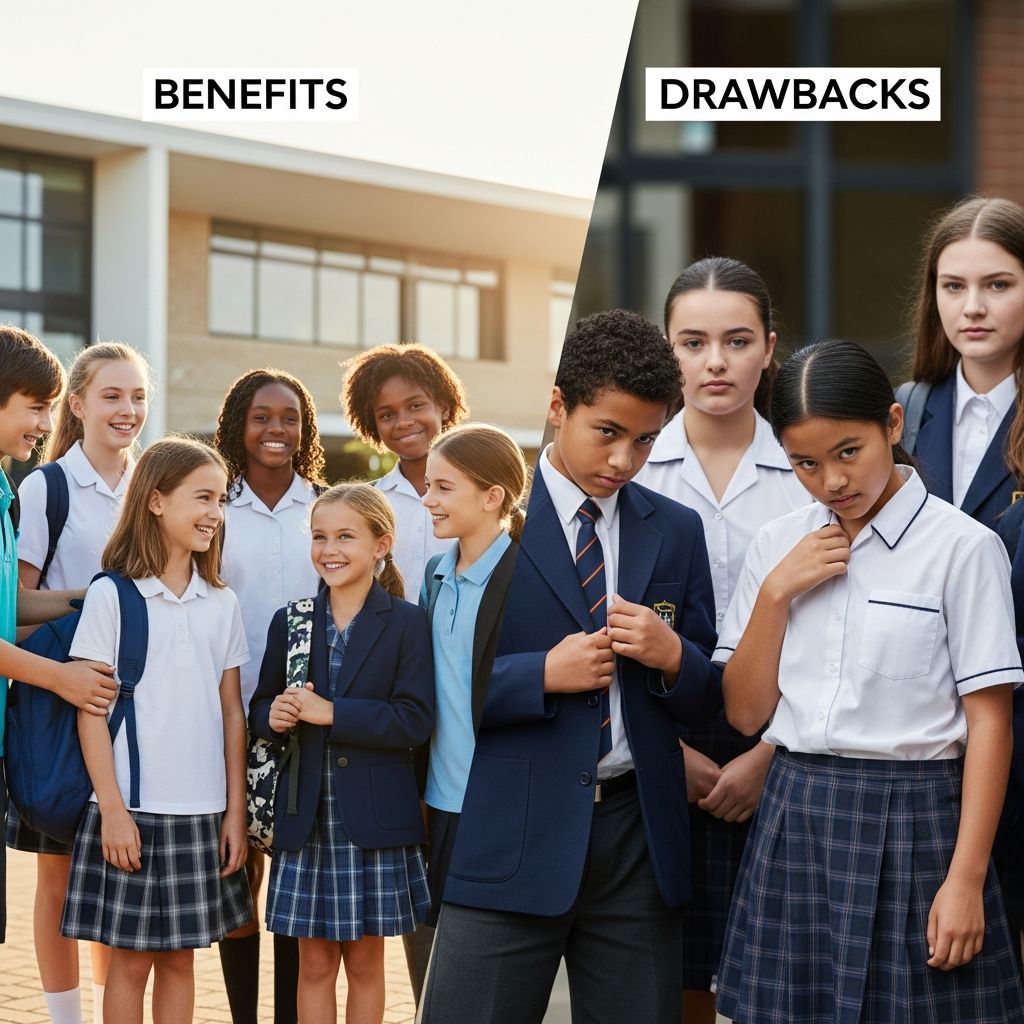
School uniforms remain a divisive topic in education, sparking discussions among parents, teachers, and policymakers. While some schools adopt them to foster unity and discipline, others resist due to concerns over individuality and expenses. This article delves into the multifaceted impacts of uniforms, drawing from credible studies and reports to provide a balanced perspective.
Understanding the Role of Uniforms in Modern Schools
Uniform policies have gained traction globally, with many institutions viewing them as tools for creating equitable learning environments. Proponents argue that standardized attire minimizes distractions and promotes a sense of belonging. However, empirical evidence is mixed, with some research questioning their effectiveness in improving behavior or academic outcomes. For instance, a study from Ohio State University found no significant behavioral improvements in uniformed schools. Despite this, uniforms persist in over half of U.S. public schools, according to recent surveys.
The debate often centers on balancing collective benefits against individual rights. In the UK, recent legislation aims to curb excessive uniform costs, reflecting parental financial strains. This section sets the stage for examining specific advantages and limitations.
Key Advantages of Implementing School Uniforms
Advocates highlight several practical benefits that uniforms bring to school communities. These range from social equalization to enhanced focus on education.
Fostering Equality and Reducing Socioeconomic Divides
One primary benefit is the promotion of equality by eliminating visible markers of wealth. When students wear the same attire, differences in clothing brands or styles become irrelevant, potentially reducing peer pressure related to fashion. Dame Rachel De Souza, England’s Children’s Commissioner, noted that uniforms prevent the stress of needing ‘the latest trainers,’ creating a fairer playground. This leveling effect can boost inclusion, especially for low-income families who might otherwise struggle to keep up with trends.
Enhancing Discipline and Academic Concentration
Uniforms are credited with instilling discipline and minimizing classroom disruptions. By standardizing dress, schools shift attention from appearance to learning, potentially improving attendance and focus. Some reports suggest increased participation in physical education, as athletic uniforms encourage activity through comfortable, functional designs. Parents report time savings in morning routines, allowing more preparation for the school day.
Decreasing Bullying and Building Community Spirit
Bullying linked to clothing choices diminishes when uniforms are mandatory. Studies indicate fewer instances of teasing over outfits, fostering a stronger sense of community. This cohesion can extend to school pride, with students identifying more as a unified group rather than fragmented cliques.
To illustrate these benefits, consider the following comparison:
| Aspect | With Uniforms | Without Uniforms |
|---|---|---|
| Peer Pressure | Low (standardized attire) | High (fashion competition) |
| Focus on Learning | High (fewer distractions) | Variable (clothing debates) |
| Bullying Incidents | Reduced (less visible differences) | Increased (style-based teasing) |
Significant Challenges and Criticisms of School Uniforms
Despite the upsides, uniforms face substantial criticism for their potential downsides, particularly regarding personal development and equity.
Financial Strain on Families
A major drawback is the cost, which can burden households. UK surveys show 78% of parents spending over £100 annually, with many exceeding £249 amid economic pressures. In the U.S., costs range from $25 to $500 per child, hitting low-income families hardest since public education should be accessible without extra fees. Critics argue this exacerbates rather than alleviates disparities, as not all can afford branded items.
Limiting Personal Expression and Creativity
Clothing serves as a key outlet for self-expression, especially during adolescence. Uniforms may stifle individuality, with 60% of students feeling restricted in their identity. Opponents, including legal scholars, claim this curbs First Amendment rights and fosters conformity over creativity. Fashion choices help teens align with social groups, and denying this can impact self-esteem.
Potential for Enforcement Issues and Inclusivity Gaps
Strict enforcement leads to missed school time for violations, straining self-image and attitudes toward authority. Gender-specific designs, like skirts for girls, raise sexism concerns and challenges for non-binary or transgender students. Additionally, sourcing uniforms can be difficult, adding frustration for families. Research shows no clear link to better behavior or academics, challenging assumed benefits.
- Cost Implications: Average annual expense per child.
- Expression Limits: 60% of students feel stifled.
- Behavior Outcomes: No proven improvements per studies.
Evidence from Research: What Studies Reveal
Scientific scrutiny provides nuanced insights. A PMC-published analysis of uniformed vs. non-uniformed schools found no differences in social skills, behavior, or achievement. Similarly, Ohio State research debunked claims of behavioral gains. WebMD notes mixed views, with uniforms potentially increasing bullying in some contexts. Conversely, practical reports emphasize reduced distractions. Policymakers must weigh these, prioritizing recent data for relevance.
Long-term, uniforms may aid transitions by teaching professionalism, but they risk delaying personal style development. Schools adapting policies—offering generic options—can mitigate costs, as urged by the UK Competition and Markets Authority.
Practical Tips for Schools and Parents
To optimize uniforms:
- Select affordable, durable fabrics available from multiple retailers.
- Incorporate flexible elements like pants for all genders.
- Provide subsidies or hand-me-down programs for needy families.
- Combine with dress-down days to allow expression.
Parents can advocate for transparent costing and inclusivity in policy reviews. Educators should monitor enforcement to avoid punitive measures.
Frequently Asked Questions
Do school uniforms improve student grades?
No strong evidence supports this; studies show no significant academic gains.
Are uniforms more expensive than regular clothes?
Often yes, averaging $100-500 yearly, though bulk buying can help.
Can uniforms reduce bullying effectively?
They may lower clothing-based incidents but not eliminate all forms.
How do uniforms affect self-esteem?
Views differ: some see boosted equality, others restricted identity.
Are there legal issues with uniform mandates?
Critics cite free speech violations, but courts generally uphold reasonable policies.
Navigating the Uniform Debate Forward
Ultimately, the value of school uniforms depends on implementation. Thoughtful policies balancing unity with flexibility yield the best outcomes. As education evolves, ongoing evaluation ensures they serve all students equitably.
References
- What Are the Pros and Cons of School Uniforms? — WebMD. 2023-10-15. https://www.webmd.com/parenting/what-are-pros-cons-school-uniforms
- SCHOOL UNIFORMS AND STUDENT BEHAVIOR: IS THERE A LINK? — PMC (National Library of Medicine). 2022-01-10. https://pmc.ncbi.nlm.nih.gov/articles/PMC8775910/
- Pros and cons of school uniform — The Week. 2024-09-05. https://theweek.com/news/education/961830/school-uniforms-the-pros-and-cons
- 17+ Pros And Cons Of School Uniforms (2024) — UniformMarket. 2024-01-20. https://www.uniformmarket.com/statistics/pros-and-cons-of-school-uniforms
- The Pros and Cons of School Uniforms — Golden Manufacturing. 2023-05-12. https://goldenmfg.com/blog/pros-and-cons-of-school-uniforms/
- The Pros and Cons of School Uniforms — SmartAsset. 2023-08-22. https://smartasset.com/insights/the-pros-and-cons-of-school-uniforms
- School uniforms don’t improve child behavior, study finds — Ohio State University College of Education and Human Ecology. 2022-11-18. https://ehe.osu.edu/news/listing/school-uniforms-don-t-improve-child-behavior-study-finds