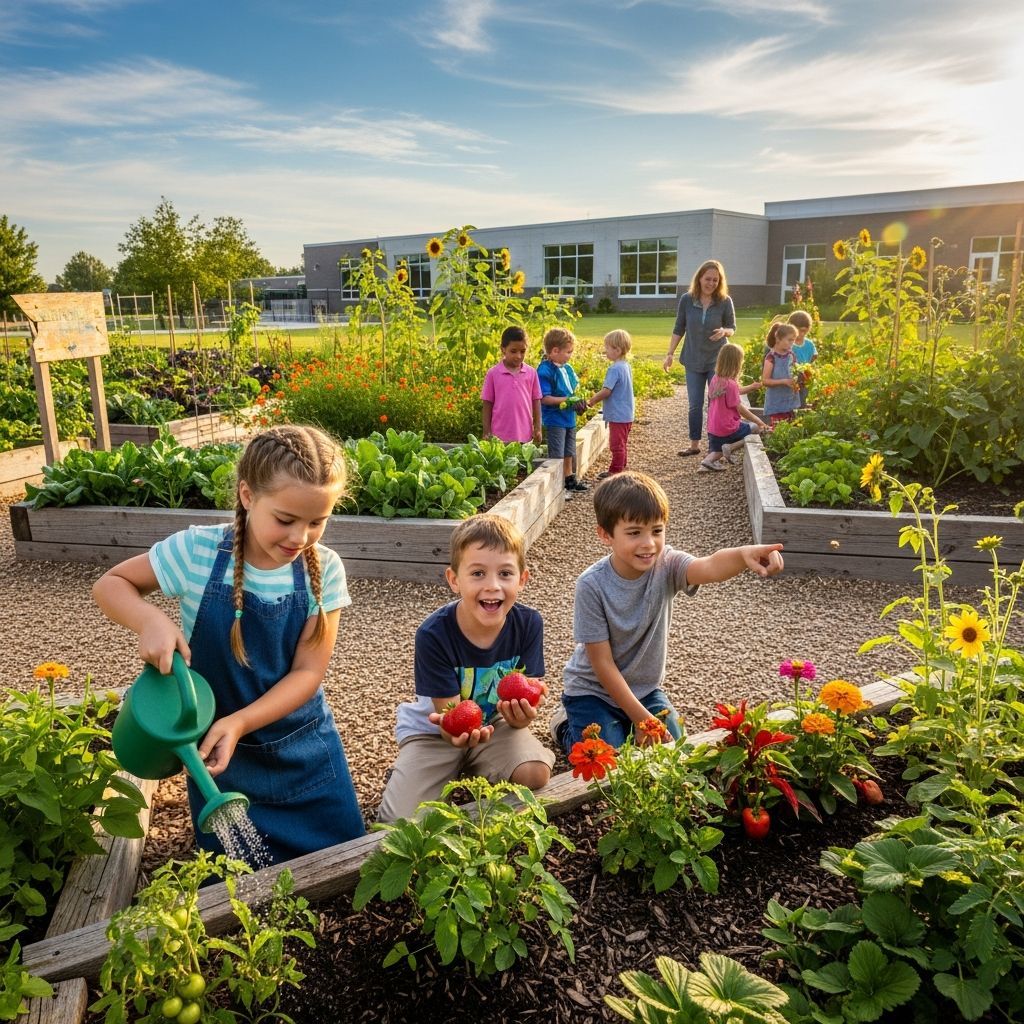
School gardens offer a dynamic way to integrate education, health, and community building into daily school life. These outdoor spaces allow children to engage directly with nature, fostering skills that extend far beyond traditional classroom lessons. By planting seeds and nurturing growth, students develop a deeper understanding of science, nutrition, and responsibility, leading to measurable improvements in their overall development.
Academic Advantages of Green Classrooms
Integrating gardens into school curricula has shown consistent positive effects on student performance across multiple subjects. Research indicates that hands-on gardening activities enhance science achievement, with participants scoring significantly higher on related tests compared to non-participants. For instance, elementary students involved in garden programs demonstrated improved retention and comprehension in science topics like plant life cycles and ecosystems.
Gardens also support math and language arts. Measuring garden beds, calculating yields, and tracking growth data provide real-world applications for mathematical concepts. In language arts, students can journal observations, write recipes from harvested produce, or research agricultural histories, boosting literacy skills and enthusiasm for learning.
| Subject | Garden Activity Example | Observed Benefit |
|---|---|---|
| Science | Observing plant growth cycles | Higher test scores |
| Math | Measuring plots and yields | Improved problem-solving |
| Language Arts | Writing garden journals | Enhanced comprehension |
| Social Studies | Exploring food origins | Increased cultural awareness |
Qualitative studies reveal heightened motivation and pride among students, creating a positive feedback loop for academic engagement.
Boosting Nutrition and Physical Health
One of the most compelling benefits is the impact on dietary habits. Children who grow their own fruits and vegetables are far more likely to consume them, leading to higher intakes of essential nutrients like vitamins A and C. Garden programs increase willingness to try new produce, including unfamiliar or ethnic foods, fostering lifelong healthy eating patterns.
- Increased fruit and vegetable consumption through direct harvesting experience.
- Better nutrition knowledge, including understanding food groups and label reading.
- Reduced sedentary behavior with moderate-to-vigorous physical activity during gardening.
- Positive effects on eye development, ADHD symptoms, stress reduction, and immune function from outdoor activity.
These changes contribute to obesity prevention efforts, as gardens encourage both physical movement and mindful eating. Schools using garden produce in meals further reinforce these habits, creating a cycle of health promotion.
Social and Emotional Growth in the Garden
Gardening cultivates teamwork and interpersonal skills. Less structured than indoor classes, garden tasks promote collaboration, communication, and conflict resolution as students work together on shared plots. Principals and teachers report improved attitudes toward school, stronger peer relationships, and greater self-confidence.
Environmental stewardship emerges naturally, with participants showing more positive attitudes toward nature conservation. This sense of empowerment extends to community involvement, as students take ownership of their gardens and share harvests.
For at-risk students, gardens provide therapeutic outlets, enhancing self-esteem and a sense of belonging. Family engagement amplifies these effects, strengthening home-school connections.
Overcoming Hurdles: Practical Solutions for Success
While benefits are clear, challenges like funding, maintenance, and teacher training persist. Surveys of principals highlight time constraints and resource needs as barriers, yet many note social interaction gains outweigh these.
Effective strategies include:
- Starting small with raised beds or container gardens to minimize labor.
- Partnering with local master gardeners or community groups for expertise and supplies.
- Securing grants from organizations like USDA Farm to School programs.
- Involving students in all stages, from planning to cleanup, to build responsibility.
- Integrating gardens into existing curricula to avoid extra workload.
Teacher preparation is key; professional development on garden-based lessons ensures sustained use. Longitudinal studies emphasize consistent, multi-year programs for optimal outcomes.
Real-World Examples and Research Insights
Across the U.S., programs like those supported by Cornell Garden-Based Learning demonstrate gains in environmental attitudes and science scores. Harvard research underscores experiential learning’s edge over traditional methods for health education.
A realist review of 24 interventions identified mechanisms like curriculum embedding, family involvement, and multi-pronged approaches as critical for health improvements. Quantitative data from nine studies confirm positive academic impacts, while qualitative findings highlight motivation and teamwork.
Environmental and Community Connections
School gardens teach sustainability by connecting students to food systems and ecosystems. Participants develop appreciation for biodiversity and responsible resource use. Community gardens extend this to broader impact, promoting equity by providing access to fresh produce in underserved areas.
These spaces foster empathy and action, as students collaborate on caretaking and share resources, empowering them to address local needs.
Getting Started with Your School Garden
Launching a garden begins with assessing space, sunlight, and school buy-in. Assemble a team of teachers, parents, and students. Choose easy-to-grow plants like tomatoes, lettuce, and herbs for quick wins.
- Plan the layout: Consider accessibility, water access, and safety.
- Source materials: Use recycled containers or seek donations.
- Educate participants: Offer workshops on basic horticulture.
- Monitor progress: Track growth, yields, and student feedback.
- Harvest and celebrate: Incorporate produce into events or meals.
Sustainability comes from student-led maintenance clubs, ensuring long-term vitality.
Frequently Asked Questions
What age groups benefit most from school gardens?
All school-aged children gain, but elementary students show marked science and attitude improvements. Programs adapt easily for various ages.
How do school gardens impact behavior?
They reduce discipline issues, boost teamwork, and increase school pride through shared responsibilities.
Can gardens help with special needs students?
Yes, providing calming, hands-on activities that improve focus for ADHD and build confidence for at-risk youth.
What if our school lacks space or funds?
Container or vertical gardens work in small areas. Grants, partnerships, and community support address costs.
How soon can we see results?
Attitude and motivation shifts appear quickly; academic and health gains build over seasons with consistent use.
References
- The child in the garden: An evaluative review of the benefits of school gardening — Blair, D. Journal of Environmental Education. 2009. https://research.childrenandnature.org/research/school-gardens-positively-impact-childrens-learning-and-behavior-2/
- Benefits of the School Garden — Master Gardeners San Diego. Accessed 2026. https://mastergardenerssandiego.org/schools/plant-a-seed/benefits-of-the-school-garden/
- School gardens — American Federation of Teachers. Accessed 2026. https://www.aft.org/childrens-health/nutrition/school-gardens
- Survey of Principals Regarding Perceived Benefits and Barriers of School Gardens — School Nutrition Association. 2017. https://schoolnutrition.org/journal/spring-2017-survey-of-principals-regarding-perceived-benefits-and-barriers-of-school-gardens/
- Why School Gardens? — Sprouts. Accessed 2026. https://about.sprouts.com/why-school-gardens/
- School Gardening and Health and Well-Being of School-Aged Children — PMC. 2023. https://pmc.ncbi.nlm.nih.gov/articles/PMC10005652/
- Key Findings | Cornell Garden-Based Learning — Cornell University. Accessed 2026. https://gardening.cals.cornell.edu/lessons/program-tools/benefits-and-research/key-findings/