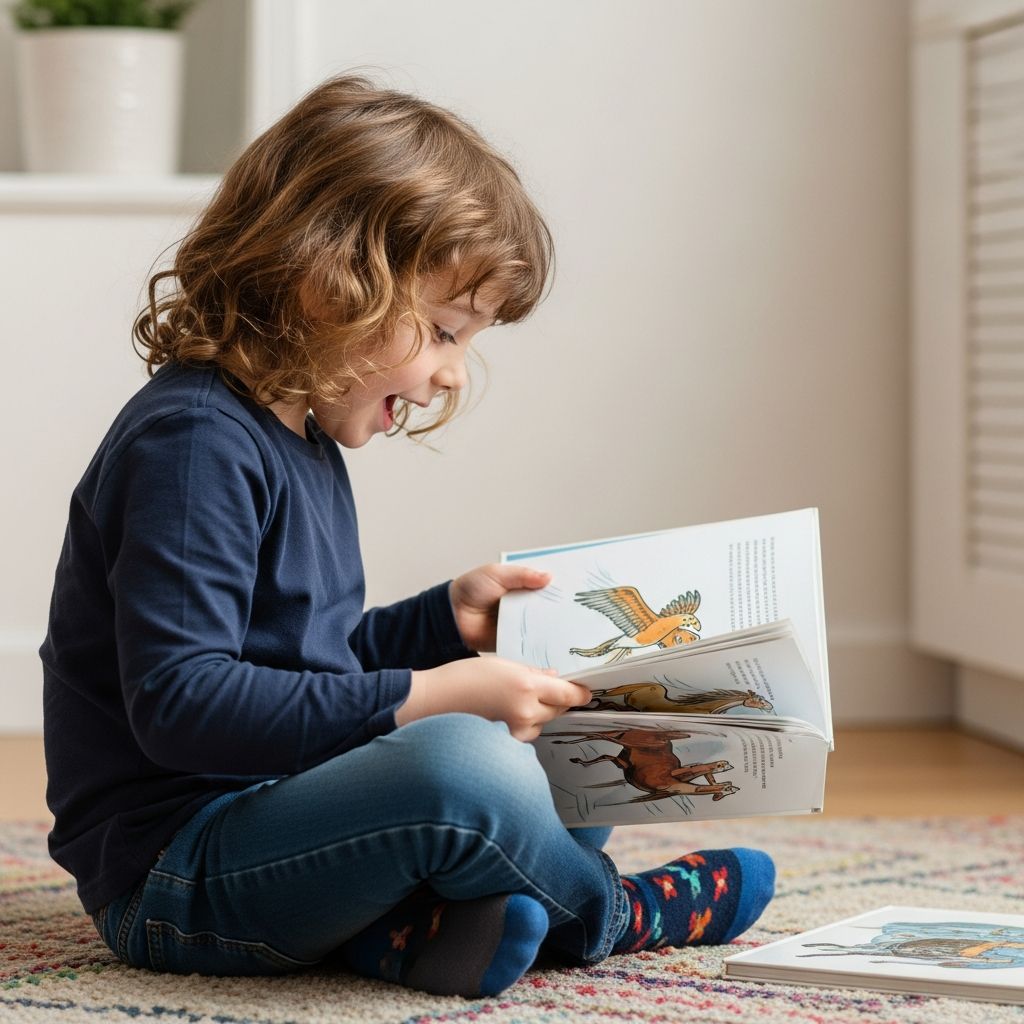
Some picture books do more than tell a story—they invite children to wiggle, jump, neigh, and roar right along with the pages. Scanimation books, which use optical illusions to create the effect of motion when pages are turned, are one of the most delightful examples of this kind of interactive reading experience. These books blend art, simple text, and surprising movement to turn read-aloud time into a full-body adventure for young children.
What Is Scanimation, Exactly?
Scanimation is a print-based animation technique that makes illustrations appear to move as the reader shifts or turns the page. Special striped overlays interact with carefully designed images underneath; when the page moves, the pictures seem to gallop, flap, or swim.
In popular scanimation picture books, each page usually pairs a single moving image with a short, rhythmic line of text that invites children to copy what they see. For example, a leaping cat may be paired with a prompt asking the child to jump, or a running horse might encourage children to pretend they’re galloping.
- Visual magic: Simple black-and-white or high-contrast images suddenly appear to move.
- Physical interaction: Children tilt, tap, and flip pages to see the next motion.
- Clear prompts: Short, playful questions encourage kids to imitate animal movements.
This combination transforms a quiet, passive read-aloud into an engaging, kinetic experience that can hold the attention of even very active toddlers.
Why Moving Images Grip Young Children’s Attention
Young children are drawn to high-contrast, dynamic visual stimuli. Research on early visual development shows that infants and toddlers pay more attention to strong contrasts and movement than to static, low-contrast images. When a page suddenly appears to come alive, it taps into this natural curiosity.
In scanimation books:
- Movement is predictable: Each page reliably “comes to life” when turned, helping children learn cause and effect.
- Surprise is gentle: Motions are small and repetitive, not overwhelming, making them suitable for very young readers.
- Repetition is built in: Kids often flip the same page back and forth, strengthening attention and memory.
This repeated, delighted engagement also creates emotional connections to books. Positive early experiences with reading are linked to later motivation and enjoyment of literacy activities.
How Scanimation Books Support Early Literacy
Even though scanimation books typically use very simple text, they can support a range of early literacy skills. Early literacy is not just about recognizing letters; it includes vocabulary, narrative understanding, sound awareness, and print concepts.
| Literacy Skill | How Scanimation Books Help |
|---|---|
| Print awareness | Children see that turning pages leads to new images and actions, reinforcing how books work. |
| Vocabulary | Animal names, verbs (gallop, leap, flap), and descriptive words are introduced in playful contexts. |
| Phonological awareness | Rhyming, rhythmic text helps children notice language patterns and sounds. |
| Comprehension | Kids connect words to actions by copying movements they see on the page. |
| Motivation to read | The novelty of moving images makes children eager to return to the book again and again. |
These books may not look text-heavy, but they are rich in opportunities for conversation. Talking about what children see and do on each page is one of the strongest ways parents can support language development.
Movement, Play, and the Growing Brain
Scanimation books sit at the intersection of reading and physical play. Young children learn best when they can move and explore; guidelines from organizations such as the World Health Organization emphasize that toddlers benefit from frequent physical activity throughout the day. Combining motion with reading respects this developmental need.
When a child is invited to gallop like a horse or flap like a bird along with the book, several things are happening at once:
- Gross motor skills: Running, jumping, and stomping help strengthen muscles and coordination.
- Body awareness: Children learn what their bodies can do, and how to control movements.
- Imagination: Pretending to be animals or characters nurtures creative thinking.
- Self-regulation: Alternating between energetic movement and quiet listening can help children gradually practice calming their bodies.
This kind of playful reading also strengthens the bond between adult and child. Shared positive activities, especially those that involve touch, eye contact, and joint attention, are linked to secure attachment and social-emotional development.
Choosing a Scanimation Book for Your Child
While one particular galloping-animal title made scanimation famous, there are now several motion-based books available for young children. When deciding which one might work best for your family or classroom, consider the following features:
- Age appropriateness: Board-book formats with sturdy pages are best for toddlers and preschoolers who are still practicing gentle hands.
- Clarity of motion: Look for images where the movement is distinct and easy to interpret (for example, galloping legs, flapping wings).
- Simple, engaging text: Short phrases, rhythmic lines, and clear prompts like “Can you jump like this?” are easier for young children to follow.
- Variety of actions: Books that include different animals and movements offer broader vocabulary and more physical options.
- Durability: Because kids often flip the same page repeatedly, strong binding and thick pages are essential.
If possible, preview the book in person. Show your child one or two spreads and watch how they react. Do their eyes widen? Do they reach for the page or start moving their body? Their response will quickly tell you whether a particular motion book is a good fit.
Making the Most of Scanimation at Home
To turn a motion-based picture book into a meaningful learning experience, the way you read it matters as much as the book itself. Here are practical ideas to use at home:
1. Read With Your Whole Body
Invite your child to stand up before you begin. Explain that this is a “moving book,” and you will both act it out together.
- Pause after each page to say, “Let’s try it!” and imitate the movement.
- Exaggerate your own motions to show that being playful and a little silly is welcome.
- If space is limited, adapt the action (for example, gallop in place instead of across the room).
2. Add Your Own Words
Use the printed text as a starting point, not a script. Expand on what you see together:
- Name body parts involved: “Look how the horse moves its legs. Can you move your legs fast too?”
- Introduce descriptive vocabulary: “The cat is leaping high. Show me a big leap!”
- Ask open-ended questions: “Where do you think this animal is going?”
3. Turn Reading Into a Short Game
Children love games with clear rules and quick rounds. You can:
- Use a timer and see how many movements you can try before it rings.
- Take turns being the “animal leader”: your child chooses the next page and movement.
- Invite siblings to copy each other’s versions of the action.
4. Calm Down After High-Energy Pages
Some children get very excited while acting out animal motions. Build in a calming routine:
- End the session with a slow, gentle movement (like stretching or pretending to be a sleepy animal).
- Lower your voice and speak more slowly on the last pages.
- Use a simple phrase like, “The animals are resting now, and so are we.”
Using Scanimation in Storytime or Classrooms
Scanimation books are especially effective in group settings, such as library storytimes or preschool classrooms. The combination of large, dynamic images and shared movement can quickly focus a room of wiggly children.
Tips for Librarians and Educators
- Preview the actions: Decide which movements are safe and realistic for your space before you read.
- Model first: Show the movement yourself before asking the children to join in.
- Use call-and-response: Short cues like “Gallop, stop!” help children manage transitions.
- Link to other activities: After reading, offer animal-themed crafts or a simple drawing activity where children design their own “moving” animals.
Educators can also connect the book to early science concepts: talk about how some animals move on four legs, some on two, some by flying or swimming. This reinforces classification and observation skills in a natural way.
Supporting Different Ages and Abilities
Because scanimation books rely heavily on visuals and very simple language, they can be adapted for children at different developmental stages and with a wide range of abilities.
- Infants: Hold the book 8–12 inches from the baby’s face and slowly move the page back and forth so the motion is easy to see. Narrate what is happening in simple sentences.
- Toddlers: Focus on one or two key words per page (e.g., “horse,” “run”) and give lots of chances to repeat the movements.
- Preschoolers: Ask questions that encourage prediction and storytelling: “What animal do you think might come next?”
- Children with limited mobility: Adapt actions to seated versions, such as arm movements, facial expressions, or small leg kicks.
- Emerging readers: Point to each word as you read short phrases, inviting the child to “read” repeated lines with you.
Because the pictures are so captivating, even children who are reluctant to participate in other group activities may be more willing to join in these shared movements.
Keeping Motion Books in Good Condition
Scanimation effects rely on precisely aligned transparent overlays. To keep these books working well:
- Encourage gentle page turning, especially with toddlers.
- Store books flat to avoid bending or warping.
- Model how to hold the book from the edges rather than pressing directly on the moving image.
- For libraries and classrooms, consider reserving motion-heavy titles for supervised use.
With reasonable care, these books can withstand many enthusiastic readings and continue to delight new readers over time.
Frequently Asked Questions (FAQs)
Q: At what age can I start using scanimation books with my child?
A: You can introduce high-contrast motion books during the first year, focusing on slowly showing the moving images and talking about what you see. Active movement prompts (like jumping or galloping) are best for toddlers and preschoolers who are steady on their feet.
Q: Are scanimation books educational or just for fun?
A: They are both. Although they look like novelty items, they support vocabulary, listening skills, print awareness, and physical development, especially when adults talk with children about the pictures and encourage movement.
Q: Can these books replace more traditional picture books?
A: Scanimation titles work best as part of a varied home or classroom library. They are ideal for capturing attention, introducing action words, and adding movement to reading routines, but they should complement longer narrative and rich-language books, not replace them.
Q: Are motion-based books suitable for children with sensory sensitivities?
A: Many children with sensory differences enjoy the predictable, controlled movement in these books, but every child is unique. Introduce the book gently, watch your child’s reactions, and adjust the level of movement and sound in the environment as needed.
Q: How often should we read interactive books like these?
A: There is no set rule. You might use a motion book when your child is especially wiggly, as part of a morning movement routine, or to re-engage interest in reading after a break. Combining one energetic book with one or two calmer stories in a single session often works well for young children.
References
- Gallop! / A Scanimation Picture Book — Let’s Move in Libraries. 2019-10-01. https://letsmovelibraries.org/gallop-a-scanimation-picture-book/
- Gallop!: A Scanimation Picture Book — Barnes & Noble Product Page. 2007-10-01. https://www.barnesandnoble.com/w/gallop-rufus-butler-seder/1102560065
- Gallop by Rufus Butler Seder — Goodreads Book Overview. 2007-10-01. https://www.goodreads.com/book/show/2140514.Gallop__A_Scanimation_Picture_Book
- Book Review: Gallop! A Scanimation Picture Book — 100 Scope Notes (School Library Journal Blog). 2007-12-15. https://100scopenotes.wordpress.com/2007/12/15/book-review-gallop-a-scanimation-picture-book/
- Gallop! A Scanimation Picture Book — Art of Play Product Description. 2023-01-01. https://www.artofplay.com/products/gallop
- Guidelines on physical activity, sedentary behaviour and sleep for children under 5 years of age — World Health Organization. 2019-04-24. https://www.who.int/publications/i/item/9789241550536