Salvia divinorum, often called salvia, is a powerful hallucinogenic plant that can dramatically change how a person thinks, feels, and perceives reality for a short period of time. Although the high is brief, the risks can be serious, especially for kids and teens whose brains are still developing.
This guide explains what salvia is, how it is used, how it affects the brain and body, the dangers for young people, and practical steps you can take as a parent or caregiver.
What Exactly Is Salvia?
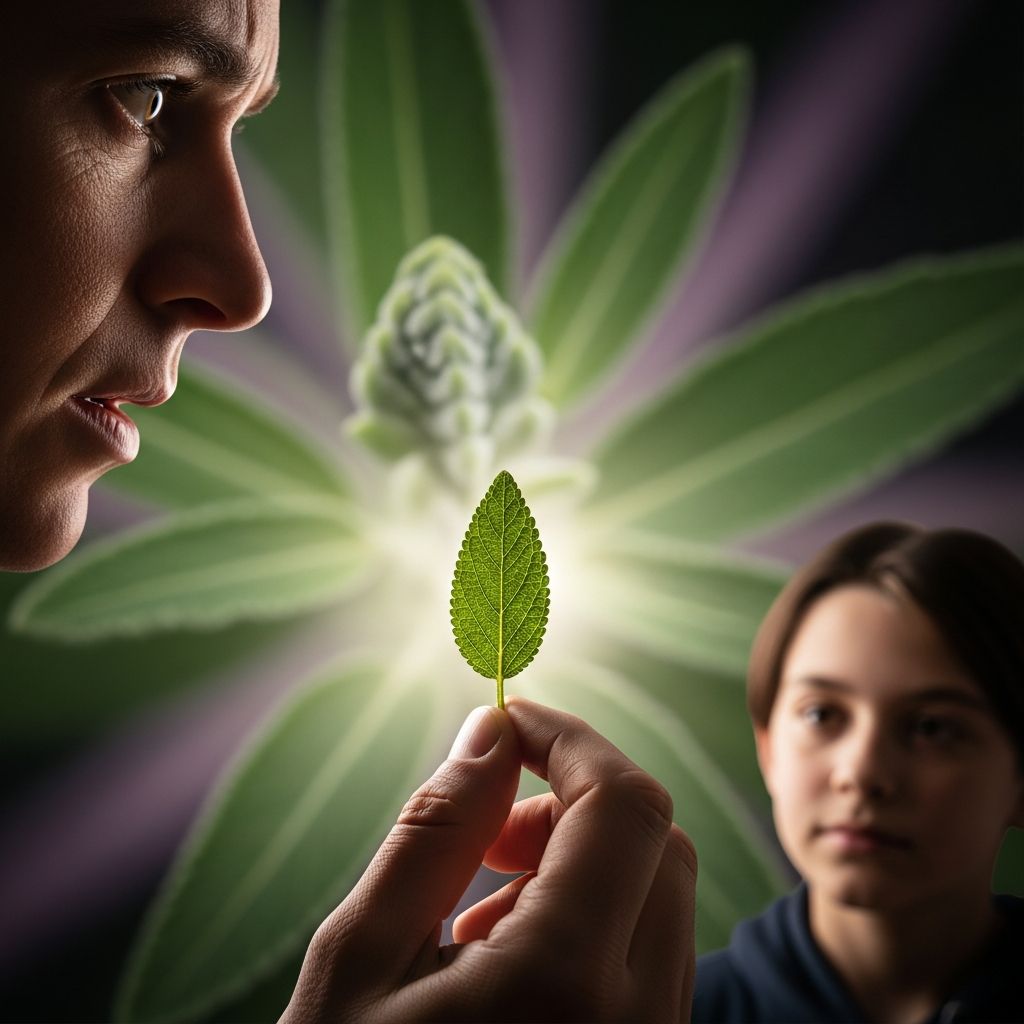
Salvia divinorum is a member of the mint family that originates from Mexico. Its leaves contain a chemical called salvinorin A, which is responsible for its strong hallucinogenic effects. It is not the same as common sage used for cooking or herbal remedies.
- Plant type: A psychoactive plant in the mint family.
- Main ingredient: Salvinorin A, a potent hallucinogen that acts on kappa opioid receptors in the brain.
- Not a party drug only: Some teens try it out of curiosity, thinking it is natural and therefore safe.
In some places, salvia is controlled like other illegal drugs, while in others it has fewer restrictions or falls into a legal gray area. That changing legal status can confuse teens and adults into underestimating its risks.
How Young People Get and Use Salvia
Salvia can be sold in several different forms, often packaged to look harmless or marketed as an herbal product.
- Dried leaves for smoking
- Concentrated extracts with much higher potency
- Leaves or extracts meant to be held under the tongue
- Seeds or plant cuttings sold online for home growing
Common Ways Teens May Use Salvia
- Smoking: In a pipe, water pipe, or rolled in paper. This produces effects within seconds and a very rapid, intense high.
- Vaporizing: Heating the extract to inhale vapors.
- Chewing or placing under the tongue: Slower onset, but the experience may last longer than smoking.
Because it is sometimes sold online or in shops that also carry herbal products, teens may assume it is safe or “legal enough.” But legal or natural does not mean harmless.
How Salvia Affects the Brain and Body
Salvia is a dissociative hallucinogen: it can cause a person to feel separated from their body or surroundings, with intense changes in perception, mood, and thinking. The high usually comes on very quickly and fades within 15–30 minutes when smoked, though after-effects may last longer.
| Type of Effect | Examples |
|---|---|
| Mental & Emotional | Hallucinations, detachment from reality, confusion, anxiety, panic, paranoia, disorientation, feeling in multiple places at once. |
| Physical | Rapid heart rate, changes in blood pressure, dizziness, slurred speech, loss of coordination, drowsiness, uncontrollable laughter. |
| Behavioral | Impaired judgment, trouble responding to surroundings, risky or erratic actions, withdrawal from others. |
Even though the intense part of the experience is brief, the person may be unable to walk safely, communicate clearly, or protect themselves from harm while under the influence.
Short-Term Dangers Parents Should Know
Many teens have heard that salvia trips are short, which can make the drug sound low-risk. But the short duration does not protect them from serious harms.
Immediate Risks
- Accidents and injuries: Because salvia can cause detachment from reality and loss of coordination, people may fall, run into objects, or engage in risk-taking behavior without understanding what they are doing.
- Dangerous decision-making: Impaired judgment can lead to reckless actions, including unsafe driving or risky stunts, even in a very short timeframe.
- Panic and extreme fear: Intense hallucinations can trigger terror, agitation, or aggressive behavior, which may be dangerous for the user and those around them.
- Rapid heart rate and blood pressure changes: These can be especially concerning for anyone with an underlying medical or heart condition.
- Psychotic symptoms: Some people experience paranoia, delusions, or psychosis that may require emergency psychiatric care.
Because the reaction can be unpredictable, even occasional experimenters may find themselves in the emergency room or in a frightening psychological state they did not expect.
What We Know (and Don’t Know) About Long-Term Effects
Compared with many other drugs, salvia’s long-term health effects are not well understood yet. Researchers and health agencies emphasize that there is limited data about how repeated use may affect the brain, mental health, or physical health over time.
Areas of Concern
- Psychotic episodes: Case reports link salvia use with psychosis, paranoia, and severe changes in behavior, sometimes in people with a history of mental illness or brain injury.
- Mental health vulnerabilities: People who already have anxiety, depression, or other mental health conditions may be at higher risk for serious reactions.
- Pattern of risky behaviors: Studies show that young people who use salvia are more likely to be involved in other substance use and risk-taking behaviors, even if we cannot say the drug directly causes those problems.
- Tolerance and dependence: Evidence about addiction is limited, but there have been isolated reports of tolerance (needing more to get the same effect) and withdrawal symptoms in heavy users.
Because of these unknowns, many public health experts recommend treating salvia use by teens as a serious warning sign and an opportunity for early intervention.
Why Teens May Be Drawn to Salvia
Understanding what attracts young people to salvia can help parents respond more effectively.
- Curiosity about hallucinations: Online videos and social media sometimes portray salvia trips as funny or entertaining, without showing the dangers.
- Misbelief that it is ‘safe’ or ‘just an herb’: Because it comes from a plant and may not be scheduled the same way as other street drugs in some regions, teens may assume it is low-risk.
- Peer pressure: Friends who experiment with substances can strongly influence a teen’s choices.
- Seeking escape: Teens struggling with stress, anxiety, or emotional pain may look for intense experiences or ways to “check out” from their feelings.
- Ease of access: Salvia has been sold online or in certain shops, making it easier to obtain than some other illicit drugs in some areas.
These motives do not mean that using salvia is harmless; they show where parents can focus prevention: accurate information, emotional support, and guidance on handling peer pressure and stress.
Warning Signs a Teen May Be Using Salvia
Many signs of salvia use overlap with those of other drugs. One incident of use may be brief and hard to notice, but patterns of use often leave clues at home or in behavior.
Possible Physical and Behavioral Clues
- Sudden, unexplained episodes of confusion or disorientation
- Periods of intense, uncontrollable laughter or apparent “zoning out”
- Loss of coordination, stumbling, or slurred speech not explained by alcohol
- Red or irritated eyes, coughing, or the smell of smoke on clothing
- Pipes, unusual smoking devices, burnt foil, or small bags of dried leaves or plant material
- Increased privacy around internet use and packages arriving from unfamiliar retailers
- Changes in friend groups, school performance, motivation, or mood
Any of these signs, especially when combined, are reasons to open a calm, nonjudgmental conversation and consider asking a healthcare professional for guidance.
How Parents Can Talk About Salvia
Open, ongoing communication is one of the most effective protections against teen substance use. You do not need to be a drug expert to make a difference.
Practical Tips for Conversations
- Start early and keep talking: Short, age-appropriate talks over time work better than one big lecture.
- Ask what they have heard: Begin by asking your child what they know about salvia or other drugs. Listen more than you talk at first.
- Use clear, honest facts: Explain that salvia can cause intense hallucinations, confusion, and risky behavior, even if the high is short.
- Address the “natural means safe” myth: Many dangerous substances, from tobacco to poisonous plants, are natural. Natural does not equal harmless.
- Share your expectations: Clearly state your family rules about drug use and the reasons behind them: safety, health, and trust.
- Offer an exit plan: Agree on a code word or plan your child can use to leave a situation where others are using drugs.
- Model healthy coping: Show and teach ways to handle stress and emotions without substances—exercise, hobbies, talking to trusted adults, and counseling when needed.
What To Do If You Suspect or Know Your Teen Used Salvia
If you think your child has tried salvia, try to respond with calm concern rather than panic or anger. Your reaction can strongly influence whether they open up and accept help.
Immediate Steps
- Check for medical emergencies: If your child is extremely confused, unresponsive, violent, or shows signs of chest pain, trouble breathing, or severe agitation, seek emergency care right away.
- Wait for the acute effects to pass: Once they are safe, wait until the high wears off before having an in-depth conversation.
- Stay nearby: While they are intoxicated, stay close enough to prevent injury but avoid escalating their fear or confusion.
After the Crisis
- Have a calm discussion: Ask what happened, what they took, how they felt, and what led up to the decision.
- Involve a healthcare professional: Let your child’s doctor know about the incident so they can screen for other substance use, mental health concerns, or possible complications.
- Assess for patterns: Try to learn whether this was a one-time experiment or part of ongoing drug use.
- Consider counseling: If you see ongoing use, mood changes, or other risky behaviors, a mental health or substance use specialist can help.
- Set clear consequences and supports: Combine reasonable limits with practical help (such as therapy, tutoring, or structured activities) rather than relying only on punishment.
Frequently Asked Questions (FAQs)
Is salvia legal?
Laws about salvia vary widely by country, state, or region. Some places classify it as an illegal substance, while others have partial restrictions or no specific laws at all. Even if it is legal where you live, its health risks and unpredictable effects make it unsafe for teens.
Can someone overdose on salvia?
Health agencies note that there is limited information about salvia overdose, and there have not been clear patterns like those seen with opioids or alcohol. However, the intense hallucinations, impaired judgment, and risk-taking behavior can indirectly lead to life-threatening injuries or medical crises.
Is salvia addictive?
Researchers do not yet have a full picture of salvia’s addiction potential. There are reports of tolerance, craving, and withdrawal in some heavy users, but it does not appear to cause physical dependence in the same way as opioids or alcohol. Still, any pattern of repeated drug use by a teen is cause for concern and evaluation.
How long do salvia’s effects last?
When smoked, the most intense effects usually begin within seconds and last about 15–30 minutes, with some lingering after-effects up to an hour. When absorbed in the mouth (such as holding leaves or extract under the tongue), the onset is slower and the experience can last longer, sometimes up to 2 hours.
Can salvia trigger mental illness?
Case reports link salvia use with psychosis, paranoia, and severe changes in thinking, sometimes in individuals with a history of mental health problems or brain injury. While we cannot say salvia directly causes chronic mental illness in every case, it may precipitate or worsen serious symptoms in vulnerable people.
What should I tell my teen in one or two sentences?
You might say: “Salvia is a powerful hallucinogen that can make you lose touch with reality and do dangerous things, even for a few minutes. Your safety and future matter more than any short high, and I’m always here to help you handle stress without drugs.”
References
- Use of Salvia divinorum may have adverse health effects — National Institute for Public Health and the Environment (RIVM). 2016-01-26. https://www.rivm.nl/en/news/use-of-salvia-divinorum-may-have-adverse-health-effects
- Salvia — Health Canada. 2023-03-31. https://www.canada.ca/en/health-canada/services/substance-use/controlled-illegal-drugs/salvia.html
- Salvia divinorum — Memorial Sloan Kettering Cancer Center. 2023-04-03. https://www.mskcc.org/cancer-care/integrative-medicine/herbs/salvia-divinorum
- Facing Addiction in America: The Surgeon General’s Report on Alcohol, Drugs, and Health — Table: Salvia — U.S. Department of Health and Human Services. 2016-11-17. https://www.ncbi.nlm.nih.gov/books/NBK424847/table/appd.t19/
- What Is Salvia: Side Effects, Overdose & Addiction Risks — American Addiction Centers. 2022-07-01. https://americanaddictioncenters.org/psychedelics/salvia
- Use of Salvia divinorum in a Nationally Representative Sample — Matthew J. Carpenter et al., Drug and Alcohol Dependence. 2012-09-01. https://pmc.ncbi.nlm.nih.gov/articles/PMC3408869/
- Salvia Divinorum: Drug Fact Sheet — U.S. Drug Enforcement Administration. 2020-04-01. https://www.dea.gov/factsheets/salvia-divinorum