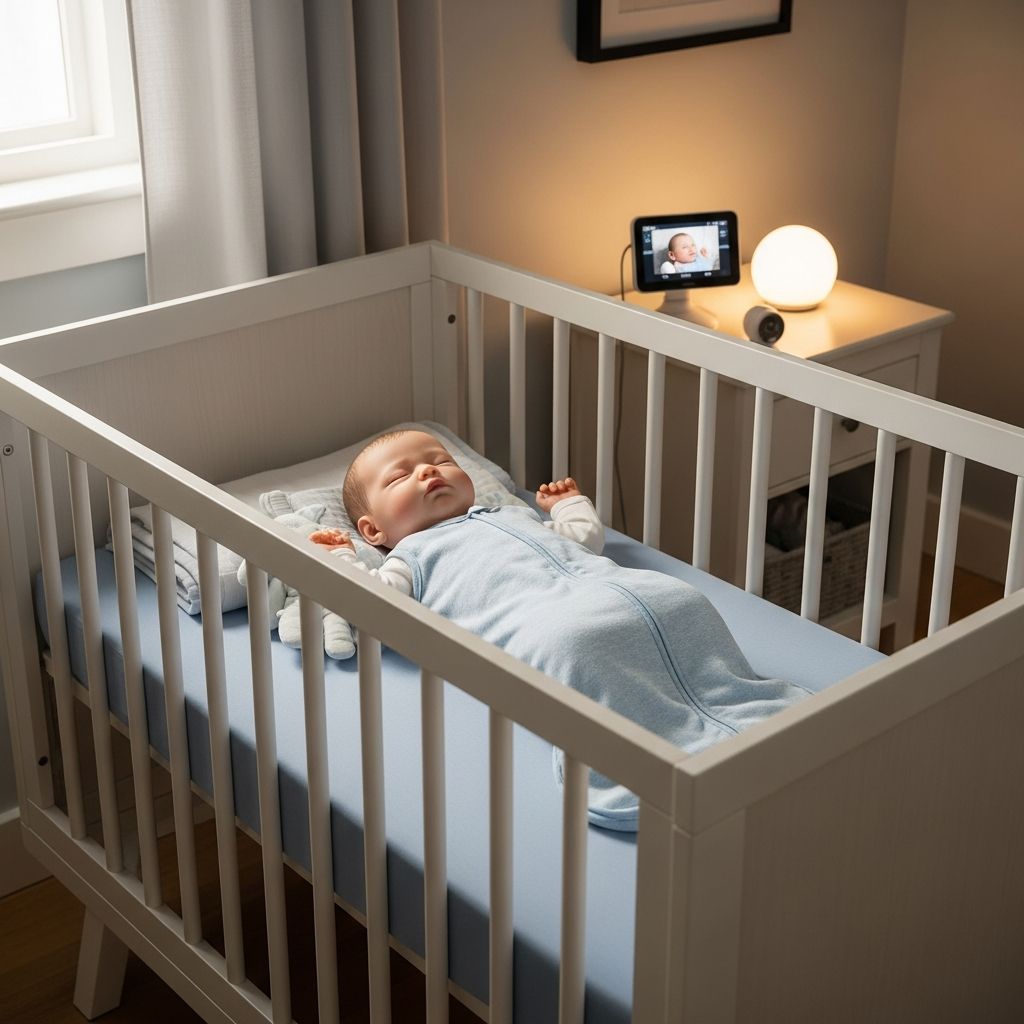
Creating a secure sleep environment is crucial for newborns and infants, significantly lowering the risk of Sudden Unexpected Infant Death (SUID) and Sudden Infant Death Syndrome (SIDS). Health authorities unanimously recommend placing babies on their backs in a bare crib or bassinet in the parents’ room.
Core Principles of Infant Sleep Safety
The foundation of safe infant sleep rests on simple, evidence-based rules known as the ABCs: Alone, Back, and Crib. These practices, endorsed by leading organizations, have contributed to a substantial decline in SIDS rates since their widespread adoption.
- Alone: Infants should sleep independently, free from adults, children, pets, or additional items like blankets and toys to prevent suffocation or entrapment.
- Back: Position babies supine for every nap and nighttime rest; their physiology protects against aspiration even if they spit up.
- Crib: Select a compliant crib, bassinet, or playard with a firm mattress and fitted sheet only—no extras permitted.
Optimal Sleep Surface Choices
A firm, flat mattress is non-negotiable to avoid sinkage that could obstruct airways. Approved options include full-size cribs, portable cribs, bassinets, and playards meeting Consumer Product Safety Commission standards. Avoid inclined sleepers, as they pose rebreathing risks.
| Approved Sleep Surfaces | Key Features | Prohibited Alternatives |
|---|---|---|
| Crib or Bassinet | Firm mattress, tight sheet, safety-certified | Adult bed, couch, armchair |
| Playard/Portable Crib | Flat base, no add-ons | Swing, bouncer, car seat |
| None | N/A | Waterbed, air mattress, pillow |
Maintaining no gaps between mattress and frame prevents wedging hazards.
Room-Sharing Without Bed-Sharing
Position the baby’s sleep space in the caregivers’ bedroom for at least six months, ideally a full year, facilitating quick monitoring and breastfeeding without the dangers of co-sleeping on adult surfaces. Couches and armchairs are especially risky due to entrapment potential.
Positioning Infants for Every Rest
Back sleeping remains the gold standard through the first year. Once babies roll independently, allow position changes during sleep but always start supine. Side or prone placement heightens suffocation odds dramatically.
Maintaining a Clutter-Free Sleep Zone
The sleep area must contain solely the infant—no pillows, quilts, bumpers, stuffed animals, or loose fabrics. These items can cover the face or create strangulation points.
- Skip blankets; opt for sleep sacks or layered clothing.
- Remove curtain cords and ensure wall-hanging stability.
- Prohibit wedges, positioners, or monitors claiming SIDS prevention, as they lack evidence and introduce risks.
Temperature Control and Overheating Prevention
Dress babies in one layer more than adults find comfortable, avoiding hats indoors which could slip over airways. Room temperature should suit caregivers; signs of overheating include damp hair or hot chest. Wearable blankets provide warmth safely.
Swaddling Done Right
Swaddling soothes but demands caution: keep hips mobile, cease at rolling signs, and always place swaddled babies supine. Consult pediatricians for arm-free options post-rolling.
Incorporating Tummy Time for Development
Supervised prone play counters flat head risks and builds strength. Begin with 3-5 minutes daily, progressing to 15-30 by seven weeks.
Addressing Common Sleep Myths
Myth: Babies choke on back. False—their gag reflex handles fluids.
Myth: Props ensure safety. Unproven gadgets like wedges increase hazards.
Myth: Bed-sharing bonds better. It elevates SUID risk; room-share instead.
Breastfeeding’s Protective Role
Nursing reduces SUID odds; feed in bed if needed but transfer to safe spot post-feed, using alarms to avoid drowsy lapses.
Navigating Travel and Childcare
Pack a travel bassinet and educate caregivers on ABCs. Move sleeping infants from car seats promptly.
Smoke-Free Environment Imperative
Avoid all tobacco exposure, even thirdhand, as it triples SUID risk.
Frequently Asked Questions
What if my baby rolls to tummy during sleep?
Place back initially; if rolling bidirectional, permit natural positioning.
Can I use a swaddle after rolling starts?
Discontinue traditional swaddles; consider arms-up products per doctor advice.
Is room-sharing same as bed-sharing?
No—separate surfaces in same room is safest.
How do I keep baby warm sans blankets?
Use footed pajamas or sleep sacks; match adult layers plus one.
What’s ideal room temp for sleep?
68-72°F (20-22°C); baby shouldn’t sweat.
Are crib bumpers okay?
No—strangulation risk; keep bare.
Can baby sleep in swing if asleep?
No—transfer to flat crib immediately.
Long-Term Benefits of Safe Practices
Consistent adherence fosters healthy sleep habits, reducing night wakings and supporting milestones. Parents gain confidence knowing evidence-backed steps shield their little ones.
Empower yourself with these guidelines, adapting as baby grows while prioritizing proven safety. Consult pediatricians for personalized advice amid evolving needs.
References
- Infant Safe Sleep Practices — Safe Sleep NM. 2023. https://www.safesleepnm.org/public/
- Safe Sleep for Babies – Nationwide Children’s Hospital — Nationwide Children’s Hospital. 2024-01-15. https://www.nationwidechildrens.org/family-resources-education/health-wellness-and-safety-resources/helping-hands/safe-sleep-practices-for-babies
- Providing Care for Babies to Sleep Safely | SUID and SIDS – CDC — Centers for Disease Control and Prevention. 2025-06-12. https://www.cdc.gov/sudden-infant-death/sleep-safely/index.html
- Safe sleep for babies – Caring for kids — Canadian Paediatric Society. 2024-03-20. https://caringforkids.cps.ca/handouts/safety-and-injury-prevention/safe_sleep_for_babies
- Safe Infant Sleep – Iowa Department of Health and Human Services — Iowa HHS. 2024-11-01. https://hhs.iowa.gov/programs/programs-and-services/early-intervention-and-support/safe-infant-sleep
- The ABCD’s of Safe Sleep for Babies — YouTube (Pediatric Experts). 2023-05-10. https://www.youtube.com/watch?v=U_B13ZyyeVI
- Safe Sleep Environment for Baby – NIH — National Institute of Child Health and Human Development. 2025-02-28. https://safetosleep.nichd.nih.gov/reduce-risk/safe-sleep-environment