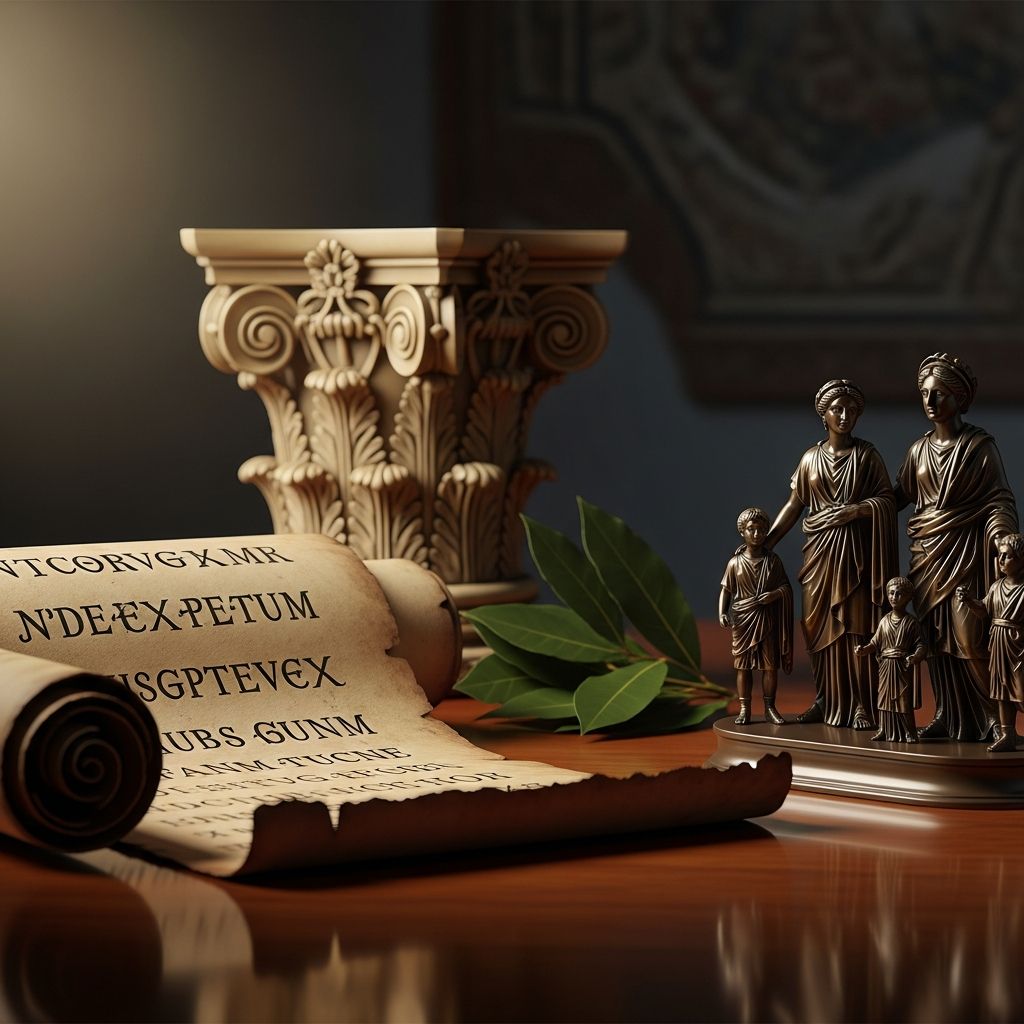
Roman last names carry a unique blend of history, power, and poetry that many modern parents and writers find irresistible. Instead of simply copying a name from a list, understanding how Roman family names worked helps you choose something meaningful, distinctive, and deeply rooted in the ancient world.
How Roman Names Actually Worked
In classical Rome, a full name was usually made up of several parts, not just a simple first-and-last combination. Over time, Romans developed a flexible system that identified a person’s individuality, family line, and even their social standing.
- Praenomen: A personal name, roughly equivalent to a modern first name.
- Nomen: A clan or gens name that linked a person to a broader family group.
- Cognomen: A surname that started as a nickname or description and often became hereditary.
For many modern readers, the cognomen feels the most like what is now called a last name, but the nomen and cognomen together can both provide rich inspiration for baby names or character names.
Why Roman Last Names Appeal to Modern Parents
Roman family names speak to strength, legacy, and story. They often carry meanings related to nature, personality traits, virtues, or the places families came from. This makes them ideal for parents who want something historical yet symbolic.
- They feel timeless, bridging ancient history and modern style.
- They can be paired with short given names to create a balanced full name.
- Many can be adapted or softened into contemporary forms without losing their roots.
Whether you are naming a child, a fictional character, or simply exploring your love of history, Roman surnames offer an entire world of ideas.
Types of Roman Last Names and What They Signified
Ancient Roman last names did not appear randomly. They often fell into recognizable categories, each carrying its own hidden story. Thinking in terms of these categories helps you find a name that fits your values or the personality you imagine for your child.
1. Names Drawn from Places
Many Roman surnames came from towns, regions, or landscapes. These names quietly announced, “My family comes from here,” making geography part of a person’s identity.
- Names linked to cities or regions could signal origin, property, or prestige.
- Parents today can use place-based Roman surnames to honor ancestry or a beloved location.
| Style | Meaning Theme | Modern Use Idea |
|---|---|---|
| Hadrianus | Connected to the town of Hadria or its region | Evokes travel, oceans, and ancient walls built by emperors |
| Laurentius | From a place associated with laurel trees | Suggests victory, greenery, and growth |
| Sabinus | Linked to the Sabine people and hills | Hints at rural roots and old tribal heritage |
Place-based names are perfect if you love travel, nature, or the idea of a family “coming from somewhere” with a story behind it.
2. Names Based on Occupations and Skills
Just like medieval surnames such as Baker or Smith, some Roman cognomina grew out of jobs or roles. At first they might have described a single person’s work, but later they could cling to entire family lines.
- Occupational names can reflect respect for craftsmanship or learning.
- Parents who value hard work or a particular trade may enjoy this category.
Imagine a teacher drawn to a Roman-style surname that hints at knowledge, or an artist who chooses a family name that suggests skill and craft. The meaning becomes an indirect blessing on the child’s future.
3. Names Reflecting Personal Traits
Other surnames grew from nicknames describing someone’s looks or character. Over time, those comments turned into hereditary family labels, even if later generations no longer matched the description.
- Some names highlighted physical attributes, such as height, build, or coloring.
- Others hinted at personality, such as seriousness, bravery, or gentleness.
When used today, these names can be seen less as literal descriptions and more as symbolic qualities you hope your child will carry—strength, kindness, or resilience.
4. Names Tied to Animals, Nature, and Symbols
Romans often borrowed imagery from animals, plants, and natural elements. A surname might point to a wolf, a bull, a laurel wreath, or the sea, giving the name an almost emblem-like feel.
- Animal-linked surnames can suggest courage, loyalty, or agility.
- Nature and element names can evoke water, earth, or the sky, ideal for parents who love the outdoors.
These symbolic surnames work beautifully for modern families seeking something poetic and meaningful rather than purely literal.
5. Names of Lineage and Legendary Ancestry
Some of the most famous Roman families linked their names to legendary heroes or divine stories. These surnames implied prestige, political power, or a sacred origin myth that set the family apart.
- Many imperial and senatorial families used this style of surname or clan name.
- Modern parents might choose such a name to echo greatness, leadership, or cultural impact.
While no one today needs a mythical ancestor to use these names, the echoes of those old legends can add drama and depth to a modern full name.
Adapting Roman Last Names for Modern Use
You do not need to reproduce an ancient Roman name exactly as it appeared in Latin. In fact, adapting the sound or spelling can make the name easier to pronounce while preserving its character.
- Shorten complex endings to make a name friendlier in casual conversation.
- Pair a bold Roman surname with a simple, familiar first name.
- Consider using a Roman last name as a middle name to balance tradition and flexibility.
A modern child might have a first name like Leo or Ava paired with a Roman-inspired surname, creating a full name that feels both current and quietly historical.
Roman Name Inspiration for Characters and Storytelling
Roman family names are not just for birth certificates. They are also perfect for authors, game designers, and role-players who want vivid, believable names for their worlds. Because these surnames grew out of character traits, jobs, and places, they instantly suggest backstory.
| Type of Character | Surname Style | Story Effect |
|---|---|---|
| Noble statesman | Lineage-based, grand-sounding clan name | Hints at political legacy and expectation |
| Rural farmer or soldier | Occupational or nature-linked surname | Suggests earthiness, strength, and humility |
| Scholar or philosopher | Name implying wisdom or learning | Creates an air of quiet intellect |
By choosing a surname that quietly reflects a character’s past, you let readers feel the depth of your world without long explanations.
Tips for Choosing a Roman-Style Last Name
When you are ready to pick a Roman-influenced surname for a baby or character, a bit of reflection goes a long way. Focus less on popularity and more on meaning, sound, and how well the name fits with the rest of the full name.
- Think about values: Decide whether you want to emphasize courage, wisdom, artistry, or heritage.
- Check pronunciation: Say the name out loud with your chosen first name several times.
- Consider spelling: Slightly adjusting Latin endings can make the name more intuitive for friends and teachers.
- Look for balance: If the surname is long and ornate, a short first name can keep things elegant.
There is no single correct way to use Roman surnames. The best choice is the one that feels rich with story every time you say it.
Frequently Asked Questions About Roman Last Names
Were Roman last names always hereditary?
No. In early periods, nicknames and descriptive cognomina did not always pass automatically from parent to child. Over time, certain surnames became closely tied to families and were inherited across generations, especially among prominent clans.
Did women in Rome use the same family names as men?
Women were connected to the same clan and family lines as men, but their naming patterns could look different. In many cases, a woman’s name reflected the family’s nomen in a feminine form, showing her place within that broader group.
Can a Roman surname be used as a first name today?
Absolutely. Many names that began as Roman family names have already shifted into modern first-name use. Others can be adapted by simplifying endings or turning them into shorter, friendlier forms, which keeps the ancient flavor while fitting modern naming styles.
Is it necessary to know Latin to choose a Roman-inspired name?
Knowing Latin is not required, but understanding the basic meaning behind a name can help you feel confident in your choice. Many parents and writers simply learn the core translation or symbolism and then choose the name for the story it tells.
How can I make a Roman-style full name feel natural in everyday life?
One approach is to combine a familiar first name with a Roman family name used as a middle or last name. Another is to soften the Latin ending slightly so that it fits more smoothly into the sound patterns of your language and culture.
Turning Ancient Surnames Into Modern Stories
Roman last names are more than a dusty list from history; they are traces of jobs, journeys, legends, and personalities that still resonate. By learning how Romans used family names, you can choose or invent a surname that feels both meaningful and stylish for your child, your characters, or your creative projects.
Whether you are drawn to a place-based name that evokes sun-washed hills, a nature-linked surname that hints at wild animals and forests, or a name that once belonged to an imperial line, Roman family names give you tools to craft a story every time you introduce yourself or your characters to the world.