Food safety authorities have issued a nationwide advisory due to a serious E. coli outbreak connected to romaine lettuce, urging immediate action from households across the United States. Consumers must discard any romaine, particularly from the Salinas, California region, and meticulously sanitize their refrigerators to eliminate potential bacterial spread. This outbreak has already impacted dozens, highlighting the critical need for swift response.
Understanding the E. coli Threat in Romaine Lettuce
E. coli, short for Escherichia coli, is a bacterium that can cause severe foodborne illness, leading to symptoms like diarrhea, stomach cramps, and vomiting. In vulnerable populations such as young children, the elderly, and those with weakened immune systems, it can result in hospitalization or life-threatening complications like hemolytic uremic syndrome (HUS). The current outbreak, traced to romaine lettuce grown in Salinas, California, has sickened nearly 70 people across 19 states, with many requiring medical attention.
Romaine lettuce’s vulnerability stems from its growing and harvesting conditions. Leafy greens like romaine are often consumed raw, providing no heat barrier to kill pathogens. Contamination can occur from soil, water, animals, or poor handling practices during harvest or distribution. Health officials emphasize that even chopped romaine or mixes containing it pose the same risk, as bacteria can survive on surfaces and spread easily.
How to Spot and Dispose of Contaminated Romaine
Identifying affected romaine is straightforward but requires careful label checking. Look for packaging indicating ‘Salinas, California’ as the growing region, whether alone or combined with other locations. If no harvest location is specified, err on the side of caution and discard it entirely. This voluntary labeling by the produce industry, implemented after prior outbreaks, aids consumers but isn’t universal.
- Check labels: Grown in Salinas? Toss it.
- No label? Assume risk and throw away.
- Chopped or mixes: Includes any romaine? Discard immediately.
- Stores and restaurants: Avoid serving or selling unlabeled or Salinas-sourced romaine.
Proper disposal prevents accidental reuse: Place discarded lettuce in a sealed bag and into the trash. If stored in reusable containers, wash them with hot, soapy water before reuse.
Why Cleaning Your Refrigerator is Essential
Simply tossing the lettuce isn’t enough. Pathogens like E. coli can contaminate fridge surfaces, shelves, drawers, and even other foods through drips or contact. Germs thrive in the moist, cool environment of a refrigerator, potentially leading to cross-contamination of dairy, meats, or ready-to-eat items. The CDC stresses that thorough cleaning disrupts this cycle, protecting your household from ongoing exposure.
Failure to clean can extend the outbreak’s reach. In past incidents, uncleaned fridges contributed to secondary illnesses within families. Regular maintenance reduces this risk, but recalls demand immediate, deep sanitation.
CDC’s Official 5-Step Fridge Cleaning Protocol
The Centers for Disease Control and Prevention (CDC) provides a proven, five-step process to clean refrigerators after handling recalled foods. Gather supplies: sealed bags, hot soapy water, clean towels, and optionally, a bleach solution (1 tablespoon liquid bleach per gallon of water).
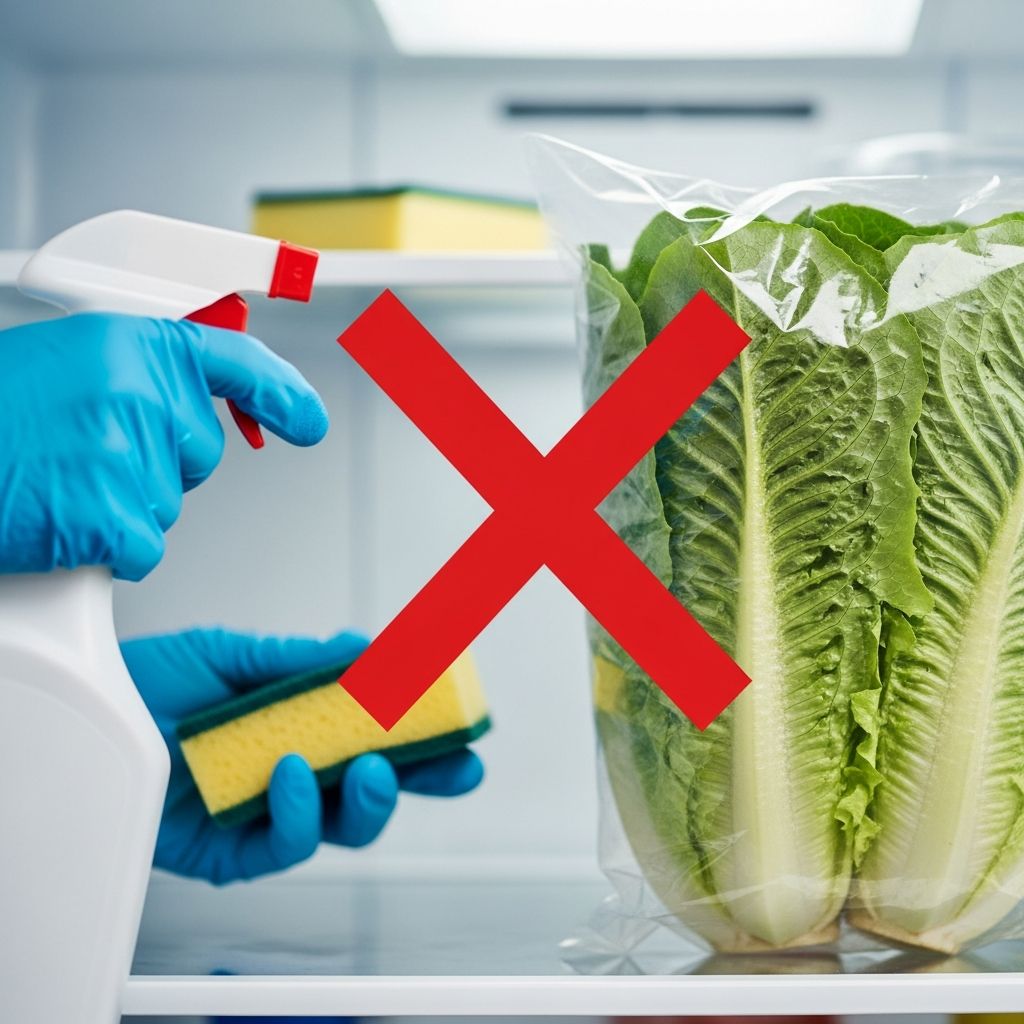
- Discard recalled items: Throw out the romaine and any food it touched. Seal in bags for garbage disposal. Wash reusable containers with hot, soapy water.
- Empty the fridge: Remove all remaining items to a counter or table. Extract shelves, drawers, and removable parts. Limit unrefrigerated time to under 2 hours for perishables.
- Wash removable components: Hand-wash shelves and drawers with hot, soapy water. Dry thoroughly with clean towels. For glass parts, warm to room temperature first to avoid cracking.
- Sanitize the interior: Wipe empty fridge surfaces, doors, and fixed drawers with hot, soapy water, rinse with clean water, and dry. Apply bleach solution for disinfection.
- Reassemble and restock: Return clean parts and food. Wipe containers before replacing. Wash hands, counters, and towels used.
This protocol ensures no residue remains, restoring your fridge to a safe state.
Supplies Checklist and Pro Tips for Effective Cleaning
| Item | Purpose | Notes |
|---|---|---|
| Sealed trash bags | Secure disposal | Double-bag if needed to prevent leaks. |
| Dish soap | Primary cleaner | Use hot water for best germ-killing power. |
| Clean towels/paper towels | Drying | Wash used towels immediately after. |
| Bleach (optional) | Sanitizer | 1 tbsp per gallon water; rinse after 1 min. |
| Gloves | Protection | Prevent skin contact with contaminants. |
Pro tips: Work in a well-ventilated area when using bleach. Test bleach solution on a small spot to avoid damaging surfaces. Clean during cooler hours to keep food safe outside the fridge.
Preventing Future Foodborne Illnesses at Home
Beyond recalls, proactive habits safeguard health. Wash produce under running water, even if pre-washed. Store raw meats below ready-to-eat foods to avoid drips. Maintain fridge temperature at 40°F or below and freezer at 0°F. Check recalls weekly via foodsafety.gov.
Educate family members, especially children, on handwashing after handling raw foods. Use separate cutting boards for produce and proteins. These steps, combined with vigilant label reading, minimize risks from outbreaks like this one.
Impact of the Outbreak and Ongoing Investigations
As of late November in the referenced period, 67 cases were reported, spanning 19 states with significant hospitalizations. The FDA and CDC collaborate with states to pinpoint contamination sources, potentially expanding recalls. Prior outbreaks prompted industry changes like regional labeling, yet challenges persist in tracing supply chains for leafy greens.
Consumers should monitor updates from official channels, as new information could affect other products. Reporting illnesses aids investigations and prevents wider spread.
Frequently Asked Questions (FAQs)
Is all romaine lettuce unsafe right now?
Yes, the CDC advises against any romaine unless confirmed from non-Salinas regions. When in doubt, throw it out.
Can I wash the lettuce to make it safe?
No, E. coli clings to leaves and washing doesn’t fully eliminate it. Discard entirely.
How long does E. coli last on fridge surfaces?
Potentially weeks in moist conditions; thorough cleaning with bleach kills it reliably.
What if my fridge has no removable shelves?
Wipe all accessible surfaces multiple times, using the bleach solution for sanitation.
Should restaurants serve romaine salads?
No, unless harvest region is verified safe. Err on caution.
Are there symptoms to watch for after exposure?
Diarrhea (often bloody), cramps, vomiting 1-10 days post-exposure. Seek medical help if severe.
This comprehensive guide empowers you to act decisively against the romaine E. coli threat, prioritizing family health through informed, CDC-backed practices.
References
- Romaine lettuce recall means its time to clean out your refrigerator — Fox Business. 2018-11-25. https://www.foxbusiness.com/markets/romaine-lettuce-recall-refrigerator
- CDC: Do not eat romaine lettuce. Learn how to dispose … — Bham Now. 2018-11-21. https://bhamnow.com/2018/11/21/cdc-romaine-lettuce/
- CDC Warning: If You Have Chopped Romaine Lettuce, Toss It Then Clean Your Fridge — Darienite. 2018. https://darienite.com/cdc-warning-if-you-have-chopped-romaine-lettuce-toss-it-then-clean-your-fridge-32064?format=pdf
- 5 Steps to Clean Your Refrigerator — Centers for Disease Control and Prevention (CDC). 2018. https://www.cdc.gov/foodsafety/pdfs/5-steps-to-clean-your-refrigerator.pdf
- Cleaning Your Refrigerator Because of a Food Recall — Restored CDC. N/A. https://restoredcdc.org/www.cdc.gov/food-safety/communication-resources/clean-refrigerator-steps.html
- CDC advising U.S. consumers not eat any romaine lettuce due to multi-state E. coli outbreak — Redner’s Markets. N/A. https://www.rednersmarkets.com/ldm_recalls/cdc-advising-u-s-consumers-not-eat-any-romaine-lettuce-due-to-multi-state-e-coli-outbreak
- 5 steps to clean your refrigerator — CDC Stacks. N/A. https://stacks.cdc.gov/view/cdc/45079