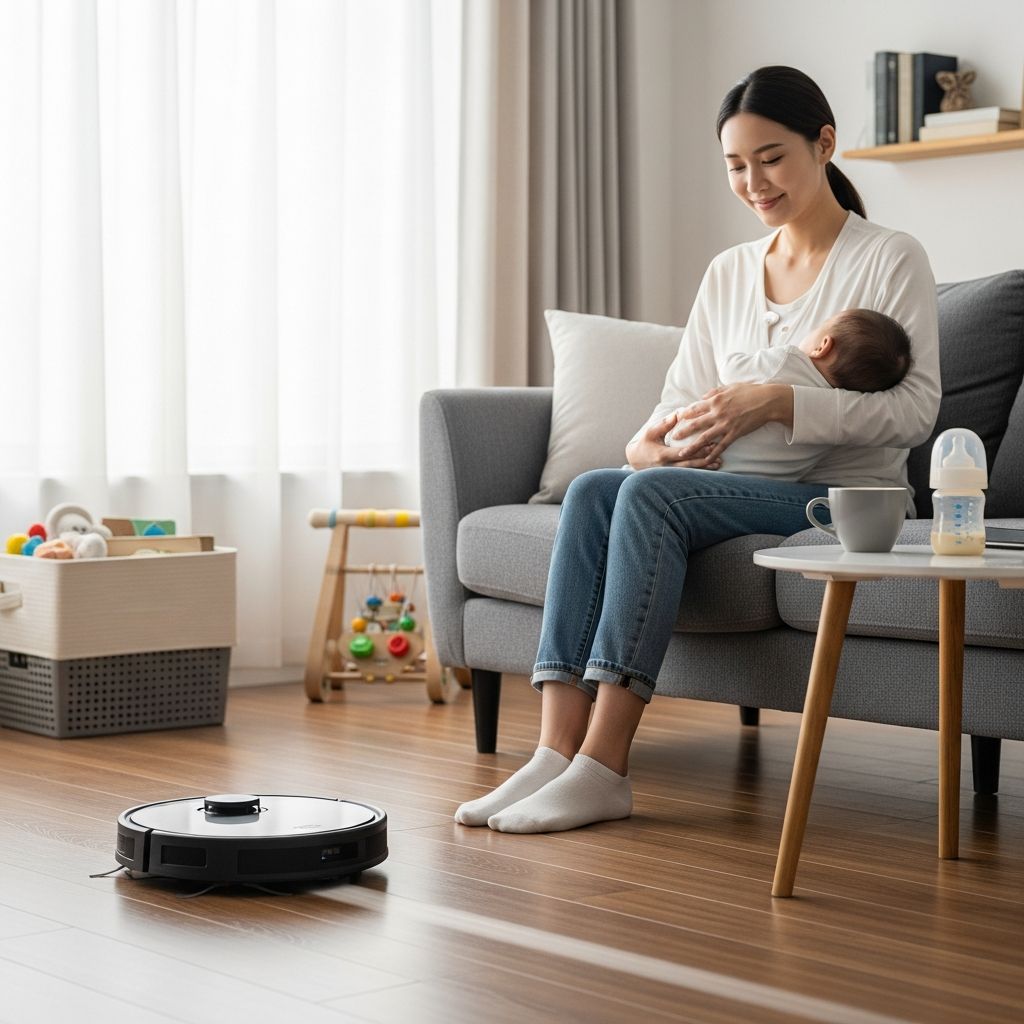
Becoming a mother reshapes every minute of the day, and everyday chores that once felt simple can suddenly feel impossible. A robot vacuum will not raise your baby or cook your meals, but it can quietly remove one recurring burden from your plate: cleaning the floors.
This article explores how a robot vacuum can support pregnant women and new moms, what to consider before buying one, and how to set it up so it truly lightens your load rather than becoming another gadget to manage.
The Reality of Floor Cleaning After Baby
Many parents are surprised at how quickly floors become messy once a baby and all their gear arrive. Between crumbs, pet hair, tracked-in dirt, and postpartum hair loss, the amount of daily debris can feel endless.
- Babies spend a lot of time on the floor: tummy time, rolling, crawling, and playing all bring them close to dust and dirt.
- Feeding a baby, whether bottles or solids, often means spills, crumbs, and sticky patches around high chairs and couches.
- Exhausted parents have less energy for vacuuming and sweeping, even if clutter and mess increase stress.
When you are juggling naps, feeds, and appointments, having a device that sweeps and vacuums without supervision can feel less like a luxury and more like a form of invisible help.
Why a Robot Vacuum Helps New Moms Specifically
Robot vacuums are useful for almost anyone, but the benefits for pregnant women and new moms are especially meaningful. You are dealing with physical recovery, hormonal changes, and a constant stream of new responsibilities. Offloading a repetitive, low-skill task frees emotional and physical capacity for what actually matters.
- Less physical effort: No pushing a heavy vacuum, bending repeatedly, or dragging a cord around furniture.
- Predictable routine: You can automate daily floor cleaning even when your day with the baby feels chaotic and unpredictable.
- Improved mental space: One less visual reminder of undone chores can reduce the constant feeling of being behind.
Key Benefits of a Robot Vacuum for New Families
While every home is different, most new parents notice a few common advantages once a robot vacuum becomes part of their routine.
1. Time Savings You Actually Feel
Regular vacuuming often takes 15–30 minutes, especially in multi-room homes. Automating this chore a few times a week quickly returns hours to your month. Those reclaimed minutes can become rest, a shower, or simply hands-free time with your baby instead of another chore.
- Schedule runs for times when you are out for a walk with the stroller or focused on feeding.
- Use on-demand cleaning for post-meal crumbs or a quick clean before visitors arrive.
- Treat those saved minutes as protected time for recovery, not just a chance to start a different task.
2. Reduced Physical Strain During Pregnancy and Postpartum
In late pregnancy and after delivery, bending, lifting, and pushing heavy equipment can be uncomfortable or medically discouraged. A robot vacuum handles most of the physical work while you rest or move gently.
- Particularly helpful after cesarean birth, pelvic floor issues, or back pain when twisting and reaching are difficult.
- Reduces the temptation to “just quickly” deep clean when your body actually needs to heal.
- Partners or family can empty the dustbin and do occasional manual vacuuming of stairs or tricky zones.
3. Cleaner Floors for Floor-Time Babies
Once your baby starts rolling and crawling, the floor becomes their main playground. Having a robot vacuum consistently remove dust, pet hair, and crumbs can support a fresher-feeling home environment.
- Less debris stuck to little hands, knees, and toys.
- Less dust gathering under furniture where babies often reach.
- More comfort laying down on the floor to play with your baby without immediately spotting dust bunnies.
4. Visual Calm in a Chaotic Season
A cluttered home is normal with a baby, but constantly dirty floors can intensify stress. Seeing vacuum lines or noticeably cleaner surfaces can make the whole space feel more manageable, even if laundry and dishes still await you.
- Cleaner floors can make toys and baby gear feel less overwhelming.
- Repeated small wins, like coming back from a walk to freshly vacuumed rooms, boost morale in tiring weeks.
- Guests may not notice the missed dusting if the main walking areas look neat and cared for.
Robot Vacuum vs Traditional Vacuum for New Moms
| Aspect | Robot Vacuum | Traditional Vacuum |
|---|---|---|
| Physical effort | Minimal; mostly setup and occasional maintenance. | Requires pushing, pulling, lifting, and bending. |
| Time commitment | Mostly automatic once scheduled; runs independently. | Requires full attention and active time each session. |
| Frequency of cleaning | Can run daily or multiple times per week with little extra effort. | Often limited to when a parent has spare energy and time. |
| Coverage under furniture | Often fits under beds, sofas, and cribs if height allows. | May not reach low-clearance areas without moving furniture. |
| Noise during nap time | Many models are relatively quiet; can be scheduled when baby is out of the room. | Varies, but generally louder and more disruptive to naps. |
| Upfront vs ongoing cost | Higher upfront cost; low ongoing effort. | Lower upfront cost; more time and physical effort long term. |
Features That Matter When You Have a Baby
Not every robot vacuum is a good fit for a home with a new baby. A few specific features can make the difference between a helpful tool and a frustrating gadget.
- Strong suction and good brush design: Helpful for capturing pet hair, food crumbs, and long hair from postpartum shedding.
- Low profile height: A shorter unit can slide under cribs, sofas, and low furniture where dust tends to accumulate.
- Smart mapping and room targeting: Allows you to send the robot only to high-traffic areas, like the kitchen and living room, instead of the entire home every time.
- Virtual boundaries or “no-go” zones: Essential for keeping the robot away from baby play areas, pet bowls, or dangling cords.
- Quiet or “eco” mode: Reduces noise during nap times or evening runs.
- Reliable app control: Lets you start, stop, and reschedule cleanings from the couch while holding the baby.
How to Set Up a Robot Vacuum for Maximum Stress Relief
Simply owning a robot vacuum does not automatically create more free time. A little thoughtful setup makes it fit more naturally into your new family rhythm.
- Choose a home base location: Place the charging station on a flat surface with open space around it so the robot can dock easily. Avoid spots where the baby might constantly pull at cords.
- Declutter the floors: Before the first run, pick up small toys, cables, and clothing. Consider using baskets for quick toy sweeps.
- Map your key zones: Let the robot do full runs at first so it can learn the layout. After mapping, create named rooms like “Nursery,” “Kitchen,” or “Living Area.”
- Set basic schedules: Start with one or two runs per week in your most-used spaces, then adjust frequency if you want cleaner floors.
- Create no-go zones: Use physical barriers or app tools to keep the robot away from play mats, pet areas, or delicate cables.
- Plan around your routine: Align cleaning times with walks, bath time, or errands so you are less bothered by the noise or movement.
Safety Tips for Homes With Babies and Robot Vacuums
- Never leave a crawling baby unsupervised in the same room as a running robot vacuum.
- Unplug or secure loose cords that might get pulled or tangled.
- Check the brushes and wheels regularly for long hair or string that could affect performance.
- Empty the dustbin away from the baby, especially if your child has allergies or you have pets.
- Store the robot where little hands cannot constantly press buttons or tip it over.
Integrating a Robot Vacuum Into Your Support System
- Ask a partner to handle weekly maintenance: emptying bins, cleaning brushes, and checking filters.
- Let visitors who ask “How can I help?” handle quick floor prep: clearing small items so you can run the robot more often.
- Combine the robot with simple habits like a nightly five-minute toy pickup, so floors are always ready for a clean sweep.
Common Concerns and How to Address Them
“Is it worth the cost when we have so many baby expenses?”
Only you can decide what fits your budget, but it helps to weigh the cost against the time and energy saved over months and years. For many families, a robot vacuum effectively replaces regular deep vacuuming in main living areas and can last long beyond the baby years. If money is tight, consider:
- Watching for sales, refurbished units, or previous-generation models with still-strong performance.
- Adding it to a baby registry as a group gift so several people can contribute to one high-impact item.
- Prioritizing features you truly need instead of the newest premium model.
“Will the noise wake the baby?”
Noise levels vary by model, but many robots are quieter than upright vacuums. If your baby is noise-sensitive, you can:
- Schedule cleaning when you plan to be out of the house.
- Run it in distant rooms during naps, saving nearby spaces for awake times.
- Use gentle white noise in the nursery to mask background sounds.
“What about rugs, cords, and baby toys everywhere?”
No robot vacuum currently handles every tricky situation perfectly, but most homes can adapt with small adjustments.
- Use rug grippers for lightweight mats that might bunch up.
- Bundle and secure cords against walls with clips or covers.
- Keep a dedicated basket for quick toy pickup before starting a cleaning cycle.
Practical Ways to Use Your Robot Vacuum in Daily Mom Life
- After breakfast: Start a quick run in the kitchen and dining area to catch crumbs and spills.
- Before evening wind-down: Have it clean the living room while you handle bath time and bedtime.
- During stroller walks: Run it through the main floor while the family is out, returning to a cleaner home.
- Weekly deep clean: Combine a robot run with manual vacuuming on stairs and corners the robot cannot reach.
FAQs About Robot Vacuums for New Moms
Do I still need a regular vacuum if I have a robot?
Most families keep a traditional vacuum or handheld unit for stairs, upholstery, and tight spaces. The robot handles routine floor cleaning, while manual tools are used less frequently for detailed work.
Are robot vacuums safe to use during pregnancy?
Using a robot vacuum is generally no different from using other household appliances. For many pregnant people, it reduces physical strain during a time when bending, lifting, and pushing a heavy vacuum can feel uncomfortable. If you have specific medical concerns, ask your healthcare provider.
Can a robot vacuum replace a cleaning service?
It can significantly reduce day-to-day floor maintenance, but it will not scrub bathrooms, dust shelves, or wash dishes. Think of it as one reliable member of your cleaning team, not a full replacement for every other form of help.
Will a robot vacuum work in a small apartment?
Yes, smaller homes can actually be ideal for robot vacuums. With fewer rooms and shorter hallways, the robot may complete runs faster and still keep the space noticeably cleaner.
What if we have pets and a baby?
Many parents find robot vacuums especially helpful in pet-friendly homes, since they capture fur and dander that quickly accumulate on floors. Choose a model designed for pet hair and keep an eye on the brushes and filters so they do not clog.
Final Thoughts: Permission to Make Life Easier
New moms are often told to enjoy every moment, even as they struggle to keep up with basic tasks. A robot vacuum will not solve sleep deprivation or answer every parenting question, but it can quietly support you by tackling one relentless job in the background.
Giving yourself permission to rely on tools like this is not laziness; it is a practical way to protect your time, body, and mental health during one of the most demanding seasons of life. If floor cleaning frequently overwhelms you, a robot vacuum might be exactly the low-drama, high-impact helper your family needs.