Ring slings are simple, stylish baby carriers that let you keep your little one close while leaving your hands free. They’re especially popular with new parents who want an ergonomic, compact solution that works from the newborn stage through the toddler years.
What Exactly Is a Ring Sling?
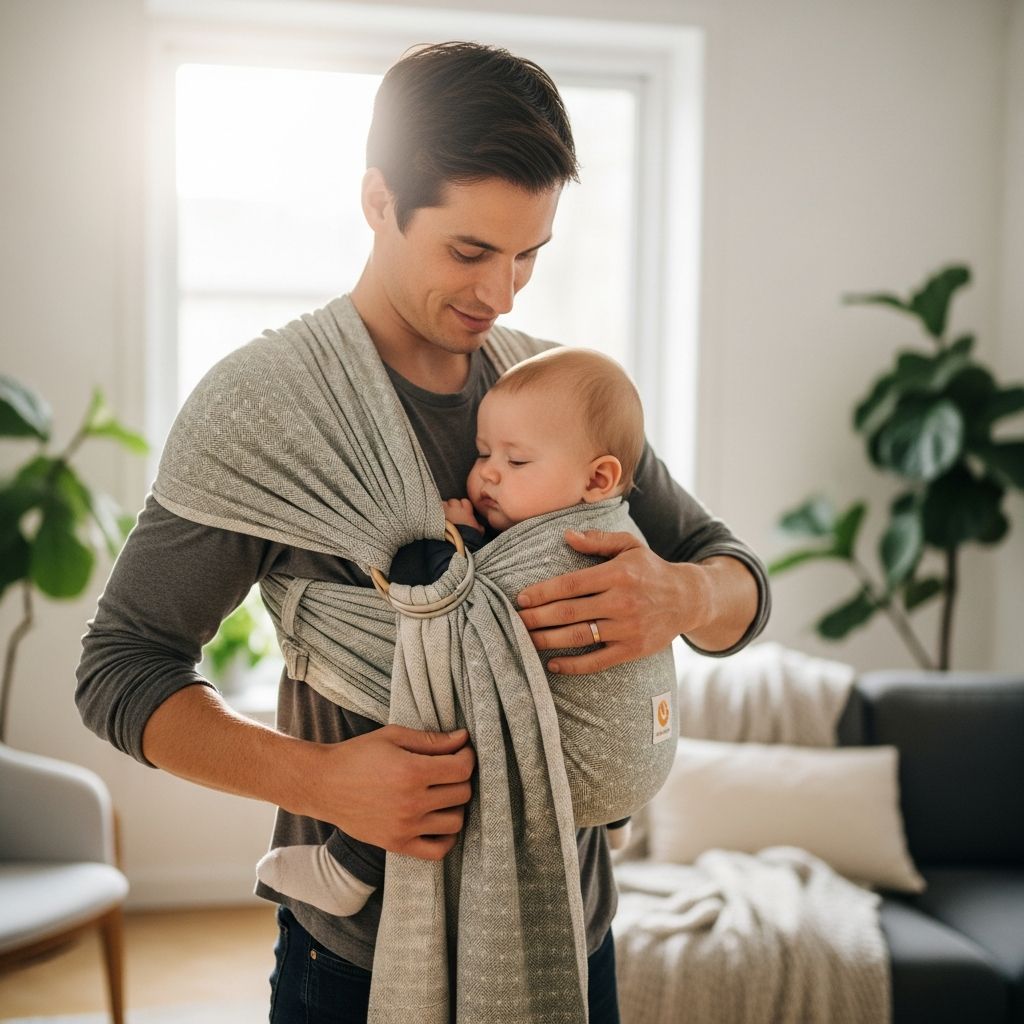
A ring sling is a long piece of woven fabric with a pair of sturdy rings sewn securely into one end. You wear it over one shoulder and across your torso to create a pouch or seat for your baby. The fabric feeds through the rings to tighten or loosen the sling, allowing a custom fit for both baby and caregiver.
Unlike buckle carriers, a ring sling has no clips or structured waistband. Instead, the snug fit comes entirely from how you thread the fabric through the rings and adjust it. This design makes ring slings lightweight, compact, and highly adjustable for different body types.
Why Many Parents Love Ring Slings
Parents often reach for ring slings because they balance comfort, convenience, and closeness. If you’re juggling naps, errands, and endless snack requests, a sling can quickly become one of your most-used baby items.
- Hands-free comfort: Carry your baby securely while answering messages, preparing meals, or playing with an older child.
- Close physical contact: The upright, snuggly position supports bonding and can help soothe a fussy or overstimulated baby.
- Quick on and off: Once adjusted, you can pop baby in and out in seconds, which is ideal for short trips or frequent up-and-down toddlers.
- Compact design: A ring sling folds down small enough to keep in a diaper bag, stroller basket, or glove compartment.
- Flexible fit: One sling often fits multiple caregivers with minimal adjustment.
Key Benefits for Baby and Caregiver
Beyond convenience, ring slings offer physical and emotional benefits when used correctly. They support healthy positioning for baby and more ease for your body.
| For Baby | For Caregiver |
|---|---|
| Upright position that supports the natural curve of the spine and encourages a deep, supportive “M” shape at the hips. | More even distribution of baby’s weight across your torso compared to carrying in arms alone. |
| Close contact with a familiar heartbeat, voice, and scent, which can help calm crying and support secure attachment. | Hands free to manage daily tasks, care for other children, or navigate busy spaces more safely. |
| Ability to tuck into your chest when stimulation is too much in crowded or noisy environments. | Less strain on wrists and arms from prolonged in-arms holding, especially with heavier babies or toddlers. |
| Positioning that can be helpful for babies who prefer being held upright, such as those with mild reflux or gassiness. | Discreet support for on-the-go feeding when combined with good positioning and awareness of baby’s airway. |
Understanding Common Ring Sling Fabrics
The fabric you choose affects how your sling feels, how supportive it is, and how easy it is to adjust. There’s no single “best” fabric; the right one depends on climate, your baby’s age, and personal preference.
- Cotton: A popular all-round choice that’s breathable, durable, and usually easy to wash. It tends to be forgiving for new users.
- Linen: Strong, cool, and ideal for warmer weather. Linen can feel stiff at first but usually softens with washing and use.
- Blends (linen/cotton, bamboo/cotton, etc.): Designed to balance softness, support, and breathability. These can be a good option if you want something cushy but still sturdy.
- Specialty or textured weaves: Some slings feature jacquard or other weaves that add grip and support. They may feel more secure for heavier babies but can involve a slightly steeper learning curve.
Rings, Length, and Fit: What to Look For
When shopping for a ring sling, it helps to understand a few technical details. Quality and fit matter for both safety and comfort.
- Ring quality: Choose slings with rings specifically designed and tested for babywearing, typically made from aluminum or stainless steel. They should be seamless, smooth, and free from sharp edges or visible flaws.
- Sling length: Most brands offer a “standard” length that fits a wide range of bodies, plus shorter or longer sizes. Longer slings provide more tail length for chest coverage or extra support, while shorter ones reduce bulk.
- Shoulder style: Some slings are gathered at the shoulder; others are pleated. Both can be comfortable when adjusted well, but you may find one style sits more naturally on your frame.
- Tail design: A wider tail can double as a cover for feeding or sun shade (with caution and airflow), while a narrower tail may feel less bulky.
Safety First: Essential Ring Sling Guidelines
Used correctly, ring slings are a safe and ergonomic way to carry your baby. The key is protecting your baby’s airway, supporting the body well, and monitoring your surroundings.
- Keep the airway clear: Baby’s chin should never be forced onto the chest. Aim for at least a two-finger gap between chin and chest, with the nose and mouth uncovered and visible.
- Use upright positions: An upright, tummy-to-chest carry is generally safer than a deep horizontal cradle position, especially for newborns.
- Check tightness: The sling should be snug enough that baby doesn’t slump or move away from your body when you lean forward slightly.
- Support the back: Smooth and spread the fabric across baby’s back from knee to knee, avoiding gaps or loose areas.
- Respect weight limits: Always follow the manufacturer’s recommended minimum and maximum weight range.
- Stay aware: Be cautious around hot surfaces, open flames, and uneven terrain, and avoid activities that could increase fall risk, such as running or cycling.
Step-by-Step: How to Put On a Ring Sling
Once you’ve practiced a few times, getting your baby into the sling can take less than a minute. The basic process is the same whether your baby is a few weeks old or well into toddlerhood, with small adjustments for size and preference.
- Thread the sling: Feed the loose end of the fabric through both rings, then back over one ring and under the other, forming a secure “buckle” you can tighten and loosen.
- Position the rings: Place the rings high on your chest at about collarbone height on the side you prefer, with the fabric spread comfortably across your back and shoulder.
- Create a pouch: Pull enough fabric through the rings to make a small hammock across the front of your body where your baby will sit.
- Place your baby: Holding your baby against your chest, gently lower them into the pouch, guiding their legs into a deep, supported “M” shape with knees higher than bottom.
- Tighten in sections: Working from the top rail (edge of the fabric near baby’s neck) to the bottom rail (behind the knees), pull the fabric through the rings in small sections until the sling feels snug and supportive.
- Final checks: Make sure baby is high enough on your chest to kiss the top of the head easily, with visible face and supported back.
Common Carrying Positions with a Ring Sling
Most families find that a few basic positions cover nearly every situation. Start with the one that feels simplest and safest, then experiment gradually as your confidence grows.
- Upright front carry: Suitable from the newborn stage, this places baby high on your chest, facing inward. It’s often the go-to position for naps, soothing, and bonding during the early months.
- Hip carry: Best for babies with good head and trunk control, the hip carry gives them a wider view of the world while keeping them close enough to rest against you. It’s particularly handy for curious toddlers who want to look around.
- Semi-reclined feeding position: With careful attention to baby’s airway, you can gently tilt baby’s torso for chest or bottle feeding, then return to a more upright position when feeding is done.
Choosing the Right Ring Sling for Your Family
The best sling for your household depends on how, where, and how often you plan to use it. Consider your climate, your baby’s age, and who will be wearing the sling most frequently.
- For newborns: Look for a soft but supportive fabric that’s not overly thick. A medium-weight cotton or blend is often forgiving and beginner-friendly.
- For warm climates: Linen or lighter, breathable weaves can make babywearing more comfortable in the heat.
- For toddlers: A slightly denser or more supportive fabric can help distribute weight more evenly as your child grows heavier.
- For multiple caregivers: A size that leaves a reasonable tail on the largest wearer will usually still work for smaller caregivers, allowing everyone to share one sling.
Everyday Life with a Ring Sling
Once you’re comfortable with your ring sling, it becomes more than just gear—it’s a daily tool that adapts to your routine. Many parents use it for short errands, school drop-offs, or simply moving around the house with a baby who does not want to be put down.
- Use it during nap transitions when baby falls asleep in your arms but you still need to move around.
- Keep it in the car for “just in case” situations when the stroller feels like too much fuss.
- Offer a hip carry to a tired toddler who wants to be held but you still need to stay mobile.
- Bring it while traveling for an easy way to navigate airports, public transport, and crowded streets.
Troubleshooting Common Ring Sling Issues
Most frustrations with ring slings come down to a few fixable problems: too much slack, poor ring placement, or uneven tightening. Small adjustments often make a big difference in comfort.
- Sling feels uncomfortable on the shoulder: Try spreading the fabric wider across your back and shoulder, or experiment with wearing the rings slightly higher or lower.
- Baby seems to slump: Re-tighten the sling in smaller sections, focusing on the fabric behind the back and under the bottom. Make sure baby’s bottom is deeply seated and knees are higher than the hips.
- Rings slide down too far: Start with the rings higher on your shoulder before putting baby in. As you tighten, they will usually settle closer to the right spot.
- Fabric is hard to pull through: Check that the fabric isn’t twisted between the rings. Smoother, broken-in fabric usually glides more easily than brand-new, stiff material.
- Baby protests: Introduce the sling gradually when baby is calm and fed. Keep early sessions short and soothing so the sling becomes associated with comfort.
Care, Cleaning, and Longevity
With proper care, a quality ring sling can last through multiple children. It’s worth reading the manufacturer’s care instructions closely, as they’re tailored to the specific weave and fiber content.
- Use a gentle detergent without optical brighteners or fabric softeners, which can coat fibers or weaken them over time.
- Follow recommended washing temperatures; many slings do best on a cool or warm cycle.
- Inspect the rings and fabric regularly for signs of wear, such as pulls, thinning areas, or stitching coming loose.
- Store in a dry place away from direct sunlight to protect the fibers and colors.
FAQs About Ring Slings
Are ring slings safe for newborns?
Yes, ring slings can be safe for newborns when used correctly. The key is to maintain a clear airway, keep baby upright and close enough to kiss, and ensure the sling is snug enough that baby cannot slump or curl into a chin-to-chest position.
Which shoulder should I wear the sling on?
You can wear the sling on either shoulder. Many caregivers prefer the opposite shoulder from their dominant hand so they have more freedom of movement, but you can experiment to see what feels best for your body.
How long can I keep my baby in a ring sling?
There is no fixed time limit as long as baby is well supported, comfortable, and monitored. Check baby’s temperature, positioning, and mood regularly, and give both of you breaks as needed.
Can plus-size or very petite caregivers use a ring sling?
Yes, ring slings are highly adjustable and come in different lengths. Many brands offer size guides to help you choose a length that provides sufficient tail without excess bulk.
Do I need more than one sling?
You can absolutely manage with a single sling, especially if you choose a versatile fabric and length. Some families enjoy owning a second sling in a different fabric weight or style for seasonal changes or for another caregiver.
Final Thoughts
A ring sling is a simple piece of fabric that can transform your day-to-day life with a baby. With a bit of practice and attention to safety, it offers a comfortable, adaptable way to carry your child while keeping them close enough to feel your heartbeat and hear your voice as you move through the world together.