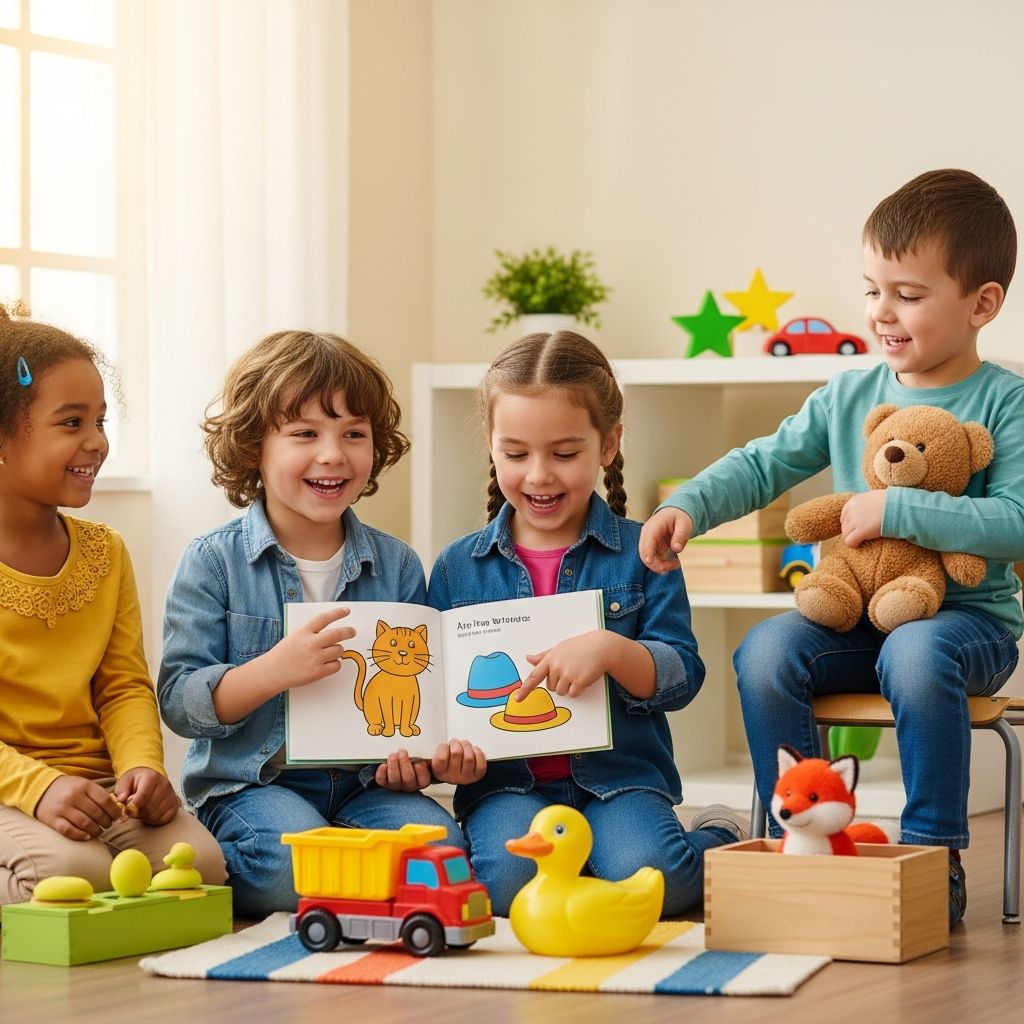
Rhyming words are more than just silly sounds; they are one of the easiest and most powerful ways to help children fall in love with language. When kids play with words that sound alike, they build the listening and thinking skills that later turn into confident reading and writing.
What Are Rhyming Words?
Rhyming words are words that share the same ending sound, even if they do not share the same spelling. For example, “cat,” “hat,” and “bat” rhyme because they all end with the sound “-at.” Children often learn to hear rhymes long before they can read or spell them.
In early learning, adults focus first on whether words sound the same at the end, not on how they are written. This keeps rhyming playful and accessible, even for toddlers and preschoolers who are not yet ready for letters and spelling.
Why Rhymes Matter in Early Learning
Rhymes do much more than entertain. When kids clap, chant, and sing rhyming phrases, they are building strong foundations for literacy. Rhyming trains the ear to notice small changes in sounds and patterns, which later helps children decode and spell new words.
Research in early literacy shows that children who are comfortable with rhymes often find it easier to break words into smaller sound parts, recognize patterns in print, and predict what comes next in a sentence. These are all key ingredients of successful reading.
Key Benefits of Rhyming for Kids
- Phonemic awareness: Rhyming highlights the individual sounds in words and teaches kids to listen closely.
- Memory and recall: Repeated rhymes stick in the mind, strengthening memory pathways.
- Vocabulary growth: Rhymes introduce lots of new words in short, catchy phrases.
- Listening skills: Children must pay attention to hear which words rhyme and which do not.
- Confidence with language: Playing with rhymes shows kids that words are flexible and fun.
How Rhyming Supports Reading and Writing
Before children can read printed words, they must understand that each spoken word is made up of smaller sound units. Rhyming draws attention to these units by grouping words with similar endings. This is the starting point of phonemic awareness, an essential pre-reading skill.
Once kids can recognize and produce rhymes, they are better able to tackle word families in print (such as -at, -an, -op). This helps them decode words quickly, see patterns in spelling, and transfer what they know from one word to many others.
From Sound Play to Word Families
Word families are groups of words that share a common spelling pattern at the end, such as “-at” or “-ing.” While early rhyme games focus only on sound, the next step is to connect those familiar sounds to letters and patterns on the page.
Introducing word families gently—through games, charts, and playful writing—helps children notice that words with the same ending sound often look similar too. This connection between sound and print is a big step toward fluent reading.
Simple Rhyming Word Lists for Kids
Short vowel sounds and simple consonants make the best starting point for young learners. Use the lists below as a quick reference when you are making up songs, reading, or playing games with your child.
Easy Rhyme Sets
| Rhyme Family | Sample Words | Use In a Simple Line |
|---|---|---|
| -at | cat, hat, bat, mat, rat | The cat sat on the mat with a hat. |
| -og | dog, log, fog, frog | The dog and frog sat on a log in the fog. |
| -in | pin, tin, win, fin | Will the fish with a fin win the tin pin? |
| -ake | lake, cake, bake, rake | We bake a cake by the lake with a rake. |
| -ell | bell, shell, tell, sell | Ring the bell and tell me about the shell. |
Use these sets to spark your own playful lines. The sillier the sentence, the more likely your child is to remember it and repeat it.
Age-by-Age Guide to Rhyming Skills
Children develop rhyming skills gradually. Many toddlers enjoy listening to rhyme long before they can produce it themselves. With patient practice and playful exposure, most children start to recognize and create rhymes over the preschool and early elementary years.
Typical Rhyming Milestones (Approximate)
| Age Range | Common Rhyming Abilities |
|---|---|
| 18 months – 2 years | Enjoys songs and rhymes; may repeat key words or sounds. |
| 2 – 3 years | Begins to notice when words sound funny or similar; may fill in the last word of a familiar rhyme. |
| 3 – 4 years | Can often tell whether two words rhyme; starts to name a word that rhymes when given examples. |
| 4 – 6 years | Can generate several rhyming words, enjoys making nonsense rhymes, and uses rhymes in simple poems or songs. |
These ranges are general, not strict rules. Some children move through them more quickly, while others need extra time and repetition. The most helpful approach is steady exposure paired with low-pressure, enjoyable practice.
Fun Rhyming Games You Can Play Anywhere
Rhyming practice works best when it feels like play. You do not need special materials or long lessons. A few minutes of focused word play sprinkled throughout the day adds up to powerful learning over time.
1. Rhyme Detective
Turn your child into a rhyme detective searching for matching sounds.
- Say a simple word, such as “cat,” and ask your child to find or name something that rhymes (real or pretend).
- If they struggle, offer two options and let them pick the one that sounds the same, for example, “Does cat rhyme with dog or hat?”
- Swap roles so your child says a word and you act silly while guessing wrong before landing on the correct rhyme.
2. Silly Rhyme Train
Build a train of words that rhyme, car by car.
- Start with an easy word family, like “-at.”
- Say “Here comes the rhyme train: cat…” and invite your child to add a new car, such as “bat” or “hat.”
- Keep going until you run out of real words, then move into nonsense ones like “zat” to keep the laughter going.
3. Rhyme and Move
Combine motion and rhyme to help active kids stay engaged.
- Choose an action (jumping, clapping, tiptoeing) and a rhyme family.
- Each time you say a word that rhymes, your child does the chosen action; when you say a word that does not rhyme, they must freeze.
- Mix in real and nonsense words to challenge their listening skills.
4. Rhyme Sorting Game
Use pictures, toys, or drawn symbols to build sorting skills and rhyme awareness at the same time.
- Gather small objects or pictures that represent a few different rhyme families, such as a cat, hat, dog, log, car, star.
- Place bowls or paper circles on the floor labeled with a key word (cat, dog, car).
- Invite your child to sort each item into the correct “rhyme home” based on sound, not spelling.
Using Rhymes in Everyday Routines
Rhymes do not have to be a separate activity. They slip easily into the natural flow of daily life. Ordinary routines like getting dressed or riding in the car can become quick, powerful language lessons.
Ideas for Daily Rhyme Moments
- Morning: Sing a short rhyme as you get dressed, changing one key word each day.
- Mealtimes: Play a “What rhymes with…” game using items on the table, like “bread,” “cup,” or “chair.”
- Bath time: Invent rhymes about water, soap, and toys while your child plays.
- Car rides: Take turns saying a word and naming as many rhymes as possible until the traffic light changes.
- Bedtime: End the day with a short rhyming story or a few lines of a simple poem you make up together.
Supporting Struggling or Reluctant Rhymers
Some children do not immediately catch onto rhyming, and that is okay. Pressure or constant correction can make them anxious and less willing to try. A gentle, game-based approach tends to be far more effective than drilling.
If a child consistently finds rhyming very difficult past the early years, consider talking with a teacher, reading specialist, or speech-language professional. They can help determine whether extra support is needed in areas like phonological processing or speech sound production.
Tips for Extra Support
- Start with listening tasks (“Do these two words rhyme?”) before asking for rhyme production.
- Use clear, simple pairs such as “cat/hat” rather than words that end with similar spellings but different sounds.
- Offer visual support with pictures or gestures to keep attention focused.
- Celebrate effort, not just correct answers, to keep motivation and confidence high.
Frequently Asked Questions About Rhyming Words for Kids
1. At what age should kids start learning to rhyme?
Most children enjoy listening to rhymes as toddlers, but many do not reliably produce their own rhymes until ages three to five. Exposure can start early through songs and stories, but there is no need to rush; the goal is enjoyment and familiarity with the sound patterns of language.
2. How do rhymes help with reading?
Rhymes draw attention to the way words are built from smaller sounds. This awareness later helps children decode written words, recognize consistent spelling patterns, and figure out new words by relating them to ones they already know. Strong rhyming skills often go hand in hand with strong early reading skills.
3. My child makes up nonsense words. Does that still count as rhyming?
Yes. When children invent nonsense words that share the same ending sound, they are practicing exactly the kind of sound play that builds phonemic awareness. As long as the made-up word matches the rhyme pattern, celebrate it as a success.
4. Do I have to use books, or can I just make up my own rhymes?
Both options are valuable. High-quality, rhyming picture books expose children to rich vocabulary and story structure, while made-up rhymes show that language is flexible and personal. A combination of reading familiar rhymes and inventing your own gives kids the best of both worlds.
5. What if my child cannot tell when two words do not rhyme?
Start with clear examples and a small set of words. Use games where children listen and move, such as jumping for rhymes and freezing for non-rhymes. Over time, as their listening skills sharpen, most children become more accurate in hearing which words go together.
Bringing It All Together
Rhyming words give children a playful doorway into the world of reading and writing. Through songs, chants, games, and everyday conversation, families and teachers can help kids tune their ears to patterns in language while keeping the mood light and fun.
With a few simple activities and a sense of humor, rhyming can become a natural part of your child’s day. Those giggles and silly sentences are more than entertainment—they are the early echoes of a confident, capable reader in the making.