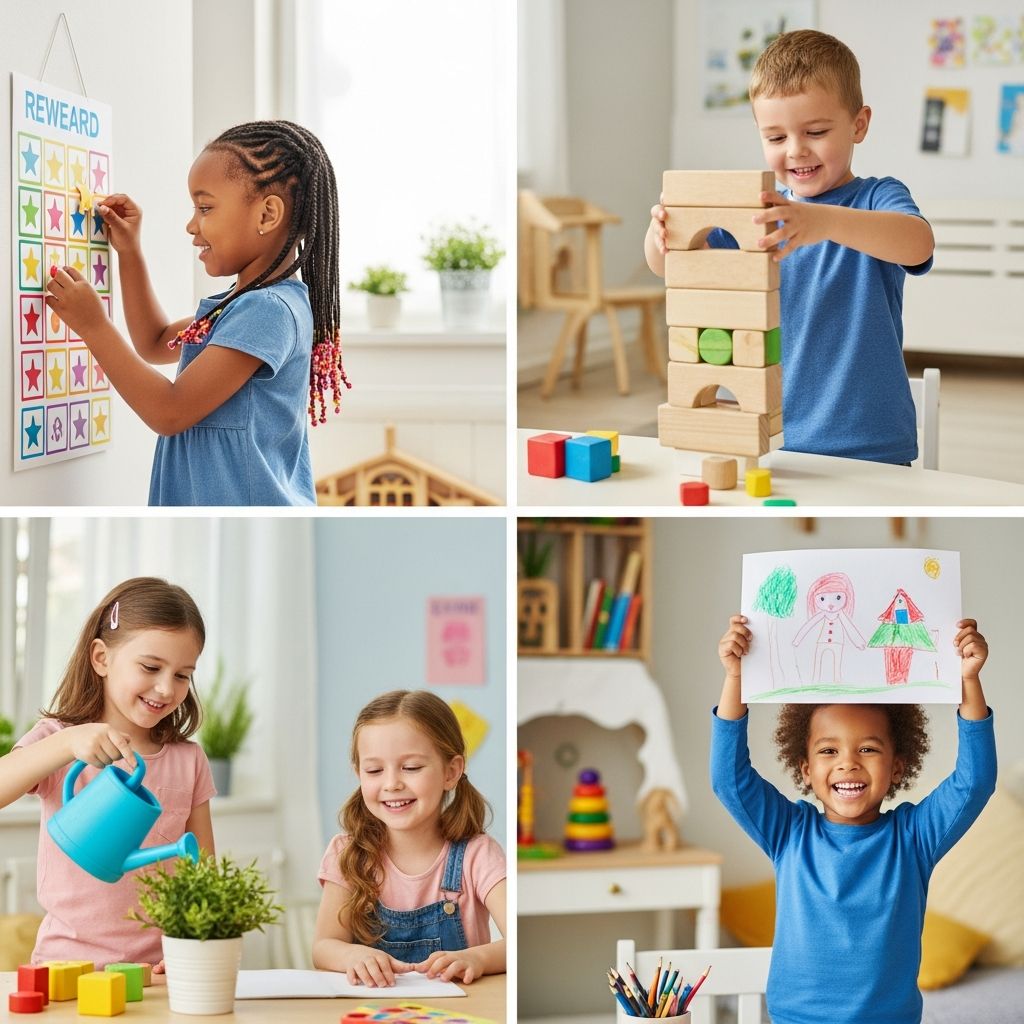
Reward systems offer parents a structured approach to guide young children toward desirable behaviors, particularly effective for ages 3-8 when kids thrive on clear feedback and motivation.
Understanding the Power of Rewards in Child Development
Rewards serve as immediate positive reinforcement, helping children link actions with positive outcomes, which strengthens neural pathways associated with good habits. Unlike punishment, which can foster fear, rewards build enthusiasm and cooperation. Research from child development experts emphasizes that consistent, age-appropriate rewards enhance self-regulation skills essential for school readiness and social interactions.
For toddlers and preschoolers, whose brains are rapidly developing executive functions like impulse control, visual tools like charts make abstract concepts tangible. This method not only curbs challenging actions—such as tantrums or defiance—but also promotes skills like sharing or completing chores independently.
Selecting Target Behaviors for Maximum Impact
Start by pinpointing one specific, observable behavior to avoid overwhelming your child. Vague goals like ‘be good’ fail; instead, opt for precise directives such as ‘put toys in the bin after playtime’ or ‘use gentle hands with siblings.’ Positive phrasing is key—’walk beside the cart in the store’ outperforms ‘don’t run away.’
Consider your child’s developmental stage: for 3-year-olds, focus on basic routines like brushing teeth; for 5-8-year-olds, introduce multi-step tasks like homework setup. Observe patterns—rewards shine for behaviors influenced by attention-seeking or skill-building needs, not those rooted in hunger or fatigue.
- Assess daily routines for high-friction areas, e.g., bedtime or mealtimes.
- Ensure behaviors are achievable within the child’s ability to build success momentum.
- Involve siblings by assigning unique, personalized targets to prevent competition.
Designing Engaging Visual Tracking Tools
Visual trackers transform abstract progress into exciting journeys. Simple charts with stickers, tokens, or apps captivate young minds, providing instant gratification. Customize based on interests: puzzle-piece charts for problem-solvers or themed posters for imaginative kids.
Digital apps offer portability and reminders, ideal for busy families, while handmade versions foster creativity—let older children decorate their own for ownership. Place charts in visible spots like the fridge to maintain focus without nagging.
| Chart Type | Best For | Pros | Cons |
|---|---|---|---|
| Sticker Wall Chart | Ages 3-5 | Tactile fun, easy to see | Space required |
| Puzzle Builder | Ages 4-6 | Game-like assembly | Pieces can scatter |
| Token Jar (e.g., Cotton Balls) | Ages 3-7 | Haptic satisfaction | Less precise tracking |
| Mobile App | Ages 5-8 | Portable, reminders | Screen time concerns |
Picking Age-Appropriate and Meaningful Incentives
Rewards must excite without extravagance to sustain long-term engagement. Short-term options like extra storytime, park visits, or choosing dinner work best initially, deliverable daily or weekly. Avoid edibles or toys that escalate expectations—opt for experiences building family bonds.
Tailor to individuality: active kids love outdoor time, artists crave supplies. Offer choices, e.g., ‘5 tokens for game night or a new crayon pack?’ to empower decision-making. Gradually scale: 3 successes for small wins, 10 for bigger outings.
- Praise amplifies rewards—pair stickers with ‘Great job sharing; that made your sister smile!’
- Surprise bonuses keep novelty alive, like impromptu ice cream for exceptional days.
- Non-material rewards boost intrinsic value, teaching joy in achievement itself.
Implementing with Consistency and Immediacy
Timing is critical: deliver feedback and tokens within seconds of the behavior to forge strong associations. Consistency across caregivers prevents confusion—align on rules via family meetings. Daily check-ins reinforce without pressure.
Monitor for plateaus; if motivation dips, refresh charts or behaviors. For multiple kids, personalize to sidestep rivalry—unique charts and rewards ensure equity.
Navigating Common Challenges and Pitfalls
Rewards risk short-term fixes if over-relied upon, potentially undermining internal drive as kids age. Critics note systems may escalate demands, shifting focus from behavior to prizes. Counter this by fading rewards: once habits solidify (after 4-6 weeks), reduce frequency, replacing with verbal praise.
Address resistance: if a child fixates on rewards, pivot to effort-focused language like ‘You worked hard!’ Watch for external factors—adjust if behaviors stem from transitions like new siblings.
- Avoid bribes: Promise rewards pre-behavior; celebrate post-success.
- No deductions: Focus on gains to prevent discouragement.
- Flexibility: Tweak goals collaboratively for buy-in.
Long-Term Transition to Intrinsic Motivation
The ultimate aim: self-motivated kids. As proficiency grows, space rewards—weekly then monthly—while highlighting personal pride. Teach goal-setting: ‘What reward feels earned after a great week?’ This cultivates lifelong skills like perseverance.
Combine with modeling: parents demonstrating self-reward (e.g., ‘I finished my work; now coffee time!’) normalizes internal drivers. Track overall growth via journals to celebrate milestones beyond charts.
Real-World Applications: Home, School, and Beyond
Integrate systems seamlessly: home charts sync with school token economies for reinforcement. For preschoolers, align with classroom goals like ‘listening during circle time.’ Community settings like sports teams benefit from team jars filling for group rewards.
Parental testimonials highlight transformations—from bedtime battles to smooth routines. Adapt for neurodiverse kids by shortening intervals or sensory-friendly rewards.
Frequently Asked Questions (FAQs)
What age is best for starting a reward system?
Ages 3-8 respond best, as they grasp cause-effect and enjoy visuals. Younger toddlers need simpler praise; older kids transition to goals.
Do rewards spoil children or create entitlement?
Not if faded properly; they teach value exchange initially, evolving to self-reward. Focus on effort over outcomes prevents this.
What if my child loses interest in the chart?
Refresh with new themes, rewards, or behaviors. Involve them in redesign for renewed excitement.
Can I use rewards for academic performance?
Yes, for preschool tasks like ‘pack backpack.’ Pair with praise to build study habits without grade fixation.
How long before seeing results?
Typically 1-2 weeks with consistency; full habituation in 4-6 weeks. Patience and adjustments key.
Empowering Families Through Smart Reinforcement
Reward systems, when thoughtfully applied, equip children with tools for success, fostering confidence and autonomy. By prioritizing positives, parents create harmonious homes ripe for growth.
References
- Reward charts: positive behaviour strategy — Raising Children Network. 2023-10-15. https://raisingchildren.net.au/preschoolers/behaviour/encouraging-good-behaviour/reward-charts
- Creating an Effective Reward System for Children: Strategies and Tips — Kangaroo Kids International. 2024-05-20. https://www.kangarookids.in/blog/creating-an-effective-reward-system-for-children-strategies-and-tips/
- Reward System in Preschool — Positive Discipline. 2022-08-10. https://www.positivediscipline.com/articles/reward-system-preschool/
- 10 Do’s and Don’ts for Using Rewards to Improve Your Child’s Challenging Behavior — The Childhood Collective. 2021-10-13. https://thechildhoodcollective.com/2021/10/13/10-dos-and-donts-for-using-rewards-to-improve-your-childs-challenging-behavior/