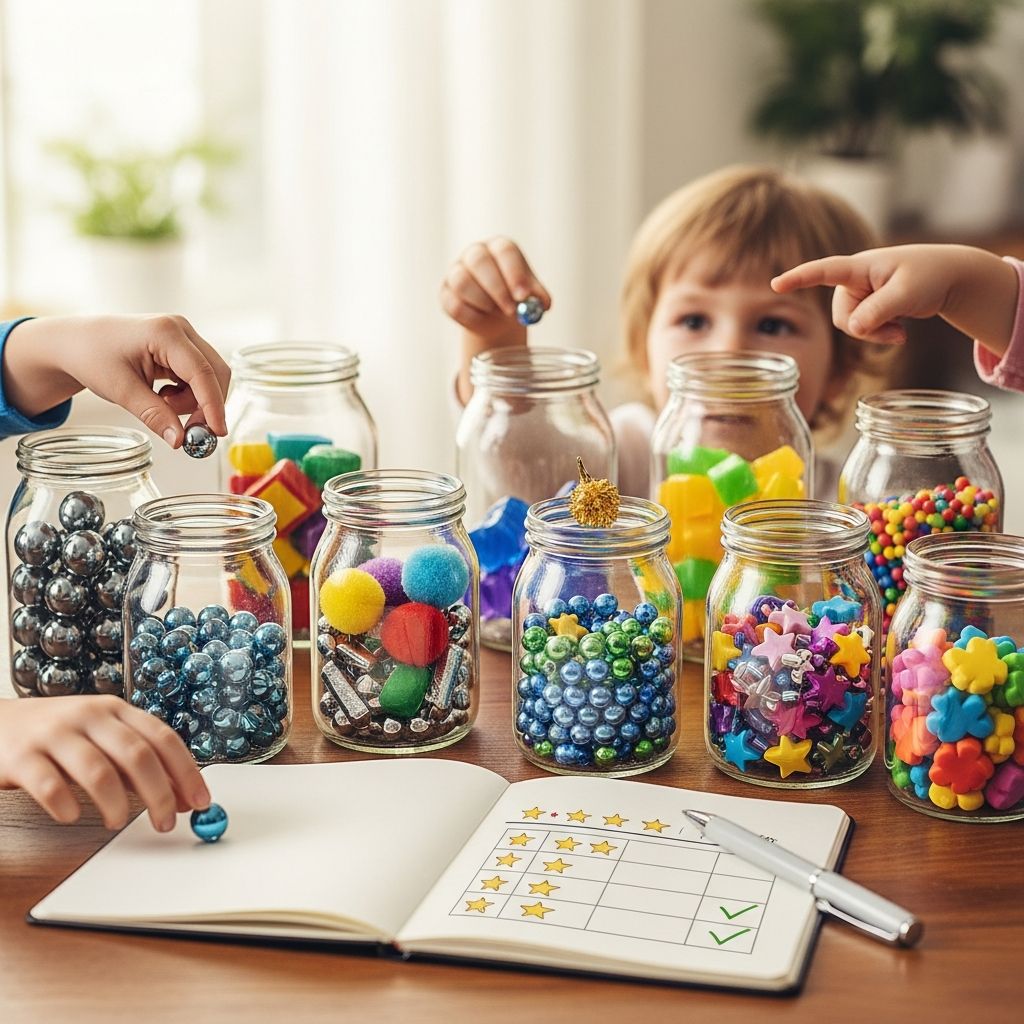
Reward jars offer parents a straightforward, engaging method to cultivate desirable behaviors in children by leveraging positive reinforcement. This visual system uses a container filled with tokens to track achievements, culminating in family rewards when full.
Understanding the Reward Jar Concept
A reward jar is essentially a clear container, such as a glass jar or plastic bin, paired with small items like pom poms, marbles, stickers, or gems that represent positive actions. Children add tokens whenever they exhibit targeted behaviors, creating a tangible progress tracker that motivates continued effort. Unlike abstract praise alone, this method provides immediate, visible feedback, making it particularly effective for young minds still mastering self-regulation.
The system’s roots lie in behavioral psychology principles, where positive reinforcement strengthens desired responses. Parents define specific, achievable goals upfront, ensuring clarity and fairness. This approach shifts focus from punishment to celebration, aligning with research emphasizing rewards over penalties for long-term habit formation.
Key Benefits for Child Development
Reward jars deliver multifaceted advantages, supporting emotional, cognitive, and social growth.
- Enhances Motivation Through Visibility: Watching the jar fill provides instant gratification and a sense of progress, encouraging persistence.
- Builds Self-Esteem: Achievements lead to pride and confidence as children see their efforts pay off.
- Teaches Goal-Oriented Thinking: Kids learn to plan, strategize, and delay gratification, key executive skills.
- Promotes Family Harmony: Shared successes foster bonding and positive interactions.
- Instills Accountability: Linking actions to outcomes helps children own their behavior.
These benefits extend beyond immediate compliance, equipping children with lifelong tools for success.
Step-by-Step Guide to Setting Up Your Reward Jar
Implementation is simple and customizable. Follow these steps for optimal results.
- Choose Your Container and Tokens: Select a transparent jar for visibility. Use affordable, appealing items like colorful pom poms, beads, or coins.
- Collaborate on Rules: Sit with your child to list 5-7 specific behaviors, such as ‘helping with dishes’ or ‘sharing toys kindly.’ Keep them positive and age-appropriate.
- Pre-Fill for Success: Secretly fill the jar partially with tokens to ensure quick initial wins, building momentum without debate on ‘fullness’.
- Decide on Rewards: Plan low-cost group activities like picnic outings, movie nights, or ice cream treats. Involve kids in selection for buy-in.
- Launch and Track: Display prominently. Praise and add tokens immediately upon good behavior.
- Celebrate Filling: Host the reward promptly to reinforce the cycle.
Adjust frequency based on age: younger kids (3-5) may fill jars weekly, while older ones (6+) aim monthly.
Age-Appropriate Customization Strategies
Tailor the system to developmental stages for maximum impact.
| Age Group | Ideal Behaviors | Token Type | Reward Examples |
|---|---|---|---|
| 2-4 Years | Potty success, gentle play, bedtime routine | Pom poms, stickers | Extra storytime, park visit |
| 5-7 Years | Homework completion, chore help, kindness acts | Marbles, gems | Family game night, small toy |
| 8+ Years | Independent tasks, sibling support, goal achievement | Coins, notes | Outing, privilege extension |
For toddlers, emphasize fun over perfection; tweens benefit from milestone lines on the jar for tiered rewards.
Real-Life Examples and Success Stories
Families worldwide report transformative results. One parent noted their 3-year-old’s shift from sibling conflicts to proactive kindness, filling the jar with pom poms for cupcake rewards. Another used gem jars with lines for escalating prizes like iPad time or prize bag picks, sustaining motivation across siblings. A childcare center highlighted improved routines and parent-child bonds via consistent jar use. These anecdotes underscore the system’s versatility across households.
Common Challenges and Proven Solutions
While effective, hurdles arise. Address them proactively:
- Issue: Jar Fills Too Slowly. Solution: Add bonus tokens for exceptional efforts or shorten goals.
- Issue: Sibling Rivalry Over Tokens. Solution: Individual jars or group fills for collective rewards.
- Issue: Forgetting to Add Tokens. Solution: Set phone reminders or child-led additions with parental approval.
- Issue: Post-Reward Drop-Off. Solution: Immediately start a new jar with a fresh reward.
- Issue: Over-Reliance on Externals. Solution: Gradually fade tokens, pairing with verbal praise to build intrinsic motivation.
Research supports non-punitive approaches: never remove tokens, as this undermines positivity.
Enhancing with Variations and Advanced Tips
Elevate the basic model:
- Kindness Focus: Target empathy-building acts like compliments or help offers.
- Chore Integration: Link to household tasks for responsibility training.
- Digital Twist: Apps mimicking jars for tech-savvy families, though physical remains superior for tangibility.
- Group Jars: Family-wide for unity, earning shared adventures.
Combine with routines: review progress nightly, discussing wins to deepen learning.
Psychological Foundations and Long-Term Impact
Backed by behavioral science, reward jars exemplify operant conditioning, where reinforcements shape habits. Studies show such systems outperform charts by providing visual, kinesthetic engagement. Long-term, they cultivate resilience, goal-setting, and a growth mindset, as overcoming minor setbacks en route to filling builds perseverance. Unlike fleeting treats, the process ingrains values, reducing reliance on incentives over time.
Frequently Asked Questions (FAQs)
What age is best for reward jars?
Ideal from 2 years up, scaling complexity with maturity. Toddlers thrive on simple visuals; school-age kids handle nuanced goals.
Do rewards spoil children?
No, when used for specific behaviors and faded gradually. Focus on process praise prevents entitlement.
How often should we change rewards?
Rotate monthly to maintain excitement, involving kids in brainstorming low-cost options.
Can this work for multiple children?
Yes, via individual or shared jars. Personalize to avoid competition.
What if my child loses interest?
Refresh with new tokens, goals, or themes. Re-engage by celebrating small milestones.
References
- The Power of Reward Jars for Kids — Rising Stride Childcare Center. Accessed 2026. https://risingstride.net/the-power-of-reward-jars-for-kids/
- The Warm Fuzzy Jar: a positive parenting strategy — The Many Little Joys. Accessed 2026. https://themanylittlejoys.com/the-warm-fuzzy-jar-a-positive-parenting-strategy-to-encourage-good-behavior/
- An Effective Reward System For Your Child — Doors of Hope KC. Accessed 2026. https://www.doorsofhopekc.com/an-effective-reward-system-for-your-child/
- Kindness Jar: Successful Parenting with Positive Reinforcement — Playground Park Bench. Accessed 2026. https://playgroundparkbench.com/kindness-jar-the-power-of-positive-reinforcement/
- Using A Gem Jar to Reward Good Behavior — Beyond Committed. Accessed 2026. https://beyondcommitted.com/gem-jars-reward-good-behavior/
- Reward charts: positive behaviour strategy — Raising Children Network (Australian Government-funded). 2023-02-15. https://raisingchildren.net.au/preschoolers/behaviour/encouraging-good-behaviour/reward-charts
- The Marble Jar Reward System — Model Teaching. Accessed 2026. https://www.modelteaching.com/education-articles/social-emotional-learning/the-marble-jar-reward-system-as-an-extrinsic-positive-behavior-reinforcer