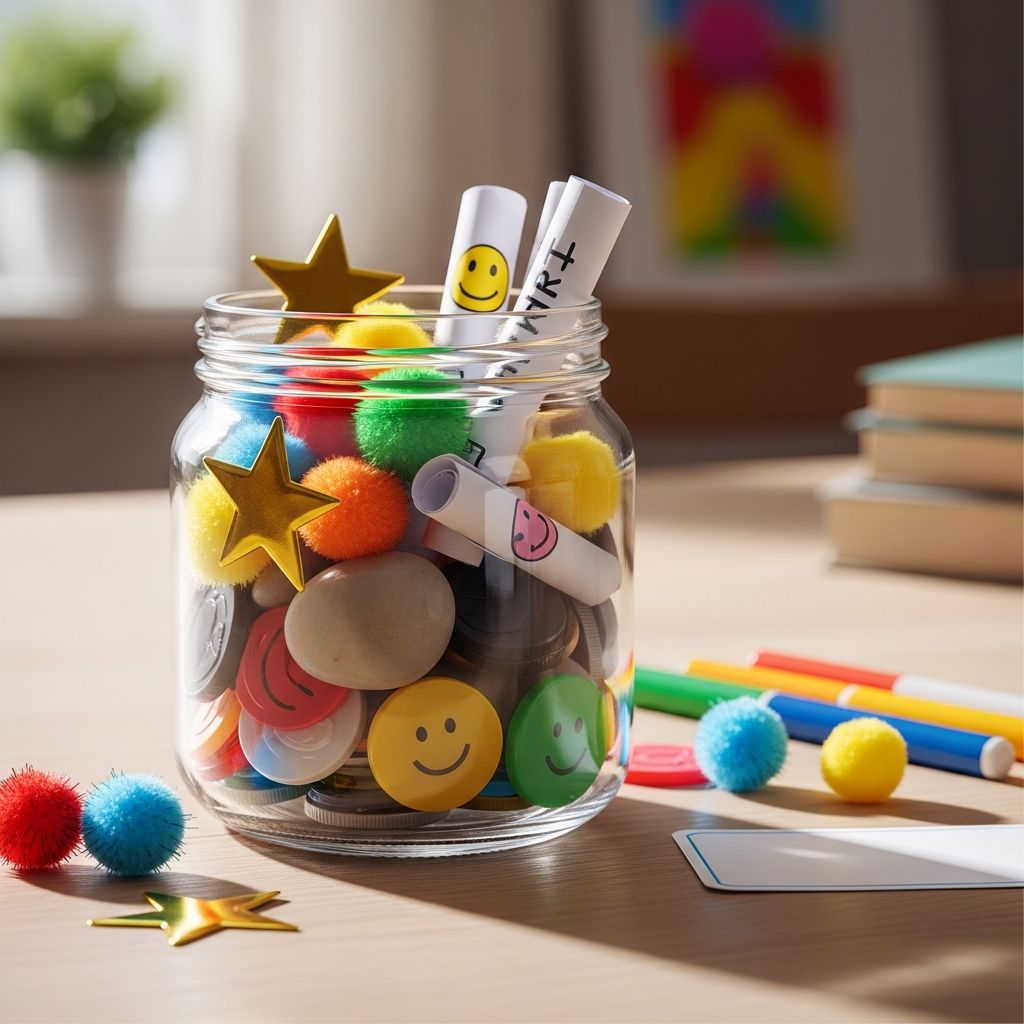
A simple glass jar and a handful of tokens can transform daily power struggles into opportunities for connection and growth. A reward jar is an easy, visual way to use positive reinforcement so kids are more likely to repeat helpful, kind, and cooperative behaviors.
This guide explains how a reward jar works, why it’s backed by behavioral science, how to set one up step by step, and how to avoid common pitfalls so the system remains fair, motivating, and sustainable.
Why Reward Jars Work: The Science Behind the Strategy
Reward jars are grounded in the principle of positive reinforcement: when a behavior is followed by something pleasant, that behavior becomes more likely to happen again.
Research on behavior modification in children consistently shows that:
- Reinforcing desired behavior is more effective than relying primarily on punishment or criticism.
- Immediate, clear feedback helps children understand exactly what behavior is expected and valued.
- Visual tools like charts or tokens can help children track progress and stay motivated, especially for ongoing goals.
Organizations such as the Raising Children Network and pediatric health systems routinely recommend reward-based systems (like charts or tokens) to encourage positive behavior, manage routines, and build new skills.
What Is a Reward Jar?
A reward jar is a clear container that fills up with small tokens whenever a child (or the whole family) shows a specific behavior you want to encourage. When the jar reaches a chosen target level or becomes full, the child earns a pre-agreed reward, such as a family activity or a special privilege.
The jar works as both:
- A visual progress tracker — kids can literally see their positive behavior piling up.
- A motivational tool — it connects everyday choices to a concrete, future reward.
| Element | Purpose | Examples |
|---|---|---|
| Jar | Holds tokens; shows progress visually | Glass mason jar, plastic container, clear box |
| Tokens | Mark each positive behavior | Marbles, pom-poms, buttons, paper stars |
| Target Line / Full Jar | Defines when a reward is earned | Marked line on the jar or top of jar |
| Reward | Motivator for ongoing effort | Family movie night, park trip, sleepover |
Benefits of Using a Reward Jar at Home
When used thoughtfully, a reward jar does more than reduce misbehavior; it can reshape the emotional climate of a home.
- Shifts attention to the positive: Parents spend more time noticing and naming what children are doing well instead of only reacting to problems, a shift that evidence-based parenting programs strongly encourage.
- Encourages internal motivation over time: External rewards can help jump-start new habits; with consistent practice and warm parent-child interactions, children gradually begin to value the behavior itself (for example, enjoying being helpful or kind).
- Reduces power struggles: Clear rules and predictable rewards help kids know what to expect, which in turn can reduce arguments about chores, routines, and limits.
- Builds social and emotional skills: You can focus your jar on behaviors like empathy, patience, sharing, and problem-solving, which align with social-emotional learning goals promoted in schools.
- Works across ages and settings: Versions of token or reward systems are used in homes, classrooms, and therapy settings because they’re simple, adaptable, and evidence-based.
Step-by-Step: Setting Up a Reward Jar System
You can start small and refine as you go. Use these steps as a flexible blueprint.
1. Choose Your Focus Behaviors
Pick one to three specific, observable behaviors you want to see more often. Being too broad (for example, “be good”) makes it hard for kids to know what to do.
Examples of well-defined behaviors include:
- Putting toys away before dinner without being reminded
- Speaking calmly when frustrated instead of yelling
- Helping a sibling with a task when they ask
- Starting homework within 10 minutes of getting home
For preschoolers and early primary school children, behavior guidelines from child development organizations suggest focusing on simple, routine-based behaviors (like following bedtime steps or using gentle hands).
2. Decide Who the Jar Is For
You can use the reward jar in different ways:
- Individual jar: One jar per child; each child is responsible for their own tokens.
- Family jar: Everyone contributes tokens to a single jar, usually for acts of kindness or teamwork.
A family jar can reduce competition between siblings and emphasize cooperation and kindness.
3. Select Tokens and a Container
Choose items that are:
- Visible (bright colors or contrasting shapes)
- Safe for your child’s age (large enough not to be swallowed for younger children)
- Easy to count or estimate (so kids can see progress)
Popular options include pom-poms, marbles, LEGO bricks, or small wooden discs. A transparent jar or plastic container allows kids to see their tokens stacking up, which many child behavior experts recommend to maintain motivation.
4. Set Clear Rules Together
Before you begin, sit with your child and explain:
- What behaviors earn a token
- When tokens can be added
- How many tokens are needed for a reward (or where the “full” line is)
- What rewards are possible when the jar is full
Involving kids in setting rules and rewards increases their sense of ownership and self-regulation, echoing approaches used in classroom behavior programs.
5. Link Tokens to Behavior in the Moment
For maximum impact, give tokens as soon as possible after the behavior, and describe exactly what you noticed. Behavioral psychology research highlights the importance of contingency (the reward must clearly follow the behavior) and immediacy for effective reinforcement.
Use specific language, for example:
- “You put your shoes away the first time I asked. That earns a token in the jar.”
- “I saw you share your toy with your brother when he asked. That was kind. Let’s add a token.”
6. Choose Meaningful, Reasonable Rewards
Rewards do not need to be expensive or extravagant. Research on reward systems stresses that social and activity-based rewards (time with a caregiver, special activities, praise) can be as powerful or more powerful than material items, especially for sustained behavior change.
Consider rewards such as:
- Choosing the family movie and snack
- Going to the park or playground of their choice
- Staying up 15 minutes later on a weekend night
- Picking a board game or baking activity with a parent
Agree on a rough “budget” of what is realistic for your family so the system remains sustainable.
Designing a Fair and Motivating Reward Jar
A few thoughtful design choices can make the reward jar feel fair and effective for everyone involved.
Match the Challenge to Your Child’s Age
The number of tokens needed for a reward should be challenging but achievable.
| Age Range | Suggested Goal Size | Notes |
|---|---|---|
| 3–5 years | Small jar / low line (1–3 days of effort) | Young children need fast feedback and shorter waits. |
| 6–9 years | Medium jar (about 1–2 weeks) | Can handle slightly longer-term goals. |
| 10+ years | Larger jar or tiered rewards (2–4 weeks) | Combine with discussions about responsibility and self-management. |
These are general guidelines; adjust based on your child’s temperament and your family’s rhythms.
Keep Criteria Consistent
Children are more likely to trust and engage with the jar when the rules feel predictable and fair. Recommendations from child behavior specialists emphasize consistency as a key factor in behavior programs.
Try to:
- Use the same criteria each day (or announce clearly when you’re changing them).
- Avoid giving tokens just because your child is upset or begging; connect them to real behaviors.
- Ensure all caregivers understand and follow the same rules.
Balance Individual and Shared Goals
To reduce sibling rivalry, you might combine:
- An individual jar for personal responsibilities (chores, homework routines).
- A shared family jar for kindness, teamwork, and problem-solving together.
This approach helps children see themselves as both individually capable and part of a team, similar to classroom reward systems where students earn both personal and group rewards.
Common Pitfalls and How to Avoid Them
Even a well-intentioned reward jar can create frustration if used without a few safeguards.
1. Over-Reliance on Tangible Rewards
If every positive action is tied to a token or prize, children may start asking, “What do I get?” before they help. To prevent this:
- Pair tokens with warm, specific praise (“You were really patient with your sister”).
- Sometimes offer praise without a token so children also experience non-material reinforcement.
- As behaviors become more consistent, gradually reduce token frequency and rely more on acknowledgment.
2. Making the Goal Too Hard
If the jar takes weeks to fill and your child rarely earns tokens, they may stop caring. Behavioral programs recommend starting with frequent, easily earned reinforcement, then slowly spreading rewards out over time.
To adjust:
- Lower the target or add a few “mini rewards” at milestones.
- Increase how often you notice and reward small steps in the right direction.
3. Using the Jar as Punishment
While it can be tempting, taking tokens away for misbehavior can quickly turn the jar into a threat instead of an encouragement. Many child development resources recommend focusing primarily on adding rewards rather than removing them.
Consider these alternatives:
- Keep the jar for positive reinforcement only.
- Use separate, calm consequences for misbehavior (for example, repairing harm, short time-out, loss of a specific privilege), as recommended by evidence-based parenting programs.
4. Forgetting to Update the System
Children grow quickly; what thrilled a 5-year-old will feel babyish to an 8-year-old. Review your jar every few months:
- Are the target behaviors still relevant?
- Are the rewards still motivating and age-appropriate?
- Is the jar filling at a reasonable pace?
Adjusting the system keeps it fresh and signals that you respect your child’s growing abilities.
Adapting Reward Jars for Different Ages
Preschoolers
For younger children, keep things extremely simple and concrete:
- Use one or two behaviors at a time (for example, “gentle hands,” “clean up toys”).
- Choose large, colorful tokens and a small jar for quick wins.
- Use pictures or simple words on a card to remind them what earns a token.
School-Age Children
Primary school children can handle more complex systems and longer-term goals:
- Include daily routines (homework start time, screen time limits) and social skills (taking turns, using respectful language).
- Invite them to help design the reward menu and goal size.
- Connect the jar to larger responsibilities, such as preparing their backpack or helping with family tasks.
Preteens and Teens
Older children may resist anything that feels “babyish,” but the underlying principles of clear expectations and positive reinforcement still apply. You can:
- Use a more mature version, such as a point system tracked on paper or a shared family app, but still maintain a visual progress indicator.
- Link rewards to meaningful privileges (later curfew within reason, choice of weekend activity, partial control over screen time).
- Focus on skills like time management, planning, and respectful communication.
Frequently Asked Questions (FAQs)
Is using a reward jar just bribery?
Bribery typically happens in the heat of the moment (“Stop screaming and I’ll give you candy”), often rewarding negative behavior. A reward jar is different: expectations, behaviors, and rewards are set calmly ahead of time, and children earn tokens by meeting clearly defined goals.
Will my child only behave for rewards?
Research suggests that when rewards are used alongside warmth, clear limits, and conversations about values, they can help build habits that later stand on their own. Over time, you can gradually reduce tokens while keeping praise and connection, so children begin to value the behavior itself.
How many tokens should I give for each behavior?
For most families, one token per instance of a desired behavior is enough. For older kids or more challenging tasks, you might give extra tokens for major efforts, but consistency is more important than complex scoring.
What if my child refuses to participate?
Involve them in choosing rewards and decorating the jar so they feel some control. Start with very achievable goals to build early success. If they still resist, you can quietly model the system with another willing child or use a family jar first, then revisit the idea later.
Can I use the reward jar for chores?
Yes. Many parents use reward systems to help children build consistent routines around chores and homework. You can decide whether tokens are linked to basic expected tasks, extra chores, or both, but explain your reasoning clearly so expectations feel fair.
References
- Positive Reinforcement and Reward Systems for Children — American Academy of Pediatrics / HealthyChildren.org. 2022-05-01. https://www.healthychildren.org/English/family-life/family-dynamics/communication-discipline/Pages/Rewards-and-Your-Childs-Behavior.aspx
- Reward Charts: Positive Behaviour Strategy — Raising Children Network (Australia). 2023-06-15. https://raisingchildren.net.au/preschoolers/behaviour/encouraging-good-behaviour/reward-charts
- Social and Emotional Learning (SEL) Framework — Collaborative for Academic, Social, and Emotional Learning (CASEL). 2023-01-10. https://casel.org/fundamentals-of-sel/
- Behavioral Interventions for Children and Adolescents — Centers for Disease Control and Prevention (CDC). 2023-05-12. https://www.cdc.gov/childrensmentalhealth/behavior.html
- Token Economy Programs in Classroom Management — U.S. Department of Education, Institute of Education Sciences. 2020-09-30. https://ies.ed.gov/ncee/wwc/PracticeGuide/21