Retinopathy of prematurity (ROP) is an eye condition that can affect babies born early or very small. It can be scary to hear that your tiny baby needs eye examinations or treatment, but most babies with ROP do well when the condition is found and managed early. This guide explains, in clear language, what ROP is, why it happens, how doctors look for it, and what parents can expect over time.
Understanding Your Baby’s Eyes and ROP
To understand ROP, it helps to know a bit about how a baby’s eyes develop before birth.
- Retina: The thin, light-sensitive layer lining the back of the eye that sends visual information to the brain.
- Blood vessels: Tiny vessels normally grow across the surface of the retina late in pregnancy to supply oxygen and nutrients.
- Premature birth: When a baby is born too early, the normal, gradual growth of these vessels is interrupted.
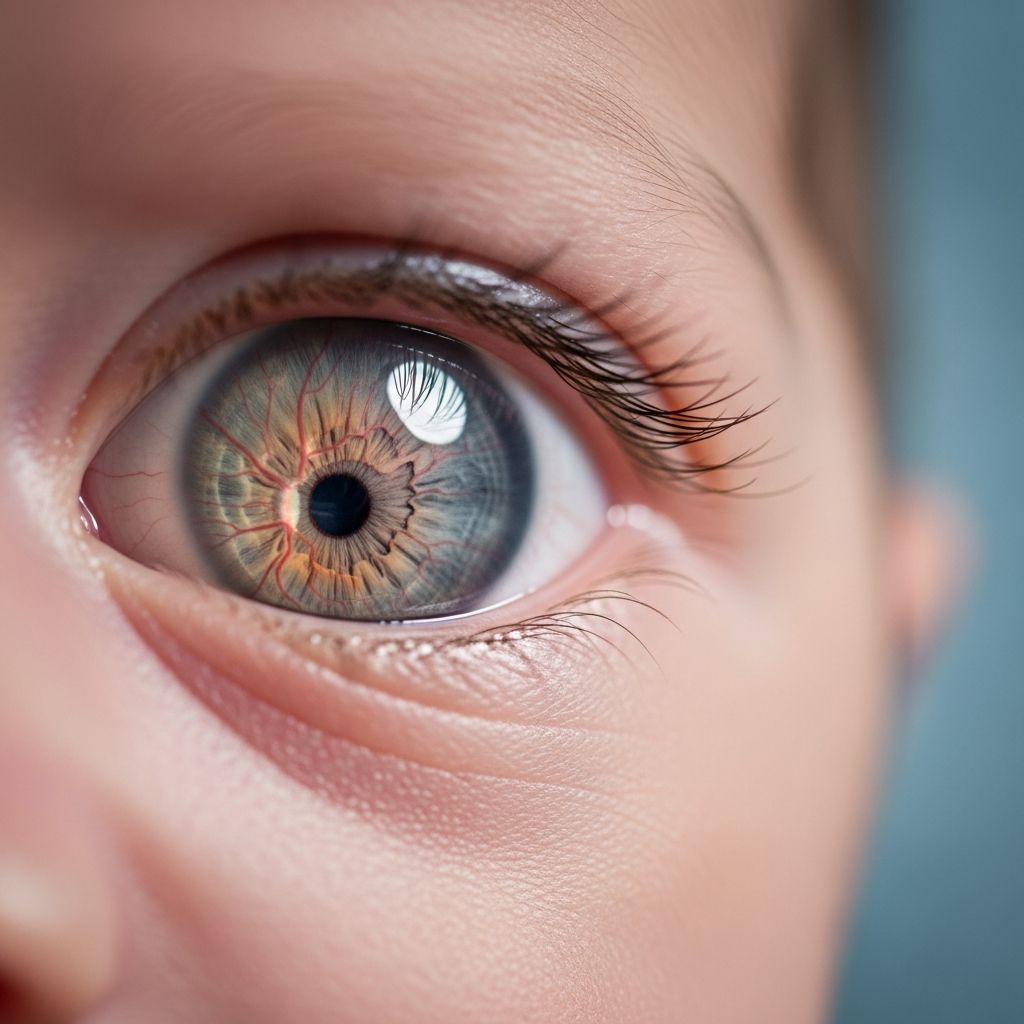
In retinopathy of prematurity, the retinal blood vessels do not develop in the usual way. Instead, they can grow abnormally, become fragile, or pull on the retina. In severe cases, this pulling can cause part or all of the retina to detach, which threatens sight.
| Feature | Normal Development | With ROP |
|---|---|---|
| Timing of vessel growth | Gradual, mostly completed near full term | Interrupted by early birth |
| Vessel pattern | Thin, orderly network over the retina | Abnormal, twisted, or leaky vessels form |
| Risk to retina | Very low in healthy term infants | Scar tissue and pulling can lead to detachment |
| Vision impact | Normal visual development | Ranges from normal vision to severe impairment, depending on severity |
Which Babies Are at Risk?
ROP does not affect all premature babies, but certain babies have a higher chance of developing it. According to major neonatal and ophthalmology guidelines, the main risk factors include:
- Very low gestational age: Babies born before about 30–32 weeks of pregnancy are at higher risk.
- Very low birth weight: Especially those weighing less than 1500 grams (about 3.3 pounds), and most often under 1250 grams.
- Serious illness around birth: Such as infections, breathing problems, or unstable blood pressure.
- Oxygen exposure: High or fluctuating oxygen levels, while lifesaving, can influence abnormal vessel growth if not carefully monitored.
Hospitals use national and international screening criteria to decide which babies need eye exams, normally based on birth weight and gestational age, and sometimes on how sick the baby has been.
How Doctors Describe the Severity of ROP
When the eye specialist (often a pediatric ophthalmologist or retina specialist) examines your baby, they describe ROP using specific terms. These help guide treatment decisions and follow-up.
- Location (zone): Which area of the retina is affected (closer to or farther from the center of vision).
- Stage: Ranges from mild changes in vessel growth to partial or complete retinal detachment.
- Plus disease: Describes how swollen and twisted the vessels look. Its presence suggests more active, aggressive disease.
Milder stages may clear on their own, whereas more advanced stages or the presence of plus disease usually mean that treatment should be considered quickly to protect vision.
Eye Examinations: What Parents Should Expect
ROP is silent — babies do not cry or show obvious signs that something is wrong. For this reason, routine eye screening in the neonatal intensive care unit (NICU) or shortly after discharge is critical.
When Screening Usually Starts
- Screening commonly begins a few weeks after birth, often around 31–33 weeks postmenstrual age (time since conception plus time since birth), or 4–6 weeks after birth, depending on local guidelines.
- These schedules are designed so that eye doctors see early changes before severe ROP develops.
How the Exam Is Done
- Eye drops are placed to dilate (widen) the pupils so the retina can be seen.
- The doctor uses a bright light and special lenses, sometimes with a soft eyelid speculum, to examine the retina.
- The exam may briefly make your baby fussy, but the team uses comfort measures such as swaddling, sucrose, or gentle holding.
- Exams are repeated every 1–3 weeks (or as advised) until the retina is fully vascularized or the ROP has clearly regressed or been treated.
Possible Outcomes: From Spontaneous Recovery to Complications
The path of ROP varies from baby to baby. Many parents are relieved to learn that a large proportion of premature infants with ROP experience only mild disease.
- Mild ROP: In many cases, the abnormal vessels stop growing, and the retina develops more normally over time with no need for treatment.
- Moderate ROP: Close observation is essential; some babies improve on their own, while others progress and need timely therapy.
- Severe ROP: Without treatment, this can lead to scar tissue and retinal detachment, placing the baby at high risk of serious vision loss or blindness.
Even when ROP improves without treatment, former preemies can be more prone to other eye issues later in childhood, such as nearsightedness, lazy eye (amblyopia), or crossed eyes (strabismus). Regular eye checks are important, especially in children who had moderate or severe ROP.
Treatment Options for ROP
When ROP is progressing or reaches a level known to carry a high risk of blindness, eye doctors may recommend treatment. The goal is to stop abnormal blood vessel growth and prevent the retina from detaching.
Common Treatments
- Laser therapy:
- The doctor uses tiny laser burns in the outer (poorly vascularized) retina.
- This reduces the drive for abnormal vessel growth and helps stabilize the retina.
- It is usually done in the NICU or operating room with pain control or anesthesia.
- Anti-VEGF injections:
- Medications that block vascular endothelial growth factor (VEGF) are injected into the eye.
- These drugs target the chemical signals that promote abnormal blood vessel growth.
- They can be especially useful for certain severe forms of ROP, such as those involving the posterior (central) retina.
- Surgery for retinal detachment:
- If the retina has partially or fully detached, procedures like scleral buckling or vitrectomy may be considered.
- These surgeries aim to reattach or support the retina, but outcomes vary and may not fully restore normal vision.
The choice of treatment depends on:
- Stage and zone (location) of ROP
- Presence of plus disease
- Your baby’s overall health and ability to tolerate procedures
- Experience and recommendations of the treating eye specialist
Short-Term Care After Treatment
After any ROP treatment, babies need close monitoring.
- Follow-up exams: The ophthalmologist will schedule frequent examinations to check whether ROP is regressing and to watch for new changes.
- Healing and comfort: Your baby may receive eye drops or other medications for a short time. The team will explain how to use them at home.
- NICU team coordination: Eye care is integrated with the baby’s respiratory, nutritional, and developmental care plans.
Parents are encouraged to ask for written instructions and contact numbers in case of concerns between appointments.
Long-Term Vision Follow-Up
Children who were born very early or had any degree of ROP benefit from ongoing eye care as they grow. Research shows higher rates of certain vision problems in this group, even when ROP was mild or resolved.
Conditions Doctors Watch For
- Nearsightedness (myopia): Difficulty seeing distant objects clearly.
- Astigmatism: Blurred or distorted vision due to irregularly shaped cornea.
- Strabismus: Eyes that do not line up properly (turning in, out, up, or down).
- Amblyopia (“lazy eye”): One eye does not develop normal vision because the brain favors the other eye.
- Late retinal problems: In a small number of children with severe ROP, the retina can change or detach later in life, requiring specialist review.
Suggested Follow-Up Pattern
Your child’s schedule will be individualized, but many specialists recommend:
- A comprehensive eye exam in early infancy after ROP resolves or is treated.
- Regular checkups in toddler and preschool years to detect refractive errors or amblyopia early.
- School-age and teenage exams, especially if your child needed glasses, had surgery, or had advanced ROP.
How Parents Can Support Their Baby
Although parents cannot control all medical factors, you play a vital role in your baby’s care and long-term outcomes.
In the NICU
- Ask the team which ROP screening criteria apply to your baby and when the first exam is planned.
- Request updates after each eye exam: ask about stage, zone, and whether ROP is getting better, staying the same, or progressing.
- Learn the signs that would trigger urgent review (such as sudden change in eye appearance or behavior at home).
After Going Home
- Keep all scheduled ophthalmology appointments, even if everything seems fine.
- Share your baby’s NICU eye records with any new eye doctor or pediatrician.
- Watch for behaviors like getting very close to books or toys, squinting, or eye crossing and report them.
- Support developmental services (such as early intervention or vision therapy) if recommended.
Emotional Support and Resources
Caring for a premature infant is emotionally demanding, and the mention of an eye disease can add to your stress. Many parents feel guilt, anxiety, or fear about the future. These feelings are common and understandable.
- Talk openly with your baby’s eye doctor and NICU team; clear information often reduces worry.
- Ask about social workers, psychologists, or parent support groups linked to your hospital.
- If your child develops significant vision impairment, early connection with low-vision specialists, orientation and mobility instructors, and educational services can profoundly support development and independence.
Frequently Asked Questions (FAQs)
Is ROP caused by something I did during pregnancy?
No. ROP is mainly related to how early and how small a baby is at birth, plus how sick they are after delivery. It is not caused by routine activities during pregnancy or by anything a parent did or did not do.
Does every premature baby get ROP?
No. Many preemies never develop ROP, and among those who do, most have a mild form that improves without treatment. The risk is highest for babies born very early and very small, which is why screening focuses on these infants.
Will my baby go blind from ROP?
Permanent severe vision loss from ROP is much less common today than in the past, largely because of careful screening and timely treatment. However, when ROP is advanced and not treated in time, it can cause blindness. Close follow-up with an experienced specialist is essential.
Are ROP treatments safe for such small babies?
Treatments like laser therapy and anti-VEGF injections have been used in many premature infants and are considered standard options when the risk of untreated ROP is high. Your baby’s doctors weigh the potential benefits and risks and will explain why a specific treatment is recommended for your child.
Will my child need glasses or special support later on?
Many children born prematurely, with or without ROP, eventually need glasses, and some benefit from patching or vision therapy to treat amblyopia or strabismus. If serious vision impairment occurs, early involvement with low-vision and educational services can help your child reach their full potential.
References
- Screening Examination of Premature Infants for Retinopathy of Prematurity — American Academy of Pediatrics, American Academy of Ophthalmology, American Association for Pediatric Ophthalmology and Strabismus. 2018-02-01. https://doi.org/10.1542/peds.2017-3478
- Retinopathy of Prematurity — National Eye Institute, U.S. National Institutes of Health. 2022-03-31. https://www.nei.nih.gov/learn-about-eye-health/eye-conditions-and-diseases/retinopathy-prematurity
- Retinopathy of Prematurity — American Association for Pediatric Ophthalmology and Strabismus. 2023-05-10. https://aapos.org/glossary/retinopathy-of-prematurity
- Retinopathy of Prematurity — Royal College of Ophthalmologists / Royal College of Paediatrics and Child Health (UK Guideline). 2022-06-01. https://www.rcophth.ac.uk/resources-listing/retinopathy-of-prematurity-guideline/