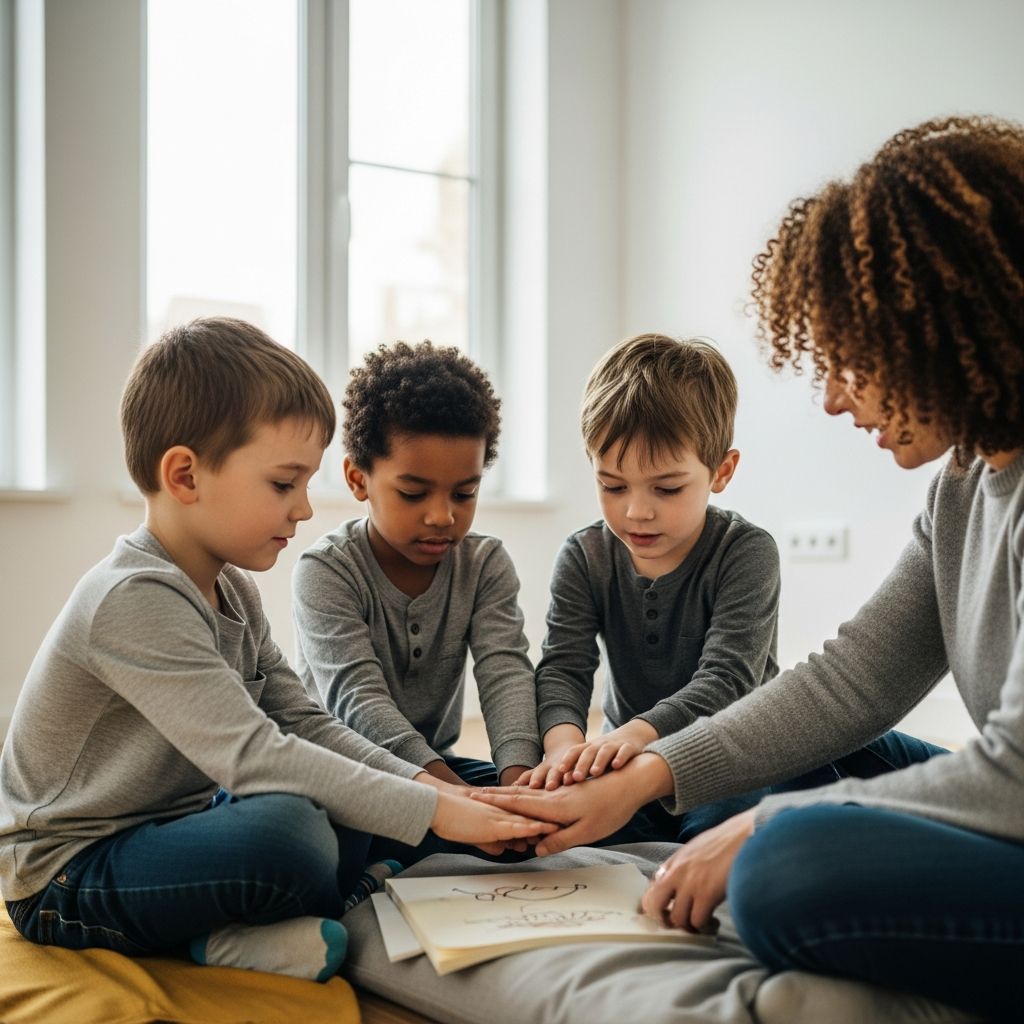
Across cultures, boys still receive powerful messages about what it means to be a “real man”—be tough, stay in control, never show weakness. Yet research on child development and fatherhood shows that boys thrive when they are allowed to be vulnerable, caring, and emotionally expressive, not when they are boxed into narrow, traditional roles.12
This article explores how fathers and other male role models can help boys grow into ethical, emotionally healthy, and genuinely strong men.
Why Rethinking Masculinity Matters for Boys
Traditional, rigid ideas of masculinity—sometimes called restrictive gender norms—are linked with higher levels of aggression, risk-taking, and emotional distress in boys and men.1 These norms often discourage:
- Showing sadness, fear, or anxiety
- Asking for help or support
- Expressing tenderness, care, or affection
- Admitting mistakes and apologizing
Studies on adolescent boys show that when they feel pressure to hide vulnerability and conform to “toughness,” they are more likely to experience depression, bullying, and difficulty forming close friendships.1 By contrast, boys who feel free to express emotions and seek support show better mental health and stronger relationships.
| Old Script | Healthier Script for Boys |
|---|---|
| “Real men don’t cry.” | “Strong men know how to feel and share their emotions.” |
| “Never back down.” | “Courage includes walking away, apologizing, or changing your mind.” |
| “You have to win.” | “Learning, effort, and integrity matter more than winning.” |
| “Don’t be like a girl.” | “Respect everyone. Caring and kindness are human strengths, not gendered.” |
The Quiet Power of Fathers and Male Role Models
Long-term research on the “father effect” shows that warm, consistent involvement from fathers is associated with better academic performance, fewer risky behaviors, and healthier relationships in children.2 This is true for sons and daughters, but sons are especially likely to watch and copy how the men around them behave.
Fathers and male caregivers shape a boy’s belief about masculinity through two main channels:
- Modeled behavior: How you talk, handle conflict, apologize, or deal with stress.
- Relational climate: Whether you are emotionally available, respectful, and predictable.
Significantly, research finds it is not just the amount of time fathers spend with children that matters most, but the quality of emotional engagement—listening, validating feelings, and sharing meaningful activities.4
Redefining Strength: From Dominance to Responsibility
Boys often learn that strength means winning, dominating, or never showing vulnerability. A healthier definition of strength emphasizes responsibility, self-control, and care for others.
Modern fathers can emphasize strength as the ability to:
- Take responsibility for mistakes and make amends
- Stay kind under stress or frustration
- Protect others without dehumanizing anyone
- Speak up when something is unfair, even to friends
- Ask for help when overwhelmed, instead of shutting down
This reframing aligns with evidence that emotional regulation, empathy, and prosocial behavior are key components of healthy masculinity and positive mental health outcomes.1
Teaching Emotional Literacy to Boys
Emotional literacy—the ability to recognize, name, and manage feelings—is a foundational life skill. Boys, however, often receive less emotional coaching than girls. This gap has consequences: lower emotional vocabulary is linked with greater behavior problems and difficulty in relationships.1
You can build your son’s emotional literacy by:
- Modeling feelings: Use clear language about your own emotions (“I feel worried,” “I’m disappointed”).
- Normalizing all emotions: Emphasize that anger, sadness, fear, and joy are all human and acceptable.
- Coaching regulation: Help him find strategies such as deep breathing, taking a break, or talking it out.
- Connecting feelings to actions: Ask, “What were you feeling right before you hit/said that?” and “What could you do next time?”
Over time, this helps boys understand that feelings are signals to pay attention to, not weaknesses to hide.
Masculinity in Daily Life: Micro-Moments that Shape Boys
Boys learn more from how men behave in ordinary moments than from big speeches about manhood. Everyday interactions quietly teach them what is acceptable.
Key daily moments include:
- How you handle frustration: Do you yell, withdraw, or talk it through?
- How you talk about other people: Do you use sexist, homophobic, or demeaning language?
- How you treat your partner: Are you collaborative, respectful, and open to feedback?
- How you deal with mistakes: Do you admit wrongdoing and apologize sincerely?
Children carefully observe these patterns, and fathers’ behavior has a measurable impact on children’s psychological, social, and cognitive development.2
Encouraging Compassion and Accountability
Raising better boys is not just about emotional openness; it also involves accountability and ethical behavior. Boys who learn to take responsibility for their actions are better prepared for healthy adulthood.
To cultivate compassion with accountability:
- Link empathy to action: When he hurts someone, ask what the other person might feel and what he can do to repair.
- Use consistent boundaries: Clear expectations and logical consequences create a sense of safety.
- Avoid shame: Critique the behavior (“that was hurtful”), not the core of who he is (“you’re bad”).
- Highlight everyday courage: Praise moments when he is honest, admits fault, or stands up for someone else.
Strong research on parenting indicates that warmth combined with clear limits—often called authoritative parenting—is associated with better outcomes than either harshness or permissiveness.2
Work, Care, and the Model of Shared Responsibility
Modern boys are growing up in a world where both parents often work, and caregiving is increasingly shared. When fathers visibly participate in caregiving and household tasks, children develop more flexible ideas about gender roles and fairness.
When fathers:
- Change diapers, cook, and manage bedtimes
- Attend medical appointments and school meetings
- Take parental leave when possible2
- Talk positively about care work as valuable and meaningful
…boys internalize the message that caring for others is a normal, respected part of manhood rather than “women’s work.” This has long-term benefits for their future partners, children, and communities.
Protecting Boys’ Mental Health
Mental health challenges often look different in boys. Instead of openly expressing sadness or anxiety, some boys act out, become aggressive, or withdraw. Social norms that discourage emotional expression can delay recognition and treatment.
To protect your son’s mental health:
- Watch for behavior changes: Sudden irritability, isolation, or loss of interest in activities.
- Invite conversation without pressure: “I’ve noticed you seem down. I’m here when you want to talk.”
- Normalize help-seeking: Talk about counseling, therapy, or support groups as tools strong people use.
- Address bullying and peer pressure: Make it safe for him to tell you about problems without fear of overreaction.
Public health agencies emphasize that early, open conversations about mental health reduce stigma and increase the likelihood that young people receive appropriate care.3
Media, Culture, and the Stories Boys Absorb
Boys are surrounded by media that often glorify toughness, sexual conquest, or dominance. Yet there is also a growing number of stories that highlight cooperation, empathy, and diverse forms of strength.
Parents and mentors can:
- Co-watch and co-play: Talk about the movies, games, and videos he uses. Ask, “What do you think about how he treated other people?”
- Point out stereotypes: Name when a character or joke relies on mocking women, LGBTQ+ people, or “weak” men.
- Offer alternatives: Include books and shows with emotionally complex male characters, caring fathers, and non-violent problem-solving.
Media literacy—learning to critically evaluate what we watch and hear—helps boys avoid internalizing narrow or harmful masculine ideals.1
Practical Checklist: Daily Habits for Raising Better Boys
Below is a simple checklist of daily or weekly practices that support healthy masculinity in boys.
- Say “I love you” and show physical affection (hugs, high-fives, gentle touch) appropriate to his age.
- Ask at least one open-ended feeling question: “What was the hardest part of your day?”
- Share a moment of your own vulnerability or mistake and how you handled it.
- Do one caring task together (cooking, helping a neighbor, caring for a pet).
- Read or watch something featuring a kind, emotionally aware male character and talk about him.
- Notice and praise acts of empathy, cooperation, and honesty—not just performance or winning.
Frequently Asked Questions (FAQs)
Q: How early should I start talking to my son about emotions and masculinity?
You can begin in early childhood by naming emotions, modeling gentle behavior, and reinforcing that all feelings are allowed. Research on early development shows that children benefit when caregivers talk about emotions and respond sensitively from infancy onward.1
Q: Can a boy still be “masculine” if he is sensitive or not interested in stereotypically male activities?
Yes. Masculinity is not defined by hobbies, clothing, or emotional style. Your son’s character—his kindness, honesty, courage, and responsibility—is far more important than conforming to stereotypes. Supporting his authentic interests is linked with better mental health and self-esteem.1
Q: What if I grew up with a very traditional or emotionally distant father?
You can still offer your son something different. Many fathers consciously decide to break cycles by learning new skills: attending parenting classes, reading about fatherhood, or seeking therapy or support groups. Studies on father involvement show that men can become more emotionally engaged even if they did not have that model growing up.24
Q: How important is it for boys to see men doing caregiving work?
It is very important. When boys see fathers or male caregivers actively involved in everyday tasks—feeding, comforting, helping with homework—they are more likely to value caregiving themselves and to adopt more egalitarian beliefs about gender roles.2
Q: What should I do if my son uses sexist or homophobic language?
Address it directly but calmly. Explain why the language is harmful, ask where he heard it, and offer better ways to express frustration or humor. Consistently challenging disrespectful language helps boys understand that dignity and inclusion are core values of adulthood.
References
- Gender Equity and Male Engagement: It’s Time to Focus on Boys and Young Men — UNFPA, UNICEF, UN Women, WHO. 2022-03-07. https://www.unfpa.org/resources/gender-equity-and-male-engagement-its-time-focus-boys-and-young-men
- The Effects of Father Involvement: An Updated Research Summary of the Evidence — Father Involvement Research Alliance. 2012-06-01. https://static1.squarespace.com/static/5c503a1c7e3c3a458681c687/t/5c50f485c2241b51f9b05a10/1548797574124/FIRA Research Summary.pdf
- Mental health: strengthening our response — World Health Organization. 2022-06-17. https://www.who.int/news-room/fact-sheets/detail/mental-health-strengthening-our-response
- The Fatherhood Project: The Evidence — Massachusetts General Hospital, Department of Psychiatry. 2010-09-01. https://www.mghclaycenter.org/parenting-concerns/families/fatherhood-project/
- The Importance of Fathers in the Healthy Development of Children — Rosenberg J, Wilcox WB. U.S. Department of Health and Human Services. 2006-06-01. https://www.childwelfare.gov/pubpdfs/fatherhood.pdf