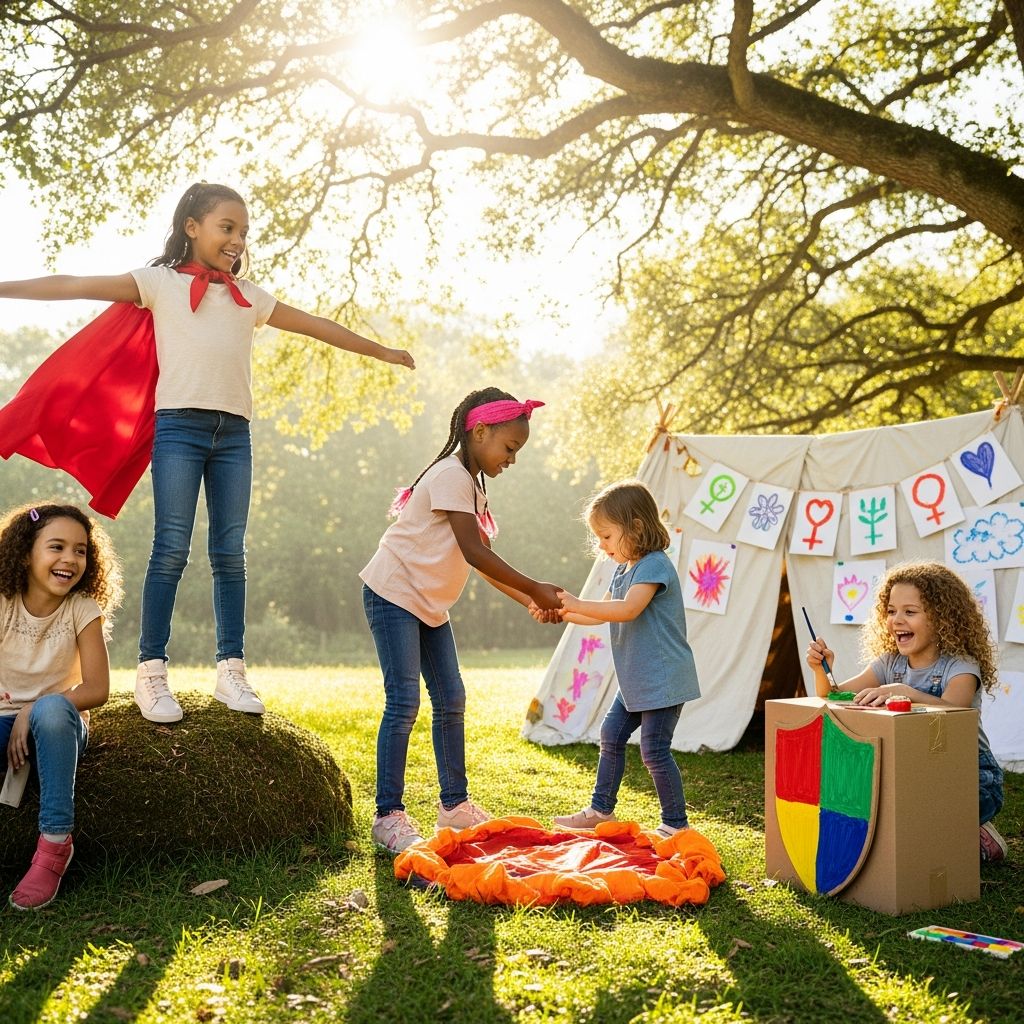
Superheroes may leap tall buildings in a single bound, but the most powerful transformations often begin in the living room, at the dinner table, or during a bedtime chat. This guide explores realistic, playful ways to help your daughter grow into her own version of a hero: brave, kind, thoughtful, and unapologetically herself.
Why Superhero Stories Matter to Our Daughters
Many children are drawn to superhero stories because they paint big, colorful pictures of courage and justice. For girls especially, seeing powerful female characters can quietly expand their sense of what is possible for their own lives.
However, the real magic happens when those stories spark conversations rather than comparisons. Instead of asking whether your daughter is as strong or fearless as a character on-screen, invite her to notice the everyday bravery she already shows: learning something new, apologizing, trying again after disappointment, or standing up for a friend.
- Use superhero stories as conversation starters, not measuring sticks.
- Highlight character traits (kindness, persistence, fairness) more than appearance or power.
- Connect big-screen bravery to small, real-life choices your child makes every day.
Redefining Strength for Modern Girls
Strength for girls is often misrepresented as being loud, unbreakable, or always confident. True inner strength is quieter and more complex. It includes the ability to ask for help, to admit mistakes, to care deeply, and to keep going after setbacks.
When parents redefine strength in this broader way, girls get permission to be emotional and powerful at the same time. This helps them understand that sensitivity is not a weakness to outgrow, but a superpower to learn how to use wisely.
- Describe strength as courage plus compassion, not toughness alone.
- Share times you felt scared but chose to act with integrity anyway.
- Normalize both tears and bravery in the same story.
Everyday Habits That Build Confidence
Confidence is not a single grand moment of victory; it is the result of many small opportunities to try, fail, learn, and try again. Parents can design simple routines that gently stretch a girl’s comfort zone while reassuring her that love and belonging do not depend on performance.
Instead of praising talent alone, focus on effort, creativity, and problem-solving. Over time, this teaches your daughter that her abilities can grow and that mistakes are information, not proof that she is not good enough.
Practical Confidence-Boosting Rituals
- Weekly “Brave Moment” check-in: At the end of the week, each family member shares one moment they did something a little scary, even if the outcome was messy.
- Try-something-new days: Once a month, let your child choose one new skill, food, or activity to experiment with, framing it as exploration, not a test.
- Effort-first compliments: Replace “You’re so smart” with “You worked hard to figure that out” or “You kept trying even when it was tricky.”
Designing a “Real-Life Superhero” Activity Day
A themed activity day can give your daughter a playful framework for exploring her strengths. Instead of copying any specific movie plot or costume, build your day around values like bravery, fairness, creativity, and friendship.
This can be as simple or elaborate as you like. The goal is to attach those powerful words to real, hands-on experiences and conversations, not to create Instagram-worthy perfection.
Core Elements for Your Special Day
- Symbol: Choose a symbol together (a star, a shield, a lightning bolt) and create a paper badge or cardboard bracelet that represents “hero mode.”
- Challenge: Plan one physical, one creative, and one kindness-related challenge.
- Reflection: End the day with questions about what felt fun, hard, or surprising.
Activity Ideas: Courage, Kindness, Curiosity
Below are flexible activity ideas that you can adapt for different ages and personalities. You do not need special equipment; simple household items and imagination are enough.
| Theme | Simple Activity | What It Teaches |
|---|---|---|
| Courage | Set up a mini obstacle course in the living room or yard, letting your child help design and then complete it at her own pace. | Facing challenges step by step, listening to her body, balancing fear and excitement. |
| Kindness | Create small “secret hero” notes or drawings and leave them where they might brighten someone’s day (inside a sibling’s book, on a neighbor’s doorstep). | Empathy, generosity, the joy of anonymous acts of care. |
| Curiosity | Choose a real-world problem (litter, water use, loneliness at school) and brainstorm together three ways a hero could help. | Problem-solving, social awareness, seeing herself as capable of change. |
| Resilience | Play a game that is slightly hard (a new puzzle, a balance task) and agree in advance what to do when frustration shows up (deep breaths, a quick wiggle break, asking for a hint). | Coping with frustration, emotional regulation, growth mindset. |
| Voice | Practice “hero phrases” in front of a mirror, such as calmly saying, “Stop, I don’t like that,” or “I need a break.” | Assertiveness, boundary-setting, clear communication. |
Helping Girls Talk About Fear and Failure
Fear and failure are not signs that something is wrong with your daughter; they are proof that she is stretching into new territory. When parents treat these experiences as expected parts of growth, children are less likely to hide their struggles or shrink their ambitions.
Instead of rushing in to fix everything, try to sit beside your child in the uncomfortable moment. Listen first, name what you see, and then ask whether she would like comfort, ideas, or space. This gives her practice choosing the kind of support that feels most helpful.
Conversation Starters When Things Go Wrong
- “What was the hardest part for you today?”
- “What did you learn about yourself from this?”
- “If this happened to your best friend, what would you tell her?”
- “What tiny next step feels possible, even if it’s not easy?”
Media Messages, Body Image, and Costumes
Many superhero costumes and images emphasize appearance, which can complicate how girls feel about their own bodies. Parents can gently redirect the focus toward mobility, comfort, and what the body can do, rather than how it looks.
When your child wants to dress up, involve her in designing an outfit that allows jumping, running, and climbing. Ask her what helps her feel powerful: bright colors, a cape that swishes, shoes she can sprint in, or a hairstyle that stays out of her eyes while she plays.
- Talk openly about how movie costumes are designed for cameras, not real-life comfort.
- Encourage dress-up that prioritizes freedom of movement.
- Praise how her body lets her play, learn, hug, and explore.
Raising Empathy Alongside Bravery
Heroism without empathy can easily slide into arrogance. Teaching girls to understand other perspectives, notice who is excluded, and offer support is just as important as encouraging boldness and achievement.
Small rituals of attention can strengthen this muscle. You might, for example, ask at dinner, “Who seemed left out today?” or “Who did you see being brave or kind?” This shifts the focus from individual performance to community care.
Simple Empathy Practices
- Create a family habit of checking in on neighbors or classmates who are sick, grieving, or new.
- Read stories together that show complex characters, then discuss why they might have acted the way they did.
- Encourage your daughter to notice her own feelings as clues to what others might be experiencing.
When Your Daughter Doubts Herself
Even the most confident child will sometimes say, “I can’t” or “I’m not good at anything.” These moments are opportunities to gently challenge all-or-nothing thinking without dismissing genuine emotion.
Validate the feeling first, then offer a wider lens. Together, you can look for evidence of times she showed persistence, creativity, or kindness, even if the result was imperfect. Over time, this helps her develop a more flexible, compassionate view of herself.
- Respond with, “You’re having an ‘I can’t’ moment. That’s okay. Let’s look at the whole story.”
- Keep a “tiny wins” list where you jot down small acts of growth she can re-read later.
- Model self-compassion out loud when you make your own mistakes.
Including Boys and Siblings in the Hero Conversation
If there are brothers or other children in the home, it can be powerful to involve them in these conversations too. This helps all kids see courage and kindness as human qualities, not traits reserved for one gender.
Siblings can take turns choosing which value to focus on for the day—patience, fairness, curiosity—and spotting examples in one another. This reduces rivalry and reinforces the idea that everyone in the family is learning and growing together.
- Invite each child to name a strength they see in another family member.
- Swap roles in games so everyone gets a chance to practice leadership and support.
- Use inclusive language like “our family’s heroes” rather than “girls vs. boys.”
Long-Term Impact: What We Hope Our Girls Remember
The specific activities and themed days will fade with time, but the feelings they create can linger: the memory of being believed in, of being invited to try, of knowing that strength and softness can live in the same heart. These memories shape how girls speak to themselves long after they leave home.
Ultimately, raising a real-life Wonder Woman is less about creating a flawless, fearless child and more about nurturing a person who can face an imperfect world with integrity, creativity, and care. That journey starts with small, consistent choices to notice and name the heroism already growing inside her.
Frequently Asked Questions
How young is too young to talk about courage and confidence?
It is never too early to introduce the ideas of bravery and kindness, as long as they are explained in age-appropriate ways. For toddlers, courage might simply mean trying the slide with a trusted adult nearby or learning to say “no” and “stop” when something feels uncomfortable.
What if my child is not interested in superheroes at all?
Your daughter does not need to love capes or action movies to explore courage and resilience. You can anchor these same ideas in artists, scientists, activists, athletes, or even family members whose stories highlight persistence, creativity, and compassion.
How can I encourage bravery without pushing too hard?
Offer gentle invitations instead of pressure, and emphasize that your love is not conditional on being bold. Ask your child what level of challenge feels “a little stretchy but not too scary,” and respect her answer while still celebrating each small step forward.
What if I struggle with confidence myself?
You do not have to be perfectly confident to raise a confident child. In fact, sharing simple, age-appropriate stories of your own learning process—and how you keep going despite self-doubt—can show your daughter that courage and insecurity often coexist.
How often should we do “hero” activities?
There is no perfect schedule. Some families enjoy a dedicated theme day once a month, while others sprinkle tiny hero moments into daily life—like naming a brave choice at bedtime or practicing a kind gesture on the way to school. Consistency matters more than intensity.