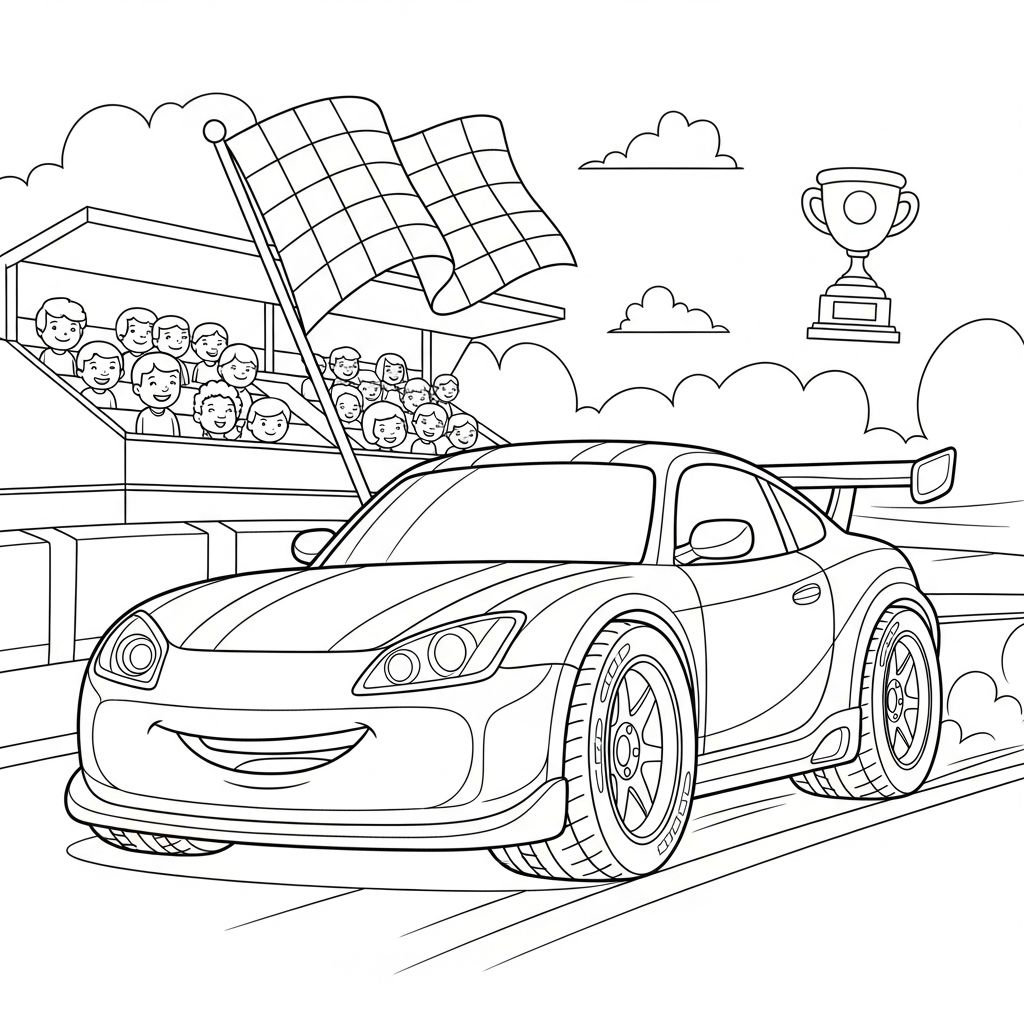
Race car coloring pages are more than simple line drawings of fast vehicles; they are an easy way to connect with car-loving kids while building creativity, focus, and early learning skills. Whether your child dreams of being a race driver or just loves bright colors and big tires, race car coloring sheets can turn quiet time into a high-speed adventure at the kitchen table.
Why Kids Are Drawn to Race Car Coloring Pages
Many children go through a phase where anything with wheels and an engine is instantly exciting. Race cars, with their bold designs, loud engines, and dramatic tracks, naturally capture this fascination. Coloring gives kids a way to bring their favorite cars to life, using colors and patterns that match their imagination rather than any rulebook.
Because race cars come in countless shapes and styles, children can explore everything from sleek formula-style cars to chunky stock cars and cartoon-like vehicles. This variety helps keep coloring fresh and interesting, even for kids who color often.
Hidden Benefits of Race Car Coloring for Children
Coloring race cars looks like simple fun, but it quietly supports important skills that children need in school and everyday life. The act of holding crayons, staying within lines, and choosing colors provides meaningful practice without feeling like work.
- Fine motor development: Gripping crayons or markers and guiding them along curves and edges helps strengthen the small muscles in the hands and fingers.
- Hand–eye coordination: Children learn to control their movements as they color within the outlines of wheels, windows, and spoilers.
- Attention and patience: Completing a detailed car or track scene encourages kids to stick with a task from start to finish.
- Color recognition and planning: Picking out paint schemes, stripes, and sponsor colors helps kids think ahead and practice decision-making.
- Emotional expression: Children can show mood and personality through bright neon cars, dark stormy race scenes, or a rainbow of playful designs.
Types of Race Car Coloring Pages to Explore
Not all race car coloring sheets look the same. Offering a mix of designs keeps your child engaged and allows different ages and skill levels to enjoy the activity. You can rotate styles based on their interests or use them to introduce new ideas about vehicles and racing.
Simple Race Cars for Young Artists
For toddlers and preschoolers, look for large, uncomplicated outlines with big spaces to color. These pages might feature a single cute race car with oversized wheels and a smiling driver, making it easier for small hands to fill in.
- Big shapes and thick lines that are forgiving of scribbles.
- Minimal background details so kids can focus on the car itself.
- Friendly faces on drivers or cars to add a playful touch.
Detailed Race Machines for Older Kids
Older children often enjoy more complexity. They may prefer pages that show realistic race cars with visible spoilers, vents, tire treads, and helmets. These designs challenge them to pay attention to detail and to think about how real vehicles are built.
- Multiple small sections to color, like logos, decals, and stripes.
- Perspective drawings that show cars turning, braking, or crossing the finish line.
- Scenes with garages, pit crews, and cheering crowds.
Race Tracks and Action Scenes
Pages that include tracks, flags, and other details can tell a mini story. Kids can color the car, then decorate the road, sky, and stands, turning a single sheet into a complete racing moment.
- Twisting tracks, bridges, or tunnels.
- Finish lines with checkered flags and confetti.
- Stormy skies, sunset races, or nighttime city circuits.
Creative Ways to Use Race Car Coloring Pages
Coloring pages do not have to end up forgotten in a pile on the table. With a little creativity, families can turn them into projects, games, and decorations that stretch the fun far beyond the initial coloring session.
Turn Pages into Crafts
Colored race cars can become part of simple craft activities. By adding scissors, glue, and household supplies, you can help your child transform a flat drawing into something they can hold, move, or display.
- Wall gallery: Frame favorite finished cars or tape them up in a row to create a “garage wall” in a bedroom or playroom.
- Race car puppets: Cut out the cars, glue them to craft sticks, and use them in homemade races on the floor.
- DIY greeting cards: Fold cardstock, glue a colored car to the front, and write a message inside for birthdays or special occasions.
- Bookmarks: Trim a colored car into a strip, laminate if possible, and punch a hole at the top for ribbon.
Host a Coloring Grand Prix
Organizing a “coloring race” can be a fun party activity for kids who love cars. Rather than making it a speed competition, create friendly challenges that celebrate creativity and effort.
- Provide several different car designs and let kids pick their favorite model.
- Offer awards like “Most Colorful Car,” “Coolest Flames,” or “Best Team Colors” instead of fastest finisher.
- Display the finished pages on a “winner’s circle” wall and let kids talk about their designs.
Use Coloring Pages for Storytelling
Once a child has finished coloring a race car sheet, ask them to tell the story behind it. Where is the car going? Who is driving? What happened during the race? Encouraging children to narrate scenes around their art supports imagination and early language skills.
Learning Opportunities Hidden in Race Cars
Race car coloring sheets provide a gentle introduction to many basic concepts. By asking simple questions or offering extra information, parents can weave learning moments into an activity that a child already enjoys.
| Topic | How to Introduce It | Simple Example |
|---|---|---|
| Colors and shades | Ask children to find light and dark versions of a color for different car parts. | “Use light blue for the windows and dark blue for the stripes.” |
| Numbers and counting | Have kids count wheels, stripes, or car numbers on pages. | “How many race cars are on this page?” |
| Shapes and patterns | Point out circles, rectangles, and triangles in the design. | “The wheels are circles and the spoiler looks like a rectangle.” |
| Vocabulary | Introduce words like pit stop, helmet, engine, and spoiler. | “This part on the back helps push the car down; it’s called a spoiler.” |
| Safety awareness | Talk about seat belts, helmets, and why real drivers need protective gear. | “Color the helmet bright so everyone can see it.” |
Choosing the Right Materials for Coloring
The supplies you choose can change the entire feel of a coloring session. Offering a variety of tools lets your child experiment and find what they enjoy most, while proper paper and storage keep the activity low-stress for grown-ups.
Best Tools for Little Hands
Younger children often do better with chunky crayons or washable markers that are easier to grip. Older kids may enjoy fine-tipped markers or colored pencils, which allow for shading, small details, and special effects like reflections on windows.
- Washable crayons and markers to make cleanup simple.
- Triangular or thick pencils that encourage the correct grip.
- A small lap desk or clipboard so kids can color comfortably anywhere.
Paper and Printing Tips
If you are printing race car coloring pages at home, consider the thickness of the paper. Thicker sheets help prevent markers from bleeding through and keep finished pictures looking crisp. You can also adjust printer settings to reduce ink use on heavy background designs.
- Use heavier printer paper or cardstock for marker-heavy projects.
- Test a single sheet first to check how colors look and whether outlines are clear.
- Print multiple copies of favorite designs so siblings can color the same car in different ways.
Making Coloring Time Enjoyable and Relaxing
Coloring can be a soothing break in a busy day. When presented as a calm, open-ended activity with no pressure to stay inside every line or finish quickly, children often use it to unwind and reset their mood.
- Play soft music or leave the room quietly buzzing with conversation.
- Avoid correcting mistakes; treat stray marks as part of the artwork.
- Offer praise for effort and creativity rather than neatness alone.
- Join in with your own car sheet to show that adults can enjoy coloring too.
Safety and Age-Appropriate Considerations
While race car coloring pages are generally low-risk, it helps to choose age-appropriate supplies. For very young children, avoid small, breakable crayons and keep sharp pencil tips out of reach when not in use.
- Supervise toddlers who may still put crayons or paper in their mouths.
- Store markers and scissors in a container that only adults open.
- Check paper edges and craft additions if you are turning pages into toys.
Fun Variations on Traditional Race Car Coloring
Once your child has colored many cars, it may be time to shake up the routine. Small twists can make familiar sheets feel new again and challenge kids to think differently about color, design, and storytelling.
Color Challenges to Try
- Two-color challenge: Let kids pick only two main colors for the entire car and see how creative they can be with patterns.
- Team design: Color cars to match favorite sports teams or made-up racing teams with matching uniforms and pit crew colors.
- Opposite day: Ask kids to color the sky, track, and car in unusual shades, like a green sky or a purple road.
Mixing Coloring with Other Activities
- Create a homemade board game where cars move along spaces that your child colors.
- Combine coloring with building blocks by placing cars on a track made from bricks or wooden blocks.
- Use colored cars as characters in bedtime stories about exciting races and teamwork.
Frequently Asked Questions About Race Car Coloring Pages
Are race car coloring pages suitable for toddlers?
Yes, as long as you choose pages with large, simple shapes and provide safe, non-toxic coloring tools. Sit close by to prevent chewing on crayons and to help guide early attempts at coloring while still letting them explore.
How can I keep my child interested after they have colored many cars?
Introduce new challenges, such as themed races, limited color palettes, or craft projects that use the finished pages. Rotating different types of cars and adding tracks, crowds, or landscapes can also provide variety without abandoning the race theme.
What if my child colors outside the lines or uses unusual colors?
Coloring outside the lines is part of learning, and imaginative color choices reflect creativity. Instead of correcting them, ask questions about their choices to encourage confidence and storytelling.
Can race car coloring help with school readiness?
Yes, the fine motor control, focus, and early concepts like counting and shape recognition that appear in coloring activities are helpful foundations for writing and early math. While coloring alone is not a full learning program, it supports many skills children will use in school.
How do I store or display finished race car pages?
You can create a simple binder with plastic sleeves, hang favorites on a bulletin board, or turn them into crafts like cards and bookmarks. Letting kids decide what to keep or display gives them a sense of pride in their work.
Fueling Imagination with Every Lap of Color
Race car coloring pages tap into a powerful combination of speed, color, and imagination that many children find irresistible. With thoughtful choices and small creative twists, parents and caregivers can transform these simple sheets into tools for learning, calm, and connection.
By encouraging kids to color freely, talk about their cars, and proudly share their artwork, families can enjoy many miles of fun together—no driver’s license required.