What Is a Partial Thromboplastin Time Test?
A partial thromboplastin time (PTT) test is a laboratory examination that measures how quickly your child’s blood forms clots. This blood test evaluates the efficiency of proteins involved in the coagulation cascade—the complex biological process that stops bleeding when an injury occurs. The test specifically examines most of the clotting factors in your child’s blood, providing insight into whether the coagulation system is functioning properly.
When your child experiences a cut or injury, numerous proteins called clotting factors spring into action to create a protective plug that seals the wound. The PTT test assesses how well these proteins work together and how much time is required for a clot to form. Healthcare providers often order this test alongside a prothrombin time (PT) test to evaluate different aspects of the coagulation cascade, as each test measures different clotting factors.
Why Doctors Order This Test for Children
Pediatricians may recommend a PTT test when they need to investigate potential bleeding or clotting problems in a child. Several clinical situations warrant this type of testing:
- Excessive bleeding or bruising — When a child bleeds more than expected from minor injuries or develops unusual bruising patterns
- Family history of clotting disorders — If relatives have conditions affecting blood coagulation, testing helps identify whether the child has inherited the condition
- Pre-surgical evaluation — Before certain procedures, doctors may order PTT tests to assess bleeding risk in children with suspected clotting problems
- Medication monitoring — Children taking blood-thinning medications like heparin require regular PTT testing to ensure the medication dosage remains safe and effective
- Investigation of autoimmune diseases — Conditions such as lupus can affect blood clotting, making PTT testing important for diagnosis
- Evaluation of liver function — Since the liver produces clotting factors, doctors may order this test if liver disease is suspected
Understanding the Testing Procedure
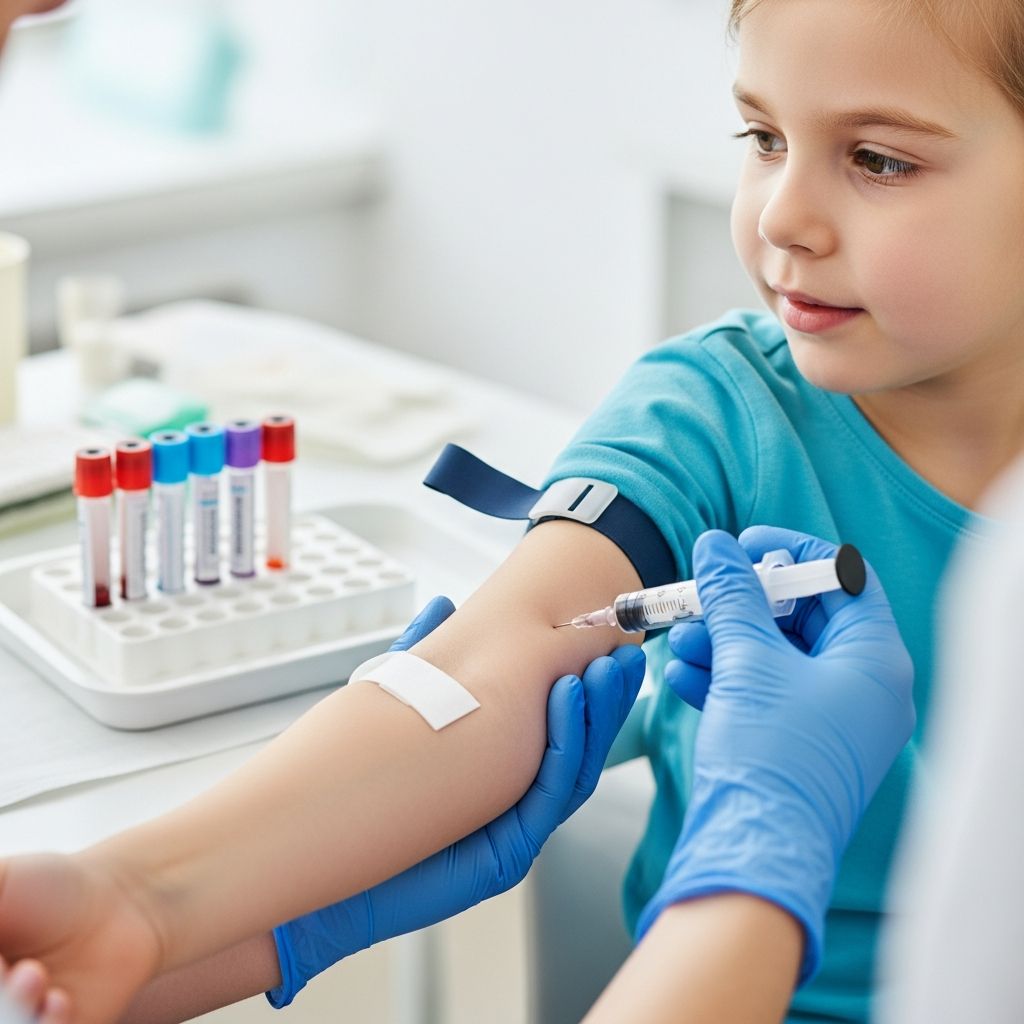
The PTT test involves a straightforward blood draw that takes only a few minutes. A phlebotomist or nurse will locate a vein in your child’s arm, typically on the inner elbow, and insert a small needle to collect a blood sample. The procedure may cause a brief pinch or sting, but it is generally well-tolerated by children.
To make the experience easier for your child, ensure they are well-hydrated before the test, as adequate hydration helps veins become more prominent and easier to access. Having your child wear short sleeves eliminates the need to roll up clothing, potentially reducing anxiety. Some medical facilities allow parents to remain with their child during the procedure, which can provide comfort and reassurance.
Once collected, the blood sample is sent to the laboratory where technicians add special chemicals to initiate the clotting process and measure how long coagulation takes. The result—expressed in seconds—indicates your child’s PTT value.
Interpreting Normal PTT Results
A normal PTT typically falls between 25 and 35 seconds, though this range may vary slightly depending on the specific laboratory, equipment used, and testing methodology employed. Each laboratory establishes its own reference ranges based on its equipment and procedures, so what is considered normal at one facility may differ slightly from another.
It is important to understand that laboratory reference ranges represent values found in healthy individuals and serve as a benchmark for comparison. Your child’s result should always be interpreted within the context of the specific laboratory’s normal range, which will be provided on the test report.
If your child is taking blood-thinning medication, the PTT may intentionally be longer than the standard normal range. Doctors adjust medication doses to achieve a therapeutic PTT that is typically 1.5 to 2.5 times the normal range, depending on the clinical situation. This prolonged clotting time is expected and desired when anticoagulation therapy is necessary.
What Abnormal Results May Indicate
When a PTT test shows results longer than expected (prolonged PTT), it suggests that blood is taking longer than normal to clot. Several medical conditions and circumstances can cause this finding:
- Inherited bleeding disorders — Conditions such as hemophilia and von Willebrand disease affect specific clotting factors and extend clotting time
- Vitamin K deficiency — This nutrient is essential for producing several clotting factors; inadequate vitamin K prevents proper coagulation
- Liver disease — The liver manufactures most clotting factors, so liver dysfunction reduces clotting factor production
- Disseminated intravascular coagulation (DIC) — This serious condition causes excessive clotting followed by depletion of clotting factors, resulting in abnormal test results
- Autoimmune conditions — Diseases like lupus and antiphospholipid syndrome produce antibodies that interfere with clotting
- Excessive heparin dosage — When blood-thinning medication is given in too high a dose
- Nutrient malabsorption — Conditions affecting the digestive system may prevent proper absorption of vitamin K and other essential nutrients
In contrast, shortened PTT results (faster clotting than normal) are less common but may indicate hypercoagulability or excessive clotting tendency. This finding can suggest certain inherited clotting disorders or may occur in specific disease states.
Comparing PTT With Other Clotting Tests
The PTT test examines most—but not all—of the clotting cascade. Factor VII and fibrin-stabilizing factor (factor XIII) are not measured by PTT testing. Consequently, doctors frequently order PTT alongside a prothrombin time (PT) test to evaluate the complete coagulation picture. Together, these tests provide complementary information about different portions of the clotting cascade:
| Test Type | What It Measures | Normal Range |
|---|---|---|
| PTT (Partial Thromboplastin Time) | Function of intrinsic and common clotting pathways | 25–35 seconds |
| PT (Prothrombin Time) | Function of extrinsic and common clotting pathways | Varies by laboratory |
| Fibrinogen Level | Amount of fibrinogen, a key clotting protein | 200–400 mg/dL |
Possible Complications and Side Effects
The PTT test is a safe procedure with minimal risk. However, as with any blood draw, some minor complications may occasionally occur. Most children experience no problems whatsoever, but being aware of possible effects helps you recognize when to contact your healthcare provider.
- Mild bruising — A small bruise or discoloration may develop at the needle insertion site; this typically resolves within a few days
- Slight discomfort — Some children report mild soreness at the puncture site following the procedure
- Lightheadedness — Occasionally, children may feel faint during or shortly after blood collection; lying down briefly resolves this sensation
- Hematoma — In rare cases, blood may accumulate under the skin, creating a larger bruise that gradually resolves
- Infection risk — Although extremely unlikely, any break in the skin carries a minimal risk of infection; signs include increased redness, warmth, or drainage
- Multiple puncture attempts — If veins are difficult to access, the phlebotomist may need to attempt the puncture more than once, potentially causing additional discomfort or bruising
Children with known bleeding disorders face a slightly elevated risk of prolonged bleeding from the puncture site. Inform the laboratory staff before the procedure if your child has a bleeding condition so they can take appropriate precautions, such as applying pressure longer or using a compression bandage.
Preparing Your Child for the Test
While no special dietary restrictions or fasting is required before a PTT test, certain preparations can make the experience more comfortable for your child. Encourage your child to drink plenty of water in the hours before the test, as proper hydration causes veins to become fuller and easier to access. This reduces the likelihood of multiple puncture attempts.
Dress your child in comfortable clothing with short or easily rollable sleeves to eliminate the need to remove clothing. Discuss the procedure with your child in age-appropriate language, explaining that a small needle will be used to collect a tiny amount of blood. Using positive, non-frightening language helps reduce anxiety.
Consider bringing a comfort item such as a favorite stuffed animal or blanket. Some facilities allow parents to hold their child’s hand during the procedure. Letting your child know that you will be present provides reassurance and support.
When to Contact Your Healthcare Provider
After the PTT test, contact your child’s doctor if any concerning symptoms develop. While most complications are minor and self-limiting, certain signs warrant medical attention:
- Excessive bleeding from the puncture site that does not stop after 15 minutes of direct pressure
- Increasing bruising, swelling, or redness at the puncture site
- Signs of infection such as warmth, discharge, or pus from the puncture site
- Unusual bruising or bleeding elsewhere on the body following the test
- Persistent pain or numbness in the arm where blood was drawn
- Fever or other signs of infection developing after the test
How Results Are Communicated
Laboratory results are typically available within one to two business days, though some facilities provide faster results. Your child’s healthcare provider will review the test results and contact you to discuss the findings. If results are normal, your doctor may provide brief reassurance and indicate that no further testing is needed at this time.
If results are abnormal, your provider will explain what the findings mean and may recommend additional testing or follow-up appointments to further investigate the cause. Do not hesitate to ask your child’s doctor to explain the results in detail and discuss what steps, if any, are needed next.
Understanding Heparin Monitoring
Children receiving heparin therapy require regular PTT testing to ensure the medication is working effectively and safely. Heparin is a blood thinner used to prevent dangerous blood clots. The PTT test helps doctors adjust the heparin dose to achieve the appropriate level of anticoagulation without causing excessive bleeding.
When a child is on heparin therapy, the PTT may be intentionally maintained at a value that is 1.5 to 2.5 times the normal range. This therapeutic window balances the need for adequate anticoagulation against the risk of bleeding complications. Your child’s doctor will explain the target PTT range and how frequently testing needs to occur based on your child’s specific clinical situation.
Frequently Asked Questions
Is the PTT test painful?
The PTT test involves a brief needle stick that may cause a small pinch or sting, but the procedure is quick and most children tolerate it well. The actual collection takes less than five minutes.
Can my child eat before the PTT test?
Yes, there are no dietary restrictions for the PTT test. Your child can eat normally before the procedure. Staying hydrated by drinking water is actually beneficial.
How often does my child need PTT testing?
The frequency depends on why the test is being ordered. If monitoring heparin therapy, testing may be needed weekly or more frequently. For initial bleeding disorder evaluation, one test may be sufficient, though repeat testing might be needed if results are abnormal.
What does a prolonged PTT mean?
A prolonged PTT indicates that blood is taking longer than normal to clot. This could reflect a clotting factor deficiency, medication effects, or an underlying bleeding disorder. Your doctor will determine the cause through additional testing and evaluation.
Can medications affect PTT results?
Yes, medications such as heparin directly affect PTT results. Inform your child’s doctor about all medications your child is taking before the test, as some may influence the results.
What should I tell my child about the blood test?
Explain the procedure in simple, age-appropriate terms. Let your child know a nurse will take a tiny sample of blood from the arm, that there may be a brief pinch, and that the procedure will be over quickly. Reassure your child that you will be there for support.
References
- Partial Thromboplastin Time (PTT) — UCSF Benioff Children’s Hospitals. Accessed January 2026. https://www.ucsfbenioffchildrens.org/medical-tests/partial-thromboplastin-time-(ptt)
- Partial Thromboplastin Time (PTT) Test — Cleveland Clinic. Accessed January 2026. https://my.clevelandclinic.org/health/diagnostics/25101-partial-thromboplastin-time
- Partial Thromboplastin Time (PTT) Test: MedlinePlus Medical Test — National Library of Medicine. Accessed January 2026. https://medlineplus.gov/lab-tests/partial-thromboplastin-time-ptt-test/
- Partial Thromboplastin Time — StatPearls, National Center for Biotechnology Information (NCBI). Accessed January 2026. https://www.ncbi.nlm.nih.gov/books/NBK507772/
- Partial Thromboplastin Time (PTT) Test — My Health Alberta. Accessed January 2026. https://myhealth.alberta.ca/Health/pages/conditions.aspx?hwid=hw203152