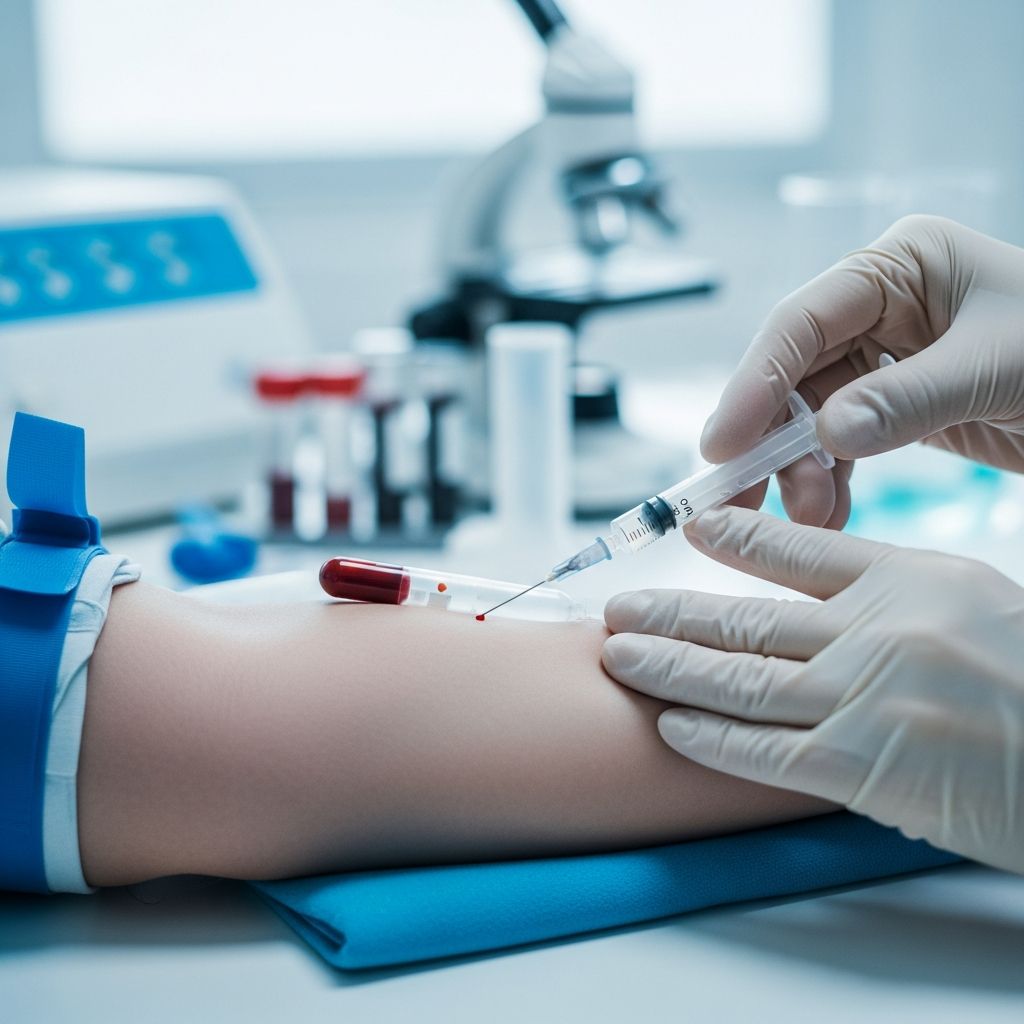
The prolactin blood test measures levels of prolactin, a key hormone produced by the pituitary gland that primarily supports milk production and breast tissue development, but also influences metabolism, immunity, and reproduction in both genders. Parents may encounter this test when addressing breastfeeding challenges, irregular periods, fertility concerns, or unusual milk discharge in children or themselves.
The Science Behind Prolactin and Its Regulation
Prolactin, a 199-amino-acid polypeptide, originates mainly from lactotroph cells in the anterior pituitary gland, with additional production sites in the immune system, uterus, and mammary glands. Dopamine from the hypothalamus acts as the primary inhibitor via D2 receptors, preventing excessive release, while factors like estrogen, thyrotropin-releasing hormone (TRH), and nipple stimulation during suckling promote it through positive feedback loops.
During pregnancy, rising estrogen levels expand lactotroph numbers, preparing breasts for lactation by developing mammary alveoli—milk-producing pockets. Post-delivery, suckling triggers prolactin surges, enhancing milk synthesis of lactose, casein, and lipids, alongside oxytocin for milk ejection. Beyond lactation, prolactin modulates over 300 functions, including stress response via ACTH sensitivity, GnRH suppression affecting fertility, oligodendrocyte proliferation for myelin formation, and immune regulation as a cytokine-like factor.
- Key Regulatory Pathways: Tuberoinfundibular dopamine pathway inhibits baseline secretion; suckling disrupts this for lactation.
- Pregnancy Adaptation: Lactotroph hyperplasia ensures ample supply; progesterone fall post-birth activates full production.
- Broader Impacts: Influences metabolism, angiogenesis, hematopoiesis, and fetal lung surfactant.
When Do Families Need a Prolactin Test?
Healthcare providers recommend prolactin testing for symptoms signaling imbalance, crucial for parents navigating postpartum recovery or child health issues. In nursing mothers, insufficient milk supply despite frequent feeding prompts evaluation, as high prolactin sustains lactation while low levels hinder it.
For adolescents or children, testing addresses precocious puberty, galactorrhea (inappropriate milk discharge), delayed puberty, or growth irregularities linked to pituitary dysfunction. Adults face testing for infertility, amenorrhea (absent periods), erectile dysfunction, or low libido, since excess prolactin suppresses GnRH, FSH, and LH, disrupting reproduction.
| Symptom Group | Common in | Potential Cause |
|---|---|---|
| Galactorrhea or low milk | Mothers, teens | Hyper- or hypoprolactinemia |
| Infertility, irregular cycles | Women, men | GnRH inhibition |
| Vision changes, headaches | All ages | Pituitary tumor (prolactinoma) |
| Puberty delays/issues | Children | Hormonal imbalance |
Medications like antipsychotics, antidepressants, or antihypertensives, plus stressors, hypothyroidism, or chest wall injuries, can elevate levels, necessitating tests to differentiate causes.
Preparing for Your Child’s or Your Prolactin Blood Test
Preparation ensures accurate results, as prolactin exhibits pulsatile daily fluctuations peaking at night and rising with stress, meals, or nipple stimulation. Schedule morning draws (8-10 AM) after 8-12 hours fasting to capture baseline; avoid high-protein foods evening prior.
- Medication Review: Inform doctor of drugs like SSRIs, metoclopramide, or estrogens, which may require pausing.
- Activity Restrictions: No exercise, stress, or breast stimulation 24 hours before; relax 30 minutes pre-draw.
- Child-Specific Tips: Explain simply to reduce anxiety; use numbing cream for young ones; fasting may need adjustment.
- Pregnant/Breastfeeding: Test possible but interpret cautiously due to natural elevations.
For repeat tests confirming highs, a dynamic suppression test with oral dopamine agonists like cabergoline may follow.
The Testing Procedure: Quick and Routine
The test involves a standard venipuncture: a phlebotomist cleans the arm, applies a tourniquet, inserts a needle into a vein (usually inner elbow), collects blood in a tube, then applies pressure to stop bleeding. Duration: 5-10 minutes; minimal discomfort like a quick pinch.
Immunoassay methods quantify prolactin precisely; results available in hours to days. No sedation needed for kids over toddlers; distractions like toys help. Rare risks include bruising, fainting, or infection, managed with care.
Interpreting Prolactin Test Results
Normal ranges vary by age, sex, and lab: non-pregnant women/men 2-29 ng/mL (102 pmol/L); pregnant up to 600 ng/mL; children lower, around 3-20 ng/mL. Elevations over 200 ng/mL suggest prolactinoma; mild highs (25-100 ng/mL) from physiology or meds.
High Levels (Hyperprolactinemia): Indicates prolactinomas (benign tumors), hypothyroidism (via TRH), renal failure, or stalk compression blocking dopamine. Impacts: lactation excess/suppression, menstrual halt, osteoporosis risk, infertility.
Low Levels: Rare, from pituitary damage (Sheehan’s syndrome, radiation); causes lactation failure, hypogonadism.
- Confirm with repeat; MRI for tumors; thyroid function tests.
Treatment Options for Abnormal Prolactin Levels
Dopamine agonists (cabergoline, bromocriptine) normalize 90% of cases by mimicking inhibition, shrinking tumors, restoring fertility. Surgery/radiation for resistant prolactinomas; address underlies like hypothyroidism.
Lifestyle aids: stress reduction, medication review. Monitoring suffices if asymptomatic. Success restores lactation, cycles, libido.
Prolactin’s Family-Wide Roles Beyond Testing
In parents, prolactin fosters maternal bonding, suppresses ovulation during breastfeeding (Lactational Amenorrhea Method). Fathers experience rises with infant contact, aiding caregiving. Children: supports neurodevelopment, immunity.
Imbalances link to PCOS, metabolic syndrome; balanced levels vital for family planning.
Frequently Asked Questions About Prolactin Testing
Why might my teenager need a prolactin test?
Teens with unexplained breast discharge, puberty delays, or headaches may have pituitary issues; testing rules out tumors or imbalances.
Does breastfeeding affect test results?
Yes, suckling elevates prolactin; pause nursing 4-6 hours prior or time post-feeding.
Are there risks for kids?
Negligible; like any blood draw—brief pain, rare bruising. Benefits outweigh for diagnosis.
How soon do results guide treatment?
Often same/next day; highs prompt imaging/meds quickly for symptom relief.
Can diet influence prolactin?
High-protein meals spike it temporarily; fast for accuracy.
References
- Physiology, Prolactin — StatPearls, NCBI Bookshelf. 2023-07-24. https://www.ncbi.nlm.nih.gov/books/NBK507829/
- Prolactin: What It Is, Function & Levels — Cleveland Clinic. 2023-11-01. https://my.clevelandclinic.org/health/body/prolactin
- Prolactin — Wikipedia (references primary sources). 2024-01-15. https://en.wikipedia.org/wiki/Prolactin
- Hyperprolactinemia (High Prolactin Levels) — ReproductiveFacts.org (ASRM). 2023-05-10. https://www.reproductivefacts.org/news-and-publications/fact-sheets-and-infographics/hyperprolactinemia-high-prolactin-levels/
- Prolactin Blood Test — UF Health. 2024-02-20. https://ufhealth.org/conditions-and-treatments/prolactin-blood-test