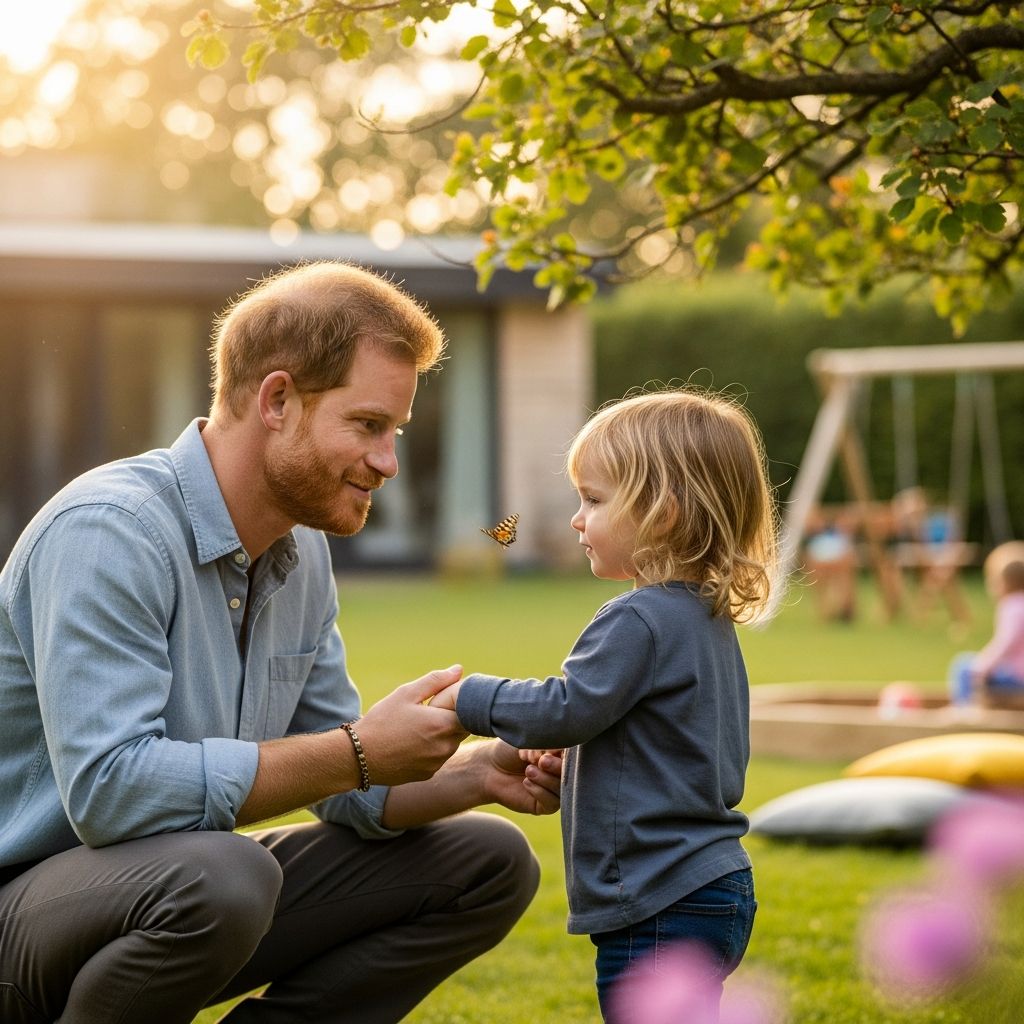
Prince Harry’s advocacy for conscious parenting highlights a profound shift in how modern families approach child-rearing. Drawing from his personal journey, he emphasizes self-awareness, emotional presence, and healing generational wounds to create nurturing environments where children thrive as whole individuals.
Understanding the Essence of Conscious Parenting
At its core, conscious parenting invites parents to embark on a journey of introspection before guiding their children. This philosophy posits that true parental effectiveness stems from understanding one’s own emotional landscape, triggers, and inherited patterns rather than imposing external controls. Prince Harry has openly discussed how recognizing his own unresolved grief influenced his desire to parent differently, prioritizing connection over correction.
Unlike traditional methods that focus on discipline and obedience, this approach views children as inherently wise beings capable of teaching adults valuable lessons. Parents are encouraged to release ego-driven expectations, fostering an atmosphere of mutual respect and growth. By staying fully present, caregivers model emotional regulation, helping kids navigate feelings constructively rather than suppressing them.
Breaking Free from Generational Trauma
One of Prince Harry’s most compelling insights revolves around interrupting cycles of intergenerational trauma. He reflects on how unprocessed family pain can unconsciously shape parenting behaviors, often leading to reactive rather than responsive interactions. Conscious parenting demands that adults confront their past—acknowledging childhood experiences that may fuel impatience or overcontrol—to prevent passing them on.
This process involves reflective practices like journaling or therapy, allowing parents to reframe old narratives. For instance, a parent who grew up in a high-pressure environment might unconsciously push perfectionism onto their child. By healing inwardly, they cultivate patience, creating space for their child’s authentic development.
Key Principles for Everyday Practice
Implementing conscious parenting requires adopting specific, actionable principles. Here’s how parents can integrate them:
- Self-Awareness First: Regularly assess your emotional state to respond thoughtfully instead of impulsively reacting to a child’s meltdown.
- Presence in the Moment: Engage fully without distractions, validating your child’s emotions to build trust.
- Clear, Compassionate Boundaries: Set expectations proactively with explanations, using positive reinforcement over punishment.
- Connection Before Correction: Prioritize empathy—ask ‘What’s behind this behavior?’ before addressing it.
- Mutual Learning: Recognize children as teachers, approaching interactions with humility and openness.
These principles transform daily challenges into opportunities for bonding and growth, aligning with Prince Harry’s vision of parenting as a shared evolutionary path.
Real-World Benefits for Families
The advantages of this parenting style extend beyond immediate harmony, yielding long-term gains. Families report stronger emotional bonds, where children feel seen and valued, reducing rebellion and enhancing cooperation. Parents experience lower stress levels through mindfulness practices inherent to the approach.
| Benefit | Impact on Child | Impact on Parent |
|---|---|---|
| Improved Emotional Regulation | Develops resilience and self-soothing skills | Reduces anxiety and reactivity |
| Enhanced Communication | Builds expressive language and empathy | Fosters respectful dialogue |
| Stronger Family Ties | Increases security and trust | Promotes personal fulfillment |
| Behavioral Improvements | Decreases outbursts via understanding roots | Minimizes power struggles |
Research supports these outcomes; for example, mindful interactions correlate with advanced cognitive development and reduced aggression in children.
Navigating Challenges in Conscious Parenting
While transformative, adopting this style isn’t without hurdles. Parents may initially struggle with letting go of control, facing societal pushback favoring authoritative methods. Time constraints in busy lives can hinder presence, and confronting personal trauma demands vulnerability.
Prince Harry addresses this by advocating gradual integration—start with short daily reflections or breathwork. Seeking community support, like parenting groups, reinforces commitment. Over time, the shift from reaction to response becomes instinctive, yielding profound rewards.
Practical Tools and Strategies from Harry’s Philosophy
To embody these ideas, consider these daily tools inspired by conscious parenting advocates:
- Mindful Mornings: Begin days with 5 minutes of meditation to center yourself before family interactions.
- Emotion Check-Ins: Use family dinners for round-robin sharing of feelings, normalizing vulnerability.
- Reflective Pauses: When tension rises, pause, breathe, and label emotions aloud to model regulation.
- Gratitude Rituals: End days noting one lesson learned from each child, reinforcing mutual growth.
- Boundary Workshops: Co-create family rules with kids, explaining rationales to build buy-in.
These habits align with Harry’s emphasis on healing through presence, turning ordinary moments into healing opportunities.
Healing Personal Wounds Through Parenting
Prince Harry’s narrative underscores parenting as a mirror for self-healing. By observing children’s unfiltered authenticity, parents confront their own suppressed aspects. This reciprocity—where kids mirror parental unresolved issues—prompts deep inner work, leading to wholeness for all.
For Harry, fatherhood catalyzed confronting loss and familial expectations, fostering resilience he now imparts. This bidirectional healing fortifies family units against external pressures, promoting collective emotional intelligence.
Frequently Asked Questions (FAQs)
What makes conscious parenting different from gentle parenting?
Conscious parenting emphasizes parental self-work and inner awareness as foundational, while gentle parenting focuses more on responsive, non-punitive child interactions. Both overlap in compassion but differ in self-reflection depth.
Can busy parents practice conscious parenting?
Yes, it thrives on micro-moments of presence rather than perfection. Short pauses and intentional check-ins fit any schedule.
How does it address child misbehavior?
By exploring underlying emotions and needs first, then enforcing pre-set boundaries with empathy, reducing future incidents.
Is conscious parenting backed by science?
Studies link mindfulness in parenting to better child outcomes like emotional regulation and cognition.
How has Prince Harry influenced this trend?
Through candid discussions on trauma and presence, he normalizes vulnerability, inspiring global parents to prioritize healing.
Building a Legacy of Emotional Resilience
Prince Harry’s embrace of conscious parenting redefines success not by achievements but by emotional depth. Families adopting this path nurture resilient, empathetic individuals equipped for life’s complexities. It’s a call to evolve together, healing past wounds while forging brighter futures.
References
- What is Conscious Parenting? — Mental Health Center Kids. 2023-05-15. https://mentalhealthcenterkids.com/blogs/articles/conscious-parenting
- The Rise of Conscious Parenting: A New Wave of Mindful Connection — FlexTalk. 2024-02-10. https://www.flextalk.org/the-rise-of-conscious-parenting-a-new-wave-of-mindful-connection-with-our-kids/
- What Is Conscious Parenting? Key Points, Benefits, and Drawbacks — Healthline. 2023-11-20. https://www.healthline.com/health/parenting/conscious-parenting
- What Is Conscious Parenting? — Cleveland Clinic Health Essentials. 2024-01-08. https://health.clevelandclinic.org/conscious-parenting
- What is Conscious Parenting? — Infinite Potential Counseling. 2023-08-12. https://www.infinitepotentialinctx.com/what-is-conscious-parenting