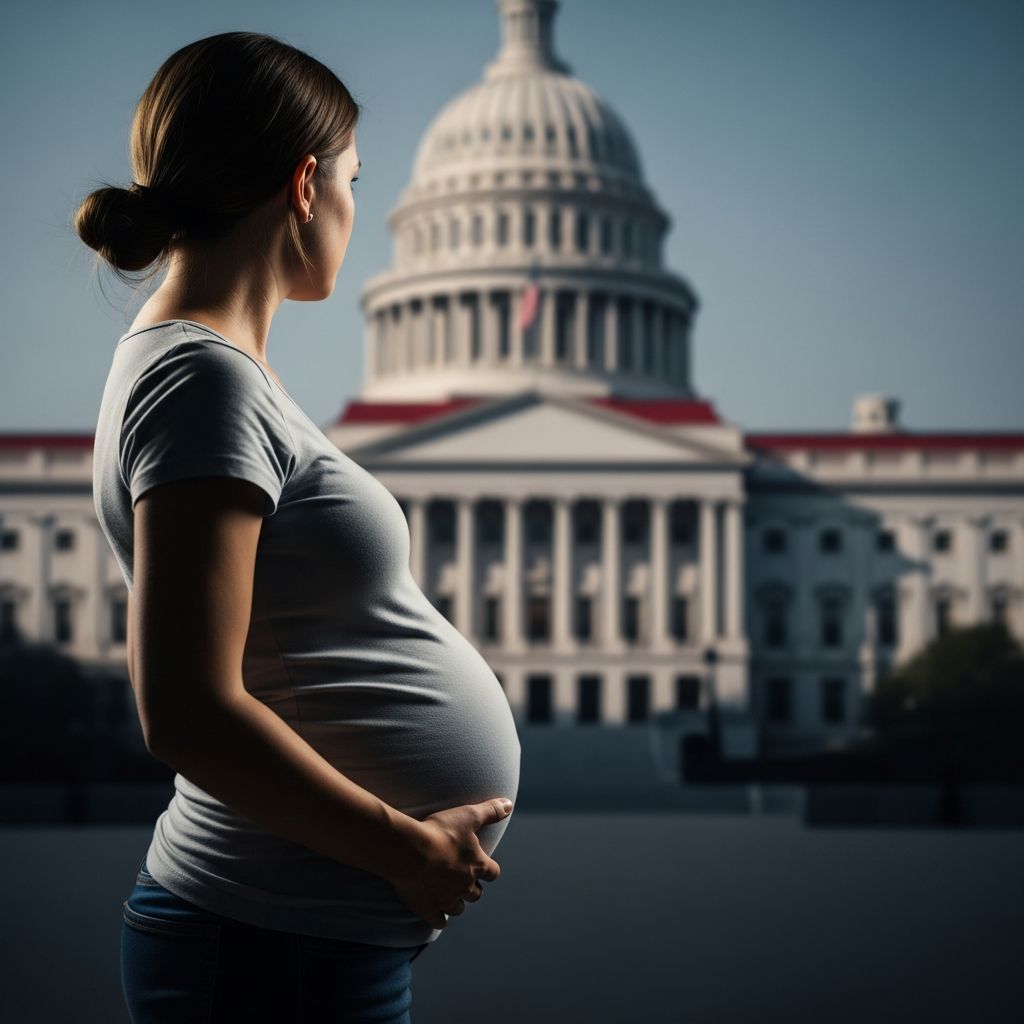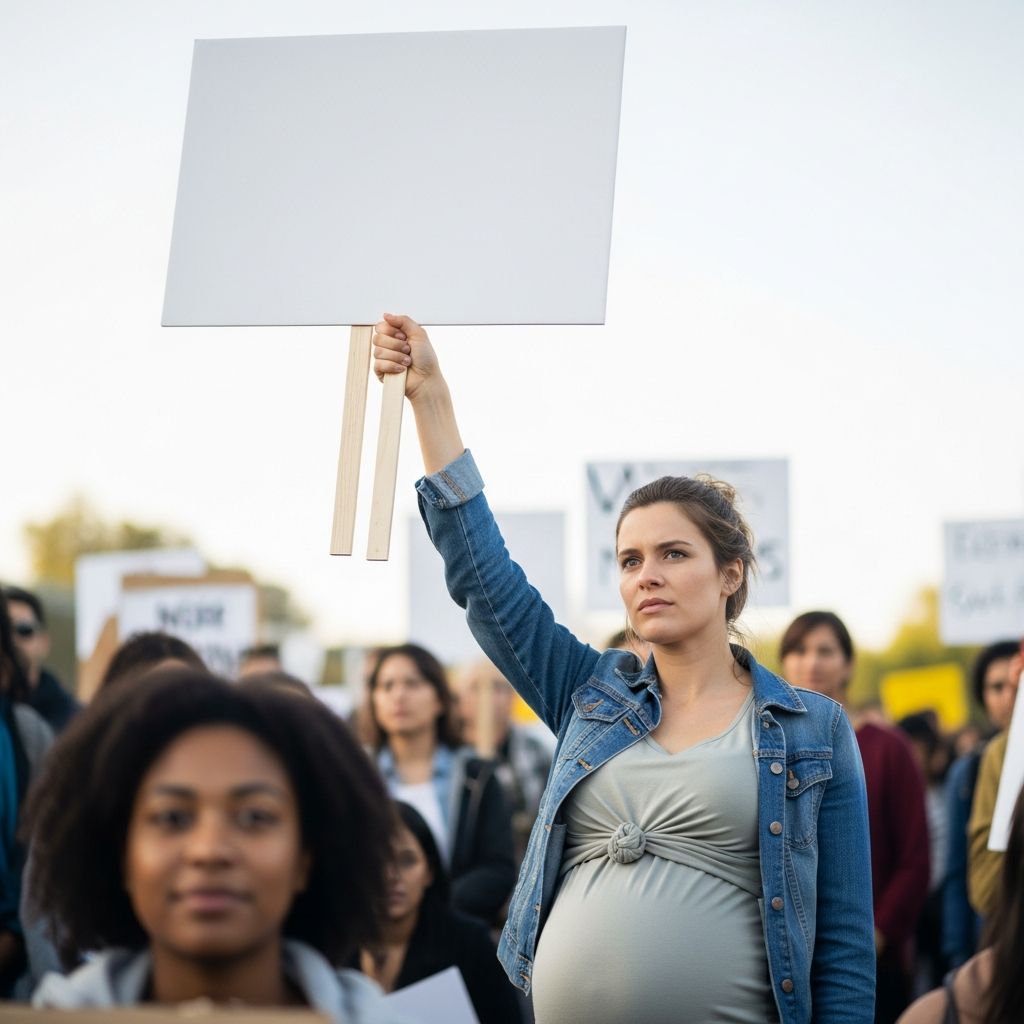
A simple yet searing message held high by a pregnant woman at a Washington D.C. rally in June 2020 has echoed through social media and streets alike, symbolizing the raw intersection of motherhood, race, and resistance. Crafted by Thema, a 26-year-old Black mother already raising one son and expecting another, the sign drew thousands of engagements on Instagram, amplifying voices in the Black Lives Matter movement.
The Birth of a Viral Symbol
In the charged atmosphere following George Floyd’s death on May 25, 2020, protests swept the nation. On June 3, amid demonstrations in the nation’s capital, Thema stood out with her handmade poster. Proudly displaying her advanced pregnancy, she embodied vulnerability and strength. Her sign read: “We are not carrying for 9 months / Then struggling for 9 hours during labor / Just for you to kneel on their neck for 9 minutes. Black Lives Matter.” This poignant parallel between the endurance of pregnancy—nine months of nurturing—and the brutality of nine minutes of a police officer’s knee on Floyd’s neck struck a deep chord.
Thema’s Instagram post, captioned with defiant hashtags like #BLACKLIVESMATTER, #justiceforgeorgefloyd, and #nojusticenopeace, exploded in popularity. Supporters from around the world praised its unfiltered truth, turning it into a rallying cry for mothers confronting systemic threats to their children’s lives.
Maternal Resilience in the Face of Injustice
Black motherhood carries unique burdens, amplified by historical and ongoing disparities. Thema’s sign crystallized fears shared by many: the exhaustive journey of gestation and labor, only for society to endanger the lives brought into the world. According to the Centers for Disease Control and Prevention (CDC), Black women face maternal mortality rates three to four times higher than white women, a statistic underscoring the stakes.
- Pregnancy Endurance: Nine months of physical, emotional, and hormonal changes prepare a mother for birth.
- Labor Intensity: Hours of pain and effort culminate in new life.
- Post-Birth Peril: The sign highlights how racial violence undermines these sacrifices, referencing Floyd’s fatal encounter.
Thema shared with ABC News that holding the sign made her feel “very empowered,” a testament to how personal expression fuels collective action.
Historical Echoes of Maternal Activism
Protest signs have long served as weapons of words in social movements. From suffragettes demanding votes to civil rights marchers challenging segregation, concise messaging cuts through chaos. In the BLM era, maternal voices gained prominence, echoing Mamie Till-Mobley’s 1955 open-casket funeral for her son Emmett, which galvanized the movement.
Thema’s display fits this tradition, merging bodily evidence of creation with demands for protection. Similar signs at rallies worldwide adapted her phrasing, spawning variations that personalized the pain of Black parenting.
Impact on Social Media and Beyond
| Platform | Engagement Metrics | Key Reactions |
|---|---|---|
| Thousands of likes/shares | Empowerment anthems, personal stories | |
| Twitter (X) | Viral retweets | Hashtag trends like #MomsofBLM |
| News Outlets | Features on GMA, Mother.ly | Broadened discourse on race/motherhood |
The sign’s reach extended to mainstream media, prompting discussions on how motherhood intersects with racial justice. It inspired artwork, T-shirts, and digital memes, ensuring its message endured beyond the rally.
Broader Context: Black Mothers and Systemic Challenges
Beyond symbolism, Thema’s stand spotlights entrenched issues. The U.S. Department of Health and Human Services reports that Black infants die at more than twice the rate of white infants, often linked to inequities in healthcare access.
Mothers like Thema navigate:
- Healthcare Disparities: Limited prenatal care in underserved communities.
- Police Violence: Disproportionate encounters endangering Black youth.
- Economic Pressures: Balancing work, childcare, and activism.
Her pregnancy amplified the urgency, visually arguing that the miracle of life demands safeguarding from violence.
Evolution of Protest Messaging in Modern Movements
From the 2020 uprisings to ongoing fights, signs evolve with cultural moments. Post-Roe v. Wade overturn in 2022, pro-choice rallies borrowed maternal rhetoric, with slogans like “Not Your Body, Not Your Choice” mirroring protective instincts.
Yet, racial justice signs retain raw specificity. Getty Images archives thousands of protest photos, showing a continuum from Floyd-focused pleas to current demands for accountability.
Personal Stories Fueling the Fire
Thema isn’t alone. Countless Black mothers have shared parallel testimonies:
“Every ultrasound reminds me of the world they’ll enter—one demanding constant vigilance.”
— Anonymous BLM mother, echoed in rally chants.
These narratives humanize statistics, fostering empathy and action. Thema’s choice to protest while pregnant underscored commitment, risking personal safety for communal change.
Psychological Power of Visual Protest
Experts note that visible pregnancy in protests evokes protection instincts, making messages harder to dismiss. A study from the American Psychological Association highlights how embodied activism—using one’s body as canvas—amplifies impact in justice campaigns.
Thema’s belly became a billboard for survival, contrasting creation with destruction.
Legacy and Ongoing Relevance
Years later, as of 2026, the sign’s essence persists amid renewed calls for police reform. It reminds that maternal love is activism’s bedrock, urging society to honor life’s labors with equity.
In D.C. and beyond, copycat signs appear at marches, proving one mother’s words can seed a movement.
Frequently Asked Questions (FAQs)
What was the exact message on Thema’s sign?
The sign contrasted nine months of pregnancy, nine hours of labor, and nine minutes of knee-on-neck violence, ending with “Black Lives Matter.”
Where and when did Thema hold the sign?
On June 3, 2020, at a Black Lives Matter protest in Washington, D.C.
Why did the sign go viral?
Its emotional parallel to George Floyd’s death, combined with Thema’s pregnancy, resonated deeply on social media, garnering thousands of likes.
How does this relate to broader maternal health issues?
It highlights Black maternal mortality disparities, where rates are 3-4 times higher per CDC data.
Has the sign influenced other protests?
Yes, inspiring variations in BLM and reproductive rights rallies, as seen in media archives.
Calls to Action for Allies
Support begins with listening:
- Amplify Black maternal voices.
- Advocate for healthcare equity.
- Participate in or fund anti-racism efforts.
Thema’s sign endures as a call: Protect what mothers build.
References
- This pregnant mother’s protest sign is so powerful — Mother.ly. 2020-06. https://www.mother.ly/life/this-pregnant-moms-protest-sign-is-so-powerful/
- Pregnant woman’s protest sign sends powerful message — ABC News. 2020-06. https://abcnews.go.com/GMA/Family/pregnant-womans-protest-sign-sends-powerful-message-mom/story?id=71137334
- Here Are 40 Sign Ideas For Your Next Abortion Rights Protest — Women’s Health Magazine. 2024-11. https://www.womenshealthmag.com/life/g40187340/pro-choice-abortion-protest-signs-ideas/
- Pro Choice Signs Stock Photos — Getty Images. Ongoing. https://www.gettyimages.com/photos/pro-choice-signs
- Maternal Mortality Rates in the United States — Centers for Disease Control and Prevention (CDC). 2023-10-05. https://www.cdc.gov/nchs/data/hestat/maternal-mortality/2023/maternal-mortality-rates-2023.htm
- Civil Rights History Project: Mamie Till-Mobley — Library of Congress. 2022. https://www.loc.gov/collections/civil-rights-history-project/?fa=location:washington%2Bd.c.&c=150&sb=date_desc
- Infant Mortality — U.S. Department of Health and Human Services (HHS). 2024-02-15. https://mchb.hrsa.gov/data/national-data/infanticide
- Embodied Activism in Social Movements — American Psychological Association (APA). 2021-07. https://psycnet.apa.org/record/2021-51234-001