Proper nutrition during pregnancy is crucial for supporting both maternal health and fetal development. Expectant mothers need increased calories, proteins, and specific micronutrients to foster the growth of the placenta, baby’s organs, and overall well-being. Health organizations emphasize a balanced diet rich in fruits, vegetables, whole grains, lean proteins, and dairy to meet these demands.
Core Principles of a Pregnancy-Friendly Diet
Adequate intake, diversity in food choices, and balanced macronutrients form the bedrock of prenatal eating. Adequacy ensures enough energy for the growing fetus, while variety helps cover a spectrum of vitamins and minerals. Balance involves proportioning carbs, proteins, and fats appropriately to sustain energy levels and prevent deficiencies.
Pregnant women should aim for gradual weight gain based on pre-pregnancy BMI: 28-40 pounds for normal weight individuals, spread across trimesters. Hydration is equally vital—target 8-12 cups of water daily to support increased blood volume and amniotic fluid.
Essential Macronutrients for Fetal Growth
Macronutrients provide the energy and building blocks needed for pregnancy. Carbohydrates should comprise 45-65% of intake, focusing on complex sources like whole grains for sustained energy and fiber to combat constipation. Proteins, at 10-35% or about 71 grams daily, aid tissue development—opt for lean meats, eggs, beans, and nuts.
Fats, making up 20-35%, should prioritize healthy unsaturated types from avocados, nuts, and fatty fish for omega-3 benefits. Limit saturated fats to under 10%. Here’s a breakdown:
| Macronutrient | Recommended % of Intake | Daily Amount (approx.) | Top Sources |
|---|---|---|---|
| Carbohydrates | 45-65% | 175-250g | Whole grains, veggies, fruits |
| Protein | 10-35% | 71g | Lean meat, eggs, legumes |
| Fats | 20-35% | Varied | Avocados, nuts, salmon |
Critical Micronutrients and Their Food Sources
Micronutrients prevent complications like anemia or neural tube defects. Folate (600 mcg daily) is paramount in the first trimester for brain and spine formation—found in leafy greens, fortified cereals, and citrus. Iron (27 mg) combats fatigue by boosting blood production; pair spinach or lean beef with vitamin C-rich foods like oranges for better absorption.
- Calcium (1,000 mg): Builds baby’s bones; sources include dairy, fortified plant milks, and leafy greens.
- Vitamin D (600 IU): Enhances calcium absorption; get from sunlight, fortified dairy, or fatty fish.
- Omega-3s (DHA/EPA): Support brain and eye development; aim for low-mercury fish like salmon twice weekly.
- Choline (450 mg): Vital for neural development; eggs and lean meats are richest.
- Iodine (220 mcg) and Zinc: For thyroid and immune function; iodized salt, seafood, nuts.
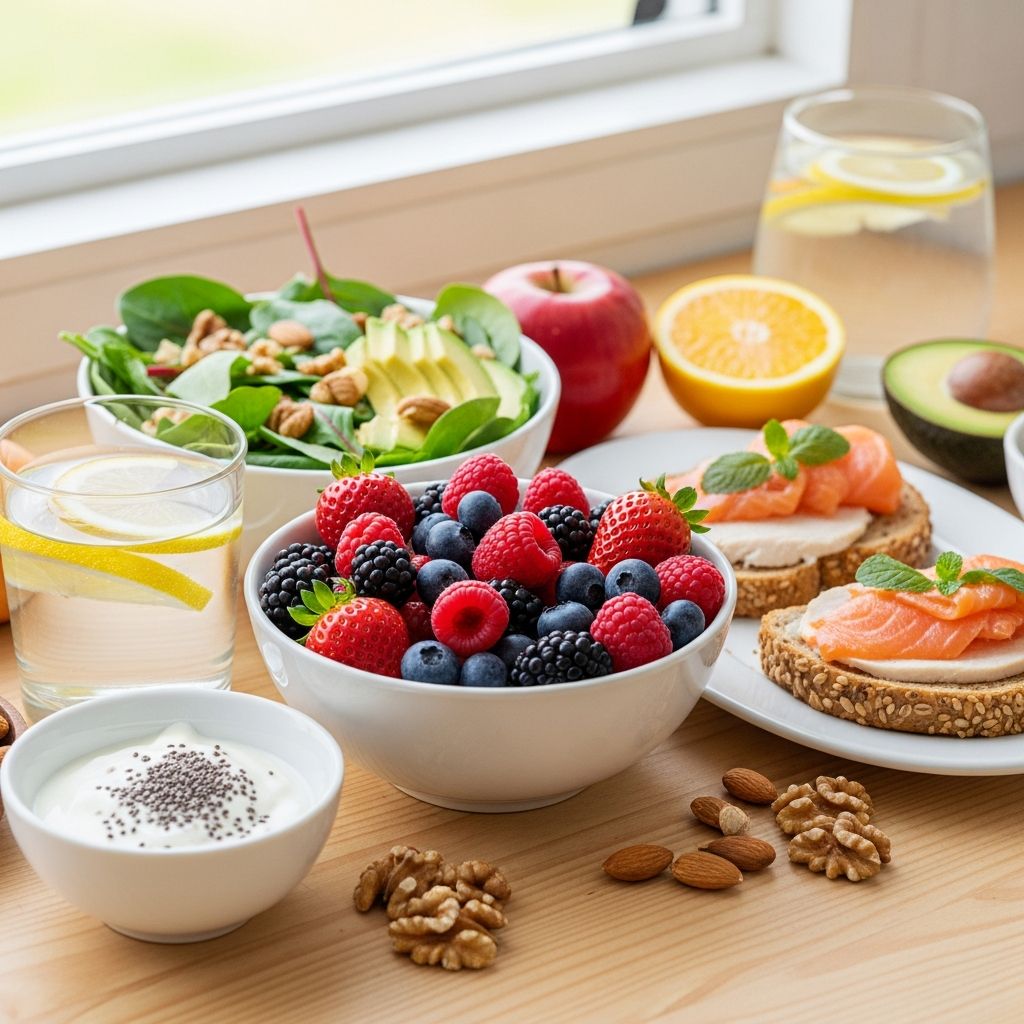
A sample nutrient-rich meal: Greek yogurt parfait with berries, nuts, and fortified cereal covers calcium, protein, folate, and vitamin C.
| Nutrient | Daily Need | Food Examples (Serving Size) | Amount Provided |
|---|---|---|---|
| Folate | 600 mcg | 1 cup spinach; 1 fortified cereal bowl | 263 mcg; 400 mcg |
| Iron | 27 mg | 3 oz lean beef; 1/2 cup lentils | 3 mg; 3.3 mg |
| Calcium | 1,000 mg | 1 cup milk; 6 oz yogurt | 300 mg; 258 mg |
| Protein | 71 g | 3 oz salmon; 1/2 cup lentils | 17 g; 9 g |
Trimester-Specific Nutritional Focus
First Trimester: Building Foundations
Nausea often strikes early, so prioritize small, frequent meals with ginger or crackers. Ramp up folate to prevent birth defects—400 mcg from prenatal vitamins plus diet. Hydrate and include B6-rich bananas for nausea relief.
Second Trimester: Energy and Growth Surge
Caloric needs rise by 340 daily calories; add iron-rich foods to match expanding blood volume. Calcium intake supports emerging bones. Opt for snacks like apple with peanut butter.
Third Trimester: Final Preparations
Increase to 452 extra calories, emphasizing proteins and omega-3s for brain growth. Fiber from veggies prevents swelling and constipation. Choose grilled chicken salads or lentil soups.
Daily Food Group Recommendations
Strive for variety per USDA and VA guidelines:
- Vegetables: 5-7 servings (dark greens, reds, legumes).
- Fruits: 2-3 whole pieces.
- Grains: Half whole (oats, quinoa).
- Proteins: Lean options daily, fish 8-12 oz weekly.
- Dairy: 3 servings low-fat.
Sample daily menu:
- Breakfast: Oatmeal with berries and yogurt.
- Lunch: Quinoa salad with spinach, chickpeas, feta.
- Snack: Apple slices with almonds.
- Dinner: Baked salmon, sweet potato, broccoli.
- Dessert: Fruit smoothie.
Foods to Limit or Avoid for Safety
Foodborne risks heighten during pregnancy. Avoid raw/undercooked meats, unpasteurized dairy, high-mercury fish (shark, swordfish), and deli meats unless heated. Limit caffeine to 200 mg, sugary drinks, and sodium to 2,300 mg. Alcohol is strictly prohibited.
Practice hygiene: Wash produce, cook thoroughly, refrigerate promptly.
Special Diets: Plant-Based and Beyond
Vegetarians/vegans can thrive with planning—fortified foods for B12, iron from lentils paired with vitamin C, plant milks for calcium. Consult a doctor for supplements.
Role of Prenatal Vitamins
Daily prenatals bridge gaps, providing 400 mcg folic acid, iron, and more. They don’t replace diet but ensure minimums.
Frequently Asked Questions
Can I eat sushi during pregnancy?
Avoid raw fish; cooked sushi rolls are safer. Choose low-mercury options.
How much weight should I gain?
Depends on BMI: 25-35 lbs for average; discuss with your provider.
Is coffee safe?
Limit to 200 mg caffeine daily (about 1-2 cups).
What if I have food aversions?
Small meals, nutrient-dense shakes; supplement as needed.
Are eggs safe?
Fully cooked yes; they provide choline and protein.
This guide empowers expectant mothers with actionable nutrition strategies. Always personalize with healthcare advice.
References
- Nutrition for Maternal Health: A Comprehensive Guide — Monadnock Community Hospital. 2024. https://monadnockcommunityhospital.com/nutrition-for-maternal-health-2024/
- Prenatal Nutrition Goals — U.S. Department of Veterans Affairs. 2023-09. https://www.va.gov/files/2023-09/Nutrition%20During%20Pregnancy.pdf
- Healthy Eating During Pregnancy — American College of Obstetricians and Gynecologists (ACOG). Accessed 2026. https://www.acog.org/womens-health/faqs/healthy-eating-during-pregnancy
- Pregnancy diet: Focus on these essential nutrients — Mayo Clinic. Accessed 2026. https://www.mayoclinic.org/healthy-lifestyle/pregnancy-week-by-week/in-depth/pregnancy-nutrition/art-20045082
- Dietary Advice Before and During Pregnancy — U.S. Food and Drug Administration (FDA). Accessed 2026. https://www.fda.gov/food/people-risk-foodborne-illness/dietary-advice-and-during-pregnancy