Pregnancy cravings can feel like a plot twist you never saw coming: one minute you are indifferent to a certain food, and the next minute you would drive twenty miles in the rain to get it. While each person’s experience is unique, cravings often become one of the most vivid and funny memories of pregnancy. This article explores the emotional and practical side of cravings, how they can follow you into postpartum life, and how to navigate them without shame, fear, or rigid rules.
What Exactly Is a Pregnancy Craving?
A pregnancy craving is more than just feeling hungry. It is an intense, often very specific desire for a particular food or flavor that can feel urgent and hard to ignore. Many people describe it as a kind of mental tug-of-war where logic knows you do not “need” that exact thing, but your body and brain insist otherwise.
- Cravings are usually food-specific, not just a general need to eat.
- They can show up at odd times, like late at night or between meals.
- They often come with strong emotions: excitement, comfort, frustration, or even guilt.
Some people never experience cravings at all, while others feel like pregnancy turns their appetite into a full-time character in their life story. Both are normal.
Why Pregnancy Cravings Feel So Intense
The reasons behind cravings are layered. Biology, psychology, and culture all play a part. During pregnancy, hormones can affect taste, smell, hunger signals, and mood. At the same time, many people are dealing with new worries, expectations, and physical discomforts, which can make food feel like a quick, reliable source of relief or joy.
- Physical shifts: Changes in hormones can alter how foods taste and smell, suddenly making some things irresistible and others intolerable.
- Emotional needs: Stress, fear, boredom, or loneliness can all nudge you toward foods that feel familiar, nostalgic, or comforting.
- Cultural stories: Jokes and stories about wild pregnancy cravings can make it feel more acceptable to indulge urges during this time than at other points in life.
None of these factors mean you are weak or out of control. They simply show that cravings are complex experiences, not moral tests.
Common Themes (Not Just Pickles and Ice Cream)
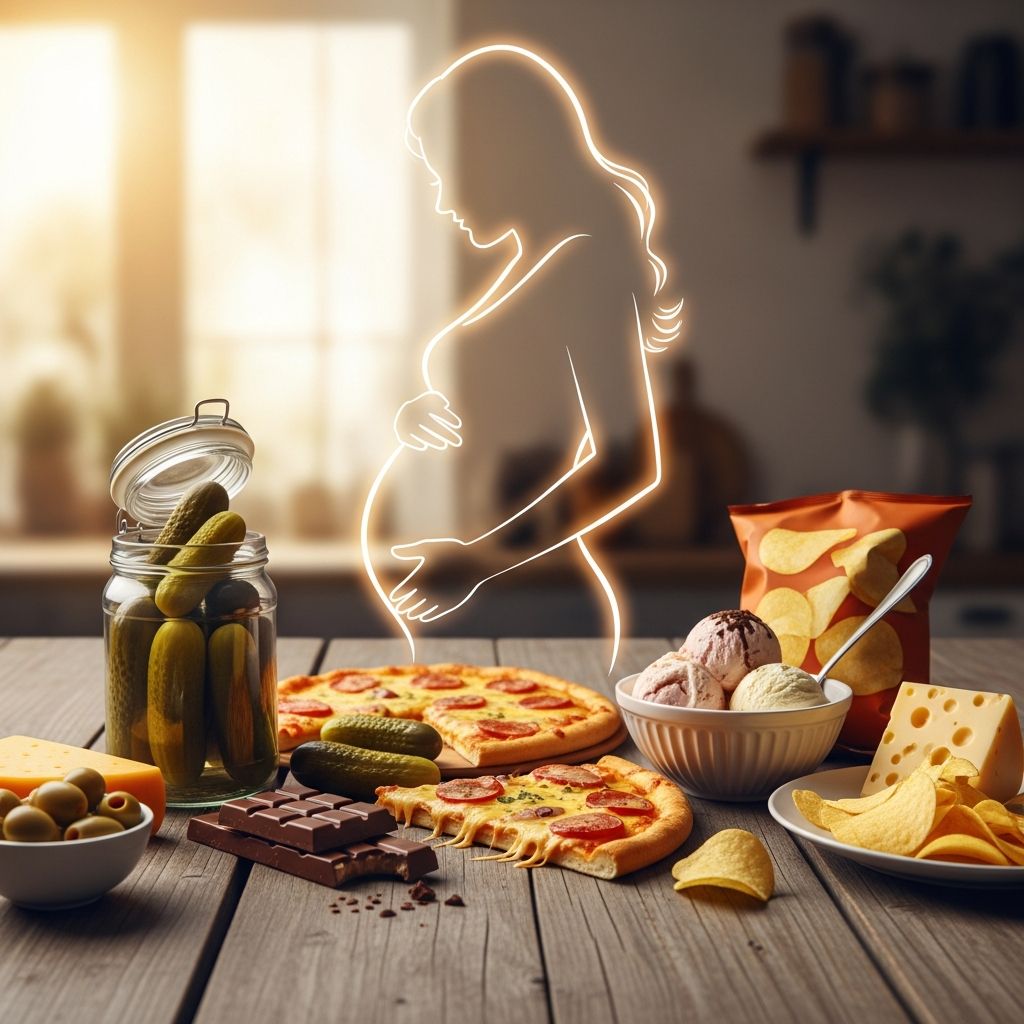
Popular culture loves the image of pickles and ice cream, but actual cravings are far more varied. They can be sweet, salty, sour, spicy, or all of the above—sometimes in rapid sequence. What matters more than the type of food is how you feel about the craving itself.
Here are some common themes many pregnant people recognize:
- Texture obsessions: Crunchy, icy, creamy, or chewy foods start to feel strangely essential.
- Temperature favorites: Some discover an intense love of very cold drinks, frozen treats, or hot soups and teas.
- Nostalgic foods: Childhood snacks, family recipes, or foods tied to comforting memories suddenly call your name.
- Odd pairings: Foods you would never combine in everyday life suddenly seem like the perfect match.
What feels bizarre to someone else may feel completely sensible and comforting to you in the moment.
How Cravings Shape Your Pregnancy Story
Cravings often become part of how you remember and tell the story of your pregnancy. Years later, you might laugh about the time you sent a partner out late at night, or how one particular snack saw you through months of nausea or fatigue. These details turn into tiny emotional bookmarks that capture how you felt at a certain time.
Cravings can also reflect what you were going through emotionally: long workdays, anxiety about birth, excitement about meeting your baby, or the need for something that felt simple and enjoyable when everything else felt new and overwhelming.
- They can mark specific trimesters or milestones (for example, early nausea or a growth spurt).
- They can serve as reminders of where you found comfort when life felt uncertain.
- They sometimes become inside jokes within a family, especially if others joined your food quests.
When Cravings Collide With Guilt and “Shoulds”
Alongside excitement and humor, cravings can also stir up guilt or worry. It is common to feel torn between what you have been told is “healthy” and what actually sounds bearable or satisfying. You might wonder whether you are doing something wrong when you do not crave salad or when the only thing that stays down is a refined carbohydrate.
Some common emotional struggles around cravings include:
- Feeling like a “bad” parent for wanting foods labeled as unhealthy.
- Comparing yourself to others who seem to eat more “perfectly” during pregnancy.
- Worrying that every craving satisfied will show up on the scale or affect your baby negatively.
- Feeling ashamed if you lose track of portions when something finally tastes good.
These feelings can be heavy. It helps to remember that no single snack defines your health or your parenting, and that flexibility, not perfection, is usually more realistic and sustainable.
Listening to Your Cravings (Without Letting Them Run the Show)
One of the most helpful skills in pregnancy is learning to listen to cravings with curiosity instead of judgment. That does not mean you must always give in or always resist. It means you pause long enough to ask what your body and mind might be trying to tell you.
When a craving hits, you might gently ask yourself:
- Am I physically hungry, or am I tired, stressed, bored, or anxious?
- Does this specific food remind me of something or someone comforting?
- Would a smaller portion or a slightly more nourishing version still feel satisfying?
- What else do I need right now besides food—rest, reassurance, company, fresh air?
This kind of reflection does not have to be complicated or time-consuming. Over time, it can reduce the sense of being “controlled” by cravings and help you feel more like a partner with your body instead of its opponent.
Simple Strategies for Navigating Cravings
There is no single right way to handle cravings, but a few practical approaches can make them feel more manageable and less stressful.
- Build in some flexibility: Plan room in your routine for foods you genuinely enjoy, not just those you think you are “supposed” to eat.
- Keep supportive options on hand: If cold, crunchy, or salty things call to you, keep versions that satisfy the craving while still helping you feel physically good.
- Pair pleasure with nourishment: Combine a highly craved food with something that offers staying power, like protein, fiber, or healthy fats.
- Use “portion first” thinking: Serve yourself a portion on a plate or in a bowl instead of eating straight from the package, then pause and check in before going back for more.
- Make rituals, not rules: Instead of strict bans, create gentle rituals, such as a nightly snack you look forward to or a weekend treat you enjoy slowly and mindfully.
Table: Balancing Cravings and Comfort
| Craving Experience | What Might Be Going On | Possible Supportive Response |
|---|---|---|
| Intense urge for very specific foods | Body seeking comfort, familiar flavors, or quick energy | Allow the food in a portion that feels good and pair it with something more sustaining |
| Cravings appear mostly when stressed or lonely | Emotional needs showing up as food desires | Add non-food coping tools like a short walk, a call to a friend, or a calming routine |
| Feeling guilty after every craving | Internalized rules and pressure to be a “perfect” pregnant person | Focus on overall patterns, not single snacks; practice kinder self-talk |
| Cravings make you feel out of control | Restrictive thinking followed by rebound eating | Schedule regular meals and snacks so you do not get overly hungry |
| Sudden aversions along with cravings | Sensitivity to smell, texture, or nausea triggers | Experiment with temperature, texture, and timing to find what feels tolerable |
Cravings and Your Changing Body Image
Pregnancy touches every part of your identity, including how you see your body. As your shape changes and the scale moves in ways you cannot fully control, cravings can become loaded with even more meaning. A snack no longer feels like “just a snack” when you are already monitoring every visible shift in your body.
It can help to reframe things:
- Weight gain in pregnancy is expected and necessary, not a failure.
- Your worth is not measured in grams of sugar, carbs, or salt.
- Respect for your body includes listening to it, not only trying to control it.
- You can care about nourishment and also enjoy food without turning every choice into a verdict on your character.
When Cravings Feel Like Red Flags
Most cravings are harmless, even if they are quirky or frequent. However, there are situations where it is wise to talk with a healthcare provider. While this article does not offer medical advice, awareness can help you know when to seek support.
- Craving non-food items such as dirt, ice, paper, or chalk.
- Feeling unable to stop eating to the point of discomfort or distress.
- Avoiding almost all foods because only one or two feel safe or tolerable.
- Feeling overwhelming guilt, anxiety, or panic around eating and cravings.
Opening up to a professional can feel intimidating, but a supportive care team can help you find safe, balanced ways to meet both physical and emotional needs.
After the Baby Arrives: Do the Cravings Ever Really End?
For some, cravings fade quietly after birth. For others, they linger in new forms. Sleep deprivation, feeding schedules, and the emotional roller coaster of caring for a newborn can keep food playing a central role in daily life. You may still reach for the same comfort foods you loved in pregnancy—or develop new favorites that get you through long nights.
It can be interesting to notice:
- Which cravings disappear once hormones shift and routines change.
- Which foods stick around as “comfort classics” in your home.
- How your perspective on cravings changes once you are no longer pregnant.
Sometimes the foods you once felt slightly embarrassed about become funny legends you share with friends, partners, or even your child someday: “When I was pregnant with you, I practically lived on…”
Rewriting the Story: From Shame to Curiosity
Instead of viewing cravings as proof that you lack discipline, you can treat them as messages and memories. That might mean keeping a lighthearted journal of the things you wanted most or talking with a trusted friend about how those cravings connected to what you were feeling at the time.
A more curious, compassionate approach can look like:
- Noticing patterns without judging them.
- Allowing room for pleasure while still respecting your body’s needs.
- Letting go of the idea that “good” pregnant people always eat perfectly.
- Seeing cravings as part of your story—not the whole story.
Quick Tips for Navigating Cravings Day-to-Day
- Eat regularly: Long gaps between meals can make cravings feel more intense and harder to navigate.
- Hydrate: Sometimes thirst or fatigue masquerades as a craving for something very specific.
- Prepare small go-to options: Have a few easy snacks on hand that you genuinely enjoy and that help you feel steady.
- Use mindful moments: Take a breath before eating, notice the smell and taste, and give yourself permission to enjoy it without multitasking if possible.
- Ask for help: If you are comfortable, involve your partner, friends, or family in practical things like grocery runs or meal prep.
Frequently Asked Questions About Pregnancy Cravings
Are pregnancy cravings a sign that my body is missing certain nutrients?
Sometimes cravings may overlap with nutritional needs, but they are not a reliable or automatic signal of deficiency. A desire for a certain food can be tied to taste, comfort, culture, memory, or simple preference. If you are concerned about specific nutrients, it is best to talk with a healthcare provider who can look at your overall eating pattern instead of any one craving.
Is it okay to give in to cravings?
For most people, enjoying craved foods in reasonable amounts is perfectly fine and can make eating feel less stressful. Trying to ban all “fun” foods often backfires and leads to more preoccupation. Many find that a middle ground—honoring cravings sometimes, balancing them with more nourishing choices—works better than either strict restriction or constant indulgence.
What if I never have any cravings?
Not everyone experiences cravings during pregnancy, and that does not mean anything is wrong. Lack of cravings is just as normal as having them. Your pregnancy is still valid and complete without a single emergency snack run.
Why do I feel so guilty after eating what I crave?
Guilt usually comes from external rules and messages about what a “good” pregnant person should eat. When you internalize these rules, everyday choices start to feel like tests you can pass or fail. Gently challenging those beliefs and focusing on overall patterns, rather than isolated moments, can reduce guilt and help you approach food with more kindness.
Do pregnancy cravings predict my baby’s likes and dislikes?
It is a charming idea, and many families love to tell stories linking a child’s favorite foods to what was craved during pregnancy. In reality, taste preferences are shaped by many factors over time, including early exposures and family eating habits. While it is fun to imagine a connection, cravings are not a crystal ball for your child’s future menu.
Embracing the Full Picture
Pregnancy cravings are not just about food. They are about identity, vulnerability, comfort, humor, and the strange experience of sharing your body with another human being. They may lead you to new favorite snacks, spark fights with the freezer when it is empty, or leave you with stories you will tell for years.
If cravings have become part of your journey, you are in good company. You are allowed to care about nourishment and still love the foods that make you smile. You are allowed to change your mind, adjust your habits, and grow—just like the new life you are carrying. And if your cravings one day become nothing more than a funny memory, they will still have done their quiet job: getting you through a chapter of life that is as challenging as it is extraordinary.