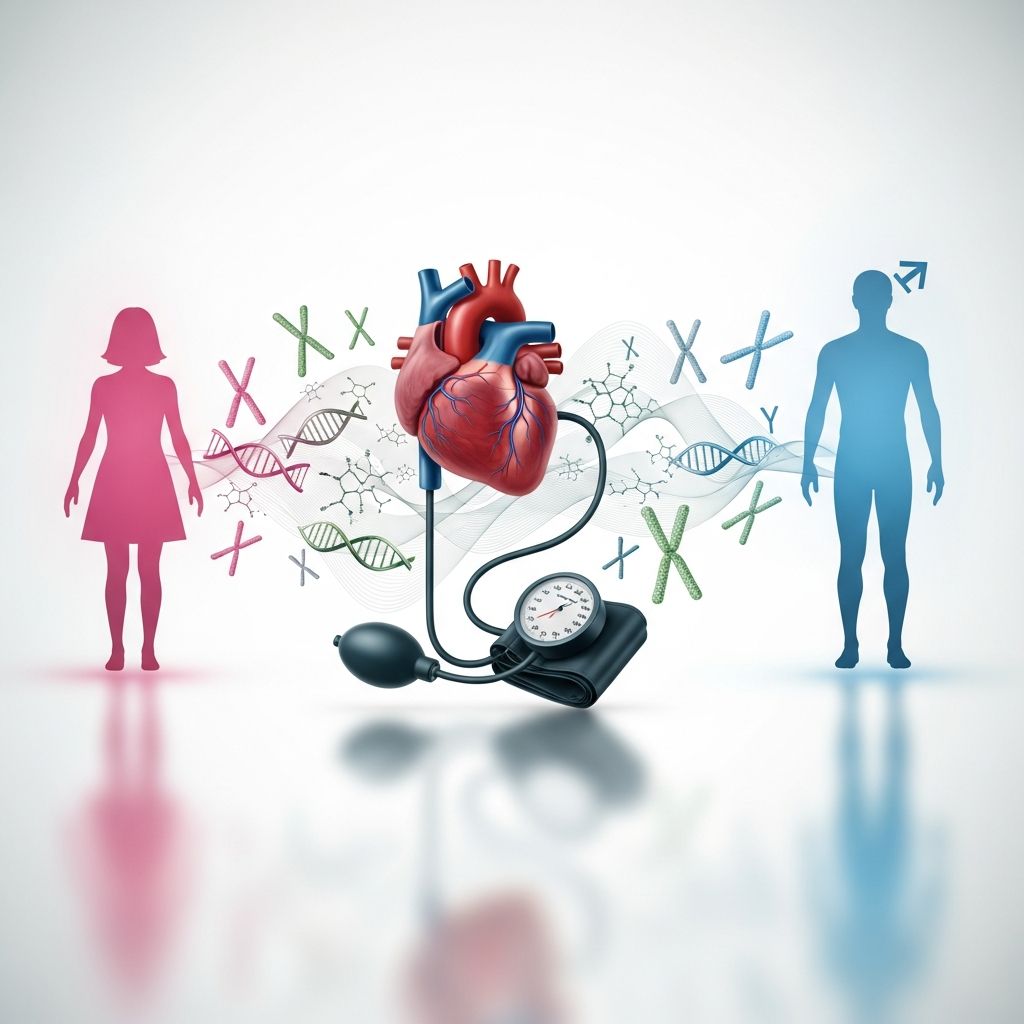
Higher systolic blood pressure measured before conception is associated with an increased probability of delivering a male baby, according to a key prospective study involving over 1,400 women. This finding challenges traditional views on fetal sex determination, suggesting maternal physiological factors play a role beyond mere genetics.
The Science Behind Maternal Blood Pressure and Baby’s Sex
Fetal sex is primarily determined by chromosomes at conception, with the father’s sperm contributing either an X or Y chromosome to pair with the mother’s X. However, emerging research indicates that pre-pregnancy maternal conditions, particularly systolic blood pressure, may influence which embryos are more likely to implant and develop to term.
In a landmark study published in the American Journal of Hypertension, researchers from Mount Sinai Hospital analyzed data from 1,411 women assessed approximately 26 weeks prior to pregnancy. Women who later gave birth to boys had average systolic blood pressure readings of 112.5 mmHg, compared to 109.6 mmHg for those delivering girls—a statistically significant difference (P < 0.0001). After adjusting for confounders like age, BMI, smoking, and metabolic factors, the gap persisted at 106.0 mmHg versus 103.3 mmHg (P = 0.0015).
This association held firm in logistic regression models, where each 1 mmHg increase in pre-pregnancy systolic blood pressure raised the odds of a male baby by 1.7% (adjusted odds ratio = 1.017, 95% CI: 1.007–1.028). Notably, diastolic pressure showed no such link, highlighting systolic pressure’s unique role.
Key Findings from the Prospective Cohort Study
- Systolic Threshold Effect: At 100 mmHg, odds of boy or girl were equal. Above this, boy probability increased; below, girl probability rose. For instance, at 123 mmHg, boy odds were 1.5 times higher than girl odds.
- Robust Predictor: Among pre-pregnancy variables (e.g., cholesterol, glucose, BMI), systolic blood pressure was the sole independent predictor of male birth.
- No Pregnancy Persistence: The blood pressure difference vanished during gestation, suggesting a preconception window of influence.
- Sample Demographics: 739 boys and 672 girls born; study conducted in Liuyang, China, starting 2009.
These results imply blood pressure as a marker of underlying physiology favoring male or female fetal viability, possibly via implantation success or early survival rates.
Potential Biological Mechanisms
Why might higher pre-pregnancy blood pressure favor male fetuses? Researchers hypothesize it reflects metabolic or hormonal environments where Y-chromosome embryos thrive. Male fetuses generally grow faster and demand more resources, potentially selecting for maternal profiles with robust vascular tone.
A separate meta-analysis confirmed male fetuses elevate maternal blood pressure during pregnancy (SBP +0.35 mmHg, DBP +0.35 mmHg), hinting at bidirectional influences. Pre-pregnancy hypertension could signal conditions optimal for male implantation, while lower pressure suits females. However, this remains speculative without direct causation evidence.
| Pre-Pregnancy SBP (mmHg) | Odds Ratio for Boy | Probability Insight |
|---|---|---|
| <100 | <1.0 | Higher chance of girl |
| 100 | 1.0 | Equal odds |
| 106 | ~1.1 | Slight boy favor |
| 123 | 1.5 | Strong boy favor |
Note: Derived from spline analysis in the primary study.
Comparing Pre-Conception vs. Gestational Blood Pressure
Unlike during pregnancy, where male fetuses mildly raise maternal BP, the preconception link is novel. Gestational differences may stem from placental hormones or fetal growth, but preconception effects likely precede implantation. This distinction underscores the preconception period’s critical role in reproductive outcomes.
Limitations and Why Causation Isn’t Proven
The study excels in prospective design and covariate adjustment but has limits. Conducted in one Chinese region, generalizability to diverse populations needs validation. It observes association, not mechanism—altering blood pressure won’t reliably sway sex, as lead researcher Dr. Ravi Retnakaran emphasized.
Confounders like unmeasured genetics or environmental factors could influence results. Moreover, it tracks live births, potentially capturing selective miscarriage effects where pressure impacts early loss differently by sex. Replication studies are essential before clinical application.
Practical Implications for Expecting Parents
For families, this offers probabilistic insight, not prediction tools. Routine preconception checkups now gain nuance: monitor systolic BP for overall health, as hypertension risks complications regardless of sex.
Prospective parents shouldn’t obsess or intervene—sex remains largely genetic. Instead, optimize health: balanced diet, exercise, and stress management stabilize BP naturally. Consult healthcare providers for personalized advice.
Broader Research Context and Future Directions
This fits evolving understanding of sex ratio modulators. Global boy:girl ratios (~105:100) vary by maternal age, nutrition, and stress. Future work could explore interventions, genetic markers, or global cohorts to confirm thresholds.
Clinically, it may inform fertility planning or high-risk monitoring, but ethical concerns around sex selection loom. Research prioritizes mechanistic insights over prediction.
Frequently Asked Questions (FAQs)
Can I use my blood pressure to predict my baby’s sex accurately?
No, it’s a statistical association, not a definitive test. Individual odds shift modestly; ultrasounds or NIPT remain gold standards.
Does changing my blood pressure before pregnancy affect baby sex?
Absolutely not recommended or proven. Manipulation risks health without guaranteed outcomes; focus on wellness.
Why systolic but not diastolic pressure?
Study data showed systolic’s stronger, consistent link, possibly tied to arterial dynamics favoring male viability.
Is this finding replicated elsewhere?
Primary study is robust, with supporting gestational evidence, but larger, diverse replications are underway.
Should I worry if my pre-pregnancy BP is high/low?
Monitor for health risks like preeclampsia; sex correlation is minor. Seek medical guidance.
Health Tips for Preconception Blood Pressure Management
- Maintain BMI 18.5–24.9 through diet and activity.
- Limit sodium, boost potassium-rich foods (bananas, spinach).
- Exercise 150 minutes weekly: walking, yoga.
- Manage stress via meditation or sleep hygiene.
- Avoid smoking; moderate alcohol.
These promote fertility and healthy pregnancies beyond sex prediction.
References
- Your Blood Pressure Could Predict Baby’s Sex: Study — The Bump. 2017-01-12. https://www.thebump.com/news/blood-pressure-determines-sex-of-babies-study
- Maternal Blood Pressure Before Pregnancy and Sex of the Baby — American Journal of Hypertension (Oxford Academic). 2017-04-01. https://academic.oup.com/ajh/article-abstract/30/4/382/2835699
- Maternal blood pressure before pregnancy may be related to babies’ sex — Sinai Health. 2017-01-01. https://www.sinaihealth.ca/news/maternal-blood-pressure-before-pregnancy-may-be-related-to-babies-sex
- Maternal blood pressure before pregnancy may be related to babies’ sex — EurekAlert! (AAAS). 2017-01-11. https://www.eurekalert.org/news-releases/471684
- The influence of fetal sex on maternal blood pressure in pregnancy — PMC (NCBI). 2023-01-01. https://pmc.ncbi.nlm.nih.gov/articles/PMC12590762/