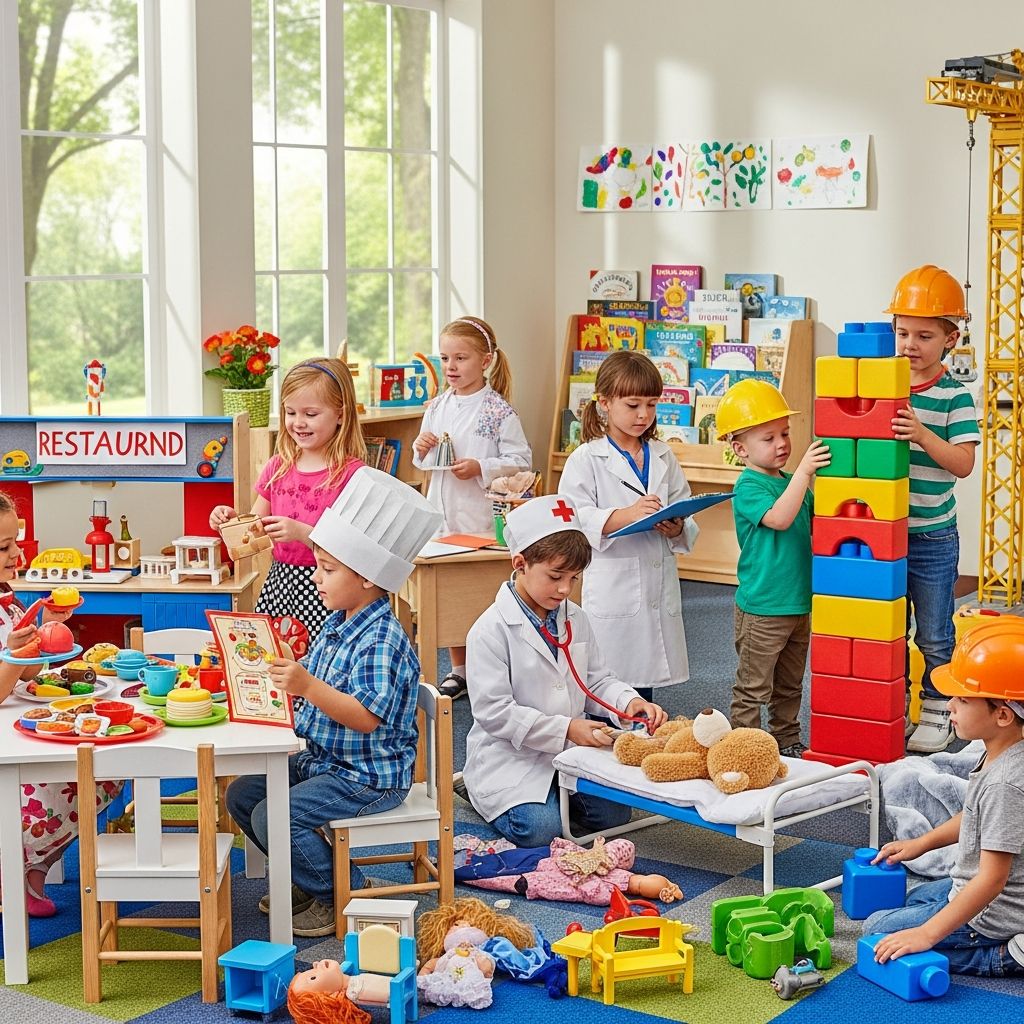
Dramatic play is one of the most powerful ways young children make sense of the world, practice language, and build social skills in a safe, playful environment. An intentional pre-K dramatic play activity plan helps turn simple pretend play into a rich, developmentally appropriate learning experience.
What Is Dramatic Play in Pre-K?
Dramatic play, sometimes called pretend play or role play, is when children act out real-life or imaginative situations using language, movement, and props. In a pre-K classroom, this often happens in a designated dramatic play center, such as a home corner, doctor’s office, restaurant, or post office.
- Children take on roles (parent, doctor, chef, teacher, worker, etc.) and interact with peers in those roles.
- They use everyday objects, simple costumes, and open-ended materials to create stories and scenarios.
- Play can be child-led, teacher-supported, or a mix of both, depending on the learning goals.
When thoughtfully planned, dramatic play supports social-emotional development, early literacy, numeracy, and problem-solving skills while still feeling like pure fun to children.
Why Plan Drammatic Play Intentionally?
It may look like children are “just playing,” but behind a strong dramatic play center is a clear activity plan. Intentional planning ensures that pretend play connects to curriculum goals, classroom routines, and children’s interests.
- Aligns with learning standards: You can target language, math, science, or social studies standards through themed play scenarios.
- Supports diverse learners: Thoughtful planning makes it easier to differentiate for English learners, children with disabilities, and children who need extra social support.
- Improves classroom management: Clear expectations, visual supports, and organized materials reduce conflicts and confusion.
Instead of rotating random themes, an intentional plan connects dramatic play to current units, seasonal events, and real-life experiences that matter to your students.
Core Learning Objectives for Dramatic Play
A pre-K dramatic play activity plan usually addresses several domains at once. Consider using goals like these when designing your center and activities:
Social-Emotional Objectives
- Practice sharing, turn-taking, and negotiating roles with peers.
- Express feelings appropriately through pretend roles and stories.
- Develop empathy by acting out different perspectives and family or community roles.
Language and Literacy Objectives
- Use new vocabulary related to the theme (e.g., ingredients, tools, jobs, locations).
- Engage in extended conversations and storytelling with peers and adults.
- Recognize and use environmental print such as labels, menus, signs, and name badges.
Math and Cognitive Objectives
- Count objects, money, or items in orders and compare quantities.
- Sort and classify materials (e.g., food groups, tools, clothing types).
- Sequence events in a story or routine, such as steps in cooking or visiting a doctor.
Motor and Creative Objectives
- Use fine-motor skills to manipulate small props, writing tools, and play food.
- Move bodies in role (building, driving, caring for babies, or dancing).
- Invent original stories, dialogue, and imaginative scenarios.
When you outline objectives before setting up a center, it becomes easier to choose the right materials, vocab words, and teacher prompts.
Key Elements of a Dramatic Play Activity Plan
A strong pre-K dramatic play plan goes beyond picking a cute theme. It weaves together goals, materials, routines, and assessment into a simple, teacher-friendly structure.
| Planning Element | What to Consider | Teacher Tips |
|---|---|---|
| Learning goals | Which domains (social, language, math, etc.) will the center support? | Write 3–5 specific, observable objectives. |
| Theme selection | How does the theme connect to children’s lives and current units? | Start with familiar settings like home, store, or doctor. |
| Materials and props | What real or pretend objects do children need for their roles? | Use labels and pictures to support independence. |
| Role options | Which characters can children play, and how many per role? | Create role tags or lanyards to avoid conflicts. |
| Literacy supports | Which signs, forms, menus, or lists will you add? | Include picture-word cards and simple writing opportunities. |
| Classroom routines | How will children sign up, clean up, and store materials? | Teach and practice center expectations explicitly. |
| Assessment | How will you observe and document learning during play? | Use quick checklists or anecdotal notes. |
Choosing Dramatic Play Themes for Pre-K
Themes should be meaningful to children, connected to your curriculum, and flexible enough to last at least one to two weeks. Below are popular options that work across the year.
Home and Family Corner
- Set up a kitchen, table, couch area, and simple bedroom or baby-care space.
- Add pretend food, baby dolls, blankets, telephones, and dress-up clothes.
- Encourage children to act out family routines like cooking, bedtime, and celebrations.
Community Helpers and Neighborhood
- Rotate community roles: doctor’s office, dentist, firefighter, police station, mail carrier, or construction worker.
- Use props like clipboards, stethoscopes, hard hats, mailbags, and walkie-talkies.
- Connect to real visits or virtual tours of local community helpers.
Store, Market, or Restaurant
- Create a grocery store, farmers’ market, bakery, café, or sandwich shop.
- Include shopping baskets, play money, menus, order pads, and price tags.
- Invite children to write or dictate simple orders and receipts.
Seasonal and Thematic Centers
- Pair dramatic play with seasonal units: pumpkin patch, flower shop, post office, or camping scene.
- Use real-world artifacts such as seed packets, maps, or postcards.
- Change small details (signs, props, vocabulary) to refresh a familiar setup.
Materials and Props: What You Really Need
Effective dramatic play does not require expensive toys. A mix of real-life objects, simple costumes, and open-ended materials works best. Think about safety, durability, and cultural relevance when choosing items.
Basic Prop Categories
- Costumes and accessories: Hats, aprons, scarves, vests, bags, and name tags.
- Household items: Pots, pans, dishes, cups, empty food boxes, and plastic containers.
- Office and writing tools: Clipboards, notebooks, sticky notes, dull pencils, and crayons.
- Fabric and loose parts: Scarves, blankets, wooden blocks, cardboard tubes, and boxes.
Adding Literacy and Math to Materials
- Label shelves and containers with both pictures and words.
- Include simple forms like sign-in sheets, appointment cards, order slips, and checklists.
- Add number lines, price tags, clocks, and calendars appropriate for pre-K understanding.
Store materials in clear bins and keep high-interest items visible so children can independently choose what they need for their roles.
Setting Up the Dramatic Play Center
The physical layout of the center can make or break the play experience. Aim for a space where a small group of children can move, talk, and access materials without disturbing other centers.
Layout Tips
- Place large furniture to create defined areas, such as a kitchen area, waiting room, or checkout counter.
- Keep walking paths clear and avoid tiny cramped corners that encourage rough play.
- Post visual rules and role charts at children’s eye level.
Behavior and Safety Considerations
- Limit the number of children in the center at one time to prevent overcrowding.
- Use pictures on role tags to support non-readers and English learners.
- Regularly check props for broken pieces, loose strings, or unsafe materials.
Model how to gently use materials, how to invite others into play, and how to clean up at the end of center time.
Sample Pre-K Dramatic Play Activity Plan
The example below shows how a one-week dramatic play plan might look for a “Grocery Store” theme. You can adapt this format to any theme you choose.
| Plan Component | Grocery Store Example |
|---|---|
| Objectives | Children will use new vocabulary (cashier, receipt, price, aisle), count up to 10 items, and negotiate roles with peers during cooperative play. |
| Roles | Cashier, shopper, bagger, stocker, manager. |
| Materials | Play food, baskets, shopping lists, price tags, toy cash register, pretend money, paper bags. |
| Literacy Supports | Store signs, aisle labels, picture shopping lists, name tags, and simple receipts. |
| Teacher Prompts | “What are you buying today?”, “How many apples do you need?”, “Can you read the price tag?”. |
| Assessment | Observe if children use vocabulary correctly, count items accurately, and take turns at the cash register. |
Teacher Role: When to Step In and When to Step Back
Teachers do more than supervise during dramatic play. They carefully balance stepping in to extend learning with stepping back to protect children’s ownership of the play.
- Before play: Introduce key vocabulary, roles, and expectations; model how to use new props.
- During play: Join as a co-player to ask open-ended questions, add new problems to solve, or gently redirect conflicts.
- After play: Facilitate brief reflection: ask children what they did, what they learned, and which roles they might try next time.
Short, authentic conversations during clean-up and transitions help children connect their pretend scenarios to real-life experiences.
Assessment and Documentation in Dramatic Play
Even though dramatic play looks informal, it offers rich opportunities for observation-based assessment. You can gather valuable evidence of children’s skills and growth without interrupting their play.
Simple Assessment Strategies
- Use a small observation clipboard with each child’s name and a few target skills.
- Take quick anecdotal notes about language, problem-solving, or social interactions.
- Capture photos of children engaged in different roles to add to portfolios or learning stories.
What to Look For
- Growth in vocabulary and sentence complexity over time.
- Ability to initiate play, join peers, and resolve conflicts with fewer adult prompts.
- Increased independence in following routines, using materials, and cleaning up.
These observations can guide future planning, help with family communication, and inform progress reports.
Tips for Managing and Rotating Dramatic Play Themes
To keep dramatic play engaging throughout the year, plan a rotation schedule that balances familiarity and novelty. Too many changes can be overwhelming, while too few can make the center feel stale.
- Rotate major themes every 2–4 weeks, but refresh small details weekly (new signs, a new prop, or an added role).
- Invite children to help decide the next theme by voting or suggesting ideas related to current interests.
- Store themed props in labeled bins so setup and cleanup between themes is quick and manageable.
When changing themes, introduce the new center with a brief “tour,” modeling how to use key materials and explaining any new routines.
Frequently Asked Questions (FAQs)
How much time should pre-K students spend in dramatic play?
Many early childhood programs offer 20–45 minutes of center time daily, with dramatic play available as one of the core centers. The exact amount depends on your schedule and curriculum, but frequent, consistent access allows children to develop deeper, more complex play themes over time.
What if children only want to use the dramatic play center and ignore other areas?
When dramatic play is very appealing, some children may gravitate there repeatedly. Consider using a simple rotation chart or sign-up board so each child has a chance to visit multiple centers. Another option is to intentionally embed math, literacy, science, or fine-motor tasks into dramatic play so children still meet a variety of learning goals while following their interests.
How can I support shy or language-delayed children in dramatic play?
Pair hesitant children with a supportive peer and give them a clear role with simple actions, such as handing items to customers or checking off a list. Visual supports like picture cards, gesture modeling, and role tags help them participate even if they are not yet comfortable speaking much during play.
Do I need expensive themed kits or can I use recycled materials?
Recycled and homemade materials work very well for dramatic play and can make the center more open-ended. Clean food boxes, cardboard, fabric scraps, and repurposed containers can become menus, buildings, tools, or props, and children often enjoy helping create them during art or small-group time.
How do I communicate the value of dramatic play to families?
Consider posting a family-friendly sign near the dramatic play center that explains which skills are being practiced there. You might also share photos and brief descriptions in newsletters, conferences, or digital portfolios to show how pretend play supports language, social skills, and early academics.
Final Thoughts on Pre-K Dramatic Play Activity Planning
With a thoughtful pre-K dramatic play activity plan, your classroom can offer children a safe, joyful space where imagination and learning come together. Clear goals, flexible themes, simple materials, and responsive teaching help transform everyday pretend play into a powerful driver of early development.