Creating a Practical Fall Wardrobe Foundation for Young Boys
As the seasons transition and school approaches, preparing a well-rounded wardrobe for your son becomes essential. A thoughtfully curated collection of fall clothing allows boys to express themselves while remaining comfortable throughout fluctuating temperatures. The key to a successful seasonal wardrobe lies in selecting versatile, durable pieces that can be mixed and matched to create multiple outfits without requiring constant shopping.
Building a wardrobe for the fall months requires balancing several considerations: temperature variations, school dress codes, practical durability for active play, and age-appropriate style choices. Whether your child attends a formal institution with specific uniform requirements or a casual environment encouraging personal expression, understanding core pieces and layering techniques helps simplify daily dressing decisions.
The Building Blocks: Essential Clothing Pieces
Every functional fall wardrobe begins with neutral foundational items that serve as the backbone for numerous outfit combinations. These pieces should be durable, comfortable, and timeless enough to last through multiple seasons.
Bottoms That Work Across Seasons
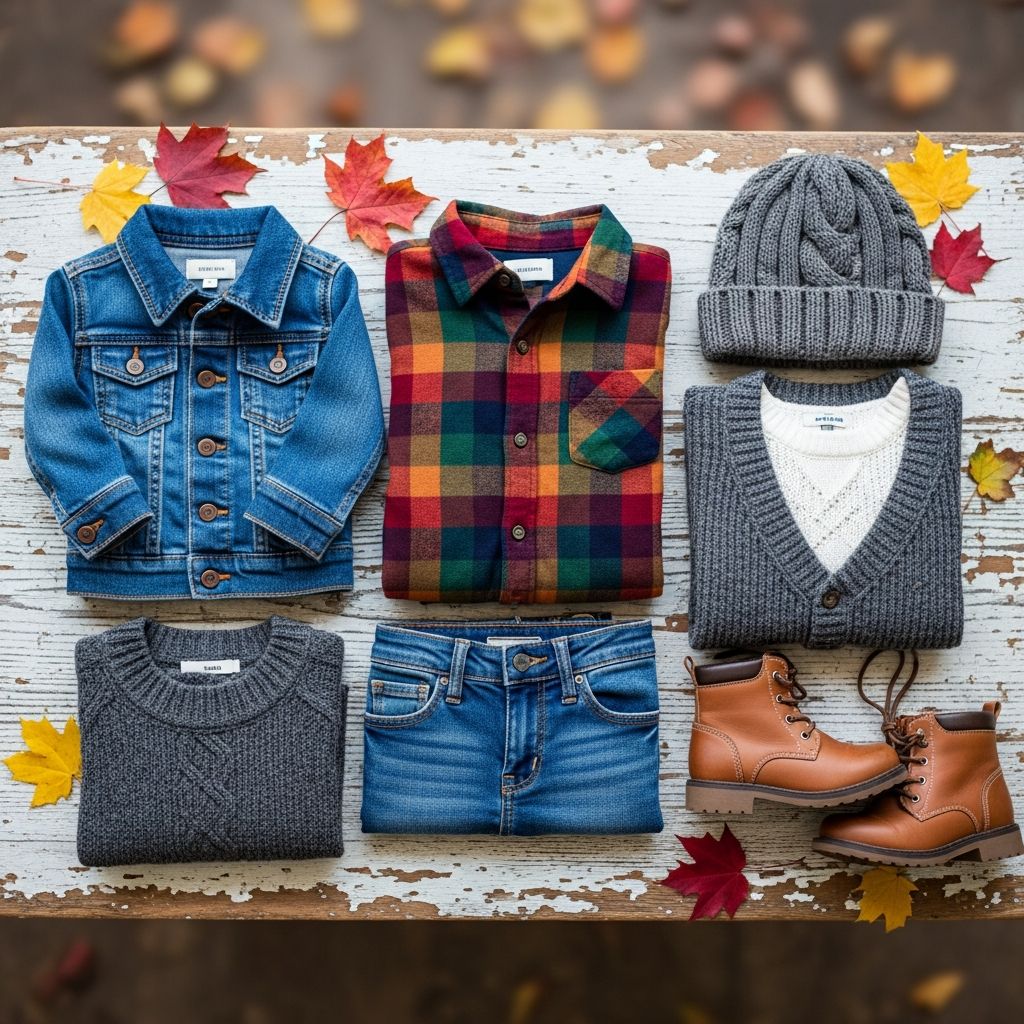
Dark-wash jeans represent one of the most versatile bottoms for boys, pairing seamlessly with virtually any top and transitioning effortlessly from casual to slightly more formal occasions. Quality denim that withstands frequent washing and active movement becomes invaluable for school-age children. Complementing jeans with several pairs of neutral-colored pants—such as khaki, olive, or charcoal—provides options suitable for varying dress codes and seasonal temperature shifts.
Consider including shorts that can bridge late summer into early fall, ensuring your son remains comfortable during temperature fluctuations before complete seasonal transition. Joggers or relaxed-fit pants offer comfort for informal days while maintaining a polished appearance appropriate for school settings.
Layering Essentials for Temperature Transitions
Strategic layering transforms a modest collection of basics into numerous outfit possibilities. Lightweight long-sleeved shirts in solid colors or subtle patterns work underneath heavier layers while serving as standalone pieces during warmer fall days. Cotton blends provide comfort and durability, resisting excessive wrinkling while maintaining breathability.
T-shirts in neutral tones—white, gray, navy, and black—create the foundation for layered looks. Quality construction ensures these basics withstand repeated washings and everyday wear. Including a few graphic tees allows personality expression while maintaining outfit versatility when paired with jackets or cardigans.
Outerwear for Changing Conditions
A lightweight zip-up hoodie bridges the gap between t-shirt and heavier jacket, offering perfect layering for variable fall temperatures. Hoodies provide functionality for both casual and school settings, adjusting easily as temperatures fluctuate throughout the day. Zip-up construction allows wearing the hoodie open or closed depending on warmth needs.
A structured jacket designed for fall weather represents a crucial investment for your son’s wardrobe. Options might include bomber jackets, denim jackets, or lightweight puffed vests that layer effectively over lighter pieces. Quality outerwear in versatile colors coordinates with multiple outfits, maximizing outfit combinations from limited pieces.
Footwear Strategy for Active Young Boys
Appropriate footwear significantly impacts both comfort and style throughout the school day. Active children require shoes capable of withstanding running, climbing, and varied playground activities while maintaining a polished appearance suitable for classroom settings.
Sneakers in neutral colors—white, gray, navy, or black—provide the most practical daily footwear, offering comfort and durability for extended wear. Quality construction prevents premature breakdown, while classic styling coordinates with diverse outfit combinations. Canvas or mesh materials in athletic shoes balance breathability with durability for active children.
Including one pair of more formal-style shoes—such as loafers or simple oxfords—accommodates school events, photos, or occasions requiring dressier presentation. These pieces don’t require daily use but become invaluable for special occasions or dress-code-specific situations throughout the year.
Mastering the Art of Layering for Unpredictable Fall Weather
Fall weather notoriously shifts within single days, requiring flexible clothing solutions. Strategic layering allows your son to adjust to temperature changes without carrying excessive garments or suffering discomfort.
The Three-Layer System
Consider implementing a basic three-layer approach: a moisture-wicking base layer, an insulating middle layer, and a protective outer layer. This structure accommodates temperature adjustments without requiring complete outfit changes.
Base layers include lightweight long-sleeved shirts or t-shirts that work independently or under heavier pieces. These garments should feel comfortable against skin and maintain their shape through repeated wearing and washing. Natural fibers like cotton or cotton blends typically offer the best comfort for children’s sensitive skin.
Middle layers provide insulation during cooler periods while remaining lightweight enough to remove when temperatures rise. Sweaters, fleece jackets, or cardigans in neutral colors fulfill this role effectively. Look for pieces that coordinate easily with multiple bottoms and can layer under or over other jackets.
Outer layers protect against wind and light precipitation while completing the outfit visually. Jackets should balance protection with breathability, preventing overheating during active play while shielding from autumn conditions.
Color Coordination and Pattern Selection
A thoughtfully coordinated color palette simplifies daily dressing while maximizing outfit combinations from fewer pieces. Establishing a cohesive color scheme ensures most items coordinate effortlessly.
Neutral base colors—navy, gray, black, white, and khaki—serve as foundation colors that pair with virtually any other shade. Building a wardrobe around these neutrals allows flexibility in adding accent colors without requiring complete wardrobe overhauls when incorporating new pieces.
Introducing two or three accent colors creates visual interest while maintaining coordination simplicity. Earth tones like olive or burgundy work effectively as secondary colors, complementing neutral bases while feeling seasonally appropriate for fall. These accent colors can appear in tops, outerwear, or accessories without overwhelming the overall wardrobe.
Patterns should remain relatively simple and sophisticated. Subtle checks, stripes, or small-scale prints work better than bold graphics for versatile school wear. Solid-colored pieces should significantly outnumber patterned items, ensuring pattern pieces layer easily with multiple outfits.
Practical Considerations for School Environments
Understanding Dress Codes
Before purchasing extensively, review your child’s school dress code if one exists. Some institutions specify uniform requirements or color restrictions, fundamentally shaping wardrobe building strategies. Understanding these requirements prevents purchasing unsuitable pieces and ensures your son arrives each day appropriately dressed for his specific school environment.
Even casual schools often maintain implied dress codes discouraging inappropriate content or extreme styles. Selecting classic, age-appropriate pieces ensures your son feels confident and comfortable regardless of his school’s formality level.
Durability for Active Lifestyles
School-age boys typically engage in active play, sports, and movement-intensive activities. Clothing must withstand these activities without deteriorating rapidly. Quality construction, reinforced seams, and durable fabrics ensure garments maintain appearance and functionality throughout extended use.
Natural fibers mixed with synthetic blends often provide optimal durability and care ease. Fabrics that resist staining, wrinkles, and shrinkage reduce maintenance burden while maintaining appearance longer. Investing in quality basics pays dividends through extended garment life and reduced replacement frequency.
Seasonal Progression Through Fall Months
Fall weather progression moves from warm early-season temperatures toward crisp late-fall conditions. Your wardrobe strategy should accommodate this transition with flexibility.
Early Fall Dressing
As summer transitions into fall, lightweight layers work best. Short-sleeved shirts paired with lightweight jackets or hoodies accommodate morning coolness while allowing removal during warmer afternoon periods. This flexibility prevents discomfort from temperature fluctuations common in early autumn.
Mid-Fall Adaptations
As temperatures cool further, longer sleeves become standard, and heavier jackets replace lightweight options. Layering becomes increasingly important as weather becomes less predictable. This transitional period benefits from versatile mid-weight pieces that provide warmth without excessive bulk.
Late Fall Preparations
By late fall, consistent cold weather enables wearing heavier outerwear and multiple layers regularly. Ensuring adequate warm pieces prevents discomfort during this season’s extended cold periods. Consider weather-appropriate accessories like hats or scarves that complement your son’s wardrobe while providing functional warmth.
Building Budget-Conscious Wardrobes Without Sacrificing Quality
Creating functional fall wardrobes doesn’t require unlimited budgets. Strategic purchasing and prioritization maximize value from wardrobe investments.
Prioritizing Essential Pieces
Focus initial purchases on versatile basics that coordinate with multiple items. Neutral jeans, basic t-shirts, and quality jackets provide the foundation for numerous combinations. Once basics are established, accent pieces and specialty items become more affordable additions.
Quality Over Quantity
Purchasing fewer, high-quality pieces proves more economical long-term than numerous lower-quality garments. Well-constructed clothing withstands washing, active wear, and growth phases better than budget alternatives. This approach also reduces environmental impact through extended garment lifecycles.
Seasonal Shopping Timing
Shopping during sales periods, end-of-season clearances, and promotional events stretches wardrobe budgets significantly. Purchasing versatile pieces during off-season sales allows building inventory at reduced prices. Planning purchases across multiple shopping occasions prevents concentrated expenses while leveraging various sales opportunities.
Accessory Considerations for Personality Expression
Accessories allow personal style expression while keeping core wardrobes neutral and versatile. Hats, scarves, watches, or simple jewelry subtly differentiate outfits while requiring minimal investment.
Functional accessories also serve practical purposes. Scarves provide warmth while adding visual interest. Hats protect from sun and wind while accommodating personal style preferences. These items add personality without requiring extensive wardrobe expansion.
Frequently Asked Questions
How many outfits should a school-age boy have available?
Most experts recommend maintaining 5-7 complete outfit combinations available, allowing adequate rotation for laundry cycles while preventing daily repetition. Quality basics that mix and match effectively reduce the quantity of individual pieces needed to achieve this goal.
What fabrics work best for active boys?
Carbon blends combining cotton with polyester or other synthetics offer excellent durability while maintaining breathability and comfort. These blends resist excessive wrinkling, resist staining better than pure cotton, and withstand frequent washing.
Should I purchase larger sizes to accommodate growth?
While purchasing slightly larger sizes provides some growth room, excessive oversizing compromises appearance and comfort. Buy appropriately fitting sizes, planning to replace items as your son grows. This approach maintains proper fit and appearance throughout the school year.
How often should I update fall wardrobe items?
Basics like t-shirts and jeans may need annual replacement due to growth and wear. Quality jackets and structured pieces may last multiple years. Monitor fit and condition, replacing items as needed rather than on fixed schedules.
Can I mix and match pieces from different seasons?
Yes, many fall pieces work effectively during spring and early summer. Lightweight layers and neutral-colored basics transition well between seasons. Strategic seasonal wardrobe building considers year-round versatility of core pieces.
Conclusion: Creating Confidence Through Wardrobe Planning
A well-organized fall wardrobe eliminates morning dressing stress while ensuring your son feels confident and comfortable throughout the school day. By prioritizing versatile basics, understanding layering principles, and maintaining a coordinated color palette, you create countless outfit combinations from a manageable quantity of pieces. This thoughtful approach benefits your family budget, reduces decision fatigue, and allows your son to focus on school rather than wardrobe concerns. As fall progresses and seasonal needs evolve, maintaining flexibility within your wardrobe framework ensures continued comfort and appropriateness regardless of weather variations.
References
- Toddler Boy First Day Of School Outfits — The Children’s Place. Accessed April 02, 2026. https://www.childrensplace.com/us/c/toddler-boy-first-day-outfits
- Boys’ Back to School Clothes – Durable & Stylish Picks — Macy’s. Accessed April 02, 2026. https://www.macys.com/shop/kids-clothes/kids-back-to-school-clothes/boys-back-to-school-clothes
- First Day and Back to School Outfits for Kids — Saks Fifth Avenue. Accessed April 02, 2026. https://www.saksfifthavenue.com/c/the-edit-content/080222/back-to-school-outfits-kids
- Boys’ Back to School Clothes & Outfits — Gap. Accessed April 02, 2026. https://www.gap.com/browse/boys/back-to-school-shop