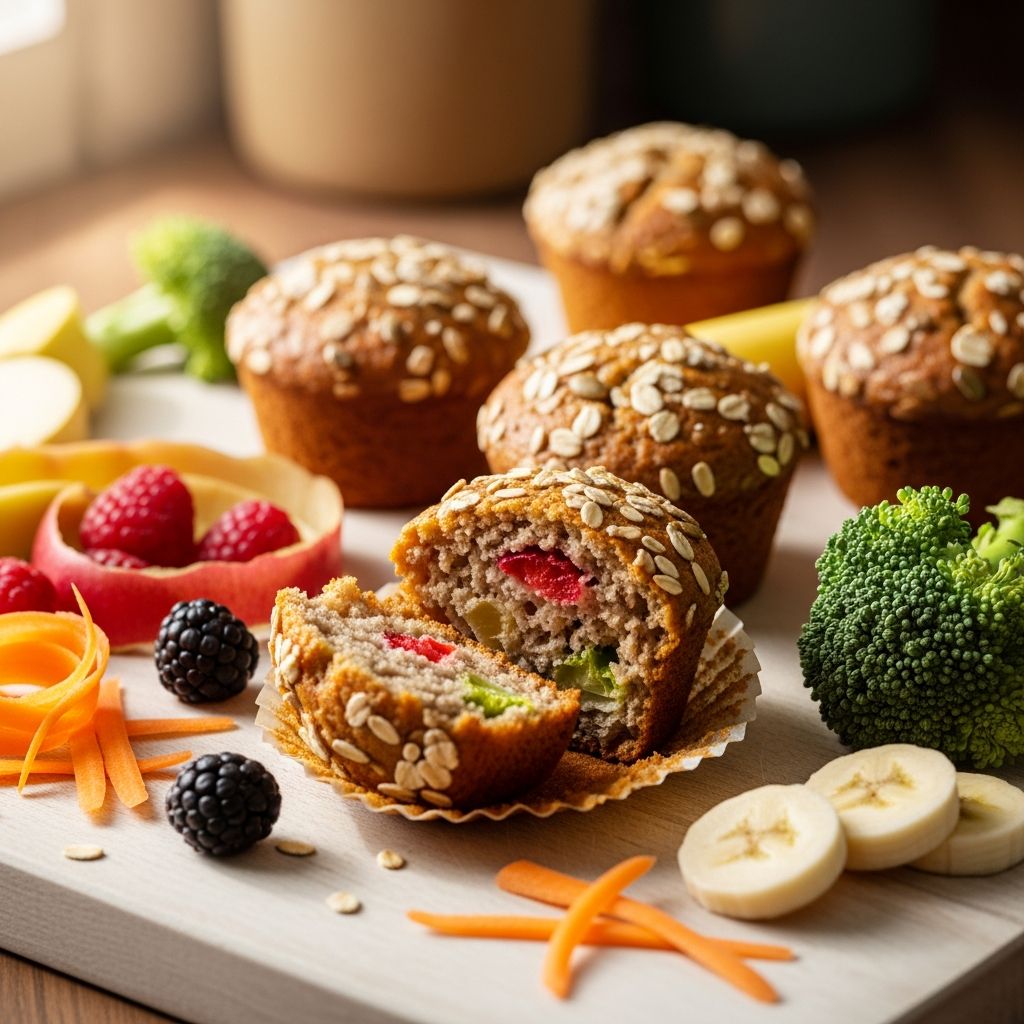
Every fridge hides a few wilted greens, bruised apples, or sad carrots that never quite made it into dinner. Instead of tossing them, you can transform those odds and ends into moist, flavorful muffins that feel like a treat, not a compromise.
These “power muffins” are not a strict recipe but a flexible system: mix-and-match produce, pantry staples, and favorite add-ins to bake a batch tailored to whatever you have on hand. You reduce food waste, save money, and stock the freezer with quick breakfasts and snacks.
Why Muffins Are Perfect for Leftover Produce
Muffins are forgiving. A little extra moisture from overripe fruit or shredded vegetables usually makes them more tender, not ruined. That means they are ideal for produce that is past its peak but still safe and flavorful.
Unlike salads or stir-fries, muffins can hide small quantities of different ingredients in each batch. A half carrot, a soft banana, and a handful of spinach can all disappear into one pan, turning scraps into nutrition instead of trash.
- They freeze well, so you can bake once and eat all week.
- They work for breakfast, lunch boxes, and afternoon snacks.
- They are adaptable for dairy-free, egg-free, or whole-grain diets.
Best Produce Candidates for Power Muffins
Many fruits and vegetables can be baked into muffins as long as they are not moldy or spoiled. Aim for produce that is wrinkled, bruised, or slightly wilted, but still smells normal and shows no signs of rot.
Fruits that work well
- Overripe bananas (brown and soft are perfect)
- Bruised apples and pears (trim off bad spots and grate or finely dice)
- Soft berries (strawberries, blueberries, raspberries, blackberries)
- Stone fruits past their prime (peaches, plums, nectarines, apricots)
- Leftover pineapple, mango, or other tropical fruit from fruit trays
Vegetables that shine in muffins
- Carrots and parsnips (finely grated)
- Zucchini and yellow squash (grated and gently squeezed)
- Sweet potato or pumpkin (cooked and mashed)
- Beets (roasted or steamed, then grated or pureed)
- Wilted spinach, chard, or kale (chopped fine and squeezed dry)
When in doubt, think about texture. Anything that can be grated or mashed into small pieces is a good candidate. Strong flavors like raw onion or bitter greens work better when combined with sweeter fruits or warm spices.
The Flexible Power Muffin Formula
Instead of a strict recipe, use a simple ratio that you can adjust to whatever leftovers you have. The idea is to balance dry ingredients, liquids, and produce so the batter is thick but spoonable.
Base ratio for about 12 muffins
| Component | Amount | Examples |
|---|---|---|
| Dry ingredients | 2 cups | All-purpose flour, whole wheat flour, oat flour, or a blend |
| Sweetener | 1/2–3/4 cup | Brown sugar, granulated sugar, honey, maple syrup |
| Leavening + salt | 2–2.5 tsp baking powder + 1/2 tsp salt | Optionally 1/2 tsp baking soda if batter is very moist or includes yogurt |
| Fat | 1/3–1/2 cup | Neutral oil, melted butter, or melted coconut oil |
| Eggs or substitute | 2 large eggs | Or flax “eggs,” commercial replacer, or extra mashed fruit |
| Dairy or dairy-free liquid | 3/4–1 cup | Milk, buttermilk, yogurt (thinned), or plant milk |
| Leftover produce | 1.5–2 cups | Any blended mix of grated, mashed, or finely chopped fruits and veggies |
| Flavor boosters | Up to 1 cup total | Nuts, seeds, chocolate chips, dried fruit, spices, citrus zest |
The goal is a batter that holds its shape on the spoon but slowly drops off when nudged. If it seems dry, add a splash more milk. If it looks soupy, sprinkle in a bit more flour or oats.
Step-by-Step: How to Build Your Muffins
- Prep and measure your produce. Trim away any mold or deep bruises. Grate firm vegetables, mash soft fruits, and chop leafy greens very finely. Lightly squeeze watery vegetables like zucchini so they do not flood the batter.
- Whisk the dry ingredients. In a large bowl, combine your flours, leavening, salt, and spices like cinnamon, nutmeg, or ginger. Add rolled oats if you want extra texture and fiber.
- Mix the wet ingredients. In a second bowl, beat eggs (or substitutes) with your chosen sweetener, fat, and milk or yogurt. Stir in vanilla extract or citrus zest if using.
- Fold in the produce. Add your shredded or mashed fruits and vegetables to the wet mixture. Stir gently until evenly distributed but do not overmix.
- Combine wet and dry. Pour the wet mixture into the dry ingredients. Stir just until no dry streaks of flour remain. Overmixing can make muffins tough, so stop while the batter still looks slightly lumpy.
- Add extras. Fold in nuts, seeds, or chocolate chips at the end. If using frozen berries, stir them in straight from the freezer to minimize bleeding.
- Fill the pan. Line a muffin tin or grease it lightly. Fill each cup about three-quarters full. Sprinkle with oats, turbinado sugar, or seeds for a pretty top if you like.
- Bake and test. Bake at 175–190°C (350–375°F) for 18–25 minutes, depending on your oven and muffin size. A toothpick inserted in the center should come out with only a few moist crumbs.
- Cool and store. Let muffins cool in the pan for a few minutes, then move them to a rack. Once cool, store at room temperature for up to 2 days or freeze for longer storage.
Flavor Ideas for Different Produce Combos
Because this method is so flexible, it helps to think in themes. Start with what you have, then match spices and mix-ins to create a muffin that tastes intentional, not random.
Comforting breakfast blends
- Banana Oat Spice: Mashed bananas, rolled oats, cinnamon, nutmeg, and a handful of chopped walnuts.
- Apple Carrot Morning Muffins: Grated apple and carrot, raisins or chopped dates, cinnamon, and a sprinkle of sunflower seeds on top.
- Berry Yogurt Swirl: Soft or frozen berries, vanilla yogurt in place of some of the milk, and lemon zest. >
Veggie-forward options
- Zucchini Almond: Grated zucchini, almond extract, sliced almonds, and a bit of orange zest.
- Sweet Potato Pecan: Mashed roasted sweet potato, warm spices, chopped pecans, and a light drizzle of maple glaze after baking.
- Chocolate Beet Surprise: Pureed cooked beets, cocoa powder in place of some flour, and dark chocolate chips for a rich, naturally tinted treat.
Kid-friendly mixes
- Hidden Greens Banana: Mashed banana, finely chopped spinach, mini chocolate chips, and a little extra vanilla.
- Peanut Butter & Jelly Muffins: Mashed berries, a swirl of peanut butter in the batter, and a teaspoon of jam baked into the center.
How to Keep Muffins Moist and Safe
Because leftover produce often carries extra moisture, it is important to control texture and bake thoroughly. Too much liquid can lead to gummy centers or muffins that mold quickly.
- Pat or squeeze excess moisture from grated vegetables and very juicy fruits.
- Do not exceed about 2 cups of produce per standard batch unless you increase the dry ingredients.
- Let muffins cool completely before sealing them in a container to avoid condensation.
- Refrigerate muffins that contain a lot of fresh fruit or vegetables if you will keep them longer than 2 days.
Storage, Freezing, and Reheating Tips
Muffins are at their best within the first day or two, but smart storage stretches their life and keeps them tasting fresh. A big batch on the weekend can carry your household through busy weekdays.
- Counter storage: Keep cooled muffins in an airtight container at room temperature for up to 2 days. Add a paper towel to absorb excess moisture.
- Refrigeration: For very moist or fruit-heavy batches, refrigerate for up to 5 days. Bring to room temperature or warm briefly before eating.
- Freezing: Arrange cooled muffins on a baking sheet, freeze until solid, then transfer to a freezer bag. They keep well for 2–3 months.
- Reheating: Warm in a low oven for 5–10 minutes or microwave in short bursts. A light toast can revive the texture of older muffins.
Reducing Food Waste Beyond Muffins
Using up produce in muffins is one strategy, but you can extend the same mindset throughout your kitchen. Treat leftovers as ingredients, not failures, and you will find endless ways to repurpose them.
- Turn trimmed stems and peels (that are clean and safe) into homemade vegetable stock.
- Freeze small portions of fruit for smoothies or quick sauces.
- Use older bread for croutons or breadcrumbs instead of tossing it.
- Plan a weekly “leftover night” to combine odds and ends into soups, frittatas, or grain bowls.
The more you practice this kind of creative cooking, the more natural it becomes to see potential in every carrot top and bruised pear.
Frequently Asked Questions
How do I know if produce is still safe to use? If you see mold, smell sour or fermented odors that are not part of the ingredient’s normal aroma, or notice slimy textures, it is safest to discard the item. Small bruises or cosmetic issues are fine as long as you trim them away and the remaining flesh looks and smells normal. Can I make these muffins completely without refined sugar? Yes. You can replace granulated sugar with mashed ripe bananas, applesauce, dates, honey, or maple syrup. Just remember that liquid sweeteners add moisture, so you may need to reduce the milk slightly or add a spoonful or two of extra flour to keep the batter balanced. What if I do not eat eggs or dairy? Use plant milk instead of dairy and swap each egg for a “flax egg” (ground flaxseed mixed with water), commercial egg replacer, or additional mashed fruit. These swaps make the muffins slightly denser but still tender and satisfying. Can I mix fruits and vegetables in the same batch? Absolutely. Combining carrot with apple, banana with spinach, or zucchini with berries often creates excellent texture and flavor. Just keep the total amount of produce in the recommended range so the batter does not become too wet. Why are my muffins dense or gummy? Common causes include overmixing, too much moisture, or underbaking. Stir the batter only until the ingredients are combined, squeeze very juicy produce before adding it, and bake until a tester comes out mostly clean from the center of a muffin.
Turning leftover produce into power muffins is a simple, satisfying way to care for your budget, your schedule, and the planet. Once you get comfortable with the flexible formula, you can look at a drawer of tired fruits and vegetables and see possibility instead of waste.