Many parents reach a crucial point in potty training just as a vacation, family visit, or long-awaited trip appears on the calendar. The big question usually becomes: keep going or hit pause? There is no single correct answer, but there are smart ways to protect your child’s progress and your own sanity while you travel.
This guide walks through how to decide what’s right for your family, how to prepare for real-life travel days, and how to support your toddler in unfamiliar bathrooms, cars, and airplanes using calm, practical routines.
Should You Pause Potty Training For Travel?
Before booking seats and packing bags, it helps to weigh whether to maintain full potty training, shift to a “maintenance mode,” or temporarily use training pants or diapers. The best choice depends on timing, your child’s temperament, and what kind of trip you are taking.
Key Factors To Consider
- How long your child has been practicing: A toddler who started training three days ago may not be ready to manage long stretches without quick bathroom access.
- Your child’s awareness and communication: Does your child tell you before going, or only after an accident? Can they manage clothes with light help?
- Type and length of travel: A two-hour car ride with frequent stops is different from back-to-back flights with tight connections.
- Your own stress level: If you feel highly anxious about accidents, that tension can spill over and make travel harder for everyone.
Three Common Approaches
| Approach | What It Looks Like | Best For |
|---|---|---|
| Stay fully potty trained | Child wears underwear, regular potty breaks, portable seat or potty available. | Kids a few weeks into training who mostly stay dry and handle new situations fairly well. |
| Use “travel underwear” or training pants | Child still uses toilets when possible, but has absorbent backup for long stretches. | Early in training, flights, unpredictable schedules, or very limited bathroom access. |
| Short-term pause | Return to diapers for the trip with a clear plan to restart at home on a certain date. | Brand-new learners, medical or caregiving stress, or trips where bathrooms are truly unreliable. |
Whatever you choose, frame it positively for your child. For example, describe training pants as “special travel unders” rather than “back to diapers,” and emphasize that toilets are still the preferred place to pee and poop whenever possible.
Preparing Your Toddler Emotionally
For your toddler, travel means new beds, new bathrooms, new people, and new rules. Those changes can be as disorienting as learning to use the potty itself. A little preparation goes a long way.
Simple Ways To Talk About The Trip
- Describe what will happen in short, concrete phrases: “We drive in the car, then we stop for snacks and potty, then we get to Grandma’s house.”
- Show photos of where you’re going—relatives, the house, or the hotel—to make it feel familiar beforehand.
- Explain what bathrooms might look like, including hand dryers, automatic flushers, or smaller sinks.
Practice Skills Before You Leave
- Let your child practice using different toilets in your daily life, such as at the library or a restaurant, so public bathrooms feel less strange.
- Rehearse pulling pants up and down, flushing, and washing hands with only light help.
- Play pretend travel: pack a little bag, “drive” to an imaginary gas station, and have a quick potty stop.
Essential Gear For Potty Training Travel
A bit of advance planning with gear can turn messy emergencies into manageable hiccups. Think in terms of three categories: places to go, ways to clean, and backup clothing.
Travel Potty And Seat Options
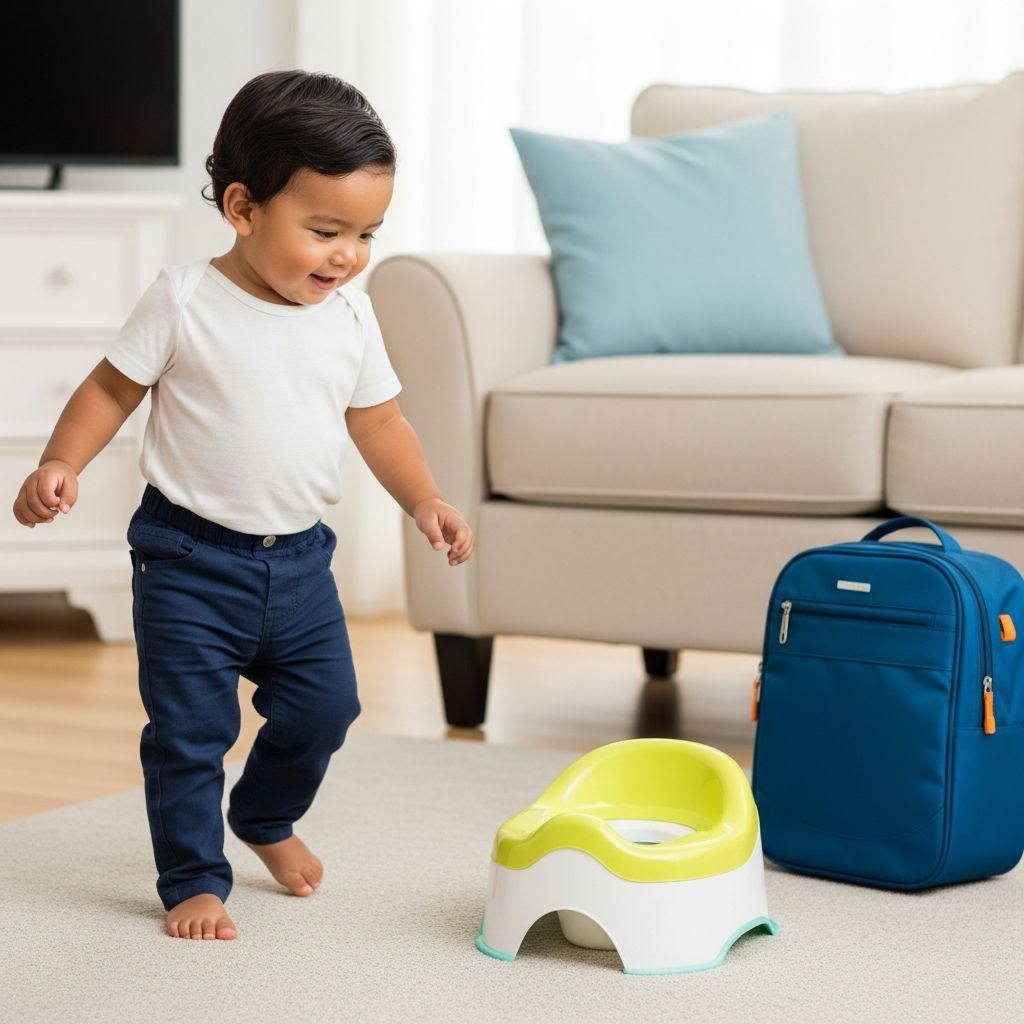
- Folding potty seat: A flat, compact seat that rests on a regular toilet and makes the opening smaller, helping toddlers feel more secure.
- Standalone travel potty: A small, lightweight potty that can be used in the car, at parks, or in a hotel bathroom.
- Seat liners or disposable bags: Liners make cleanup easier if you cannot empty a portable potty right away.
Clean-Up And Comfort Supplies
- Extra underwear and pants in a waterproof bag.
- Wet/dry bags for storing soiled clothing without smells or leaks.
- Flushable or regular wipes, tissues, and a small bottle of hand sanitizer.
- Portable changing pad or absorbent pad for car or airplane seats, in case of leaks.
- Nighttime or backup training pants, if you are using them during the trip.
Road Trips With A Potty-Training Toddler
Car travel offers the biggest advantage of all: you can pull over. That flexibility makes it easier to continue potty training with only minor adjustments to your routine.
Planning Stops And Routines
- Plan to stop roughly every 60–90 minutes for a quick stretch, snack, and potty opportunity, even if your child does not ask.
- Offer the potty before you leave home, when you arrive at rest stops, and just before getting back in the car.
- Allow a few extra minutes at each stop so your toddler is not rushed—hurrying often leads to resistance or accidents.
When There Is No Bathroom Nearby
- Keep a portable potty within reach, along with a roll of small trash bags and wipes.
- Pull over safely, use the potty in the back seat or trunk area, and dispose of waste appropriately at the next stop.
- Have a “car-only” towel or spare blanket as a backup layer under your child’s seat if leaks are a frequent concern.
Flying With A Toddler In Training
Air travel compresses many challenges into one place: long lines, limited bathrooms, and strict seatbelt rules. That does not mean you must abandon progress, but it may mean using flexible strategies and clear explanations.
Before Takeoff
- Take your child to the bathroom just before boarding, even if they insist they do not need to go.
- Explain that sometimes you have to stay in your seat and cannot get up right away, especially during takeoff and landing.
- Consider using special “travel underwear,” such as training pants or a pull-on absorbent layer, for the flight only, while still encouraging toilet use when possible.
On The Plane
- Visit the restroom early in the flight, before the seatbelt sign comes on or lines form, so your child sees where it is and what it looks like.
- Bring a compact folding seat if your toddler feels unsteady on the large airplane toilet.
- Expect that you might not make it in time for every urge; keep extra clothes and wipes in your personal item, not checked luggage.
Helping Kids Use Unfamiliar Bathrooms
From gas station restrooms to echoing airport stalls, new bathrooms can feel loud, bright, and even scary for toddlers. Those fears often show up as sudden refusal to sit or last-minute accidents near the door.
Making Bathrooms Feel Safer
- Enter first, look around, and speak calmly about what you see: “Here is the potty, here is where we wash hands.”
- If loud flushes or hand dryers bother your child, warn them before flushing or use a quieter stall when possible.
- Offer a simple job—holding the toilet paper, pressing the soap pump—to give your toddler a sense of control.
Hygiene Without Overwhelm
- Teach your child to avoid touching the toilet seat and walls, but stay realistic: young children will forget, so wipes and soap matter more than perfection.
- Use a portable seat or paper liners if you prefer an extra layer between your child and the toilet.
- Turn handwashing into a mini game—count to ten while rubbing soap, or sing a short made-up tune.
Protecting Progress Without Stress
Trips often bring their own schedule disruptions, special treats, and late bedtimes. It is normal to see a few more accidents during and just after travel. The goal is not perfection; it is preserving your child’s confidence and your long-term routine.
Realistic Expectations
- Expect a learning curve: your child is balancing new places, new people, and new sleep routines along with toilet skills.
- View accidents as information (“We waited too long” or “The bathroom felt scary”), not as failures.
- Try to keep the tone neutral when cleaning up—brief, matter-of-fact, and followed by a reminder that the next pee or poop will go in the potty.
Restarting Normal Routines At Home
- Once you are home, go back to your usual potty schedule, such as offering the toilet after waking, before going out, and before naps.
- If you used training pants for travel, explain that those were for the trip only and that now you are back to regular underwear.
- Give your child a few days to readjust before deciding whether any regression is truly a setback or just temporary.
Sample Daily Rhythm On A Trip
Every family’s routine is different, but having a loose rhythm can reduce decision fatigue. The example below works for a day that includes some driving, some outings, and rest time.
| Time | Suggested Potty Rhythm |
|---|---|
| Wake-up | Offer potty in your room or bathroom before breakfast. |
| Before leaving lodging | Quick potty trip and check that extra clothes and wipes are in the day bag. |
| Mid-morning outing | Prompt a bathroom visit when you first arrive at your activity (park, museum, playground). |
| Before lunch | Offer the potty before ordering food or starting a picnic. |
| After nap or quiet time | Bathroom stop and fresh underwear check. |
| Late afternoon | Another potty opportunity before heading back to where you are staying. |
| Bedtime | Usual bedtime potty trip and decision about nighttime protection, depending on your child’s stage. |
Frequently Asked Questions
Is it confusing to use diapers or training pants only during travel?
Short-term use of absorbent backups does not automatically undo progress if you explain clearly what is happening. Use simple, consistent language such as, “These are your special travel pants. We still try to pee and poop in the potty when we can.” Focus on offering chances to use the toilet rather than relying fully on the backup.
What if my child refuses all public bathrooms?
Some toddlers strongly dislike loud, bright restrooms. If possible, step back and use a portable potty in a quieter setting, like the car or a private corner, while gradually building tolerance for indoor bathrooms over time. Stay calm, keep attempts brief, and praise small steps such as just entering the room or washing hands.
How many accidents mean potty training “isn’t working” during travel?
A few accidents each day on travel days are common, especially with changes in fluid intake and schedule. Look more at overall patterns—such as whether your child is still signaling sometimes, or if accidents cluster around specific situations—rather than counting every isolated event.
Should I restart potty training from the beginning after a trip?
Most children do not need a full reset. Instead, return to your pre-trip routine, add a few extra reminders, and offer praise for successful bathroom visits. If accidents remain frequent a week or two after your return, you can then decide whether a more structured “start over” approach is helpful.
What if different caregivers handle potty training differently on the trip?
Consistency is ideal, but perfect agreement is rare, especially with extended family. Aim for two or three shared rules—such as always offering the potty before leaving the house or before naps—and accept that there may be minor differences in wording or timing between adults.
Key Takeaways For Parents
- There is no single correct choice about pausing or continuing potty training during travel; the right option balances your child’s readiness with the practical realities of your trip.
- Preparation—both emotional and logistical—makes travel smoother: talk about what to expect, practice using different bathrooms, and pack a small kit of potty essentials.
- Accidents are part of the learning curve, not a sign of failure. With calm responses and a return to your usual routine at home, most toddlers quickly regain any progress that felt shaky on the road.