Potty training marks a pivotal developmental milestone for toddlers, transitioning them from diapers to independent toilet use. This process, typically beginning between 18 and 30 months, requires patience, observation of readiness cues, and consistent encouragement. Integrating fun elements like educational songs can transform potential frustration into an enjoyable learning experience, fostering confidence and reducing resistance.
Understanding Readiness: When to Begin the Journey
Determining the right time to initiate potty training is crucial for success and minimal stress. Children develop at different paces, but common indicators signal preparedness. Look for signs such as staying dry for longer periods (at least two hours), showing discomfort with soiled diapers, expressing interest in the bathroom routines of others, or successfully pulling pants up and down independently.
- Physical cues: Ability to walk steadily to the potty, sit down, and climb off without assistance.
- Behavioral signs: Dislike for wet or dirty diapers, hiding during bowel movements, or verbal announcements like “pee” or “poop.”
- Cognitive markers: Understanding simple instructions and following basic routines.
Experts from the Mayo Clinic emphasize introducing concepts gradually, such as explaining what toilets are for and demonstrating use with dolls or family members to build familiarity. Rushing before these signs appear often leads to setbacks, prolonging the process.
Popular Potty Training Methods: Finding the Right Fit
Several evidence-based approaches exist, ranging from relaxed child-led strategies to intensive structured plans. Selecting one aligns with your child’s temperament and your family’s lifestyle.
| Method | Key Features | Duration | Best For |
|---|---|---|---|
| Child-Oriented (Brazelton) | Follow child’s interest; introduce potty clothed, then naked periods; pause if resistance | Months to 3 years | Patient parents, older toddlers (18-24 months) |
| 3-Day Intensive | Naked from waist down Day 1; frequent timer prompts; rewards; quick progression to underwear | 3-7 days | Determined families, 20+ months |
| Self-Led | Child initiates; minimal intervention; peers/siblings influence | Days to weeks | Independent, observant children |
The child-oriented method, endorsed by the American Academy of Pediatrics, prioritizes the toddler’s pace, starting with clothed sits around 18 months and advancing only with enthusiasm. If resistance emerges, halt for 1-2 months. In contrast, 3-day methods demand full commitment, keeping children bare-bottomed at home with timers every 15-30 minutes, leveraging hydration for frequent practice opportunities.
Day-by-Day Guide: Implementing a Successful Plan
A structured yet flexible routine maximizes effectiveness. Prepare supplies: potty chair, step stool, flushable wipes, rewards (stickers or small treats), and loose clothing.
Preparation Phase (1-2 Weeks Before)
- Read potty-themed books and discuss body functions positively.
- Practice naked sits on the potty multiple times daily to normalize it.
- Make diaper changes quick and neutral, avoiding negative reactions.
Day 1: Intensive Introduction
Commit to staying home. Discard diapers ceremonially, dress child in a shirt only, and set a 15-minute timer. Hydrate generously with water or juice. At each ding, excitedly lead to the potty: “Potty time! Let’s try!” Praise efforts lavishly, even dry sits, restarting the timer upon success. Expect accidents—clean calmly without scolding.
Day 2: Building Momentum
Extend intervals to 20-30 minutes. Introduce underwear over pants briefly. Use before nap/bedtime, employing pull-ups only for sleep, framing them as “special nap underwear.” Continue rewards and songs during sits.
Day 3+: Outings and Nighttime
Venture short trips (e.g., park with restrooms). Prompt every hour. Night training follows daytime mastery, often requiring pull-ups until age 4-5 as bladders mature.
The Magic of Music: Songs as Confidence Boosters
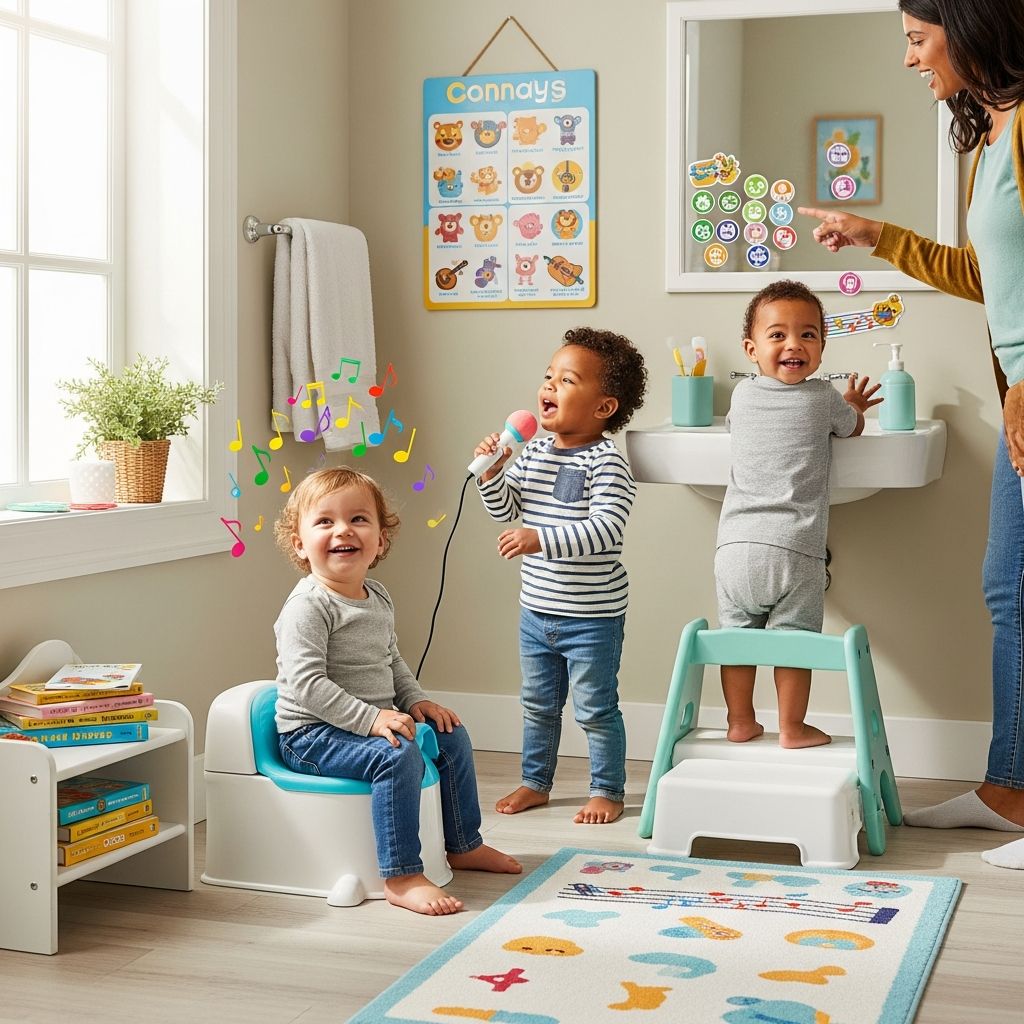
Engaging tunes simplify learning by associating fun with the routine. Songs reinforce steps—pull down pants, sit, go, wipe, flush, wash—while distracting from discomfort. Popular children’s shows release catchy tracks mimicking classics like “Baby Shark,” with lyrics guiding the process rhythmically. Singing during practice sits extends time on the potty, increasing success odds. Parents report toddlers humming independently, self-prompting use. Create custom versions or use proven ones for repetition.
- Benefits: Reduces anxiety, improves retention of sequence, turns practice into playtime.
- Implementation: Sing while waiting; reward with a reprise after success.
troubleshooting Resistance, Regression, and Setbacks
Challenges are normal. For refusal, revert to diapers briefly and retry later. Constipation hinders progress—ensure fiber-rich diet and hydration. Regression from illness or stress (new sibling) resolves with encouragement, not punishment. Praise beats over specifics like “big boy pee.” Stay consistent; most children master by age 3.
Nighttime and Beyond: Long-Term Success
Daytime success precedes nights. Limit evening fluids; wake for midnight potty if needed initially. By preschool, 90% succeed. Celebrate independence to build self-esteem.
Frequently Asked Questions
What if my toddler hates the potty?
Pause training for 1-2 months, reintroduce gradually with play. Force creates aversion.
Are rewards necessary?
Small incentives like stickers motivate initially but phase out for intrinsic pride.
How long does potty training take?
Child-led: months; intensive: 3-14 days; full mastery including nights: up to age 3-4.
Can girls and boys train differently?
Boys often sit first, stand later; girls may progress faster. Tailor to anatomy.
What about constipation during training?
Address with prunes, water, movement; consult pediatrician if persistent.
References
- Tips and Tricks For Toilet Training Your Toddler — Portland Pediatric. Accessed 2026. https://www.portlandpediatric.com/tips-and-tricks-for-toilet-training-your-toddler/
- A Complete Guide to Potty Training — Busy Toddler. Accessed 2026. https://busytoddler.com/potty-training/
- The Best Potty Training Methods [2026] — Lucie’s List. 2026. https://www.lucieslist.com/guides/introduction-to-potty-training/potty-training-methods/
- My Foolproof Potty Training Method — Austin Moms. 2019-04-30. https://austinmoms.com/2019/04/30/my-foolproof-potty-training-method/
- Potty training: How to get the job done — Mayo Clinic Staff. Accessed 2026. https://www.mayoclinic.org/healthy-lifestyle/infant-and-toddler-health/in-depth/potty-training/art-20045230
- Toilet Training: 12 Tips to Keep the Process Positive — HealthyChildren.org (AAP). Accessed 2026. https://www.healthychildren.org/English/ages-stages/toddler/toilet-training/Pages/Praise-and-Reward-Your-Childs-Success.aspx