Potty training marks a pivotal moment in a child’s journey toward independence, typically unfolding between 18 and 36 months. This process demands patience, consistency, and attunement to your toddler’s developmental cues, transforming what could be a challenging phase into a rewarding achievement. Drawing from pediatric guidelines, most children master daytime control within six months, with girls often progressing quicker than boys by two to three months.
Assessing Your Toddler’s Readiness for Toilet Independence
Timing is crucial; rushing into potty training before physiological, cognitive, and emotional readiness can prolong the process and heighten frustration. Physiologically, children gain voluntary control over their sphincter muscles around 12-18 months, enabling them to hold urine and stool. Cognitively, they must recognize bodily signals, communicate needs, and manage clothing independently—skills that solidify after age two.
Emotional preparedness manifests through interest: toddlers may request diaper changes promptly, stay dry for two hours or post-nap, or retreat to private spots during elimination, signaling awareness. Firstborns might take longer, learning without siblings’ examples, while subsequent children often accelerate.
- Physical signs: Remains dry during naps, holds for extended periods, walks steadily to the bathroom.
- Behavioral cues: Expresses discomfort with wet diapers, mimics adults, shows curiosity about toilets.
- Skill markers: Pulls pants up/down, follows simple instructions, sits comfortably for minutes.
Observe for at least a week; if most signs align, proceed confidently. Premature starts risk resistance and regression.
Selecting the Right Equipment for Comfort and Success
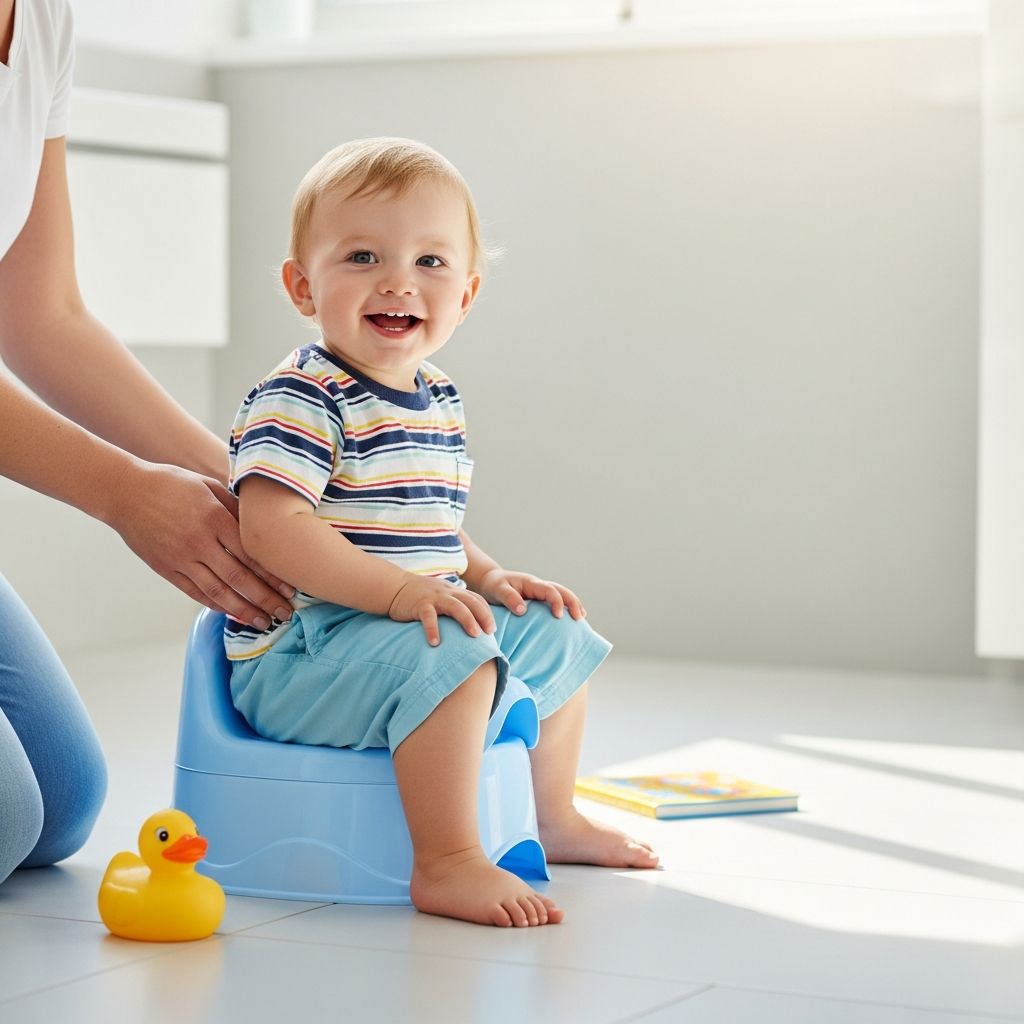
Equipping your home thoughtfully eases the transition. Opt for a child-sized potty chair with feet touching the floor for stability, or a toilet insert with step stool for older toddlers. Personalize with colors or characters to spark enthusiasm—let your child choose to foster ownership.
Stock essentials: multiple pairs of easy-pull underwear featuring favorites (prepare for accidents), flushable wipes for thorough cleaning, and training pants for outings. Introduce the potty casually weeks ahead, placing it in the play area for clothed playtime to demystify it.
| Item | Purpose | Tips |
|---|---|---|
| Potty Chair | Secure seating | Stable base, removable liner for easy emptying |
| Step Stool | Toilet access | Non-slip surface, dual steps for growth |
| Underwear | Skin sensation | 10+ pairs, fun prints to motivate |
| Wipes | Hygiene | Flushable, child-friendly dispenser |
Incorporate books, songs, or dolls simulating use to normalize the routine.
Building a Consistent Daily Routine
Consistency anchors success. Establish a schedule targeting natural cues: upon waking, post-meals, pre/post-naps, and bedtime. Initial days, prompt every 30-60 minutes, extending intervals as proficiency grows.
Practice runs sharpen recognition: watch for squirming, hiding, or facial grimaces indicating urges. Respond swiftly, praising the signal over the outcome. Limit sits to 5 minutes; no forcing—end positively even without results.
- Morning: First potty attempt after dry diaper check.
- Meals: Digestion prompts within 20-30 minutes.
- Naps: Pre- and immediate post- for dry successes.
- Evenings: Wind-down ritual before bath/bed.
Use uniform family terms like ‘pee’ or ‘poo’ to avoid confusion. Loose clothing facilitates quick access.
Positive Reinforcement: Praise, Rewards, and Modeling
Positivity fuels motivation. Lavish specific praise: ‘Great job telling me!’ or ‘You sat so well!’ Sticker charts tracking successes culminate in rewards like extra playtime or stories—highly effective for toddlers.
Model behavior: Narrate your bathroom visits casually. Role-play with toys teaches steps. Avoid negatives like ‘stinky’—frame as natural body functions. If accidents occur, calmly guide cleanup, emphasizing next time’s opportunity without shame.
Boys start seated, transitioning to standing later. Nighttime training follows daytime mastery, potentially with protective bedding.
Navigating Common Challenges and Setbacks
Accidents are inevitable—view them as learning. Regression during stress (new sibling, illness) is common; revert to diapers temporarily, resuming gently. Withholding stool from fear prompts dietary fiber boosts and relaxed encouragement.
Resistance? Pause for weeks, reintroducing playfully. Public settings need portable potties or timed stops. Track progress in a journal to spot patterns.
- Accidents: Neutral response, quick change, immediate retry.
- Regression: Reassure, shorten intervals, amplify praise.
- Fear: No-flush during sits, gradual exposure.
Daytime to Nighttime: Full Mastery Timeline
Daytime dryness precedes nights, where deep sleep delays signals. Use bedtime pull-ups fading as dry nights increase. Most achieve full control by 36 months, though some boys linger to 4 years.
Transition from potty to adult toilet with seat adapter. Celebrate milestones: accident-free days earn special outings.
Frequently Asked Questions (FAQs)
What if my child shows no interest after a week?
Pause training for 1-2 months; recheck readiness signs. Forcing breeds aversion—patience prevents prolonged struggles.
How do I handle potty training during travel?
Pack portable potty, extra underwear, wipes. Schedule stops every 1-2 hours; practice public bathroom familiarity beforehand.
Are rewards like candy okay?
Small, infrequent treats motivate initially, phasing to intrinsic praise. Sticker systems build long-term habits.
What’s the difference for boys vs. girls?
Girls often train faster; boys may delay standing urination. Both benefit from seated starts.
When to consult a doctor?
If no progress by 3 years, pain during bowel movements, or frequent UTIs—rule out constipation or medical issues.
Long-Term Benefits of Early Toilet Mastery
Successful potty training boosts self-esteem, reduces diaper costs, and models discipline. It paves the way for preschool readiness, where independence is prized. Parents report stronger bonds through shared triumphs.
Expand vocabulary: Teach anatomy positively, empowering body awareness. Community tips emphasize schedules and supplies for efficiency.
References
- Five do’s and don’ts of potty training your toddler — UC Davis Health. 2023-10-15. https://health.ucdavis.edu/children/patient-education/potty-training-children
- Potty training: How to get the job done — Mayo Clinic. 2024-05-22. https://www.mayoclinic.org/healthy-lifestyle/infant-and-toddler-health/in-depth/potty-training/art-20045230
- 25 Potty Training Tips from Real Moms — Kandoo Kids. 2023-08-10. https://kandookids.com/25-potty-training-tips-from-real-moms/
- Potty Training: Learning to Use the Toilet — ZERO TO THREE. 2024-01-12. https://www.zerotothree.org/resource/potty-training-learning-to-the-use-the-toilet/
- Toilet Training: 12 Tips to Keep the Process Positive — American Academy of Pediatrics (healthychildren.org). 2023-11-05. https://www.healthychildren.org/English/ages-stages/toddler/toilet-training/Pages/Praise-and-Reward-Your-Childs-Success.aspx