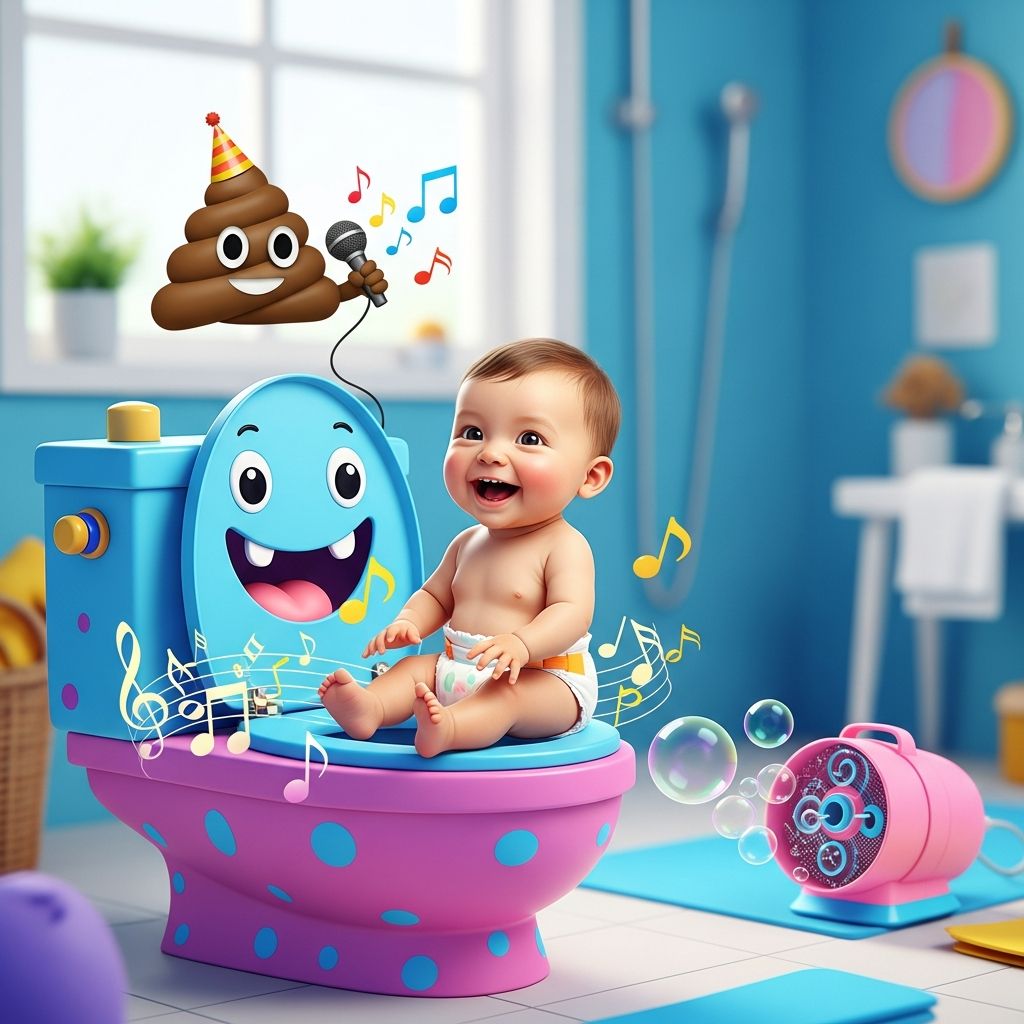
Potty training is one of those parenting milestones that can feel equal parts exciting and overwhelming. Your child is taking a big step toward independence, but there may also be power struggles, accidents, and a lot of big feelings. One simple tool can ease the tension for everyone: music. Silly poop songs and upbeat potty-training tunes can help toddlers relax, learn the routine, and even look forward to using the toilet.
This guide explains why music works so well for toilet training, how to use songs intentionally, and practical tips for turning your bathroom into a place of confidence instead of conflict.
Why Music Helps Toddlers Learn the Potty Routine
Young children learn best when they feel safe, relaxed, and engaged. Several strands of research support the idea that adding songs to potty training makes the process smoother:
- Music boosts learning and memory: Studies show that rhythmic, repetitive songs strengthen recall and help toddlers internalize new routines and language.
- Fun reduces stress: When children are laughing and singing, the experience feels like play, not pressure. Pediatric experts recommend making toilet training low-stress and playful to reduce anxiety.
- Positive associations matter: If the bathroom is linked to songs, dancing, and praise, kids are more likely to cooperate and less likely to resist sitting on the potty.
- Structure in a friendly package: Potty songs often walk through the steps—sit, pee or poop, wipe, flush, wash hands—which reinforces the routine in a way toddlers can easily follow.
In short, songs can turn an uncertain, sometimes scary experience into a predictable, upbeat ritual.
Recognizing When Your Child Is Ready
Before you queue up the poop playlist, it is important to check whether your child is developmentally ready. Forcing training too early can lead to power struggles, accidents, and constipation.
Research on toilet-training readiness has identified multiple behavioral and physical signs that a child is prepared to start learning.
| Readiness Area | Common Signs Your Child May Be Ready |
|---|---|
| Physical readiness |
|
| Communication |
|
| Awareness |
|
| Emotional & cognitive skills |
|
Many parents begin potty training around age 2 to 3, but there is a wide range of normal; experts recommend focusing on readiness signs and temperament rather than a specific age.
Evidence-Based Potty-Training Foundations
Poop songs work best when they are layered onto a solid, evidence-informed approach. Decades of research on toilet training suggest a few core principles:
- Child-oriented pacing: Approaches that follow the child’s readiness and allow gradual progress tend to have higher success rates and fewer conflicts than highly rigid methods.
- Consistency and routine: Taking your child to the toilet at regular times (for example, after meals and before bedtime) helps build a predictable habit.
- Positive reinforcement: Praise, attention, and small rewards can encourage desired behaviors more effectively than punishment or shaming.
- Low pressure: A calm, non-punitive attitude is critical. Pressuring or scolding can increase anxiety and may contribute to withholding or constipation.
Music fits naturally into this child-friendly approach because it adds warmth, predictability, and fun without adding pressure.
How Poop Songs Support Each Step of the Process
Potty training has several distinct parts: noticing the urge, getting to the toilet, sitting long enough to go, cleaning up, and washing hands. Thoughtful use of songs can reinforce each step.
1. Recognizing the Need to Go
Toddlers often feel the urge to pee or poop but do not yet have the language or habit of telling an adult. Short, catchy phrases about listening to their body can help.
- Use a simple jingle about a “tummy talk” or a “wiggle dance” that means it is time for the potty.
- Pair the song with a gesture—like tapping their belly or doing a little dance—so they have multiple ways to communicate.
- Sing the cue whenever you see signs (wiggling, squatting, going quiet) so your child links those sensations to the potty.
2. Moving Quickly but Calmly to the Bathroom
One goal of potty training is helping kids act on the urge right away. Energetic tunes can turn that rush into a fun mini-ritual instead of a frantic dash.
- Create a “potty parade” song you sing as you both walk to the bathroom.
- Keep the tune the same every time to build a strong association with going right away.
- If your child resists, invite them to be the leader of the song or choose the volume or dance move as you walk.
3. Sitting and Relaxing on the Potty
Many children can make it to the potty but pop up too quickly. Calm songs can encourage them to stay seated long enough for their muscles to relax and for pee or poop to come.
- Use a slower, soothing song as a “sitting timer” (for example, sing it twice, then let them get up).
- Play a short playlist that lasts just a few minutes; when the songs stop, sitting time is done.
- Combine the song with deep breaths or gentle back rubs to reduce any anxiety about letting poop out.
4. Celebrating Success (and Effort)
Even small wins deserve recognition—sitting on the potty, telling you they need to go, or trying again after an accident. A victory song is a fun, low-pressure way to emphasize effort.
- Have a special “you tried the potty!” cheer, not just a “you peed!” cheer.
- Let your child clap, stomp, or play a simple instrument (like a shaker or small drum) during the song.
- Use enthusiastic but gentle language; keep it about pride and progress rather than perfection.
5. Reinforcing Hygiene: Wipe, Flush, Wash
Good hygiene is part of healthy toilet habits. Many popular potty songs include verses about wiping and washing hands, which helps kids remember every step.
- Make up lyrics about front-to-back wiping, putting toilet paper in the bowl, and flushing once.
- Create a separate handwashing song that lasts about 20 seconds, aligning with public health guidelines for proper handwashing duration.
- Use the same handwashing song outside of potty time to generalize the habit.
Creating a Musical Potty Routine
You do not need to be a professional songwriter—or even able to carry a tune—to make poop songs work. The magic comes from repetition, playfulness, and a warm connection with your child.
Simple Steps to Build Your Routine
- Pick a few key moments: For example, a “let’s go” song, a “sitting” song, and a “handwashing” song.
- Borrow familiar melodies: Use tunes your child already knows and change the words to match potty steps.
- Keep lyrics short: Toddlers respond best to simple, repetitive lines they can learn quickly.
- Repeat daily: Sing the same lines at the same times each day so the routine becomes automatic.
- Follow your child’s lead: If they start improvising silly lines, go with it—it deepens their sense of ownership.
Ideas for DIY Poop Song Themes
To keep things original and playful, base your tunes around ideas your child already loves.
- Animal helpers (e.g., a bear who always remembers to flush)
- Superhero powers that appear when they sit on the potty
- Magical bubbles that show up only during handwashing
- Trains, cars, or rockets “delivering” poop to the toilet
- Royalty themes—princes and princesses who use the royal potty
Managing Common Potty Challenges With Music
Even with the best playlist, most families hit bumps along the way. National polling suggests that about one in five parents report potty-training being harder than expected, and many children experience potty-related anxiety or temporary setbacks.
Anxiety or Fear of the Toilet
Some toddlers are scared of the flushing sound, the size of the toilet, or the feeling of letting poop go.
- Turn the bathroom into a pressure-free zone with books, toys, and gentle music.
- Use a soft “goodbye poop” song to normalize flushing and make it feel silly rather than scary.
- Allow them to step out while you flush at first, then gradually invite them to push the lever as part of the song.
Refusing to Sit or Running Away
Power struggles are common, especially in strong-willed toddlers.
- Offer choices inside the routine: sit on the little potty or the big toilet, sing quietly or loudly, clap or stomp.
- Use a “potty invitation” song instead of commands. Ending with a question (“Do you want to be the singer or the dancer?”) can feel less controlling.
- Keep expectations small at first—maybe the goal is just sitting while one short verse plays.
Poop Withholding or Constipation
Some children begin to hold in their stool, which can lead to discomfort, constipation, or even encopresis (soiling accidents). Medical guidance is important here, but music can support the emotional side.
- Use calm, slow songs and deep breathing to promote relaxation on the potty.
- Talk (or sing) about poop as something the body is supposed to let go of—“poop wants to go swimming” or “poop is ready for its toilet trip.”
- If your child shows pain, fear, or frequent withholding, consult their pediatrician for medical and behavioral guidance.
Regression After Seeming Fully Trained
It is common for children to backslide after big life changes—like a new sibling, a move, or starting daycare. This does not mean training has failed.
- Return to the basics: regular potty visits, supportive reminders, and your familiar songs.
- Frame it as practice, not punishment: “We’re just singing our potty songs again to help your body remember.”
- Avoid shaming language; focus instead on encouragement and reassurance.
Safety, Culture, and Individual Differences
Toilet training is influenced by culture, family routines, and the child’s specific needs. Research shows that no single method works for every family, and success depends on preferences, expectations, and context.
- Respect your child’s pace: Musically enhancing training should never become a way to pressure children before they are ready.
- Adapt for neurodivergent children: Some kids may prefer quieter songs, visual supports, or more predictable patterns. Others may be motivated by upbeat music and movement breaks.
- Be mindful of noise sensitivity: If flushing sounds are overwhelming, let your child wear headphones with soft music during that step and gradually fade supports.
- Coordinate with caregivers: Share your key potty songs and cues with grandparents, daycare, or babysitters so the routine feels consistent.
Frequently Asked Questions (FAQs)
At what age should I start using potty-training songs?
You can introduce fun bathroom-related songs whenever your child starts noticing the toilet or talking about diapers, often around 18–24 months. Many parents begin formal training between ages 2 and 3, but experts advise following readiness signs rather than a strict age.
Do poop songs really make a difference, or are they just for fun?
They are both. Music enhances learning, supports memory, and makes routines feel predictable and enjoyable, which can reduce anxiety and resistance. Songs alone will not toilet-train a child, but they are a powerful tool within a positive, consistent approach.
What if my child hates singing or covers their ears?
Some children are sensitive to noise or simply prefer quiet. In that case, keep songs very soft, hum instead of singing lyrics, or use gentle instrumental music. You can still explain the routine verbally and use visual charts or stories instead of musical cues.
How long should we keep using potty songs?
Use them as long as they are helpful and enjoyable. Many families find that songs naturally fade out once the routine becomes automatic, while some kids enjoy a quick handwashing song for years. If your child starts rolling their eyes and asking you to stop, that is usually a sign they feel confident enough without them.
Are reward charts and songs okay together, or is that too much?
Combining simple positive rewards—like stickers or extra story time—with songs is very common and consistent with behavior-based training methods. Just be sure praise and connection remain the main focus, and avoid turning every bathroom trip into a high-pressure performance.
References
- The Trials of Toilet Training — Michigan Medicine, C.S. Mott Children’s Hospital National Poll on Children’s Health. 2023-03-20. https://www.michiganmedicine.org/health-lab-podcast/trials-toilet-training
- Toilet Training Readiness Scale for 0–5-Year-Old Children — Bayer et al., Children (Basel), MDPI. 2023-06-12. https://pmc.ncbi.nlm.nih.gov/articles/PMC11429537/
- An Evidence-Based Approach to Potty Training — Cara Goodwin, Psychology Today. 2022-05-16. https://www.psychologytoday.com/us/blog/parenting-translator/202205/an-evidence-based-approach-to-potty-training
- Potty Training Songs and Videos Compilation — Tots and Toilets. 2021-08-01. https://www.totsandtoilets.com/articles/potty-training-songs-videos-compilation/
- CoComelon’s Musical Approach to Potty Training Success: How Songs Build Toddler Confidence — Mom the Mag. 2023-04-10. https://momthemag.com/cocomelons-musical-approach-to-potty-training-success-how-songs-build-toddler-confidence/