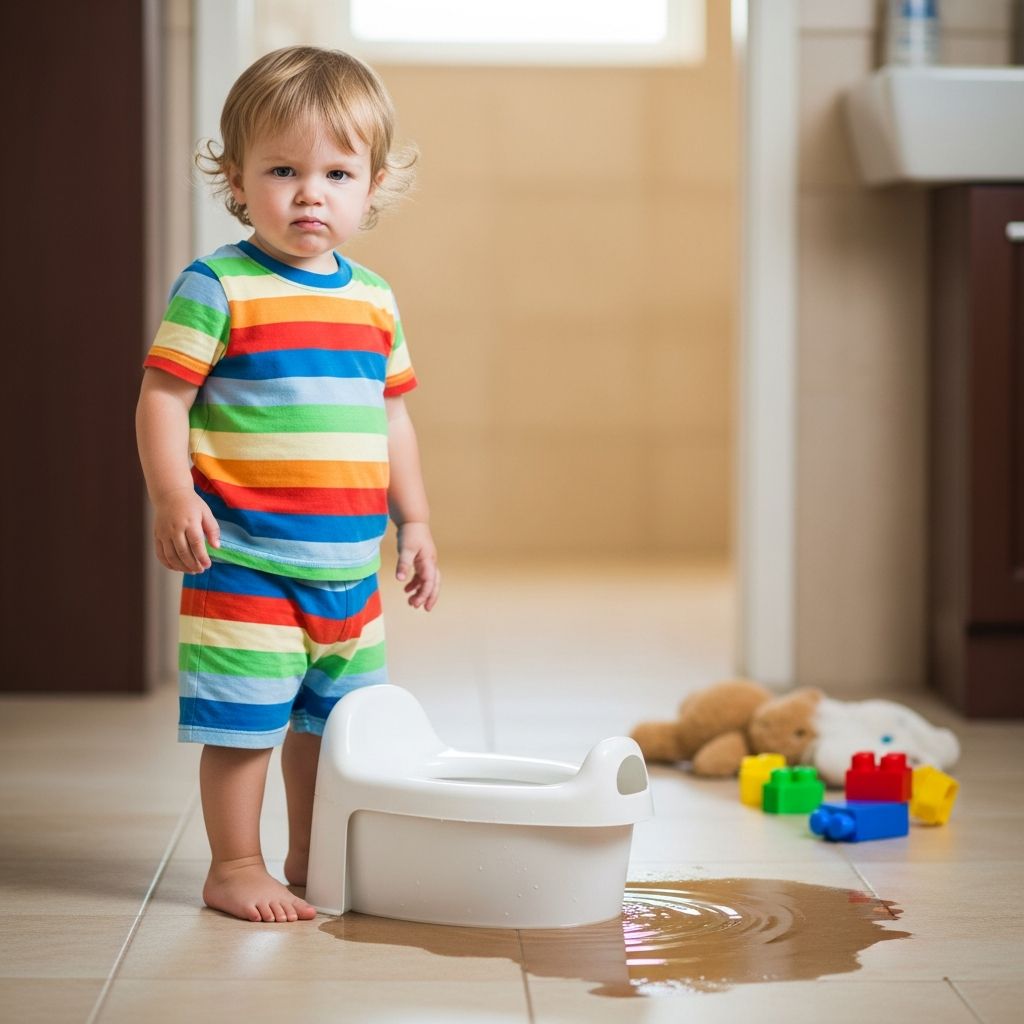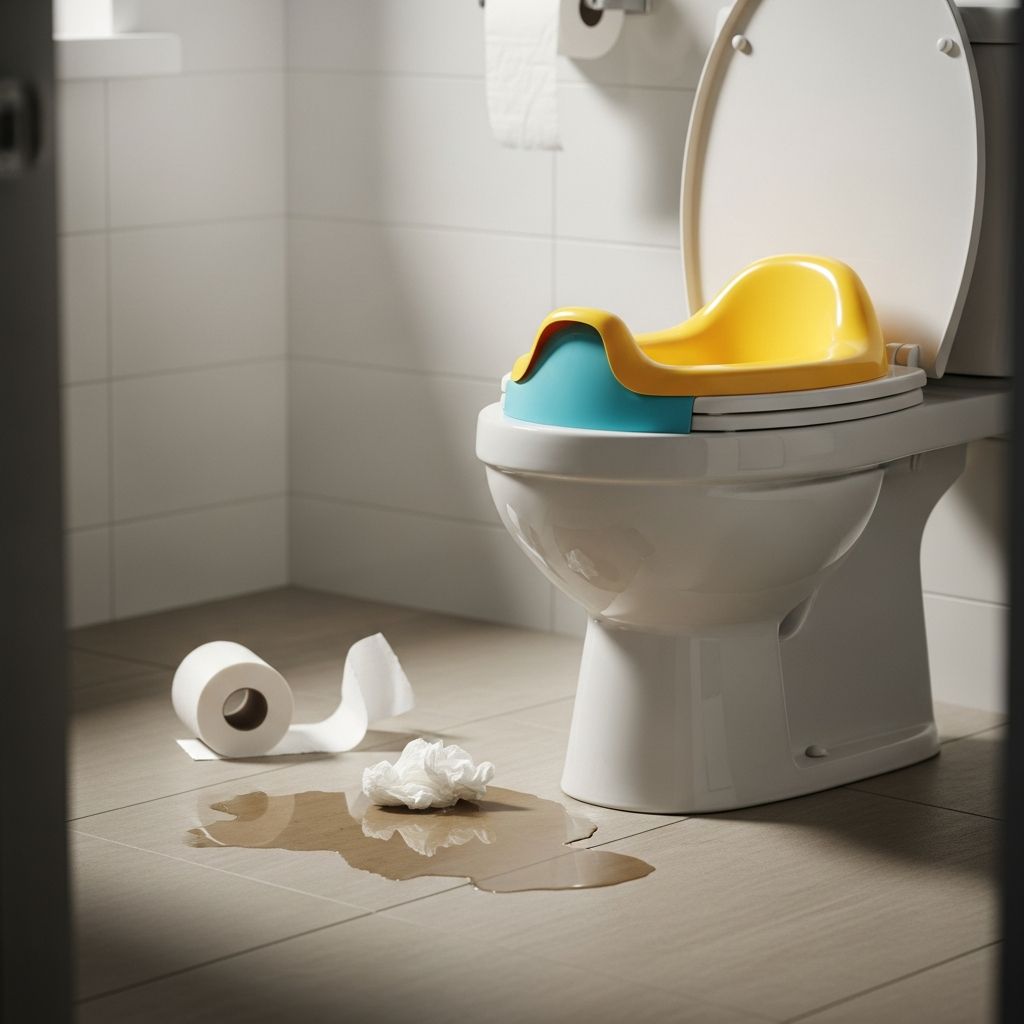
Few things rattle a parent more than a toddler who was proudly using the potty suddenly soaking pants, hiding to poop, or demanding diapers again. Potty training regression can feel like a personal failure or a battle of wills, but it is usually neither. It is a developmental detour that most families experience at least once.
This guide explains why potty regression happens, how to tell it from ordinary accidents, when to call your child’s doctor, and concrete steps to help your child regain skills without turning the bathroom into a power struggle.
What Potty Training Regression Really Is
Potty training regression is a return to frequent accidents or refusal to use the toilet after a child had previously been mostly dry and using the potty with reasonable consistency.
It is different from an occasional mishap. Even fully toilet-trained preschoolers may have single accidents when they are:
- Overly distracted by play
- In an unfamiliar environment
- Extremely tired or not feeling well
Regression is more than that. Parents usually notice a pattern like:
- Multiple wet or dirty accidents most days for more than a few days
- Asking to go back to diapers or pull-ups
- Hiding to pee or poop instead of going to the potty
- Sudden refusal to sit on the toilet or potty chair
- Bedwetting after a stretch of dry nights
Common Reasons Toddlers Slide Backward
Regression nearly always has a cause, even if it is not obvious to adults. Research and pediatric guidance point to a few major categories.
1. Big Life Changes and Stress
Young children have limited tools for coping with stress. Changes that feel routine to adults can feel overwhelming to a toddler. Regressing in a recently learned skill (like toileting) is a common way their stress shows up.
Typical triggers include:
- New sibling or pregnancy in the family
- Starting daycare or preschool
- New caregiver or babysitter
- Moving homes or major schedule changes
- Parental conflict, separation, or divorce
- Serious illness in the child or a close family member
- Recent death or other significant loss
For many children, toileting is one of the few areas where they feel in control. When everything else shifts, they may cling to diapers or refuse the potty as a way to reclaim that sense of control.
2. Medical Issues
Sometimes regression is less about emotion and more about physical discomfort. Pediatricians emphasize ruling out medical causes early, especially when regression appears suddenly.
Two of the most common are:
- Constipation: Hard, painful stools can make children avoid pooping, leading to larger, more painful bowel movements and even more avoidance. This cycle often results in stool accidents and can worsen urinary accidents as well.
- Urinary tract infections (UTIs): These can cause burning, urgency, or frequent urination, making it harder for a child to get to the toilet in time.
If your child suddenly starts having frequent accidents after being consistently trained, or shows discomfort when peeing or pooping, your pediatrician should be your first call.
3. Developmental Readiness Mismatch
Some children toilet train early to please adults or copy older siblings even though their bodies and brains are not quite ready to maintain that level of control all day. When the novelty wears off or the demands feel high, the child may retreat to earlier habits.
Signs that readiness may have been overestimated include:
- Constant reminders are needed or accidents happen as soon as adults stop prompting
- Child resists sitting on the toilet most of the time
- Child cannot yet stay dry for at least two hours at a time
- Limited verbal ability to say they need to go
In these cases, it can help to pause intensive training and return to it when your child is more ready, rather than turning every trip to the toilet into a conflict.
4. Everyday Distractions and Growing Independence
As toddlers grow, they become more interested in play, peers, and exploration. They may delay going until the last second because they do not want to stop what they are doing. Sometimes a pattern of accidents from distraction can gradually slide into a true regression if the child becomes embarrassed, anxious, or begins avoiding the bathroom altogether.
How to Tell Regression from Normal Accidents
Not every cluster of accidents is a full regression. Carefully watching the pattern can help you decide what kind of response is needed.
| Feature | Typical Accident Pattern | Potty Training Regression |
|---|---|---|
| Frequency | Occasional, a few times a month or linked to clear events (e.g., long car ride) | Multiple accidents per day or most days for more than a week |
| Child’s attitude | Surprised or mildly upset, usually willing to try again | Refusal to sit on potty, hiding, or demanding diapers |
| Context | When very busy, tired, or in a new place | Across many settings (home, childcare, outings) |
| Duration | Brief phase, then back to usual | Ongoing without clear improvement unless addressed |
First Response: Check Health, Then Lower the Temperature
Before diving into sticker charts or new routines, step back and make sure there is no underlying health problem.
Step 1: Talk to Your Pediatrician
Contact your child’s healthcare provider if:
- Accidents suddenly become frequent after a period of reliable dryness
- Your child has pain, burning, or crying with urination or bowel movements
- Stools are very hard, large, or infrequent (possible constipation)
- There is blood in urine or stool
- Regression follows a trauma or you suspect abuse
The clinician may ask about patterns, diet, recent changes, and perform an exam or tests (such as urine analysis) to check for infections or constipation.
Step 2: De-escalate the Power Struggle
Once serious medical issues are ruled out, the most powerful tool you have is your own calm. Pressure and anger often make regression worse by increasing a child’s anxiety.
Helpful mindset shifts include:
- Viewing regression as information, not defiance
- Remembering that children this age are still learning body awareness and emotional regulation
- Assuming your child would rather succeed than fail, even if their behavior looks oppositional
Practical Strategies to Get Back on Track
After you have calmed the emotional climate and checked with your child’s doctor when needed, you can gently rebuild skills. The goal is to make toileting predictable, low-pressure, and safe.
1. Revisit the Basics
Sometimes a brief “reset” that looks like early potty training helps:
- Offer regular potty sits at predictable times (on waking, before leaving the house, before naps and bedtime, after meals)
- Keep the potty chair or toilet insert easy to access and familiar
- Dress your child in clothing that is easy to pull down quickly
- Use simple, neutral language: “It’s potty time,” rather than long lectures
2. Create a Calm Routine, Not a Contest
Think of the routine as an invitation rather than a demand. You might:
- Give a brief warning: “In a few minutes, it will be time to sit on the potty.”
- Let your child choose a small element (which bathroom, which book to look at on the potty).
- Keep sits short; many toddlers do well with 3–5 minutes, not long forced waits.
If they refuse, respond with calm limits instead of bribes or threats. For example, “That’s okay, you can choose not to sit, but we won’t start the next activity until we try the potty once.”
3. Use Positive Reinforcement Wisely
Research and clinical experience support using praise and small rewards to shape toileting behavior, as long as rewards do not become coercive or overly controlling.
Ideas include:
- Notice effort: “You listened to your body and went to the potty. That was helpful!”
- Tiny tangible rewards: A sticker, marble in a jar, or extra bedtime story for successful sits or attempts.
- Process praise: Focus on trying and listening to their body, not just producing pee or poop.
Avoid shaming comments (“You’re too big for this”) or comparisons to siblings or peers, which can increase resistance and anxiety.
4. Address the Underlying Stress
If a major change or stressor is driving regression, supporting the child’s emotions often helps the toilet progress follow.
Tailored support might include:
- For a new baby: Build in regular one-on-one time with the older child, and reassure them that they are loved whether they use diapers or underwear.
- For a new school or caregiver: Visit the bathroom together, meet teachers, and use pretend play to practice the new routine.
- For moves or schedule changes: Keep bedtime and mealtimes as consistent as possible, and talk ahead of time about what will stay the same each day.
- For family conflict or separation: Communicate with other caregivers about using similar toileting expectations and create predictable routines in both homes when possible.
5. Consider a Temporary Step Back
In some cases, especially when the child appears highly anxious or defiant around the toilet, it can be kinder and more effective to intentionally pause or partially step back.
Examples:
- Using training pants or diapers for a few weeks while keeping the potty available and low-key
- Focusing only on daytime training and using pull-ups at night if bedwetting is frequent
- Letting the child decide when to try underwear again, with gentle encouragement
Stepping back is not “giving up”; it is matching expectations to your child’s current capacity.
What to Avoid During Regression
Some common reactions, even when understandable, tend to make regression last longer or feel more painful for everyone.
- Punishment: Yelling, spanking, or taking away cherished items after accidents can increase shame and fear, worsening toileting problems and potentially harming the parent–child relationship.
- Public shaming: Talking about your child’s accidents in front of others or teasing them erodes trust.
- Inconsistent rules: Switching daily between strict enforcement and total indifference confuses children. Aim for calm, predictable responses instead.
- Ignoring possible health issues: Assuming it is all behavior without checking for constipation or UTIs can prolong physical discomfort and regression.
Supporting Yourself as the Parent
Potty regression does not just affect children. It also strains caregivers who may be juggling work, siblings, and other responsibilities.
Ways to protect your own well-being include:
- Reminding yourself that regression is common and usually temporary
- Sharing the routine with another caregiver when possible so one person is not handling every accident
- Preparing simple clean-up kits (wipes, spare clothes, plastic bag) to reduce stress when you are out of the house
- Talking with other parents or a trusted professional if you feel overwhelmed or ashamed
Frequently Asked Questions (FAQs)
Q: How long does potty training regression usually last?
A: There is no exact timeline, but many regressions improve over days to a few weeks once medical issues are addressed and routines become calm and consistent. If regression persists for many weeks without improvement, or you are very worried, consult your child’s healthcare provider.
Q: Should I put my child back in diapers during regression?
A: Sometimes yes. If your child is very distressed, having constant accidents, or clearly not ready to maintain dryness, short-term use of diapers or training pants can lower pressure while you work on readiness skills. Continue talking about the potty in a relaxed way and offer opportunities to use it, but avoid power struggles.
Q: When is potty regression a sign of something serious?
A: Call your pediatrician promptly if there is pain with urination or bowel movements, blood in urine or stool, very hard or infrequent stools, sudden and severe wetting after months of dryness, or if you suspect trauma or abuse. These may require medical or mental health support beyond routine parenting strategies.
Q: My child only has accidents at school. Is that regression?
A: It can be. Some children are comfortable at home but anxious or distracted in childcare or school settings. Talk with teachers about toileting schedules, access to bathrooms, and any stressors. A pattern of frequent accidents in one setting still deserves attention and support.
Q: Does night-time bedwetting count as regression?
A: Night-time dryness develops later than daytime control for many children, and occasional bedwetting can be normal for years. If a child who had many dry nights suddenly wets frequently again, especially during times of stress, it may be part of a regression and should be discussed with their healthcare provider.
References
- Potty Training Regression — HealthyChildren.org (American Academy of Pediatrics). 2022-06-21. https://www.healthychildren.org/English/ages-stages/toddler/toilet-training/Pages/Regression.aspx
- Potty Training Regression: What To Do About It — Cleveland Clinic. 2023-05-30. https://health.clevelandclinic.org/what-to-do-when-your-potty-trained-child-suddenly-isnt
- How to Deal With Potty-Training Regression — Pampers (Pampers Parenting & Expert Advice). 2022-09-09. https://www.pampers.com/en-us/toddler/potty-training/article/potty-training-regression
- Potty Training Regression: 8 Helpful Tips for Parents — Healthline. 2019-11-21. https://www.healthline.com/health/parenting/potty-training-regression
- 10 Helpful Tips For Dealing With Potty Training Regression — Newton Baby. 2021-05-10. https://www.newtonbaby.com/blogs/parenting-kids/potty-training-regression