Potty training marks a significant developmental milestone for toddlers, typically beginning between 18 months and 3 years. Success hinges on recognizing your child’s readiness cues while steering clear of widespread errors that prolong the process or create frustration. This guide outlines critical missteps and offers actionable solutions drawn from pediatric expertise to ensure a positive experience for both parent and child.
Assessing Readiness: The Foundation of Effective Training
Before introducing the potty, evaluate your toddler’s preparedness through observable signs. Key indicators include staying dry for at least two hours, showing discomfort with soiled diapers, expressing interest in the bathroom routines of others, or demonstrating the ability to pull clothing up and down independently. These signals suggest physical and cognitive maturity for bladder control and self-awareness.
Rushing into training without these prerequisites often leads to resistance and setbacks. Pediatric guidelines from the American Academy of Pediatrics emphasize waiting for natural readiness to minimize stress, noting that children who begin prepared achieve daytime dryness faster, often within weeks rather than months.
- Physical cues: Fewer wet diapers overnight, ability to hold urine.
- Behavioral signs: Hiding during bowel movements, verbalizing needs.
- Motor skills: Independent dressing and undressing.
Why Pull-Ups and Diapers Derail Progress
One of the most prevalent errors is continuing pull-ups or diapers during training. These products are engineered for high absorbency, preventing children from feeling wetness—a crucial sensory feedback for learning bodily signals. Without this discomfort, toddlers fail to connect urges with potty use, extending the training phase.
Transition to real underwear or training pants immediately upon starting. Initial messes are inevitable but accelerate learning by reinforcing cause and effect. For mess-averse parents, a hybrid approach—underwear inside a pull-up—allows wetness sensation while containing spills. Studies on child development confirm that tactile feedback is essential for neuro-muscular conditioning in toilet habits.
| Product Type | Impact on Training | Recommendation |
|---|---|---|
| Diapers/Pull-Ups | Masks wetness, delays awareness | Eliminate from day one |
| Training Pants | Allows feeling wet/dry | Use for transitions |
| Regular Underwear | Full sensory feedback | Ideal for home use |
Ditching Rigid Schedules for Child-Led Timing
Setting arbitrary potty timers, like every 20-30 minutes, undermines a child’s ability to tune into internal cues. This method fosters dependency on external prompts rather than self-initiated bathroom visits, breeding boredom and resistance.
Instead, observe natural patterns: fidgeting, leg-crossing, or sudden stillness often precede urges. Gently guide with phrases like, “Your wiggle tells me it’s potty time—let’s go!” This builds body awareness. Research from child psychologists highlights that intuitive prompting aligns with developmental stages, reducing accidents over time.
Avoiding Prolonged Potty Sits and Power Struggles
Forcing toddlers to remain on the potty for extended periods—beyond 5 minutes—turns the experience negative, associating it with punishment. Combined with frequent trips, this creates anxiety and constipation risks.
Keep sessions brief and voluntary. Offer choices like preferred books or toys to empower the child. If resistance arises, step back without pressure; forcing amplifies defiance. Consistency in calm responses prevents escalation into battles that stall progress.
Mastering Reactions to Inevitable Accidents
Accidents are learning opportunities, not failures—expect 10-20 daily in early days. Overreacting with anger or excessive comfort like “It’s okay, I’ll clean it” minimizes accountability and prolongs mishaps.
Respond neutrally: Clean up together, note the wetness sensation, and praise efforts. Phrases to avoid include questioning “Do you need to go?” which invites refusal. Opt for statements: “Big kids use the potty for pee.” Positive reinforcement, per behavioral studies, strengthens neural pathways for success.
Timing Training Around Life Transitions
Initiating potty training amid disruptions—a new sibling, family move, or preschool start—divides focus and invites regression. Major changes overload toddlers’ emotional bandwidth, making new habits harder to adopt.
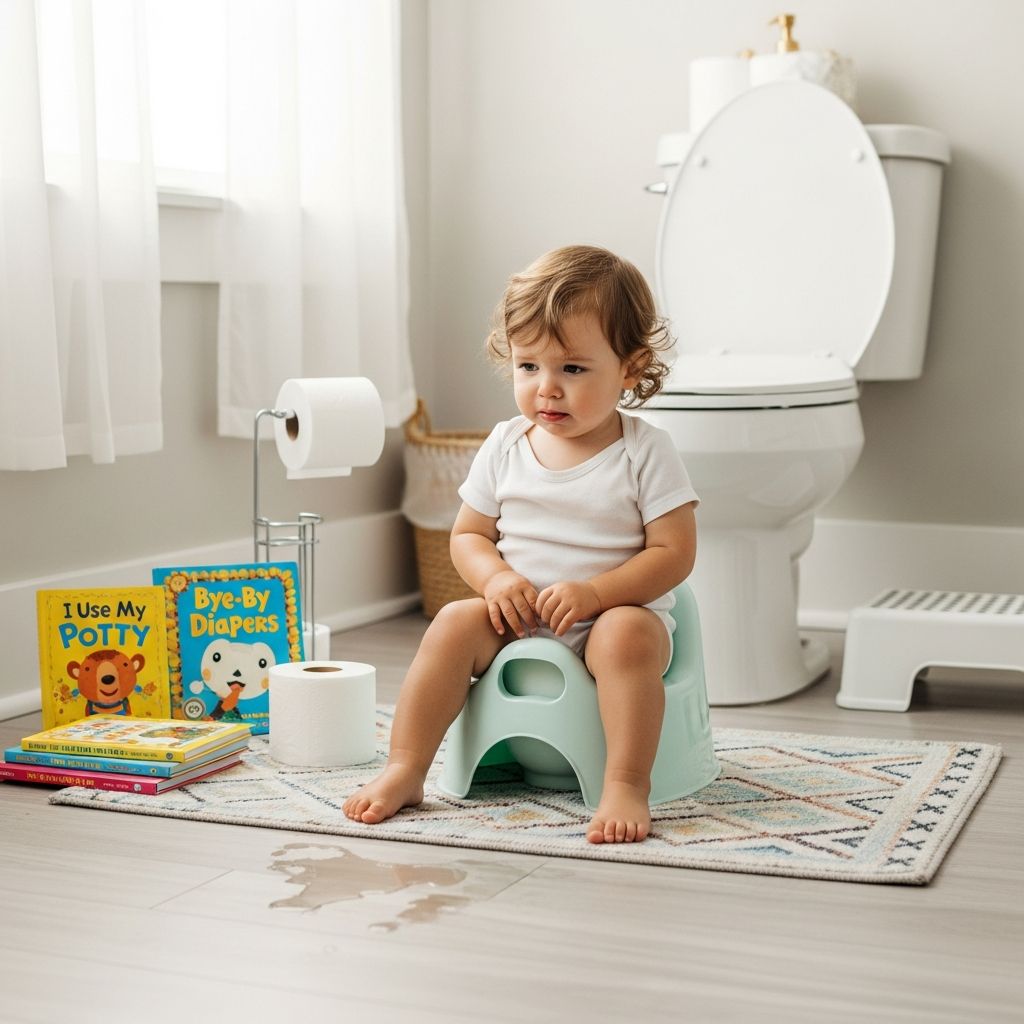
Choose a stable period, ideally with parental availability for 3-7 intensive days. Prepare supplies: multiple potties for choice, protective pads for furniture, and themed books for engagement. A supportive routine fosters security.
Debunking Quick-Fix Myths and Expectations
Programs promising completion in “three days” set unrealistic benchmarks, ignoring individual paces. Potty training spans weeks to months, with night dryness often lagging by years due to deep sleep patterns.
Embrace gradual progress: Daytime success first, then overnights. Parental commitment—staying home, maintaining positivity—is pivotal. Data from longitudinal studies show patient approaches yield 90% success by age 4 without coercion.
Building a Positive Potty Environment
Enhance success with strategic setups. Place the potty accessibly, stock fun incentives, and model behavior casually. Avoid intimidation by keeping boys standing if preferred, and celebrate small wins lavishly.
Address regressions calmly; they stem from stress, not failure. Revert briefly if needed, then rebuild. Holistic support, including diet for regularity, underpins smooth training.
Frequently Asked Questions
What age is best for potty training?
Most children show readiness between 18-30 months. Watch for signs rather than calendar age; forcing earlier prolongs the process.
How do I handle nighttime wetting?
Limit evening fluids and use optional bed pads. Full control often emerges by age 5-7 naturally.
What if my child resists fiercely?
Pause training for 1-2 weeks, then retry with more play-based fun. Consistency without force resolves most standoffs.
Are rewards necessary?
Small, non-food stickers work well for motivation. Intrinsic pride soon replaces them.
How long until no accidents?
Expect 1-3 months for reliability, varying by child. Patience prevents burnout.
Long-Term Strategies for Lasting Independence
Beyond basics, instill habits like pre-outing bathroom breaks and public restroom familiarity. Track progress in a chart for visual motivation. If issues persist beyond 4 years, consult a pediatrician to rule out medical factors like UTIs.
Ultimately, potty training builds confidence and autonomy. By avoiding pitfalls—rigid methods, absorbent crutches, emotional overreactions—parents pave a path to mastery. Embrace the journey; every spill leads closer to dry days.
References
- Potty Training Mistakes to Avoid to Make The Process 10x Easier — Brightest Beginning. 2023. https://brightestbeginning.com/potty-training-mistakes/
- The Most Common Potty Training Mistakes and How to Avoid Them — Parent.com. 2024-01-01. https://www.parent.com/blogs/conversations/2024-the-most-common-potty-training-mistakes-and-how-to-avoid-them
- 14 Mistakes Parents Make While Potty Training — Tinybeans. 2023. https://tinybeans.com/when-to-start-potty-training-and-common-mistakes/
- 5 Potty Training Mistakes to Avoid — PedsDocTalk. 2023. https://pedsdoctalk.com/when-to-potty-train/
- 6 Common Mistakes Parents Make When Potty Training — YouTube (Andrea Olson @ Go Diaper Free). 2023. https://www.youtube.com/watch?v=Q61z3tRO1Ew