Moving from diapers to the potty is a big developmental leap, and it can feel just as intimidating for parents as it does for toddlers. The goal of potty training is not only a dry pair of underwear; it is also about building body awareness, confidence, and cooperation. This guide walks you through a calm, respectful, and practical approach to breaking diaper dependence without turning it into a battle of wills.
Why Potty Training Feels So Hard
Potty training sits at the crossroads of independence, control, and routine. Toddlers are discovering that they can say “no,” while caregivers often feel urgent pressure from daycare, relatives, or their own expectations. This clash can turn a normal learning process into a stressful stand-off if it is approached with rigid timelines instead of flexibility.
Toilet learning also involves new sensations, unfamiliar equipment, and a shift away from the security of diapers. When parents understand how big this change feels to a young child, it becomes easier to slow down, adjust expectations, and look at potty training as a shared project rather than a test.
Spotting Real Readiness in Your Toddler
Successful potty training starts with readiness, not age. While many children show interest between 2 and 3 years old, some are ready earlier and others later. Instead of relying on a birthday, look for behavioral and physical signs that your child is prepared to learn a new skill.
Common readiness signs
- Stays dry for at least 1.5–2 hours during the day.
- Wakes up from some naps with a dry diaper.
- Shows awareness of wet or dirty diapers (tugging at them, asking for a change, hiding to poop).
- Follows simple instructions like “get your shoes” or “put this in the trash.”
- Can walk to another room and sit down without help.
- Shows interest in the bathroom or copying adults’ bathroom habits.
- Can pull pants up and down with minimal assistance.
If your toddler shows most of these signs, you are likely in a good window to begin. If not, you can still lay the groundwork with gentle preparation and language without expecting consistent potty use yet.
Preparing the Ground: Set Up for Success Before You Start
Before asking a toddler to give up diapers, create an environment and routine that makes using the potty feel natural and safe. Think of this as a warm-up phase rather than “real” training. The more familiar and low-pressure this stage is, the smoother the later transition will be.
Simple preparation steps
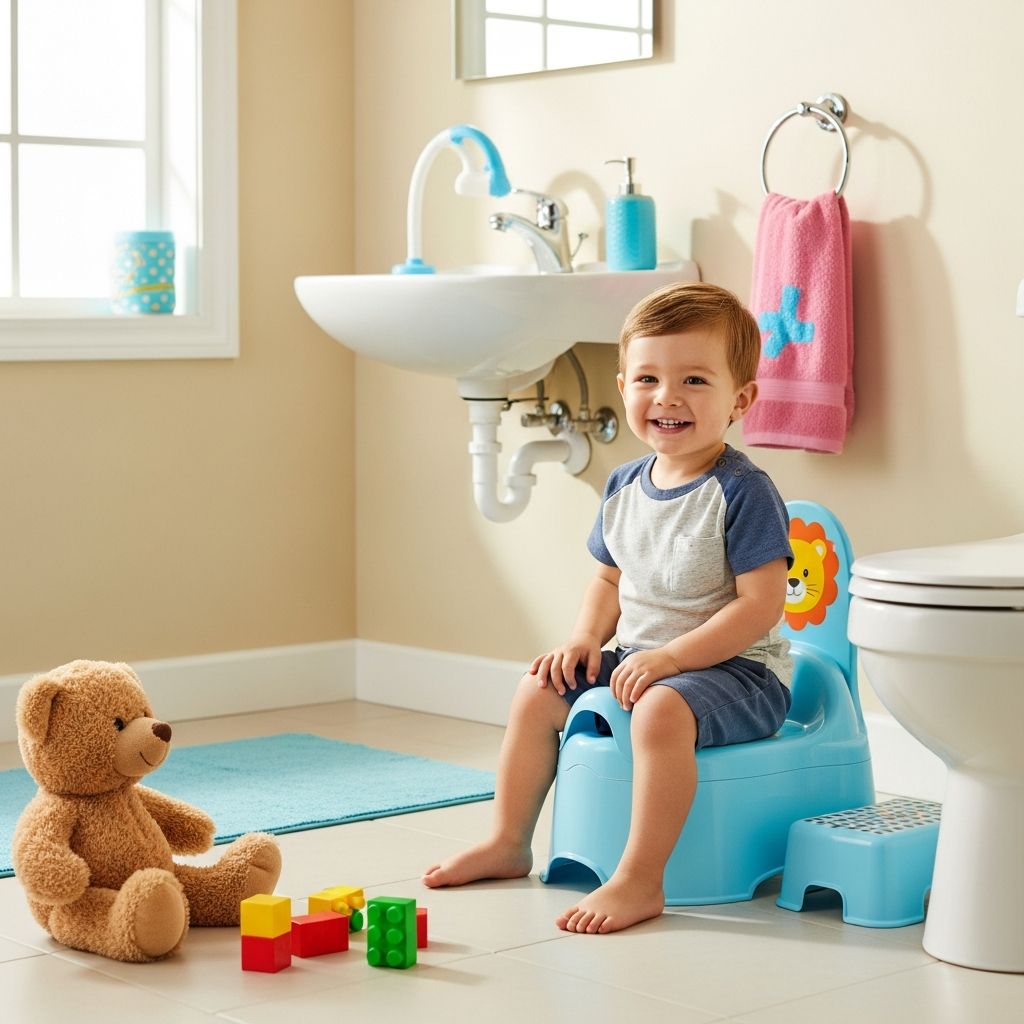
- Choose kid-friendly equipment: A small floor potty or a toddler seat with a step on the big toilet both work. Involve your child in picking colors or stickers, so it feels like their special tool.
- Put the potty where life happens: Keep it where your child spends most of the day, not hidden in a distant bathroom. Visibility is a strong reminder.
- Normalize bathroom language: Use simple, matter-of-fact words like “pee,” “poop,” and “potty.” Avoid negative labels or jokes that might make bodily functions feel embarrassing.
- Practice sitting fully clothed: Let your toddler sit on the potty while reading a short book or playing with a toy so the seat itself feels safe, not urgent.
- Connect the diaper to the potty: When changing a poop diaper, calmly say, “Poop goes in the potty,” and gently dump it into the potty before flushing.
Choosing an Approach That Fits Your Family
There is no single correct way to potty train. What matters most is consistency, respect, and tuning into your child’s temperament. Some families like fast, structured methods; others prefer a slow and child-led pace. Many end up with a hybrid that evolves as they see what works.
| Approach | Main Idea | Best For | Potential Challenges |
|---|---|---|---|
| Gradual, child-led | Follow the child’s cues and interest with gentle reminders and minimal pressure. | Easygoing toddlers, families who dislike strict schedules. | Progress may be slow; harder if outside pressures demand a quick transition. |
| Structured, time-limited | Focus intensely on potty training over a few days with frequent potty trips and no daytime diapers. | Families who can stay home for a block of time and want a clear plan. | Can feel intense; may trigger resistance in strong-willed kids. |
| Hybrid approach | Use structure to get started, then relax into a more flexible routine. | Most families who want balance between guidance and responsiveness. | Requires ongoing adjustments and communication between caregivers. |
Whichever style you choose, commit to avoiding shame, threats, or punishment. Those tactics may produce short-term results but often create long-term anxiety around bodily functions and control.
A Step-by-Step Potty Training Day
Once you are confident in your child’s readiness and your schedule allows it, you can move into a focused training phase. The sample rhythm below assumes your toddler is wearing underwear or loose pants at home during the day and continues to wear diapers or pull-ups for sleep until fully ready.
Morning: Helpful routines to start the day
- First potty visit: After your toddler wakes up and you have said good morning, invite a relaxed visit to the potty: “Let’s sit on the potty before breakfast.” No pressure if nothing happens.
- Light clothing: Dress your child in easy-on, easy-off pants or shorts with no complicated snaps. This gives them a sense of control when the urge hits.
- Hydration for practice: Offer water regularly through the morning. More opportunities to pee mean more chances to practice noticing signals.
Midday: Building the habit without nagging
- Predictable potty times: Aim for gentle check-ins around natural transitions: before going outside, before snacks and meals, and before getting in the car.
- Watch the body language: Squirming, crossing legs, hiding in corners, or suddenly freezing during play often signal that your child needs to go.
- Use inviting language: Instead of asking, “Do you need to go?” (which often gets a reflexive “no”), try “It’s time to sit on the potty and see if anything comes out.”
- Celebrate effort, not just success: Praise the act of sitting and trying, even if the potty stays empty.
Afternoon and evening: Staying consistent as energy dips
- Post-nap check: After naps, calmly check the diaper or underwear and, if reasonably dry, invite a potty stop.
- Wind-down potty: Include a bathroom visit in the bedtime routine, right after brushing teeth and before stories.
- Nighttime protection: Use diapers or absorbent underwear at night until your child regularly wakes up dry. Night dryness is driven by body maturation, not training effort.
Making the Potty a Positive Place
For a toddler, the potty should feel like a safe tool, not a stage where they are being evaluated. Children learn best when they associate new skills with warmth and connection, not pressure or criticism.
Encouragement that actually works
- Offer specific praise: Instead of generic “Good job,” try “You listened to your body and made it to the potty in time.”
- Stay neutral about accidents: A calm “Oops, pee came out. Let’s clean up together and try the potty next time,” teaches responsibility without shame.
- Use small, consistent rewards if needed: Some families use stickers or a simple chart. If you do, make sure the main focus is still internal pride and comfort, not prizes.
- Model and narrate: Let your child see trusted adults or older siblings use the toilet, with simple narration like “My tummy says I need to pee, so I’m going to the bathroom.”
Handling Accidents Without Drama
Accidents are not a failure; they are how the brain and body learn to coordinate better. Expect them, plan for them, and respond predictably. Overreacting can make your child anxious or secretive about bathroom needs.
Calm accident response script
- Notice what happened: “Your pants are wet; pee came out.”
- Reassure: “Everyone has accidents while learning. You are still learning.”
- Guide: “Let’s change into dry clothes, and then we’ll sit on the potty for a minute.”
- Involve your child: Have them help carry clothes to the hamper or bring clean underwear, matching the task to their age.
If accidents are constant and your child seems upset or resistant, it might mean the process started too early or moved too fast. Returning to diapers for a few weeks is not a step backward; it is a way to protect your child’s confidence and reset expectations.
Dealing With Power Struggles and Refusal
Even ready toddlers may say “no” to the potty, especially if they sense that it really matters to adults. Refusal often reflects a desire for control, not an inability to learn. The more intense the pressure, the stronger the resistance tends to grow.
Strategies for the strong-willed toddler
- Give real choices: Offer options that keep the goal but hand your child some control, such as “Do you want the frog potty or the big toilet seat?” or “Should we read this book or that one while you sit?”
- Lower the emotional temperature: If every potty prompt ends in a battle, pause formal training for a week or two, keep diapers on, and talk about the potty casually only.
- Avoid bribes and threats: Statements like “No cartoons unless you use the potty” teach that bathroom use is a bargaining chip instead of a normal body function.
- Focus on cooperation, not obedience: Emphasize teamwork: “We are working together to help your body learn where pee and poop go.”
Common Potty Training Challenges and How to Respond
Most families encounter bumps on the way to diaper independence. Knowing that these are normal and temporary can reduce anxiety for everyone. The key is to observe patterns, stay calm, and adjust your approach rather than doubling down on pressure.
Frequent challenges
- Child pees on the potty but refuses to poop: Pooping can feel more intense and vulnerable. Offer extra privacy, a footstool for support, and perhaps a favorite story while they sit. Avoid forcing or rushing.
- Regression after a big life change: New siblings, moves, or starting daycare can bring temporary setbacks. Return to basics: reminders, extra patience, and perhaps allowing training pants while stress is high.
- Fear of flushing or the toilet itself: Let your child control the flush button when they are ready. Until then, dump contents quietly and avoid sudden loud flushes while they are still on the seat.
- Holding pee or poop for long periods: Some children withhold because they fear using the potty or dislike interrupting play. Gently build in regular, low-pressure sit times and keep activities near the bathroom so they do not feel they are “missing out.”
Working With Daycare, Preschool, and Other Caregivers
Potty training is much smoother when all caregivers use similar language and routines. Children can become confused if expectations change between home and school, causing more accidents or resistance.
Practical coordination tips
- Share your plan in writing: Briefly describe your child’s signs of readiness, typical schedule, and phrases you use so teachers can echo them.
- Pack extra gear: Send several pairs of underwear, pants, and socks, plus a plastic bag for wet clothes.
- Ask about school routines: Learn when bathroom breaks happen and how staff handle accidents, so you can mirror their approach at home as much as possible.
- Keep communication open: Regularly check in about how the day went, progress, and any patterns teachers notice.
When to Pause or Seek Professional Advice
Sometimes the most loving decision is to slow down. If training is causing significant stress or conflict, taking a break can protect your relationship with your child and their self-esteem. You can keep talking about the potty in simple terms while returning to full-time diapers for a few weeks.
Warning signs that need attention
- Persistent, painful constipation or very hard stools, with your child clearly afraid to poop.
- Blood in the stool, ongoing abdominal pain, or sudden changes in bathroom habits combined with physical discomfort.
- Extreme fear of the potty that does not ease with gentle exposure and time.
- Potty training battles that make daily life consistently tense or tearful for either of you.
In these cases, consult your child’s healthcare provider. They can help rule out medical issues such as constipation or urinary tract problems and may offer guidance or referrals for behavioral support if needed.
Frequently Asked Questions About Potty Training
How long does potty training usually take?
There is a wide range of “normal.” Some children gain daytime control in a few days once they are ready and motivated; others take several weeks or months to become consistent. Nighttime dryness often comes much later than daytime, sometimes years later, and is largely controlled by the body’s development rather than training effort.
Is it okay to use diapers part-time?
Yes. Many families choose underwear at home and diapers or pull-ups for outings or sleep, especially in the early stages. The key is consistency in messaging: explain clearly that diapers are there to catch pee and poop when a potty is not nearby or during sleep, while the goal remains listening to the body and using the toilet when possible.
What if my child is older than peers and still not trained?
Comparisons can create unnecessary pressure. Some children simply need more time, especially those who are highly sensitive, easily overwhelmed, or dealing with other developmental tasks. Focus on steady progress and your child’s cues, and talk with your pediatrician if you are concerned about medical or developmental factors.
Do rewards like candy or toys help?
Small, predictable rewards can motivate some children, especially in the very beginning. However, over-reliance on external prizes can overshadow internal motivation and make your child feel that bathroom use is a performance. If you use rewards, pair them with warm verbal recognition of effort, and phase them out as your child becomes more confident.
What if my child refuses to sit on the potty at all?
Step back and shift the goal from actual peeing to simple comfort. Invite your child to sit fully clothed for a few seconds while you read or sing, then hop off. Celebrate this tiny step. As comfort grows, slowly move toward sitting without a diaper, then toward trying after predictable times like after meals.
Helping Your Child Own This Milestone
Potty training is not a race or a parenting exam. It is an unfolding process where your child learns to recognize body signals, trust caregivers, and feel proud of new independence. When you respond with patience, humor, and clear boundaries, you send the message that their body is capable and safe, accidents included.
By focusing on readiness, gentle routines, and strong connection, you create conditions where diaper-free days arrive not as a sudden achievement, but as a natural outcome of many small, supported steps.