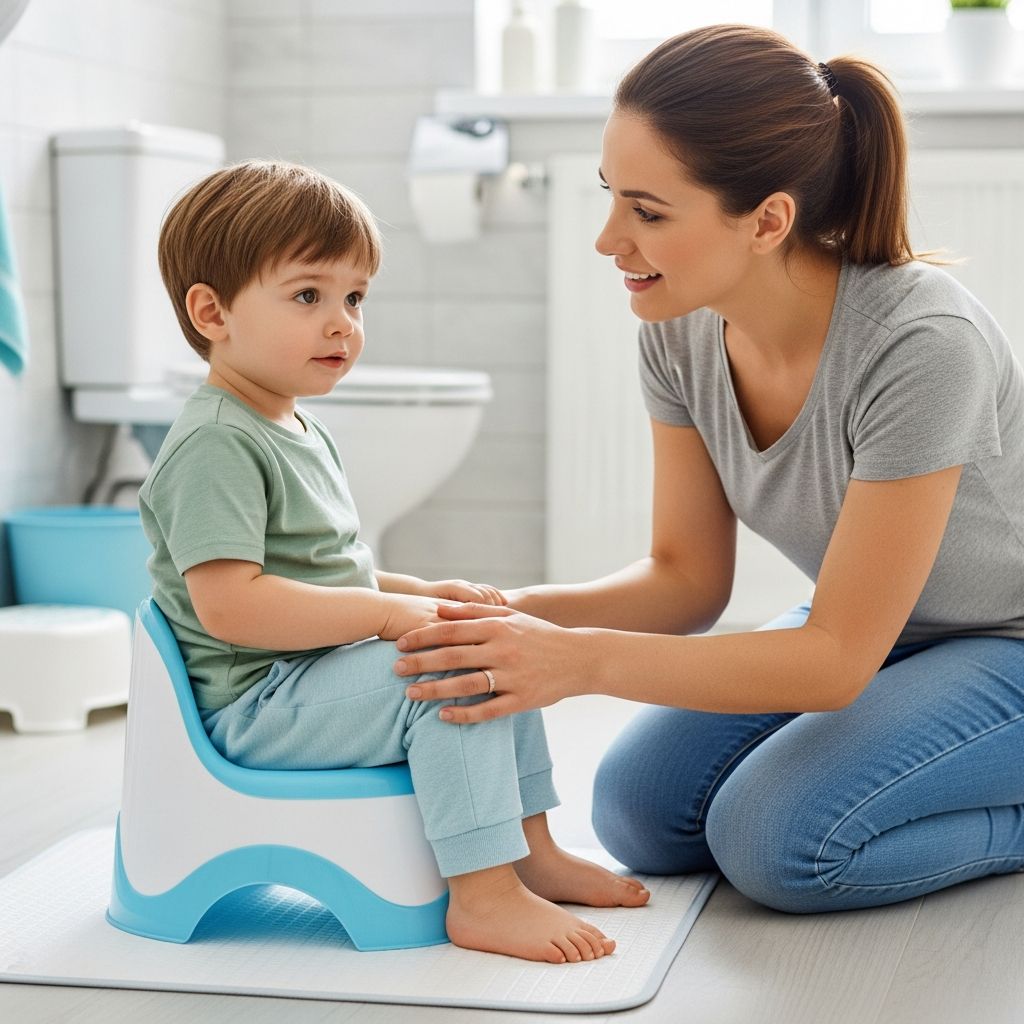
Potty training a boy can feel like a huge milestone and an even bigger mystery. Every child has a different pace, temperament, and style of learning, so the goal is not perfection but progress and confidence. This guide offers practical, judgment-free advice to help you move from diapers to the potty with as little stress as possible.
Understanding Readiness (Beyond Age Alone)
Age gives only a rough estimate for when to start potty training; many boys are ready sometime between 2 and 3 years old, but some are ready earlier and others later. What matters far more than the number on the birthday cake are daily behaviors that show your child can notice and respond to their body’s signals.
Look for practical signs that your son is ready to try the potty:
- He stays dry for at least 1.5–2 hours at a time during the day.
- He can walk steadily and sit down and stand up from a low chair on his own.
- He shows interest in what others do in the bathroom or wants to flush/peek into the toilet.
- He can follow simple directions like “Bring me your shoes” or “Put this in the trash.”
- He communicates (with words, gestures, or facial expressions) when he is peeing or pooping or just did so.
Preparing Your Home and Your Mind
Preparation is half the battle in potty training boys. Thoughtful setup can reduce mess, minimize power struggles, and create a calmer experience for everyone involved.
Before you begin in earnest, consider these steps:
- Choose a potty chair or a child seat that fits securely on your toilet, ideally with a splash guard.
- Add a stable step stool so your child can climb up and feel grounded when sitting or eventually standing.
- Stock easy-on, easy-off clothing like elastic-waist pants or shorts; avoid overalls, belts, and tiny buttons.
- Have cleaning supplies (wipes, spray, paper towels) in an easy-to-reach spot so accidents are no big deal.
- Prepare a simple reward system if you choose to use one, such as verbal praise or a sticker chart.
Parent Mindset Matters
Boys respond strongly to the emotional tone of their caregivers, so a relaxed, flexible attitude goes a long way. If you feel pressured by daycare deadlines, relatives, or social media, remind yourself that your child’s nervous system will learn best when he feels safe and supported rather than judged.
Plan to clear your own schedule for the first few training days if possible, so you are not rushing between errands, appointments, and toilet prompts.
Sitting or Standing? A Boy-Friendly Approach
Many families wonder whether to teach boys to stand or sit first. In most cases, starting with sitting is calmer and less messy, especially while your child is still learning to feel the urge and manage both pee and poop.
A simple sequence to start with sitting:
- Introduce the potty as “your special toilet” and let him sit fully clothed to read a book or play with a small toy.
- When he seems comfortable, invite him to sit with pants and diaper off but keep the mood very low pressure.
- When pee happens, emphasize the body connection: “You felt it and you got it in the potty! That’s what your body is learning to do.”
Transitioning to Standing Later On
Once sitting to pee feels easy and your child mostly hits the potty, you can introduce standing. Some boys love learning to aim; others find it strange at first. Approach it like a game or a new skill rather than a test he must pass.
- Have him stand close to the toilet bowl with a step stool so he feels stable.
- Teach him to hold his penis gently and aim downward so the stream goes into the water.
- Consider harmless “targets” like bits of toilet paper to help him focus on where the stream should go.
A Simple Day-By-Day Launch Plan
There is no perfect method that works for every child, but having a loose structure for the first few days can prevent chaos. Think of it as a gentle boot camp with lots of support.
Day 1: Learning the Routine
Pick a day when you can stay mostly at home and reduce distractions such as long outings or big family events. The focus is on making the potty part of normal life, not on being accident-free.
- Keep him in underwear or loose shorts; skip diapers during awake time, except for naps if needed.
- Offer regular potty sits: after waking, after drinking, after meals, and before naps or bedtime.
- Use a neutral, brief cue like “Time to try the potty” and stay calm if nothing happens.
- When accidents happen, respond with a simple, matter-of-fact line such as “Pee goes in the potty; let’s clean up and try again next time.”
Day 2: Building Awareness
On the second day, your son may begin to anticipate the urge or at least recognize it sooner. Keep expectations realistic; progress is often uneven.
- Continue regular potty breaks but also watch his body language: squatting, holding his crotch, hiding in a corner.
- When you notice signs, name them gently: “Your body is telling you pee is coming. Let’s go to the potty.”
- Celebrate small wins: getting to the potty even if some pee lands in underwear first still counts as progress.
Day 3 and Beyond: Refining Skills
By the third day, some children show clear improvement; others are just getting warmed up. It is common for boys to understand pee before poop, so bowel movements may lag behind.
- Slowly stretch the time between scheduled potty trips if he often stays dry in between.
- Begin using diapers only for sleep if daytime dryness is improving.
- Introduce simple choices to give him control, like “Do you want to use the little potty or the big toilet today?”
Common Challenges With Boys (And How to Handle Them)
Even with great preparation, most families hit at least one rough patch. Boys in particular may be distracted, energetic, or resistant to stopping play for the toilet. Anticipating these patterns helps you respond calmly instead of reacting with frustration.
Accidents During Play
Your son may get so absorbed in toys or outdoor fun that he ignores his body’s signals until it is too late. Think of these accidents as information rather than failures; they show that he is still learning when to pause and respond.
- Use gentle reminders before transitions: “We’ll go to the potty when this puzzle is finished.”
- Schedule extra potty breaks during very active playtimes or just before going outside.
- Keep spare clothes in a nearby basket so changing is quick and not a big drama.
Reluctance to Poop on the Potty
Poop can feel scary for toddlers; they may fear the sensation, the sound, or even the idea that a part of their body is leaving. Boys might hide to poop or ask for a diaper even if they pee on the potty consistently.
- Watch for regular times of day when your child usually poops and invite him to sit on the potty around those moments.
- If he insists on a diaper, try putting the diaper on but having him sit on the potty while he goes, then gradually move toward diaper-free poops over time.
- Support healthy digestion with fiber-rich foods and plenty of fluids so stool is soft and easier to pass.
Nighttime and Naptime
Daytime training and nighttime dryness are related but not identical milestones. Many boys stay in sleep diapers long after they are dry for most of the day, and this is normal because sleep hormones and bladder capacity are still maturing.
- Focus on daytime training first; let nighttime catch up later.
- Limit large drinks right before bed, but avoid restricting fluids too aggressively.
- Consider night training when he wakes up dry most mornings for several weeks in a row.
Helpful Potty Training Tools and Gear
While no product can guarantee success, the right tools can make life easier for both you and your child. Simple, functional items usually work better than complex gadgets or toys that distract more than they help.
| Item | Purpose | Tips for Use |
|---|---|---|
| Potty chair | Provides a small, stable seat close to the ground. | Place it in the bathroom or a nearby room where you spend lots of time. |
| Toilet seat insert | Makes the regular toilet feel secure and child-sized. | Use with a sturdy step stool so he can climb and feel anchored. |
| Step stool | Helps with climbing, balance, and eventual standing to pee. | Choose a non-slip surface and check that it does not wobble. |
| Waterproof mattress cover | Protects bedding during naps and night training. | Use under a fitted sheet so changes are fast after accidents. |
| Training underwear | Thicker fabric helps catch small leaks while still feeling wet. | Use during the day as a bridge between diapers and regular underwear. |
Emotionally Supporting Your Son
Underneath the practical steps is the emotional experience of your child learning a new, highly personal skill. For some boys, this is exciting; for others, it feels like pressure or even a threat to their routine.
- Use neutral, respectful language, avoiding shaming words for accidents or messes.
- Offer plenty of hugs, eye contact, and playful connection outside of potty moments so he does not feel all attention is conditional on performance.
- Model body positivity by talking about how amazing it is that bodies can grow, learn, and take care of themselves.
When Progress Stalls or Reverses
Regression is common, especially during stressful changes such as a new sibling, a move, starting daycare, or illness. A boy who was mostly dry may suddenly have frequent accidents or refuse the potty altogether.
- Ask yourself what has changed recently in his environment or routine and address that stress first.
- Consider taking a short break from active training if everyone is frustrated; you can return in a few weeks with a reset.
- If months go by with repeated pain, fear, or constipation, consult your pediatrician for guidance.
Quick Reference: Potty Training Tips for Boys
For busy days, keep a handful of fast reminders in mind. These simple principles work across most personalities and parenting styles.
- Follow your child’s signals more than the calendar.
- Start with sitting to reduce anxiety and spills; introduce standing as a fun next step.
- Use short, frequent potty visits instead of long, pressured sits.
- Respond to accidents with calm cleanup and a quick reminder of where pee and poop belong.
- Celebrate effort, not perfection, and protect your relationship over any training timeline.
FAQs About Potty Training Boys
How long does it usually take to potty train a boy?
There is wide variation, but many boys learn basic daytime skills over several weeks, with accidents gradually decreasing over a few months. Complete dryness for both pee and poop, in all settings, often takes longer and may continue to improve into the preschool years.
Should I use rewards like candy or sticker charts?
Simple rewards can be motivating if used sparingly and paired with warm praise, especially in the early stages. If you notice your child becoming anxious or hyper-focused on earning a reward, consider shifting toward verbal encouragement and pride in his growing independence instead.
What if my son refuses to sit on the potty?
Refusal is a sign that he feels overwhelmed, pressured, or not ready, rather than a sign of “bad behavior.” Try backing off for a week or two, keeping diapers on, and then gently reintroducing the potty with play, stories, or letting him watch you use the toilet.
Is it okay if he uses diapers at night but underwear during the day?
Yes. Nighttime dryness depends on biological factors like bladder capacity and hormone patterns that parents cannot control. Many children wear night diapers or training pants long after they are confidently trained during the day.
When should I talk to a doctor about potty training problems?
Reach out to your pediatrician if your child has ongoing pain with urination or bowel movements, blood in the stool, extreme fear of the toilet, or chronic constipation. It is also reasonable to ask for help if there is little progress over several months despite consistent, low-pressure effort at home.
Potty training a boy is rarely a neat, straight path, but with patience, humor, and a focus on connection, most families find their way. The goal is not only a dry pair of underwear but a child who trusts his body and feels supported while learning to care for it.