Introducing the potty around 21 months can feel both exciting and intimidating. Your toddler may be pulling at wet diapers one minute and refusing to sit on the potty the next. This guide offers a low-pressure, practical approach inspired by real-life experience and informed by expert recommendations, so you can support your child without turning potty training into a battle.
Understanding What 21 Months Really Looks Like
By about 18–24 months, many toddlers begin to develop the physical and emotional skills needed for basic potty learning, such as better bladder control and awareness of when they are wet or soiled. However, “ready” does not mean “fully trainable in a weekend.” At 21 months, you are often laying the foundation rather than finishing the process.
Common abilities emerging around this age include:
- Walking steadily to and from the bathroom.
- Understanding and following simple one- or two-step directions (for example, “Get your pants” or “Sit down, please”).
- Pulling at wet or dirty diapers or asking for a change, which shows body awareness.
- Showing curiosity about what happens in the bathroom or copying adults’ behavior.
These are encouraging signs, but they do not guarantee that your toddler will consistently use the potty yet. Think of this stage as potty introduction rather than full-on training.
Is Your Child Ready to Start Learning About the Potty?
Experts emphasize that readiness should guide your timing more than age alone. Some toddlers are keen and curious at 21 months; others are overwhelmed or uninterested. Pushing too soon can create resistance and fear, while waiting until some basic signs appear can make things smoother.
Key Readiness Indicators
Look for several of the following signs occurring together over a few weeks:
- Dry diapers for longer stretches (about two hours at a time or dry after a nap), showing growing bladder control.
- Noticing or disliking dirty diapers, such as asking for a change or trying to remove them.
- Predictable bowel movements at around the same time each day.
- Using simple words or signs like “pee,” “poop,” or “wet” to describe what is happening.
- Interest in the bathroom – following you in, asking questions, or wanting to flush.
- Basic motor skills: can walk to the potty, sit safely, and stand up again.
- Ability to follow simple directions, e.g., “Sit here,” “Bring your diaper,” or “Pull down your pants.”
If you see some signs but not all, you can still begin gently exposing your toddler to the idea of the potty, without any expectation that they will perform right away.
When It May Be Best to Wait
Consider slowing down or pausing if:
- Your child is terrified of the potty or toilet and refuses to go near it.
- They are still wetting diapers every 30–40 minutes all day with no dry periods.
- They show no awareness of being wet or soiled and continue playing as if nothing happened.
- They are currently constipated, having painful or very infrequent stools (less than every other day); resolving constipation first is important.
Waiting a month or two and trying again can lead to faster progress than pushing ahead during a rough phase.
Choosing Your Approach at 21 Months
At this age, a gentle, gradual approach often works best. Instead of aiming to ditch diapers in three days, focus on building understanding, positive associations, and simple habits.
| Approach | What It Looks Like at 21 Months | Best For |
|---|---|---|
| Gradual introduction | Talks about pee/poop, offers potty at predictable times, keeps diapers on most of the day. | Most toddlers just starting to show interest. |
| Hybrid (part-time potty) | Diapers for naps/outings; potty attempts at home, especially before bath or after meals. | Families who want progress without all-or-nothing pressure. |
| Intensive weekend | Underwear or bare-bottom at home for several days, frequent potty trips and observation. | Older toddlers with many readiness signs; can be too intense for many 21-month-olds. |
Step-by-Step: Introducing the Potty to a 21-Month-Old
1. Normalize Bathroom Talk
Start by making body functions a neutral, everyday topic rather than something secretive or shameful. Simple, matter-of-fact comments help:
- “You’re peeing in your diaper. Your body is working!”
- “Daddy is going pee in the toilet. Adults use the toilet.”
- “The potty is for pee and poop.”
Experts note that toddlers who understand basic “bathroom language” and can name what they are doing are better prepared for potty training.
2. Pick the Right Equipment
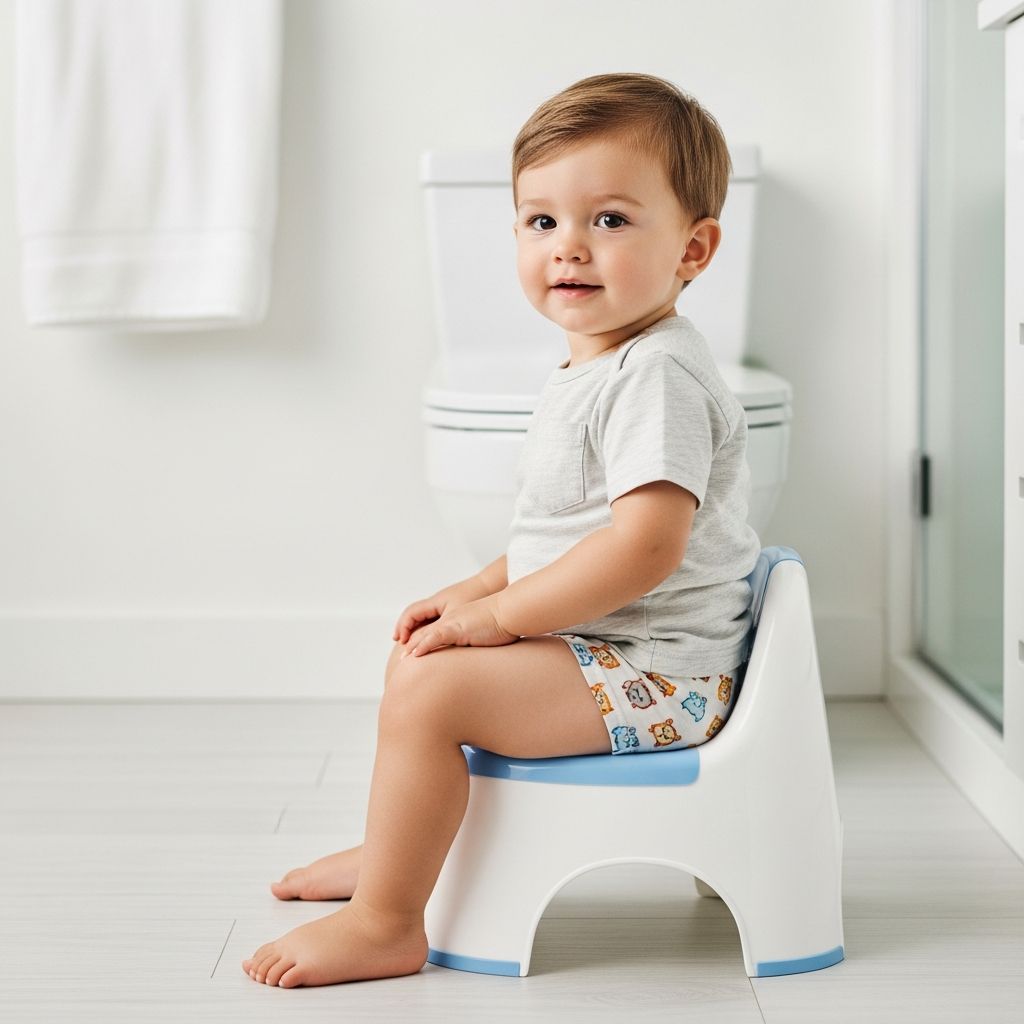
Young toddlers often feel safer on a small floor potty than on the big toilet. Look for:
- A stable base that doesn’t tip easily.
- A low seat they can climb on and off independently.
- A simple design that is easy to clean.
If you use the regular toilet, add a child seat and a secure step stool so your toddler can climb up and feel supported.
3. Build Simple Routines
Rather than constantly asking, “Do you need to go?” create predictable times when trying is part of the routine:
- Upon waking in the morning.
- After breakfast or other meals (many children have predictable bowel movements after eating).
- Before bath time.
- Before leaving the house.
Invite them calmly: “It’s potty time. Let’s try to sit.” If they say no or resist strongly, back off and try again at the next routine time.
4. Practice Getting Clothes On and Off
Potty use requires basic dressing skills. You can practice outside of bathroom moments:
- Use elastic-waist pants that are easy to pull up and down.
- Play “pants up, pants down” as a silly game.
- Offer small nudges: “Can you help me pull your pants down for the potty?”
Over time, aim for your toddler to pull pants down with assistance, then independently.
5. Celebrate Sitting, Not Just Success
At 21 months, simply sitting on the potty when asked is a big win. Focus praise on:
- Sitting down cooperatively, even for 10–30 seconds.
- Trying at routine times, regardless of whether pee or poop comes out.
- Noticing body cues, such as pausing play or grabbing their diaper.
Rather than elaborate rewards, many experts encourage using verbal praise and encouragement, especially when toddlers are naturally eager to please.
Managing Common Challenges With 21-Month-Olds
Short Attention Span
A long potty sit is unrealistic for this age. Keep it brief:
- Offer a simple cue: “We’ll sit until we sing the ABCs, then all done.”
- Use a short song or quiet counting to ten.
- If they pop up quickly, don’t force them back down; try again at the next routine time.
Fear of the Toilet or Potty
Fear can show up as clinging, crying, or refusing to enter the bathroom. To build comfort:
- Let a favorite doll or stuffed animal “use” the potty first.
- Allow your child to sit on the potty fully clothed at first.
- Gradually introduce flushing; some toddlers dislike the noise. They might prefer to flush from a distance or after leaving the room.
Refusing to Sit or Sudden Resistance
It is normal for toddlers to say “no” to almost anything. If potty resistance is consistent and intense:
- Reduce how often you offer the potty.
- Stop asking questions like “Do you want to…?” that invite a “no.” Use gentle statements such as “After snack, we sit on the potty,” but still respect a firm refusal.
- Take a short break (a few days to a couple of weeks) if it becomes a major power struggle.
Pooping Only in a Corner or Hiding
Many toddlers hide to poop, which actually indicates awareness of the urge. You can use this to your advantage:
- Notice their typical “poop spot” and gently invite: “You’re going to poop. Let’s bring the potty here.”
- Allow them to sit on the potty in their diaper at first, then gradually try without it.
- Keep your tone neutral and supportive. Avoid scolding, which can contribute to withholding and constipation.
Balancing Diapers, Trainers, and Underwear
At 21 months, it is common to use a mix of options depending on the situation. There is no single “right” choice, but consistency in your message is helpful.
- Diapers: Practical for naps, nights, and long outings. You can still say, “Even with a diaper, pee goes in the potty when we can.”
- Cloth trainers or training pants: Slightly less absorbent than diapers, helping toddlers feel wetness more clearly, which may support awareness and learning.
- Underwear or bare-bottom time: Useful during short, supervised periods at home when you can respond quickly to early signs of peeing or pooping.
Whatever you use, avoid shaming language like “baby diapers” versus “big kid underwear.” The goal is cooperation, not embarrassment.
Preserving the Relationship: Avoiding Power Struggles
Health professionals highlight that potty training is most successful when it respects the child’s pace and avoids turning toileting into a control battle. Your toddler controls their body; your role is to offer tools, structure, and encouragement.
Helpful mindset shifts:
- From deadlines to direction: Think “We’re moving in the potty direction” rather than “We must be done by age X.”
- From accidents to information: View wet pants as data (“We waited too long”) rather than failure.
- From praise for outcomes to praise for effort: Remark on trying, sitting, and communicating, not just on dry days.
Frequently Asked Questions (FAQs)
Q1: Is 21 months too young to start potty training?
Not necessarily. Many children begin showing readiness signs between 18 and 24 months, such as staying dry longer, following simple directions, and showing interest in the bathroom. At 21 months, focus on gentle introduction rather than expecting full training right away.
Q2: How long should my 21-month-old sit on the potty?
Keep sits short – often 30 seconds to 2 minutes is plenty for this age. Forcing longer sits can create resistance. A brief routine (a short song or counting to ten) is usually enough time for something to happen if they needed to go.
Q3: What if my child cries or seems scared of the potty?
Pause and work on comfort instead of insisting. Let them sit fully clothed, place a toy on the potty, or allow them to watch you use the toilet. Gradually move toward sitting without pressure. If fear persists, take a break for a couple of weeks and try again slowly.
Q4: Should I use rewards like stickers or treats?
Some families find small rewards helpful, but many toddlers at this age respond well to simple praise and attention, especially if they have a natural eagerness to please. If you use rewards, keep them small and linked to effort (sitting, telling you they need to go) rather than only to perfect performance.
Q5: How do I handle outings while we’re introducing the potty?
For young toddlers, it is perfectly reasonable to use diapers when you go out, even if you are practicing the potty at home. You can still offer the potty before leaving and when you return. As your child becomes more reliable, you can add short outings in training pants or underwear.
Q6: What if my child shows no interest at all?
If there are few or no readiness signs and your child seems indifferent, keep diapers for now and casually mention the potty during changes or bath time. Revisit the idea in a month or two. Pressuring an uninterested toddler often backfires and prolongs the process.
References
- Potty training: How to get the job done — Mayo Clinic Staff. 2023-05-11. https://www.mayoclinic.org/healthy-lifestyle/infant-and-toddler-health/in-depth/potty-training/art-20045230
- When Is Your Child Ready To Start Potty Training? — National Diaper Bank Network. 2022-08-15. https://nationaldiaperbanknetwork.org/when-to-start-potty-training/
- 10 signs your toddler is ready to start potty training — Huckleberry. 2023-02-01. https://huckleberrycare.com/blog/10-signs-your-toddler-is-ready-to-start-potty-training
- 8 Signs Your Child is Ready for Potty Training — Potty Genius. 2021-09-20. https://pottygenius.com/blogs/blog/8-signs-your-child-is-ready-for-potty-training
- Signs Your Child is Ready for Potty Training — Pull-Ups. 2022-07-19. https://www.pull-ups.com/en-ca/resources/tips-advice/when-to-start/signs-your-child-is-ready
- 5 Signs of Potty-Training Readiness — Lullaby Earth. 2022-03-10. https://www.lullabyearth.com/blog/signs-of-potty-training-readiness