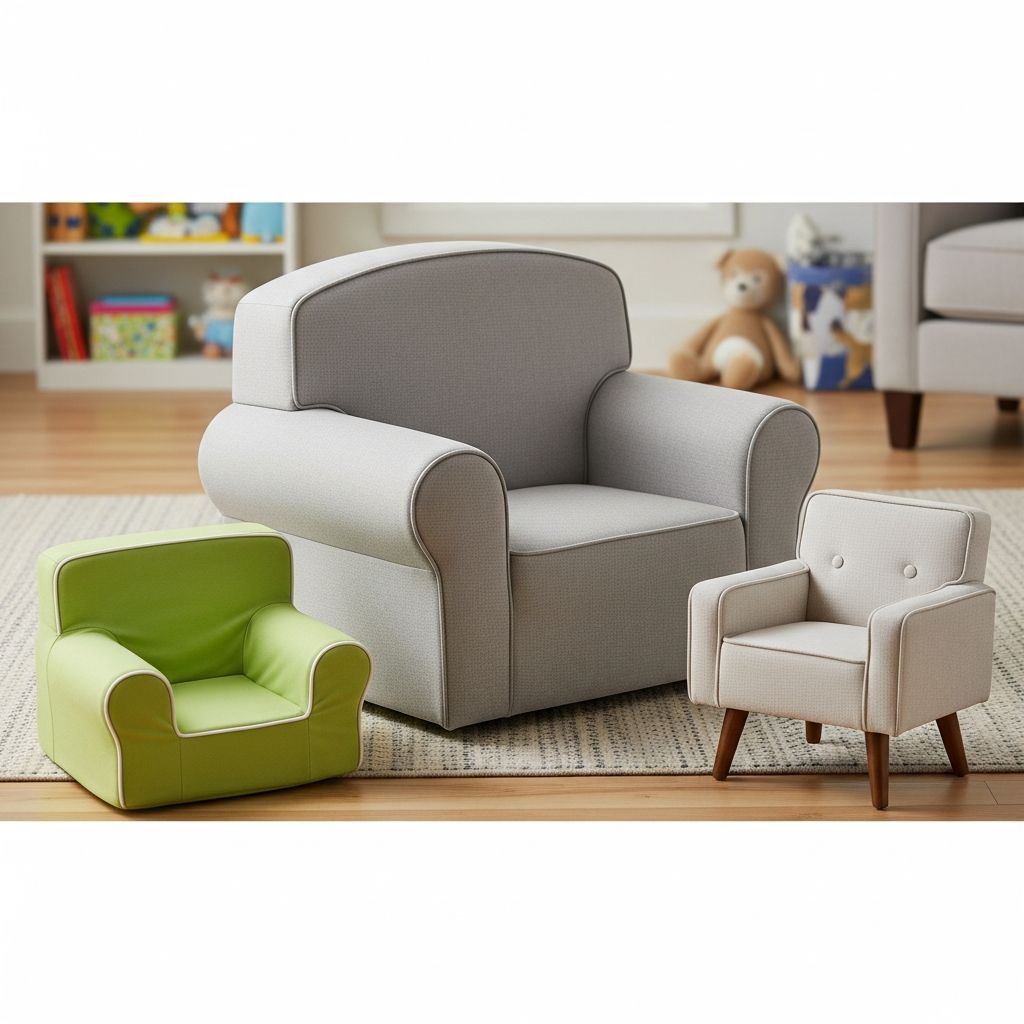
If you have ever scrolled through a beautifully styled playroom on social media, you have probably seen a small monogrammed chair parked in the corner. It looks like a tiny armchair, often with your child’s name stitched across the back, and it is usually inspired by the well-known Pottery Barn Anywhere Chair. That iconic look comes with a premium price, which naturally leads many parents to wonder whether it is really worth it—or if a more affordable dupe can offer the same cozy comfort.
This guide walks through what these toddler lounge chairs actually offer, what to look for when choosing one, and how a high-end option compares to cheaper alternatives in everyday family life. The goal is to help you decide when to splurge, when to save, and how to choose a chair your toddler will actually use.
Why Toddler Lounge Chairs Became a Parenting Staple
Toddler lounge chairs blend playtime and comfort. They give young children a sense of ownership: a chair that is just their size where they can flip through books, watch a show, or simply practice sitting independently. Parents love that these chairs are lightweight, soft, and usually foam-filled, making them safer than wood-framed furniture for wobbly toddlers.
The Pottery Barn-style chair made this category famous with its structured foam insert and removable slipcover, and many brands have followed with similar products at lower price points. That means more options and a bigger decision for you: pay for the brand name, or focus on value and features.
Key Features That Actually Matter
Before comparing specific chairs, it helps to know which features make a meaningful difference in everyday use. When evaluating any toddler lounge chair—premium or budget—look closely at the following factors.
- Comfort and support: Look for a chair with a supportive backrest and armrests, not just a floppy bean bag. Structured foam helps toddlers feel secure as they learn to sit and climb on independently.
- Size and age range: Check the dimensions and recommended age range. Some chairs are scaled for early toddlers only, while others are deep and wide enough to last into the preschool years.
- Cover material: Common choices include cotton twill, polyester, velvet, and sherpa. Each offers a different balance of softness, durability, and ease of cleaning.
- Washability: A removable, machine-washable cover is nearly non-negotiable. Toddlers are messy, and spot-clean-only fabrics tend to look tired quickly.
- Weight and portability: Many chairs have a handle so kids can drag or carry them from room to room. Lightweight foam makes this more realistic and also safer if the chair tips over.
- Safety and certifications: Look for chairs with foam that meets or exceeds safety standards and, when possible, certifications for low chemical emissions and safer indoor air.
- Personalization and color options: Monogramming and extensive fabric choices are a big part of the appeal of premium chairs. Dupes may offer fewer colors or more basic fonts, but still look cute in a child’s room.
- Price and value: A higher price is not always a sign of longer life. Consider how long your child will use the chair and whether paying extra for specific features, like decor-perfect fabrics or detailed embroidery, makes sense for your family.
Premium vs Dupe: What’s the Real Difference?
In practical terms, most toddler lounge chairs in this category are built around the same basic concept: a foam insert and a removable slipcover that zips on and off. The difference between an upscale option modeled after the Pottery Barn Anywhere Chair and a well-reviewed budget dupe is often more about refinement than about the core function.
Below is a high-level comparison of what many parents report when weighing a premium monogrammed chair against a more affordable alternative.
Typical Differences at a Glance
| Feature | Premium Monogrammed Chair | Budget-Friendly Dupe |
|---|---|---|
| Price range | Higher, especially once you add personalization and shipping | Lower; often under or around half the premium price |
| Fabric choices | Very wide range of fabrics, colors, and patterns, plus seasonal designs | More limited palette; usually a handful of neutrals and maybe a few prints |
| Monogramming | Refined embroidery styles and thread colors, with character limits | Personalization may be available but with fewer font and color options |
| Foam structure | Shaped foam pieces for back, seat, and arms; tends to hold its form | Foam can be slightly softer or less structured, but still supportive in many models |
| Age/size range | Often sized for specific age brackets (like “My First” versions for younger toddlers) | Some dupes are deeper or taller, fitting a wider age range from toddlers to early grade school |
| Washability | Machine-washable slipcovers; replacement covers sometimes sold separately | Machine-washable covers are common; replacement covers may be harder to find |
| Brand appeal | Recognizable brand with matching accessories and decor lines | Less emphasis on brand name; focused on value and practicality |
For many families, the biggest deciding factor is not comfort or safety—because both tiers can perform well—but whether the extra money for name recognition and aesthetic options aligns with the household budget and priorities. A premium chair can feel like a keepsake, while a dupe feels like a smart, low-stress workhorse.
Practical Pros and Cons for Everyday Families
Looking at checklists is helpful, but it is also useful to think through how these chairs behave in real homes with real children. Here are some pros and cons parents often notice over time.
Advantages of a High-End Toddler Chair
- Sturdy foam that tends to keep its shape after repeated jumps, flips, and lounge sessions.
- Extensive fabric and color options that can match a carefully designed nursery or playroom.
- Monogramming that doubles as both personalization and decor, especially in shared spaces.
- Brand consistency with other items, such as bedding and storage, for a cohesive look.
Advantages of a Budget Dupe
- Lower upfront cost makes it easier to buy one chair per child or to replace later without guilt.
- Foam and covers that often feel just as cozy for everyday lounging and reading time.
- Some models offer deeper seats and wider age ranges, allowing older siblings to use them too.
- Less stress about stains, art projects, and rough play because replacement feels more affordable.
Potential Drawbacks to Consider
- Premium chairs can feel like a splurge if your child goes through a short “chair phase” and then loses interest.
- Budget chairs may have fewer color choices, which can matter if you are blending them into a main living room.
- Some dupes may use fabric that pills more easily or zippers that feel less substantial, so it is worth reading reviews closely.
How to Choose the Right Chair for Your Child
Instead of starting with the brand, start with your child and your space. A chair that looks amazing online but never gets used is not a good value at any price. Think about where the chair will live and how your toddler actually plays.
Questions to Ask Before You Buy
- Where will this chair go? If it is going in a high-traffic living room, you might prioritize fabric that matches your decor and holds up well to constant visibility.
- How old is your child? Early toddlers may do better with a chair designed for smaller bodies and extra support, while older preschoolers can use deeper, roomier styles.
- How messy is daily life? If snacks, crafts, and pets are part of the picture, a darker, stain-resistant fabric or a lower-cost chair that you are not precious about may be ideal.
- Will siblings share? If multiple kids will use it, consider sizing up or choosing a dupe with a broader recommended age range.
- Do you care about matching a specific aesthetic? If you have a very defined style, a premium chair’s fabric catalog might be worth the extra cost.
Once you answer these questions, the choice between a high-end chair and a dupe often becomes clearer. For many families, the best strategy is to pick the most practical option for the main living area and be more flexible in secondary spaces like playrooms or bedrooms.
Design Choices: Fabrics, Colors, and Personalization
One of the reasons premium toddler chairs draw so much attention is the sheer number of design choices. There are often cotton twills, textured linens, velvety options, playful prints, and seasonal patterns. Dupes typically pare this down to a manageable set of neutrals and bestselling colors, such as gray, blush, and navy.
When choosing a fabric and color, think about how you live, not just how a styled photo looks. Light-colored sherpa or cream cotton can look gorgeous, but dark gray or medium-toned prints often disguise everyday wear and small stains far better. Personalization with embroidery can be a sweet touch, but you can also achieve a similar effect with a decorative pillow or blanket if your budget is tight.
Longevity and Resale Value
Most toddler lounge chairs are used from about age one or eighteen months through the early school years, depending on the size of the chair and your child’s preferences. Some children treat their chair as a reading nook well into kindergarten, while others move on quickly to more grown-up seating.
If you are thinking about passing the chair down to younger siblings or selling it later, a premium brand name may help hold resale value. That said, a well-kept dupe with a clean cover can also find a second life through local marketplaces or hand-me-downs to friends and relatives.
Care and Cleaning Tips for Any Toddler Chair
No matter which chair you choose, maintenance is what keeps it looking inviting. The good news is that most of these foam chairs are designed with busy families in mind, so basic care usually goes a long way.
- Wash the slipcover before first use if the manufacturer allows it; this can help soften the fabric and remove any factory odors.
- Keep a lint roller nearby for pet hair and crumbs instead of washing the cover after every minor mess.
- Spot-clean spills quickly using a mild detergent and water, blotting rather than scrubbing to avoid damage to the fabric.
- Rotate the chair’s position occasionally if one side sits in bright sunlight to reduce uneven fading.
- Teach older toddlers not to stand on the arms or use the chair as a trampoline, which can compress foam more quickly.
Budget Strategy: When to Splurge and When to Save
There is no one “right” answer about whether a Pottery Barn-style chair is worth the money. It depends on your budget, your decorating priorities, and how long you expect the chair to be in use. Thinking in terms of cost per year—or even cost per daily use—can make the decision feel more grounded.
- Consider splurging if you value coordinated decor, plan to use the chair for multiple children, and enjoy the idea of it doubling as a keepsake.
- Consider saving if your child is rough on furniture, you expect the chair to move between messy spaces, or you would rather put the price difference toward other big-ticket items like a crib, stroller, or car seat.
- Look for sales and outlet options if you are drawn to the premium look but prefer not to pay full price. Sometimes last-season colors or limited-time discount codes bring top-tier chairs closer to dupe territory.
SEO-Friendly FAQ: Toddler Lounge Chairs
Are toddler lounge chairs safe?
Foam-based toddler chairs are generally considered a safer option than rigid wooden chairs for very young children because they are low to the ground and have soft sides. Still, supervision is important, and kids should not use the chair as a step stool or climbing aid. Always follow the manufacturer’s age and weight recommendations.
What age is best for a foam toddler chair?
Many chairs are marketed for ages one to three or eighteen months and up, but the sweet spot usually starts when your child can climb in and out independently. Bigger, deeper chairs can comfortably fit preschoolers and even early elementary kids, so checking real measurements—not just age labels—is helpful.
Is a personalized chair worth the extra money?
Personalization is purely optional. For some families, a monogrammed chair becomes part of the room’s decor and feels special in photos. For others, a neutral, unbranded chair at a lower price is more appealing, especially if there are multiple children or frequent room changes.
Can I wash the whole toddler chair?
Usually only the slipcover is machine-washable; the foam insert should be spot-cleaned if needed and allowed to air dry thoroughly. Always read the care tag, and avoid soaking foam, as trapped moisture can lead to odors or damage.
How many toddler chairs does a family really need?
Most families find that one well-placed chair is enough, particularly if it lives in a shared space like the living room or playroom. Larger families sometimes invest in one chair per child to minimize arguments, but a small loveseat-style kid sofa can also work as a compromise.
Final Thoughts: Choosing What Works for You
Whether you end up opting for a premium Pottery Barn-inspired toddler chair or a more budget-friendly dupe, the most important factor is that your child feels comfortable and safe using it. A thoughtfully chosen toddler lounge chair can quickly become a favorite spot for afternoon stories, morning cartoons, and quiet moments of independence.
If the high-end version fits your budget and decor goals, it can be a lovely, long-lasting piece. If it does not, rest assured that many well-designed alternatives deliver the same daily joy at a fraction of the cost. In the end, what matters most is not the logo on the tag, but the memories your child makes curled up in their very own little chair.