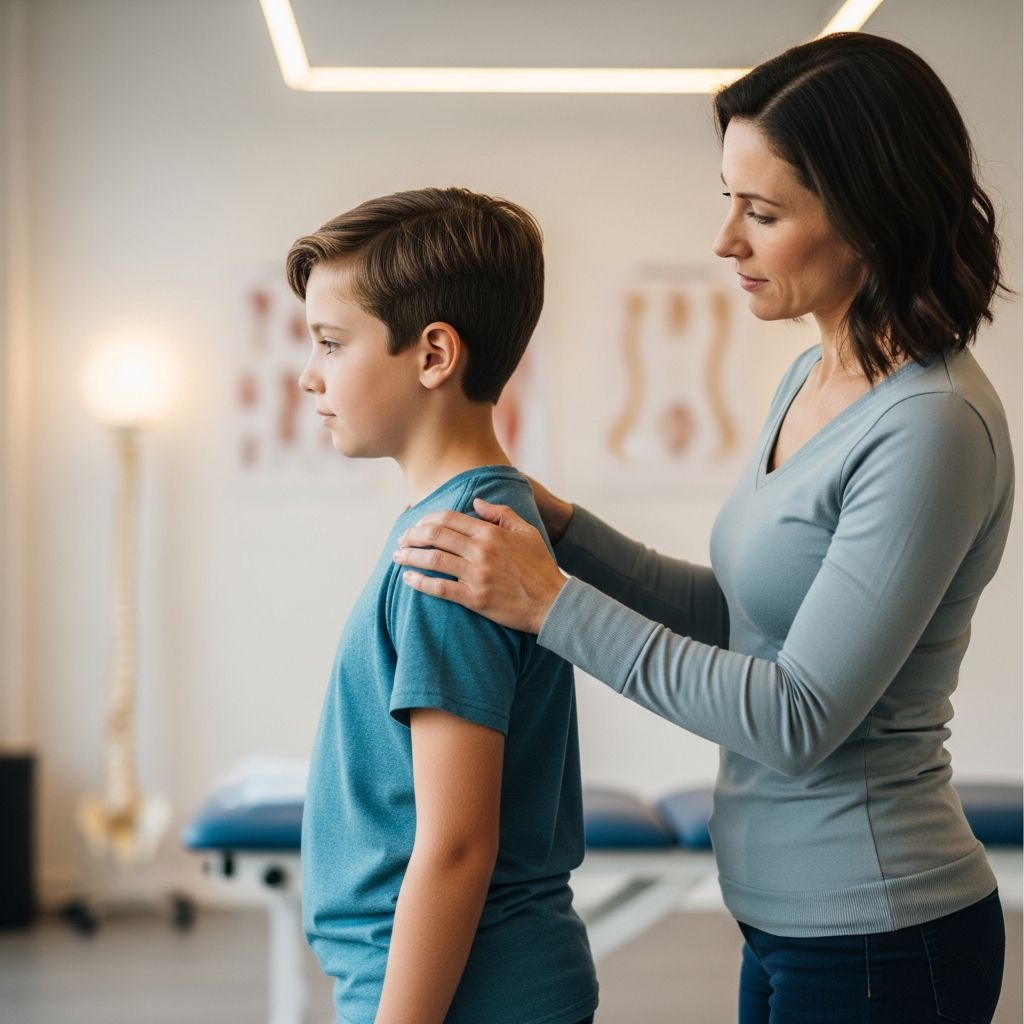
Postural kyphosis is a common reason why a child or teenager may appear to slouch or have a rounded upper back. It can be worrying to see this change in posture, but in many cases it is related to habits and muscle imbalance rather than a serious spine disease. With the right information, parents can support better posture, comfort, and long-term spine health.
What Is Postural Kyphosis?
The spine has natural curves when viewed from the side, including a gentle forward curve in the upper back. Postural kyphosis occurs when that upper-back curve becomes exaggerated, usually because of slouching or poor movement patterns rather than a structural problem in the bones. The result is a rounded or hunched appearance of the shoulders and upper back, especially when sitting.
This type of kyphosis is usually flexible. When a child stands up straight or lies flat, the curve improves or nearly disappears. This flexibility is one of the main features that separates postural kyphosis from more serious forms of spinal curvature.
Why Good Posture Matters in Growing Bodies
Childhood and adolescence are times of rapid growth, and the spine is still developing. During growth spurts, muscles and ligaments may lag behind the bones, making it harder for kids to maintain upright posture. If slouching becomes a long-term habit, certain muscles tighten while others weaken, reinforcing the rounded position.
Good posture is not only about appearance. Efficient alignment helps the lungs expand fully, reduces strain on back and neck muscles, and can lower the risk of pain and fatigue as a child grows older.
Common Causes and Risk Factors
Postural kyphosis usually develops gradually rather than suddenly. Many everyday habits can contribute to the problem, especially in school-age children and teens.
- Extended screen time: Leaning forward toward phones, tablets, and computers encourages a head-forward, rounded-shoulder position.
- Slouching at a desk: Poor chair height, lack of back support, or long periods of sitting at school can promote hunched posture.
- Weak core and back muscles: If the muscles that support the spine are deconditioned, it is harder to sit and stand upright for long.
- Heavy backpacks: Carrying a bag that is too heavy or worn on one shoulder may increase rounding of the upper back.
- Low activity levels: Sedentary routines reduce overall muscle strength and flexibility, making slouching more likely.
Not every child with these risk factors will develop postural kyphosis, but the more of them that are present, the more likely a rounded posture will appear or worsen.
Signs and Symptoms Parents May Notice
Postural kyphosis can be easy to overlook at first because many children simply look like they are slouching. Over time, the roundness of the upper back may become more obvious.
- A visible rounding or hump-like curve in the upper back when viewed from the side.
- Shoulders that roll forward and chest that seems to sink inward.
- Head held forward rather than aligned over the shoulders.
- Difficulty or discomfort when trying to sit up straight for long periods.
- Mild back or neck aches, particularly after sitting or standing for a long time.
- Fatigue in the back muscles at the end of the school day.
Some children may have no pain at all and simply dislike the way their posture looks in photos or the mirror, especially during the teenage years when body image becomes more important.
How Doctors Evaluate Rounded-Back Posture
If you are concerned about your child’s posture, a health care provider can examine the spine and help identify the cause. The visit usually starts with questions about the child’s daily activities, when the slouching began, and whether pain or other symptoms are present.
During the physical exam, the provider will observe the child standing, sitting, and bending. A key test is whether the curve straightens when the child is asked to stand as tall as possible or lies flat on a table. Flexible curves suggest postural kyphosis, whereas rigid curves may indicate other spinal conditions that require different care.
Imaging and When It Is Needed
In many mild cases, a physical exam and medical history provide enough information to diagnose postural kyphosis. If the curve appears severe, continues to worsen, or does not improve when the child straightens up, the provider may order imaging studies.
- X-rays: Side-view images of the spine show the degree of curvature and help distinguish posture-related rounding from structural deformities.
- Additional scans: In unusual or complex cases, further imaging may be recommended to evaluate the bones, discs, or spinal cord more closely.
Imaging is also helpful for tracking changes over time, especially during growth spurts, and for deciding whether more intensive treatment is necessary.
Treatment Goals for Postural Kyphosis
The main aims of treatment are to improve posture, reduce discomfort, and prevent the curve from progressing. Because postural kyphosis is usually linked to habits and muscle imbalance, non-surgical approaches are almost always effective.
Most treatment plans include a combination of posture education, exercises, and changes to the child’s environment at home and school. Early attention to posture can often reverse the rounding and build lifelong healthy habits.
Home Strategies Parents Can Start Right Away
Parents play a powerful role in helping children change posture habits. Small adjustments in the daily routine can make a big difference over time.
- Create a posture-friendly study space: Choose a chair that allows the child’s feet to rest flat, hips and knees at roughly right angles, and back supported by the chair back.
- Encourage movement breaks: Aim for a brief stretch or walk every 30–45 minutes of sitting, especially during homework or gaming sessions.
- Reposition screens: Raise laptops, monitors, or tablets so the top of the screen is at or just below eye level to reduce forward head posture.
- Teach “tall posture” cues: Simple phrases like “ears over shoulders” or “imagine a string gently lifting the top of your head” can help children remember alignment without feeling scolded.
- Watch backpack weight: Help your child carry only what is necessary and use both straps so the weight is distributed evenly across the shoulders.
Exercises That Support Better Posture
Targeted exercises help strengthen the muscles that hold the spine upright and stretch the areas that become tight from slouching. A physical therapist or health professional can design a personalized program, but many general principles are commonly used.
- Upper-back strengthening: Movements that gently squeeze the shoulder blades together and down help counteract rounded shoulders.
- Core stability: Exercises that engage the abdominal and deep back muscles support the spine, making it easier to maintain good posture with less effort.
- Chest stretching: Gentle stretches across the front of the shoulders and chest reduce tightness that pulls the shoulders forward.
- Hip and hamstring flexibility: Stretching the back of the legs and hips can improve overall alignment when sitting and standing.
Consistency is more important than intensity. A few minutes of focused exercise most days of the week can gradually change posture habits and muscle balance.
When Physical Therapy Is Recommended
Many children benefit from working with a physical therapist, especially if the curve is pronounced, causes discomfort, or has been present for a long time. Therapy sessions provide personalized instruction and feedback that can be hard to achieve at home alone.
A therapist can assess which muscles are weak or tight, teach safe and effective exercises, correct technique, and give the child tools to use during daily activities. Parents often receive guidance on how to support and motivate their child without focusing solely on appearance.
Lifestyle and Activity Tips for Everyday Life
Improving posture does not mean giving up favorite activities. Instead, small adjustments can help children stay active while protecting the spine.
- Encourage sports or activities that strengthen the back and core, such as swimming, martial arts, or dance, as approved by a health care provider.
- Help your child vary positions throughout the day: mix sitting, standing, and walking rather than spending long stretches in one posture.
- Model good posture yourself; children are more likely to copy what they see than what they are told.
- Promote overall wellness, including adequate sleep, balanced nutrition, and stress management, which all support muscle recovery and growth.
Warning Signs That Need Prompt Medical Attention
Most cases of postural kyphosis are mild, flexible, and respond well to simple measures. However, certain signs suggest that further evaluation is urgent, as they may point to other spinal conditions or complications.
- Severe or rapidly worsening curve that does not improve with attempts to sit or stand up straight.
- Persistent or intense back pain, especially at night or after minor injuries.
- Numbness, tingling, or weakness in the arms or legs.
- Changes in bowel or bladder control.
- Shortness of breath, chest discomfort, or difficulty with everyday activities.
If any of these symptoms occur, seek medical care promptly. Early diagnosis of more serious spinal problems can make treatment safer and more effective.
Postural Kyphosis vs. Structural Kyphosis
Understanding the difference between postural and structural forms of kyphosis can help families appreciate why treatment approaches vary. Structural kyphosis involves changes in the bones of the spine, whereas postural kyphosis is primarily related to position and muscle balance.
| Feature | Postural Kyphosis | Structural Kyphosis |
|---|---|---|
| Cause | Mainly poor posture and muscle imbalance rather than bone deformity. | Changes in vertebrae shape or alignment, sometimes due to growth disorders or other conditions. |
| Flexibility | Curve improves when standing tall or lying flat. | Curve remains even when trying to straighten up. |
| Typical treatment | Posture training, exercises, and lifestyle changes. | May involve bracing, more intensive therapy, or sometimes surgery, depending on severity. |
| Outlook | Often reversible with consistent effort. | Varies by cause; early detection is important to limit progression. |
Long-Term Outlook and Emotional Well-Being
With early recognition and consistent management, many children and teenagers with postural kyphosis achieve a more upright posture and live active, comfortable lives. Improvement often occurs gradually, and small changes in daily habits add up over months and years.
Body image is an important part of this journey, especially for adolescents. Parents and caregivers can help by focusing on strength, health, and how the body feels rather than criticizing appearance. Encouraging comments, celebrating small posture gains, and involving the child in decisions about their care all support confidence and motivation.
Prevention: Helping Kids Build Lifelong Posture Habits
Even children who do not currently have postural kyphosis can benefit from posture-friendly routines. Prevention focuses on building strong muscles, flexible joints, and healthy tech habits.
- Limit long stretches of sitting by scheduling regular activity breaks.
- Teach children to hold phones and tablets closer to eye level rather than bending their necks downward.
- Encourage participation in physical activities that challenge balance, strength, and coordination.
- Review backpack contents weekly to remove unnecessary items and keep weight reasonable.
- Make discussions about posture positive and supportive instead of critical or shaming.
Frequently Asked Questions (FAQs)
Is postural kyphosis permanent?
Postural kyphosis is often at least partially reversible, especially in children and teenagers whose bones are still growing. Because the curve is mainly due to posture habits and muscle imbalance, consistent exercises and lifestyle changes can gradually reduce the rounding and improve alignment.
Can postural kyphosis cause pain?
Some children with postural kyphosis experience no pain at all, while others have mild to moderate discomfort. When pain occurs, it is usually described as aching or fatigue in the upper or lower back after long periods of sitting or standing. Strengthening the supporting muscles and improving posture often reduces these symptoms.
Will my child need a brace or surgery?
Bracing and surgery are typically reserved for structural forms of kyphosis or for very severe curves that do not respond to conservative care. Most children with postural kyphosis improve through exercise, posture training, and changes in daily habits without needing more invasive treatment.
How long does it take to see improvement?
Visible changes in posture may take weeks to months, depending on the starting severity and how consistently exercises and habits are followed. Families often notice early improvements in how the child feels—less fatigue or discomfort—before major changes in appearance are obvious.
When should we see a specialist?
A primary care provider, pediatrician, or family doctor is usually the best first step. If the curve is pronounced, rigid, or associated with significant pain or neurological symptoms, the provider may refer your child to a spine specialist or pediatric orthopedist for further evaluation and guidance.