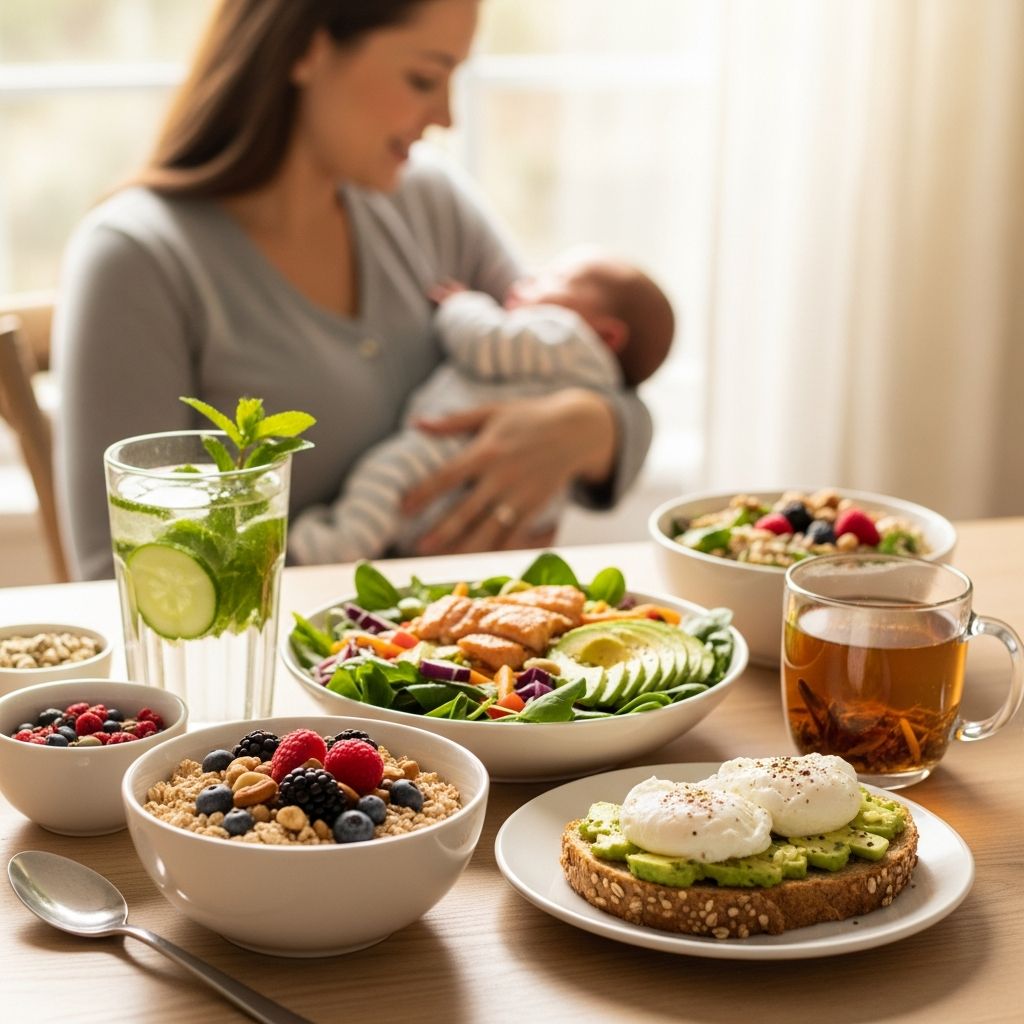
The postpartum period demands focused nutrition to rebuild strength, restore energy, and support breastfeeding if applicable. A balanced intake of proteins, vitamins, minerals, and fluids helps address blood loss, tissue repair, and hormonal shifts following delivery.
Core Nutrients for Healing and Vitality
Postpartum recovery hinges on specific nutrients that target common challenges like fatigue, anemia, and muscle repair. Prioritizing these builds a strong foundation for maternal health.
- Protein: Essential for tissue repair, especially after C-sections or vaginal tears. Sources include lean meats, eggs, dairy, and legumes, providing amino acids for muscle maintenance.
- Iron: Critical to replenish blood volume lost during birth. Pair with vitamin C for better absorption to combat fatigue and support oxygen transport.
- Omega-3 Fatty Acids: Found in fatty fish and seeds, these reduce inflammation, support brain health, and aid mood stabilization during hormonal fluctuations.
- Calcium and Vitamin D: Vital for bone health amid lactation’s demands, preventing depletion that could affect long-term skeletal strength.
- Fiber and Hydration: Promote digestion and prevent constipation, exacerbated by pain meds or hormonal changes.
Breastfeeding mothers require an extra 500 calories daily, emphasizing nutrient-dense choices over empty calories.
Building Balanced Daily Meals
Structure meals around whole foods: half your plate fruits and vegetables, quarter whole grains, quarter proteins, plus healthy fats and dairy. This aligns with Dietary Guidelines for Americans for lactating women.
| Meal Time | Suggested Components | Key Benefits |
|---|---|---|
| Breakfast | Oatmeal with chia seeds, berries, and Greek yogurt | Sustained energy from complex carbs, omega-3s, and protein |
| Lunch | Grilled chicken salad with spinach, citrus, and olive oil dressing | Iron and vitamin C pairing for absorption, hydration from fruits |
| Dinner | Baked salmon, quinoa, and steamed broccoli | Omega-3s, complete protein, and fiber for digestion |
| Snacks | Hard-boiled eggs or apple with nut butter | Quick protein boost to maintain blood sugar |
These combinations ensure steady energy without blood sugar crashes, crucial for sleep-deprived nights.
Power-Packed Snacks for Busy Days
New motherhood often means eating one-handed. Stock fridge-friendly, no-cook options that deliver nutrition efficiently.
- Hard-boiled eggs: High in protein, choline, iodine, vitamin A, and B12 for healing and lactation.
- Canned skipjack tuna: Low-mercury source of protein, vitamin D, iron, selenium; ideal for salads or wraps.
- Citrus fruits like oranges: Vitamin C, fiber, and hydration; fortified juice adds calcium and vitamin D.
- Greek yogurt with granola and fruit: Probiotics for gut health, protein for satiety.
- Roasted chickpeas or hummus with veggies: Plant-based protein and fiber.
Aim for snacks combining protein and fiber to sustain energy through night feedings.
Hydration: The Unsung Hero of Recovery
Dehydration worsens fatigue and complicates breastfeeding. Target 12 cups (96 oz) of fluids daily, more if nursing. Water is best, supplemented by herbal teas (peppermint, chamomile) or infused water with lemon for flavor.
Limit caffeine to avoid affecting baby’s sleep, especially in preemies. Electrolyte packets can help if experiencing heavy sweating or diarrhea.
Special Considerations for Breastfeeding Moms
Lactation increases needs for choline, vitamin D, iodine, selenium, and thiamin to enrich breast milk. Fish like salmon and sardines provide DHA/EPA for baby’s brain development. Continue prenatal vitamins for 6 weeks post-birth, then switch to a multivitamin with folic acid.
Caloric intake should rise by 450-500 kcal/day, focusing on quality: whole grains (6-10 oz), fruits/veggies (4-6 cups), proteins (5-7 oz), dairy (3 cups).
Addressing Common Postpartum Challenges
Combating Fatigue and Anemia
Iron-rich foods like lean meats, fortified cereals, and dark leafy greens, paired with vitamin C sources (broccoli, citrus), restore hemoglobin levels. Folate and B12 from eggs and dairy support red blood cell production.
Supporting Gut Health and Bowel Regularities
Fiber from whole grains, fruits, and veggies (aim for 25-30g/day) eases constipation. Prunes or warm water with lemon aid motility.
Mood and Hormonal Balance
Omega-3s from walnuts, flaxseeds, and fish may mitigate postpartum blues by reducing inflammation. Complex carbs stabilize serotonin.
7-Day Sample Meal Plan
This plan provides ~2,500 calories for breastfeeding moms, adjustable for non-lactating. Emphasizes variety and ease.
| Day | Breakfast | Lunch | Dinner | Snacks |
|---|---|---|---|---|
| Monday | Smoothie: yogurt, banana, spinach, chia | Tuna salad wrap with veggies | Chicken stir-fry with quinoa | Apple + almond butter; hard-boiled egg |
| Tuesday | Oatmeal with walnuts, berries | Chickpea curry bowl | Salmon, sweet potato, greens | Greek yogurt; citrus fruit |
| Wednesday | Avocado toast, eggs | Turkey & veggie soup | Beef stir-fry, brown rice | Trail mix; carrot sticks + hummus |
| Thursday | Yogurt parfait with granola | Sardine salad | Lentil stew, whole grain bread | Orange; cheese stick |
| Friday | Chia pudding with fruit | Chicken quinoa bowl | Baked cod, broccoli, couscous | Roasted chickpeas; pear |
| Saturday | Whole grain pancakes, nut butter | Bean burrito | Turkey meatloaf, mashed potatoes | Yogurt; celery + peanut butter |
| Sunday | Smoothie bowl with seeds | Egg salad on greens | Shrimp stir-fry, rice | Berries; nuts |
Prep in batches for convenience; frozen options like burrito bowls save time.
Frequently Asked Questions
How many calories do I need postpartum?
Non-breastfeeding: 1,800-2,200; breastfeeding: add 450-500. Focus on hunger cues over strict counting.
Should I take supplements?
Continue prenatals for 6 weeks, then multivitamin. Consult provider for personalized needs like iron or vitamin D.
Can I diet to lose baby weight?
Wait 6-8 weeks; prioritize nutrient-dense foods. Breastfeeding aids weight loss naturally via extra calories burned.
What if I’m vegetarian?
Emphasize eggs, dairy, beans, fortified cereals, leafy greens. Supplements may cover B12, iron gaps.
How much water daily?
At least 96 oz, more if breastfeeding. Herbal teas count.
Consult healthcare providers before major changes, especially with conditions like preeclampsia.
References
- The New Mom Nutrition Guide: What to Eat for Postpartum Energy — Thrive Market. 2023. https://thrivemarket.com/blog/new-mom-nutrition-guide
- Postpartum Nutrition Tips to Help Support Recovery — Abbott Nutrition News. 2024. https://www.nutritionnews.abbott/pregnancy-childhood/prenatal-breastfeeding/postpartum-nutrition-tips-to-help-support-recovery/
- Your guide to postpartum meals: 7 essential postpartum nutrition tips — Baylor Scott & White Health. 2023. https://www.bswhealth.com/blog/postpartum-meals-7-essential-postpartum-nutrition-tips-for-new-mothers
- Postpartum Nutrition Guide — Kentucky Department for Public Health. 2022. https://www.chfs.ky.gov/agencies/dph/dmch/nsb/Documents/PostpartumNutrition.pdf
- Postpartum Nutrition after Preeclampsia — Preeclampsia Foundation. 2018. https://www.preeclampsia.org/public/frontend/assets/img/gallery/pdf/After_Preeclampsia_postpartum_nutrition_handout_for_PET_foundation_4.27.18_1.pdf