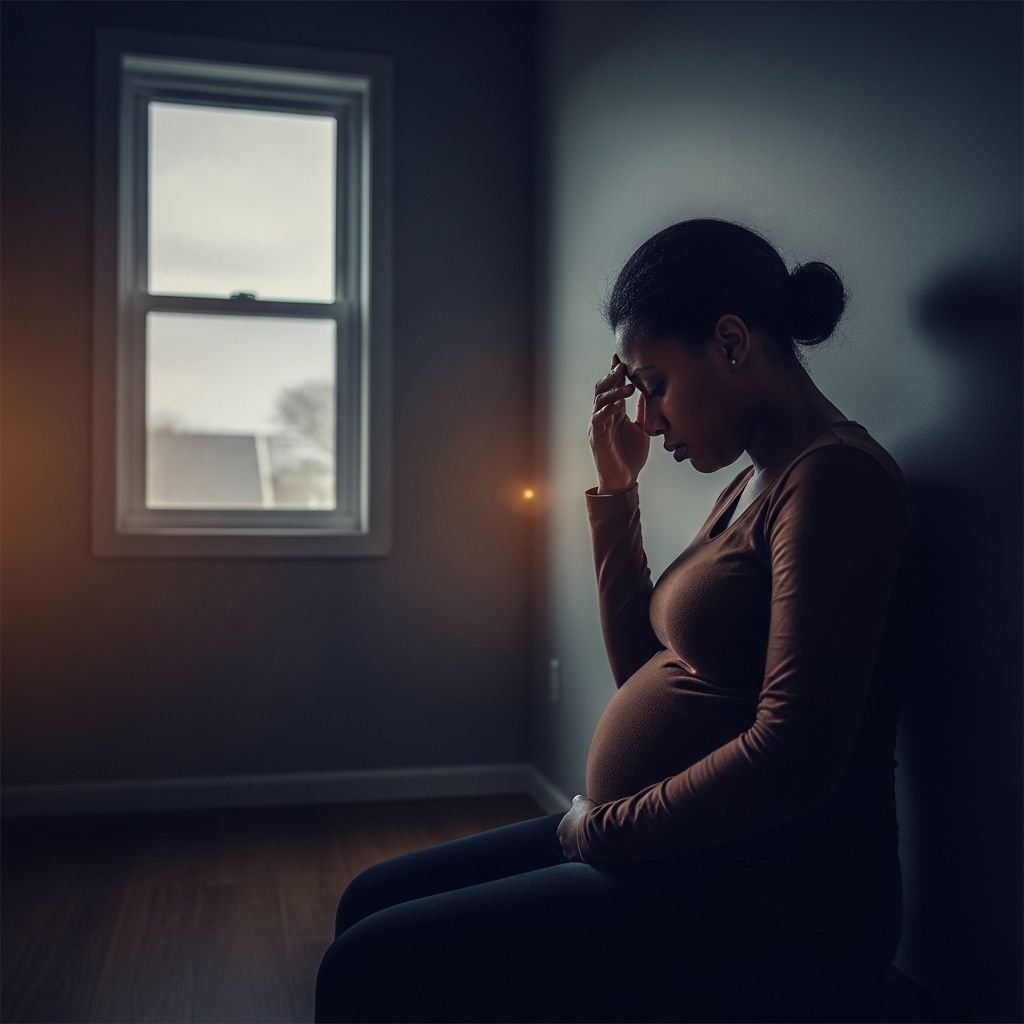
Postpartum mental health conditions affect hundreds of thousands of new mothers annually, yet systemic barriers in healthcare often leave women of color with undiagnosed disorders like PTSD and depression. While **postpartum depression (PPD)** impacts about 1 in 8 women nationwide, emerging evidence highlights **postpartum PTSD** as an underrecognized crisis exacerbated by unequal treatment.
Understanding Postpartum Mental Health Disorders
New motherhood brings profound joy but also vulnerability to mental health challenges. **Perinatal depression**, encompassing both prenatal and postpartum periods, affects 12-15% of women, with PPD rates reaching up to 20% in high-risk areas. Distinct from the common “baby blues” that resolve in two weeks and impact up to 80% of mothers, PPD persists for months, featuring deep sadness, anxiety, and detachment.
**Postpartum PTSD** arises from traumatic birth experiences, such as emergency interventions or perceived loss of control, manifesting in flashbacks, hypervigilance, and avoidance behaviors. Often co-occurring with depression, it demands targeted screening beyond standard PPD tools. Untreated, these conditions risk infant development delays, strained family bonds, and maternal suicidality.
Prevalence and Trends: A Growing Public Health Concern
In the U.S., over 460,000 mothers face PPD yearly based on 3.7 million births, with nearly 50% undiagnosed. Diagnosis rates have climbed from 9.4% in 2010 to 19.0% in 2021, yet less than 20% of women receive depression screening. State variations are stark: Utah reports 15.0% in 2022, above the national 12.9% average.
| Year | Utah PPD Rate (%) | Lower Limit | Upper Limit |
|---|---|---|---|
| 2012 | 11.2 | 9.5 | 13.1 |
| 2019 | 15.0 | 12.9 | 17.4 |
| 2022 | 15.0 | 12.6 | 17.4 |
Data from Utah PRAMS shows consistent elevation. Globally, PPD prevalence is 10-20%, with similar patterns in Canada (1 in 6), the UK (1 in 8), and Australia (1 in 5).
Racial and Ethnic Disparities in Diagnosis and Care
Racial inequities amplify risks. CDC PRAMS 2022 data reveals American Indian/Alaska Native mothers at 21.8% PPD symptoms, Black non-Hispanic at 16.3%, versus 8.0% for Asian/Pacific Islander non-Hispanic. A JAMA study confirms trends: Black women’s PPD diagnoses rose from 9.2% (2010) to 22.0% (2021), Hispanic from 8.9% to 18.8%—still lagging white rates in access.
| Race/Ethnicity | PPD Symptoms (%) |
|---|---|
| American Indian/Alaska Native | 21.8 |
| Black, non-Hispanic | 16.3 |
| White, non-Hispanic | 11.7 |
| Asian/Pacific Islander, non-Hispanic | 8.0 |
These gaps stem from biased screening, language barriers, and distrust in systems marred by historical mistreatment. Unintended pregnancies (23.3% PPD rate vs. 12.0% intended) and abuse (31.4% vs. 14.8%) further heighten risks, disproportionately affecting marginalized groups.
Risk Factors Beyond Race: What Amplifies Vulnerability
- Age: Younger mothers (18-19) face 28.5% rates in Utah.
- Marital Status: Unmarried women at 21.7% vs. 13.7% married.
- Pregnancy Intention: Unintended at 23.3%.
- Trauma History: Perinatal abuse triples odds.
- Comorbidities: Up to 17% experience postpartum anxiety alongside PPD; psychosis affects 1-2 per 1,000.
Socioeconomic factors, limited insurance, and provider bias compound these, often delaying PTSD recognition mislabeled as “normal” stress.
Systemic Failures: Why Postpartum PTSD Goes Unseen
Healthcare inequities manifest in rushed visits, cultural insensitivity, and inadequate follow-up. NCQA notes perinatal depression’s severe outcomes—prematurity, low birthweight—yet screening remains inconsistent. Women of color report dismissed symptoms, leading to chronic untreated PTSD with flashbacks from birth trauma.
Policy gaps persist: While diagnosis rates improve, universal screening isn’t mandated everywhere. PSI emphasizes 1 in 5 moms and 1 in 10 dads affected, urging holistic family support.
Personal Impacts: Long-Term Effects on Mothers and Families
Undiagnosed conditions erode bonding, heighten child behavioral risks, and strain relationships. Recovery is possible—80% with treatment—but access barriers perpetuate cycles. Mothers endure isolation, with PTSD symptoms like nightmares persisting years without intervention.
Pathways to Equitable Screening and Treatment
Enhance training for trauma-informed care, implement bias-free protocols, and expand telehealth for underserved areas. Community doulas and peer support bridge gaps. With 80% recovery potential, early intervention via validated tools like the Edinburgh scale is vital.
- Advocate for policy: Mandate perinatal screening in all visits.
- Build trust: Culturally competent providers.
- Holistic support: Therapy, medication, family involvement.
Success Stories and Emerging Solutions
Initiatives like PSI conferences (2026 in LA) foster innovation. States with robust PRAMS data drive targeted programs, reducing disparities through education and access.
Frequently Asked Questions
What is the difference between baby blues and postpartum depression?
Baby blues affect 80% of mothers mildly for two weeks; PPD is severe, lasting months, requiring professional help.
Which groups face highest postpartum mental health risks?
Women of color, young mothers, and those with trauma history; Black mothers at 16.3% PPD symptoms.
How effective is treatment for postpartum PTSD?
Up to 80% recover fully with therapy, medication, and support.
Is postpartum depression only for mothers?
No, 1 in 10 dads experience it; family screening is key.
What should I do if I suspect postpartum PTSD?
Seek immediate help via PSI helpline or providers; don’t delay.
This comprehensive look underscores the need for reform. By addressing inequities, we safeguard maternal futures.
References
- Complete Health Indicator Report – Postpartum depression — Utah Department of Health and Human Services. 2022. https://ibis.utah.gov/ibisph-view/indicator/complete_profile/PPD.html
- Postpartum Depression Screening and Follow-up (PDS-E) — NCQA. Accessed 2025. https://www.ncqa.org/report-cards/health-plans/state-of-health-care-quality-report/postpartum-depression-screening-and-follow-up/
- Postpartum Depression Statistics (2025) — PostpartumDepression.org. 2025. https://www.postpartumdepression.org/resources/statistics/
- Mental Health Fact Sheet 2025 Update — Policy Center for Maternal Mental Health. 2025. https://policycentermmh.org/mental-health-fact-sheet-2025-update-mmhweek/
- Postpartum Depression by Race, Ethnicity, and Prepregnancy Body Mass Index — JAMA Network Open. 2024-10-28. https://jamanetwork.com/journals/jamanetworkopen/fullarticle/2826508
- Postpartum Support International — PSI. Accessed 2025. https://postpartum.net
- What is Perinatal Depression (formerly Postpartum)? — American Psychiatric Association. Accessed 2025. https://www.psychiatry.org/patients-families/peripartum-depression/what-is-peripartum-depression