The Reality of Hair Loss After Pregnancy: More Than a Physical Change
The journey into motherhood brings countless transformations—some welcomed, others unexpected. Among the less-anticipated changes new mothers face is the sudden and sometimes alarming loss of hair in the months following childbirth. While many women anticipate stretch marks, body shape changes, and sleep deprivation, few are prepared for the sight of clumps of hair in the shower drain or waking to find strands scattered across their pillow. This phenomenon affects the vast majority of postpartum women, creating not only a visible physical change but also an emotional challenge during an already demanding transition period.
The experience of postpartum hair loss extends far beyond cosmetic concerns. For many new mothers already navigating exhaustion, hormonal fluctuations, and identity shifts, watching their hair thin becomes another layer of complexity in their recovery journey. Understanding what causes this condition, recognizing it as a normal biological response rather than a sign of illness, and discovering practical strategies to manage it can help women feel more empowered during the postpartum period.
The Science Behind Hair Loss Following Childbirth
To understand postpartum hair loss, it’s essential to first comprehend how pregnancy transforms hair growth cycles. During pregnancy, elevated hormone levels—particularly estrogen—extend the growth phase of the hair cycle. Follicles that would normally progress to the resting phase remain in an active growth state, resulting in visibly thicker, shinier, and fuller hair that many pregnant women celebrate as one of the few aesthetically positive pregnancy side effects.
This hormonal effect explains why pregnancy hair often feels luxurious and voluminous. The body’s increased estrogen essentially puts hair growth into overdrive, reducing the percentage of hairs entering the shedding phase at any given time. What many women don’t realize is that this dramatic change sets the stage for what comes next.
Once a baby is born, estrogen levels plummet rapidly. This sudden hormonal shift triggers a significant change in the hair growth cycle. Instead of the typical 10 to 15 percent of hairs being in the resting phase at any time, as much as 30 percent of hair follicles enter this phase simultaneously, a condition scientifically termed telogen effluvium. This means that within a concentrated timeframe, a substantially larger volume of hair transitions from growing to shedding, creating the noticeable hair loss that characterizes the postpartum period.
The timeline of this process follows a predictable pattern. Research indicates that hair loss typically begins around 2.9 months after delivery, peaks at approximately 5.1 months postpartum, and generally concludes by 8.1 months. This knowledge can reassure mothers that the condition has a defined endpoint and is not a permanent change.
Additional Factors That Influence Hair Loss Severity
While hormonal changes are the primary driver of postpartum hair loss, researchers have identified additional factors that may intensify or prolong the condition. Extended breastfeeding duration and preterm labor have been identified as independent predictors of increased hair loss severity. Women who continue breastfeeding beyond six months experience significantly higher rates and potentially more pronounced hair loss compared to those who breastfeed for shorter periods. This correlation likely relates to the way breastfeeding continues to suppress estrogen levels by disrupting normal hormonal cycles.
Interestingly, breastfeeding itself doesn’t directly cause hair loss; rather, it prolongs the hormonal environment that supports the shedding cycle. Understanding this distinction helps mothers avoid self-blame or regret about their feeding choices, recognizing instead that their body is operating within normal biological parameters.
Recognizing the Symptoms: What New Mothers Notice
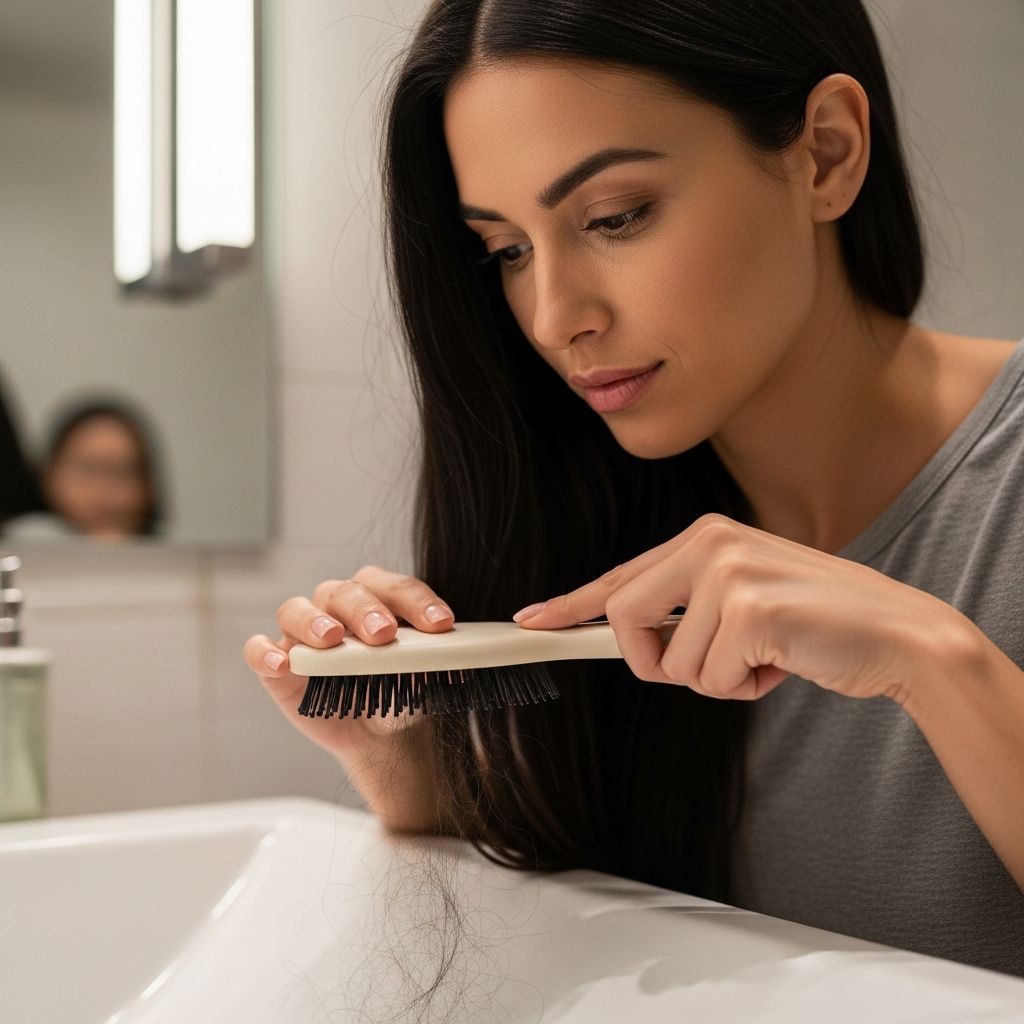
Postpartum hair loss manifests through several observable signs that often prompt mothers to seek answers. The most common indicator is noticing an unusual amount of loose hair accumulating in everyday situations:
- Significantly more hair coming free when brushing or combing
- Hair collecting in shower drains at a rate that seems abnormal
- Multiple strands left on pillows each morning
- Hair clinging to clothing more frequently than before
- Overall thinning of hair density across the scalp
- Occasionally, localized areas where hair thinning is more pronounced
Some women experience diffuse thinning across their entire scalp, while others notice more concentrated areas of loss. The visible changes can range from subtle to dramatic, depending on individual hair density, the severity of hormonal fluctuation, and the presence of other contributing factors.
Many dermatologists emphasize that while alarming to experience, this shedding represents a temporary disruption of the normal hair cycle rather than pathological hair loss or a sign of serious illness. This distinction is important for maternal mental health, as framing the condition correctly can significantly reduce anxiety and worry during an already stressful period.
The Emotional and Psychological Dimensions
Beyond the biological mechanisms, postpartum hair loss carries significant emotional weight for many new mothers. During a period when women are already navigating profound identity shifts—transitioning from pre-parenthood to motherhood, managing sleep deprivation, and adjusting to new responsibilities—losing their hair compounds feelings of loss of control over their body.
The postpartum period is characterized by numerous visible physical changes: abdominal softness where there was previously firmness, breasts that may look different, stretch marks, and altered skin texture. Hair loss adds another change to a body that may already feel unfamiliar. For women whose pregnancy hair was one of the few aesthetically positive changes, the return to pre-pregnancy (or thinner-than-pre-pregnancy) hair can feel like losing a temporary gift.
Research has documented correlations between postpartum hair loss and increased anxiety levels in postpartum women. The condition’s visibility—unlike many internal postpartum changes—means it cannot be hidden, and others may notice and comment on it. For some mothers, these external observations amplify self-consciousness during a vulnerable time.
Additionally, for women who experienced hair loss as a teenager or family member, postpartum shedding may trigger fears about permanent hair loss or developing conditions like androgenetic alopecia (female-pattern baldness). Education about the temporary nature of telogen effluvium and its distinction from pattern hair loss can significantly alleviate these psychological burdens.
Distinguishing Postpartum Hair Loss from Other Conditions
While postpartum hair loss is common and temporary, it’s important to recognize that other conditions can cause hair loss during the postpartum period. Alopecia areata, an autoimmune condition, presents differently with patchy, circumscribed hair loss rather than diffuse shedding across the scalp. Scalp infections like ringworm or trichotillomania (a hair-pulling disorder) can also occur during this vulnerable period and require different treatment approaches.
If a new mother observes symptoms that seem atypical—such as bald patches with visible scalp, severe inflammation, or persistent itching—consulting a healthcare provider becomes important to rule out these alternative conditions. Additionally, if hair loss extends beyond one year postpartum or seems unusually severe, medical evaluation can help identify contributing factors such as thyroid dysfunction, vitamin deficiencies, or other hormonal irregularities that may warrant treatment.
Nutritional Considerations and Preventive Approaches
While postpartum hair loss cannot be entirely prevented due to its foundation in unavoidable hormonal changes, emerging evidence suggests that maintaining optimal nutrition during pregnancy and the postpartum period may help minimize severity. Continuing prenatal vitamins throughout breastfeeding, when applicable, supports micronutrient levels that contribute to hair health, including iron, zinc, and B vitamins.
Hair follicles are sensitive to nutritional status, and deficiencies in key minerals and vitamins can compromise hair cycle function. Women who experienced significant micronutrient depletion during pregnancy may benefit from sustained supplementation during recovery and breastfeeding. A healthcare provider can assess individual nutritional needs and recommend appropriate supplementation based on postpartum labs and dietary intake.
Additionally, adequate protein intake supports hair structure and growth, while omega-3 fatty acids contribute to scalp health. Prioritizing nutrient-dense foods during the postpartum period—a time often dominated by quick, convenience-based meals—can provide foundational support for hair recovery, even if it doesn’t prevent the condition entirely.
Managing the Physical and Emotional Impact
Several strategies can help new mothers manage both the practical realities and emotional challenges of postpartum hair loss:
- Reframing the narrative: Understanding postpartum hair loss as a normal, temporary biological response rather than a sign of illness or permanent damage helps reduce anxiety and catastrophic thinking patterns.
- Adjusting hair care practices: Using gentle shampoos, avoiding tight hairstyles that create tension on follicles, and minimizing heat styling can reduce mechanical stress during a vulnerable growth cycle.
- Considering styling changes: Some women find that shorter cuts or layered styles make thinning less noticeable and easier to manage during a period of limited personal care time.
- Seeking community: Connecting with other postpartum women who have experienced hair loss normalizes the phenomenon and provides practical coping strategies from those who have navigated similar experiences.
- Prioritizing mental health: If hair loss is contributing to significant anxiety or depression, speaking with a mental health professional can provide tools for managing these emotional responses.
- Managing expectations: Recognizing that full recovery takes time—typically up to a year—helps prevent disappointment and allows celebration of gradual improvement.
Timeline for Recovery and Return to Normalcy
One of the most reassuring aspects of postpartum hair loss is its predictable resolution. Unlike some postpartum conditions that may persist, telogen effluvium typically resolves completely as hormonal levels restabilize and hair cycles reset. Most women see improvement within several months, with substantial recovery occurring by eight to twelve months postpartum.
The return to normal shedding rates coincides with the stabilization of reproductive hormones. As menstruation resumes (or continues if already reestablished), and if breastfeeding concludes, estrogen levels return to baseline, signaling hair follicles to return to their normal growth and shedding patterns. Gradual thickening becomes noticeable as hair density increases back to pre-pregnancy levels.
However, individual timelines vary. Women who continue breastfeeding may experience extended hair loss duration, as hormonal suppression continues throughout lactation. Conversely, those with particularly robust nutritional status or genetic predisposition toward thick hair may recover more quickly or experience less pronounced shedding.
When to Seek Professional Guidance
While postpartum hair loss is typically self-limiting, certain circumstances warrant professional evaluation:
- Hair loss that persists beyond 12-14 months postpartum
- Patchy or circumscribed areas of baldness suggesting alopecia areata
- Signs of scalp infection, inflammation, or unusual itching
- Hair loss accompanied by fatigue, weight changes, or temperature regulation problems (suggesting thyroid dysfunction)
- Severe psychological distress or depression related to hair loss
- Hair loss accompanied by irregular periods or other hormonal symptoms
A dermatologist can perform scalp examination and order appropriate tests to rule out other conditions. A primary care provider can assess thyroid function and nutritional status. A mental health professional can help address anxiety or depression that may accompany or be exacerbated by hair loss.
Frequently Asked Questions
Q: Is postpartum hair loss inevitable for all new mothers?
A: Postpartum hair loss affects over 90% of women who have given birth. While not absolutely universal, it is extraordinarily common and should be expected rather than viewed as an unusual complication. Most women experience at least some degree of increased shedding during the postpartum period.
Q: Can I prevent postpartum hair loss entirely?
A: Postpartum hair loss cannot be completely prevented because it stems from inevitable hormonal changes that occur after birth. However, maintaining excellent nutrition, managing stress, and supporting overall health during pregnancy and postpartum may help minimize severity. The condition is temporary and self-resolving regardless of intervention.
Q: Does breastfeeding cause postpartum hair loss?
A: Breastfeeding itself does not directly cause hair loss. However, the hormonal environment created by breastfeeding—specifically the suppression of estrogen through lactation—can prolong the duration of hair loss. Women who breastfeed longer may experience hair loss extending across a longer timeline.
Q: How much hair loss is considered normal during the postpartum period?
A: Normally, people shed 50 to 100 hairs daily. During postpartum telogen effluvium, this amount can increase significantly as up to 30% of scalp hair enters the shedding phase simultaneously. The increase becomes visually noticeable—more in drains, on pillows, and in brushes—but represents a temporary cycle disruption rather than pathological loss.
Q: When should I worry that postpartum hair loss indicates a serious condition?
A: If hair loss appears as distinct bald patches, includes scalp inflammation or itching, persists beyond 12-14 months, or is accompanied by other symptoms like fatigue or weight changes, medical evaluation is warranted to rule out conditions like alopecia areata or thyroid dysfunction. Most postpartum hair loss, however, follows a predictable pattern of diffuse shedding that resolves without intervention.
Q: Are there treatments to speed up recovery from postpartum hair loss?
A: Currently, no treatments specifically accelerate recovery from postpartum telogen effluvium. The condition resolves naturally as hormones restabilize. Maintaining optimal nutrition, managing stress, and supporting overall health create the best foundation for natural recovery. In rare cases of severe or prolonged hair loss, a dermatologist may recommend specific interventions after evaluating individual circumstances.
References
- Investigation of exacerbating factors for postpartum hair loss — National Institutes of Health (NIH), National Center for Biotechnology Information (NCBI). 2024-02-28. https://pmc.ncbi.nlm.nih.gov/articles/PMC10846762/
- Postpartum Hair Loss: Why Does It Happen and What You Can Do — Perel Health. https://perelelhealth.com/blogs/news/postpartum-and-pregnancy-hair-loss
- Hair loss after giving birth — Health Service Executive (HSE), Ireland. https://www2.hse.ie/pregnancy-birth/birth/health-after-birth/breast-changes-hair-loss/
- Postpartum Hair Loss: Causes, Treatment & What to Expect — Cleveland Clinic. https://my.clevelandclinic.org/health/diseases/23297-postpartum-hair-loss
- Postpartum Hair Loss: Hair Loss After Pregnancy — ROGAINE (Johnson & Johnson). https://www.rogaine.com/blogs/blog/postpartum-hair-loss-hair-loss-after-pregnancy
- Postpartum Hair Loss: Causes, Diagnosis, and Treatment — GoodRx. https://www.goodrx.com/conditions/hair-loss/postpartum-hair-loss