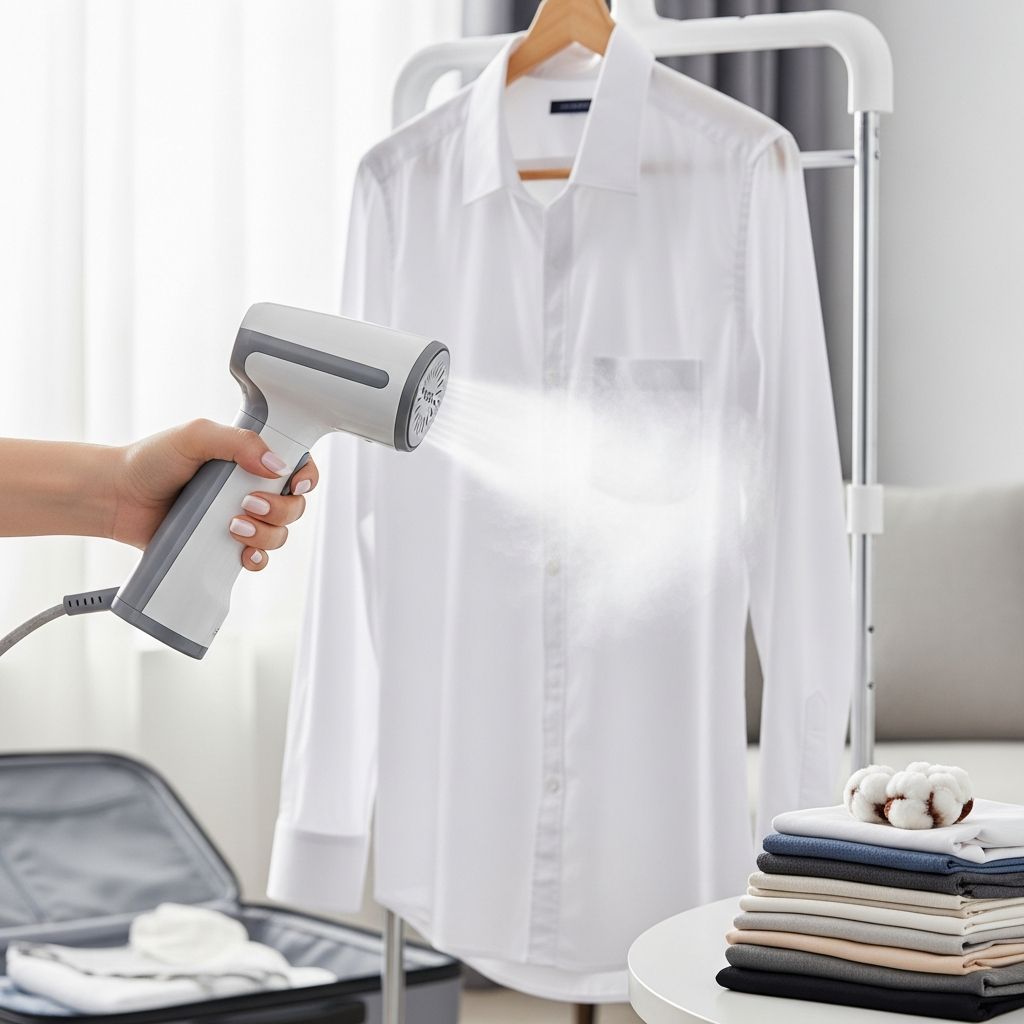
Dragging out a full-size ironing board for every wrinkled shirt is one of those chores that many people quietly dread. A compact garment steamer offers a faster, simpler alternative that fits modern, busy lifestyles. Instead of wrestling with a board, you hang your clothes, switch on a small handheld device, and watch creases relax in seconds.
Portable steamers are especially helpful for families juggling school, work, and travel, where the difference between “ready to wear” and “crumpled mess” often comes down to a few spare minutes. This guide explores how these small appliances work, what to look for when buying one, and how to use them safely and effectively at home or on the road.
Why Portable Steamers Are Replacing Everyday Ironing
While traditional irons still have a place for crisp pleats and formal wear, many people find themselves reaching for a mini steamer for everyday outfits. The appeal is simple: less setup, gentler treatment of fabrics, and more flexibility when space and time are limited.
- No ironing board required: Hang garments on a doorknob, shower rod, or hook and steam vertically.
- Gentler on fabrics: Steam relaxes fibers without the direct pressure of a hot soleplate, reducing the risk of shine marks or scorched spots.
- Perfect for last-minute fixes: Quickly refresh a wrinkled top, dress, or pair of pants minutes before heading out the door.
Compact models are also appealing because they weigh less and store easily in small apartments, dorm rooms, or carry-on luggage. For many households, a mini steamer becomes the go-to tool for day-to-day wrinkle removal, while the iron is reserved for more formal occasions.
How a Mini Garment Steamer Works
Most portable steamers follow a simple design. A small reservoir holds water, which is heated by an internal element. As the water boils, steam travels up to the nozzle, where it is released in a controlled flow over your clothes. Despite their size, these devices can generate enough steam to smooth most everyday wrinkles when used correctly.
- Water tank: Typically holds enough water for one or two garments before needing a refill.
- Heating element: Brings water to temperature quickly, often in a couple of minutes.
- Nozzle or head: Directs the steam; some heads are shaped to cover a wider surface, while others are narrow for precision.
Unlike irons, you do not press the appliance firmly against the fabric. Instead, you keep a slight distance, allowing the hot vapor to do most of the work. A gentle pulling or smoothing motion with your free hand can help the fibers relax evenly.
Key Benefits of a Travel-Friendly Steamer
Portable steamers shine in situations where bulk and complexity are a problem. Whether you live in a tight space or travel frequently, there are several clear advantages to using a handheld model designed for mobility.
- Lightweight and compact: Many units are about the size of a small kettle and can slip into a suitcase or weekender bag.
- Quick start-up: You can often begin steaming within a few minutes of plugging in, ideal for rushed mornings.
- Versatile around the house: Besides clothing, steam can freshen curtains, table linens, and some upholstery (with care).
Families with limited storage space benefit from an appliance that tucks easily into a drawer or closet shelf. College students and frequent fliers appreciate being able to de-wrinkle outfits without relying on hotel irons, which may be unavailable or of questionable quality.
Portable Steamer vs. Traditional Iron
Choosing between a mini steamer and an iron is less about which is “better” and more about how you dress and live. Each tool has strengths that make it more suitable for certain fabrics and occasions.
| Feature | Portable Garment Steamer | Traditional Iron |
|---|---|---|
| Setup time | Fast; hang and go | Slower; requires board and flat surface |
| Best for | Everyday tops, dresses, casual pants, delicate fabrics | Dress shirts, sharp creases, heavy cotton and linen |
| Fabric contact | Little to none; steam works at a short distance | Direct contact with hot soleplate |
| Risk of scorch marks | Low when used correctly | Higher, especially at maximum heat |
| Portability | High; fits in luggage or small drawer | Low; bulkier and heavier |
| Learning curve | Easy for beginners | Moderate; requires attention to temperature settings |
If your wardrobe leans toward knits, soft dresses, and casual shirts, a steamer will likely handle most of your needs. If you rely heavily on formal button-downs, structured suits, or crisp pleats, keeping an iron around as a partner tool makes sense.
What to Look for When Buying a Mini Steamer
Not all portable steamers perform alike. Some deliver a strong, consistent flow of steam, while others sputter or run dry too quickly. Before investing in one, consider which features will matter most in your daily routine.
- Power (wattage): Higher wattage generally means faster heating and stronger steam output, which is useful for thicker fabrics.
- Tank capacity: A larger tank allows you to steam more garments in one session but may make the unit heavier.
- Heating time: Look for models that heat in a few minutes or less for genuine “grab-and-go” convenience.
- Weight and ergonomics: A comfortable handle and balanced design reduce hand fatigue, especially when steaming multiple pieces.
- Safety features: Auto shut-off and heat-resistant handles can provide additional peace of mind.
Reading user experiences can also help you understand how a steamer behaves in real homes and hotels. Some compact models are praised for reliability and speed, while others draw criticism for leaking water or failing after limited use. Look for clear patterns in feedback instead of focusing on a single glowing or negative review.
Step-by-Step: How to Use a Portable Steamer
Getting good results from a mini steamer is less about raw power and more about technique. A few simple habits can dramatically improve how your clothes look after steaming.
- Fill the tank correctly: Unplug the steamer, remove the reservoir or cap, and fill to the indicated maximum line with clean water. Avoid overfilling, which can cause spitting or dripping.
- Secure the cap: Ensure the tank or lid is firmly closed before plugging in. A loose seal can lead to leaks and uneven steam.
- Hang the garment: Place the item on a hanger, ideally somewhere with room to move—like a door frame, shower rod, or sturdy hook.
- Preheat fully: Turn on the steamer and wait until it reaches full steam output before beginning. This may take a minute or two.
- Steam from top to bottom: Hold the steamer upright and move it slowly down the fabric, keeping a slight distance. Use your free hand to gently pull the fabric taut.
- Target stubborn wrinkles: For deeper creases, linger a bit longer in that area while gently stretching the fabric, but avoid pressing the nozzle hard against it.
- Allow to dry and set: After steaming, let the garment hang for a few minutes to dry and cool, helping the smoothness set in.
Always keep the steamer upright while in use to prevent hot water from spilling out. If you need to set it down mid-session, turn it off and place it on a heat-safe, stable surface.
Common Mistakes and How to Avoid Them
Even a well-designed steamer can feel frustrating if it is used incorrectly. Many complaints trace back to a few avoidable habits that interfere with performance and safety.
- Tilting too far: Holding the steamer at an extreme angle can cause water, rather than steam, to spill onto your clothes.
- Overfilling the tank: Exceeding the fill line makes it more likely that water will sputter out of the nozzle.
- Using it on the wrong fabrics: Some very structured or coated textiles may not respond well to steam; always check care labels.
- Impatience during warm-up: Starting before the device reaches full temperature can produce weak steam and more dripping.
If you notice consistent spitting or leaks, double-check the fill level, make sure the cap is firmly attached, and confirm that you are keeping the steamer upright. Periodic cleaning to remove mineral buildup can also help maintain a smooth flow of steam over time.
Safety Tips for Using a Mini Steamer
Although small, a garment steamer still produces very hot steam and surfaces that can burn skin if mishandled. Respecting its heat is crucial, especially in homes with children or pets.
- Keep hands clear of steam: Never place your fingers directly in front of the nozzle or test the temperature with your skin.
- Use in an open space: Avoid steaming right next to cluttered shelves or electronics that might be affected by heat and moisture.
- Unplug after use: Turn off the steamer, unplug it, and allow it to cool completely before refilling or storing.
- Store safely: Keep the device out of reach of curious children and away from flammable materials.
Check your unit’s manual for specific warnings, such as whether it can be used with certain water types or in particular orientations. A few seconds of review can prevent accidents and extend the life of the steamer.
Everyday Scenarios Where a Portable Steamer Shines
Once a handheld steamer becomes part of your routine, you may find it saves time and stress in many small but meaningful ways. It is not only about “formal” outfits; casual wear benefits too.
- Morning rush: Smooth a crumpled shirt straight from the laundry pile without hunting for the ironing board.
- Travel days: Refresh clothes that have been compressed in suitcases during flights or road trips.
- Small living spaces: Maintain a polished look in dorm rooms or studio apartments without devoting space to an ironing setup.
- Special occasions: Gently de-wrinkle dresses, dress shirts, and light jackets before events or family photos.
Because the appliance is small and easy to plug in, it also lends itself to quick touch-ups: a hem that curled in the dryer, a scarf needing a quick smooth, or even table linens before guests arrive.
Care and Maintenance for Long-Term Performance
A portable steamer is simple to maintain, but a little care goes a long way. Mineral deposits from hard water can gradually clog internal pathways, reducing steam output or causing erratic performance.
- Use appropriate water: If you live in an area with very hard water, consider using distilled or filtered water to minimize mineral buildup.
- Empty after use: Once the steamer has cooled, pour out any remaining water instead of leaving it sitting inside the tank.
- Descale periodically: Follow the manufacturer’s instructions for cleaning if you notice reduced steam or visible buildup.
- Inspect the cord: Periodically check the power cord for damage and discontinue use if you see fraying or exposed wiring.
Proper storage also matters. Let the unit cool fully before putting it away, and avoid wrapping the cord tightly around the body, which can strain internal connections over time.
Frequently Asked Questions
Can a portable steamer completely replace an iron?
For many casual wardrobes, a mini steamer can handle most day-to-day wrinkle removal, especially for knits, flowy fabrics, and simple tops. However, those who rely on sharply pressed dress shirts, formal trousers, or precise pleats may still prefer to keep an iron available for those specific garments.
Is it safe to use a steamer on delicate fabrics?
Steam is generally gentler than direct contact with a hot iron, but care labels should always be your guide. For delicate items, keep the steamer slightly farther away, move continuously, and avoid lingering too long in one spot to reduce the risk of damage.
Why does my steamer sometimes spit water instead of steam?
Common causes include overfilling the tank, tilting the unit too far from its upright position, or using it before it has fully heated. Ensuring the correct water level, keeping the device vertical, and waiting until it reaches full temperature often resolves minor spitting issues.
Can I pack a portable steamer in my carry-on bag?
Many travelers keep a compact steamer in their luggage, but air travel rules may vary by region and airline. Always pack the device completely cool and empty, and check current regulations regarding electric appliances in carry-on or checked baggage before flying.
Will a mini steamer handle heavy fabrics like denim or thick cotton?
Portable units can soften wrinkles in heavier fabrics, but results may be more modest compared to an iron, and you may need extra passes over stubborn areas. For very structured or thick items, combining steam with occasional traditional ironing can provide the best finish.
Bringing Wrinkle Care Into the Modern Home
A portable garment steamer reflects the shift toward smaller, more flexible home appliances that match fast-paced living. It offers a way to maintain a neat appearance without dedicating a closet to ironing tools or carving out large blocks of time for pressing clothes.
For families, travelers, and anyone who prefers convenience over ritual, a compact steamer can feel like a quiet but meaningful upgrade. Whether you are smoothing a child’s school uniform, preparing for a work trip, or simply taming the wrinkles from your favorite dress, this small device can make daily life look and feel a bit more polished with a lot less effort.