After a baby’s clubfoot has been corrected with the Ponseti casting method, the next step is using a brace to keep the feet in their new, healthy position. The brace phase can feel overwhelming at first, but understanding why it matters and how to manage daily life with it makes the process much easier for families.
Why Bracing Matters After Clubfoot Casting
Clubfoot is a condition in which a baby is born with one or both feet turned inward and downward. The Ponseti method uses a series of casts, and sometimes a minor procedure to release the tight heel cord, to straighten the foot gradually. Once the foot is corrected, it naturally tends to turn back toward its original position as the baby grows and moves. Bracing keeps the feet turned outward in a stable position so the correction holds as bones, muscles, and ligaments mature.
- Bracing is not optional; it is an essential part of treatment, just like the casting phase.
- Most relapses of clubfoot after Ponseti casting are linked to not using the brace as recommended.
- Correct use of the brace helps many children avoid major surgery later in childhood.
What Is a Ponseti Brace?
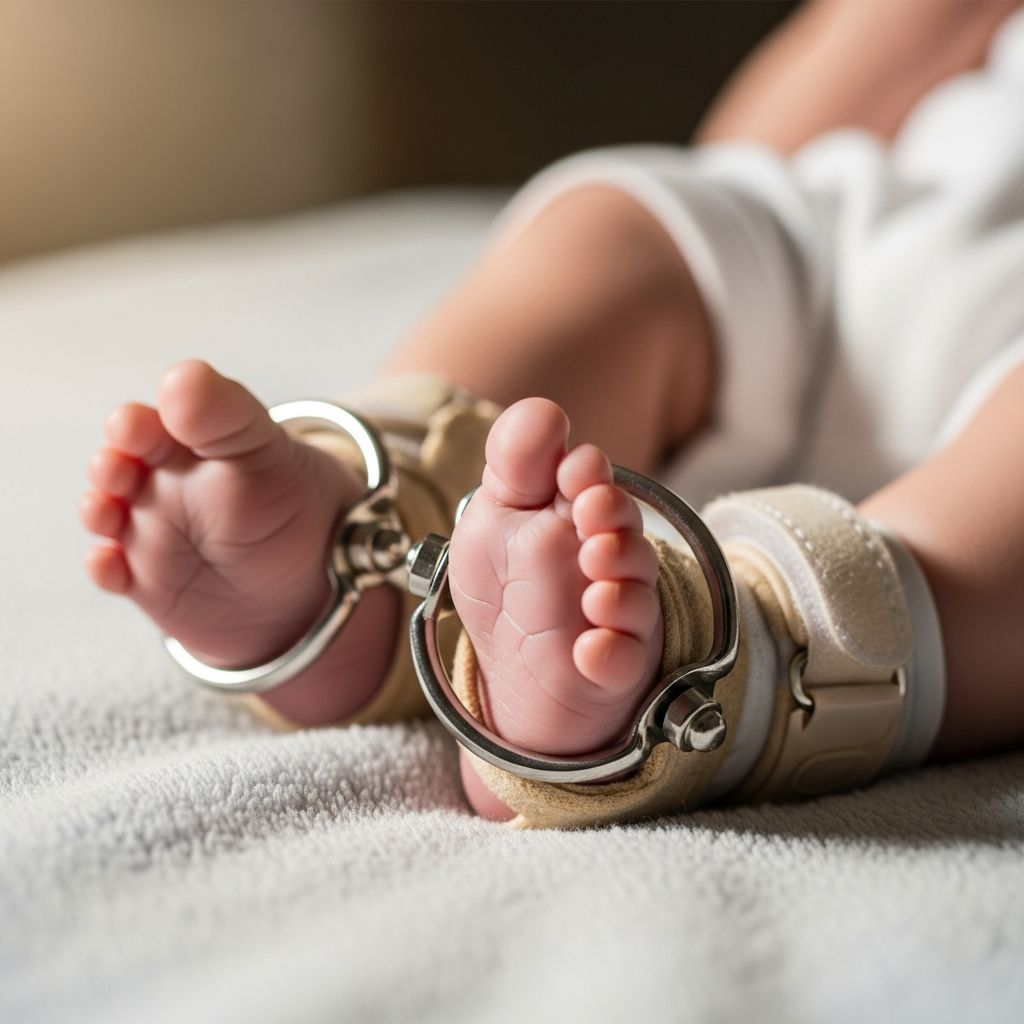
A Ponseti brace, often called a foot abduction brace or boots-and-bar brace, consists of two small shoes attached to a metal or plastic bar. The shoes hold each foot at a specific outward angle, and the bar keeps both feet set apart at a fixed distance. When both feet are affected, both shoes are turned outward; if only one foot is affected, the brace is usually set differently for the normal foot and the treated foot.
The purpose of the bar is to:
- Keep the feet turned outward to maintain correction.
- Prevent the foot from drifting inward as your child moves and grows.
- Encourage both legs to work together, promoting balanced leg and hip development.
Typical Bracing Schedule and Phases
Every child is unique, and the exact bracing schedule is set by the orthopaedic team. However, most treatment plans follow a similar pattern after the final cast is removed. Parents can think of bracing in two broad phases: full-time wear and part-time wear. The overall bracing program often continues for several years, even after the child is walking.
| Phase | Approximate Age Range* | Typical Wear Time | Main Goal |
|---|---|---|---|
| Early full-time use | Immediately after last cast to about 3–4 months later | About 23 hours per day | Lock in the correction while tissues are still very flexible |
| Transition phase | End of full-time phase to about 1 year of age | Gradual shift from nearly full-time to mostly nights and naps | Help baby adapt to reduced brace time while keeping feet stable |
| Night-and-nap phase | From about 1 year up to 4–5 years, depending on the plan | Usually 10–14 hours per day (nights and any daytime naps) | Prevent relapse as bones strengthen and the child becomes more active |
*Age ranges and hours are examples only. Parents should always follow their child’s specific treatment plan.
Getting the Brace Fitted Correctly
Correct brace fit is key to both comfort and effectiveness. At the first fitting, the orthopaedic team shows parents how to place the baby’s feet into the shoes, tighten the straps, and lock the bar. Feet should sit all the way back in the shoes with the heels flat against the heel cups. Straps should be snug enough that the foot does not slide, but not so tight that they leave deep marks or restrict blood flow.
- Parents should learn how to check that the heel stays down inside the shoe, especially in the early days when the baby might try to pull the feet out.
- Regular follow-up visits allow the team to adjust angles, shoe size, or bar length as the child grows.
- If redness, blisters, or unusual swelling appear, the medical team should be contacted rather than changing brace settings without guidance.
How to Put On the Brace Step by Step
Developing a consistent routine makes brace time smoother for parents and babies. Many caregivers find it easiest to apply the brace during a calm moment, such as after a feeding or before sleep. The process usually gets quicker with practice.
- Lay your baby on a safe, flat surface where you can see both feet clearly.
- Put on clean, well-fitting socks that rise above the top of the shoes to help protect the skin.
- Open each brace shoe fully, loosening straps and checking that there is no debris inside.
- Place one foot into the shoe, pushing the heel firmly back and down into the heel cup.
- Secure the ankle or instep strap first to lock the heel in place, then close remaining straps from bottom to top.
- Repeat the process with the other foot, making sure both heels are equally seated.
- Attach the shoes to the bar if they are not permanently fixed, confirming that the angles match the prescribed positions.
- Gently move the bar up and down to be sure everything feels secure and that the baby’s legs can move together freely.
Keeping Your Baby Comfortable in the Brace
Most babies adjust to the brace within a few days, though some fussiness is common at first. Discomfort is usually related to new sensations and restricted leg movement rather than pain. Good skin care and attention to clothing make a big difference in the child’s comfort and reduce the chance of irritation.
- Use soft, seamless, breathable socks without thick ridges or folds.
- Check the skin on the heels, toes, and around the straps at each brace removal.
- Choose loose-fitting pants that allow space for the bar, or dress the baby in one-piece outfits snapped over the brace.
Skin Care and Safety Checks
Because the brace is worn many hours a day, small problems can become big quickly if not noticed. A brief inspection each time the brace is removed helps catch issues early. Mild redness that fades within 20–30 minutes is often normal, but deeper marks, blisters, or broken skin should be discussed with the care team.
- Make sure the baby’s socks lie flat with no wrinkles under the foot or around the ankle.
- Keep the feet and brace dry; moisture from sweat, spills, or drool can soften the skin and cause rubbing.
- Never place padding or extra liners inside the shoes unless specifically advised, as this can change the fit.
Helping Your Baby Sleep With the Brace
Wearing the brace at night is often the hardest part for families, especially during the first week. Babies may kick, wiggle, or cry more than usual as they adjust. Over time, most babies fall asleep normally and do not seem bothered by the brace during the night.
- Establish a calm bedtime routine with feeding, a diaper change, and putting on the brace in the same order each night.
- Use a sleep sack or larger-sized pajamas that fit over the brace without pulling the legs together tightly.
- Allow extra soothing time during the first few nights, such as rocking, singing, or gentle patting.
Daily Activities and Play With the Brace
Even with a bar between the feet, babies can kick, wiggle, and play. During full-time wear, tummy time and playtime simply look a little different. When the brace is only worn at night and naps, children are free to crawl, stand, and walk without it during waking hours.
- Place toys within reach so the baby can use arms and hands for play while legs move together.
- For supervised play on the floor, allow the baby to move the bar up and down; this motion helps build hip and leg strength.
- As the child grows, they can learn to roll, sit, and later stand and walk normally when not in the brace.
Managing Clothing, Diaper Changes, and Travel
Practical details like dressing, diapering, and going out with the brace can feel tricky at first. Planning ahead and choosing adaptable clothing and gear reduces frustration. Over time, families find simple workarounds that fit into their usual routines.
Clothing Tips
- Use onesies and rompers with wide leg openings or snaps that fasten around the brace.
- Consider larger sizes of pants or footless sleepers so the bar has enough room.
- Avoid tight leggings or narrow jeans that pull the legs together or press on the brace.
Diaper Changes
- Lift the baby gently by the hips rather than pulling on the bar or legs.
- Slide the diaper under the bar instead of trying to thread it through small openings.
- Check regularly that the diaper is not rubbing against the brace straps or shoes.
Car Seats and Strollers
- Most infant car seats can accommodate the brace, but straps may need to be loosened and then refitted properly.
- Make sure the bar does not push against the car seat shell in a way that alters proper harness positioning.
- In strollers, place the baby so the bar is free and not caught under footrests or side rails.
Common Challenges and How to Handle Them
Parents may worry about fussiness, sleep disruption, or the child’s ability to move. While these concerns are valid, they are usually temporary and manageable. Understanding what is typical adjustment versus a sign of true trouble helps families stay committed to the plan.
- Increased crying at the start: Often improves within several days as the baby gets used to the new sensation.
- Attempts to kick off the brace: Check heel position and strap tightness; sometimes a minor adjustment solves the problem.
- Missed hours of wear: Discuss with the care team; do not change the schedule on your own if wear time drops regularly.
Supporting Your Child’s Development
Wearing a brace does not prevent normal development. Children treated with the Ponseti method and bracing typically learn to roll, sit, stand, and walk around the same ages as their peers. During waking, brace-free hours, they should be encouraged to move, explore, and build strength like any other child.
- Offer plenty of supervised floor time when the brace is off, especially during the day once the schedule allows it.
- Encourage crawling, pulling to stand, and walking when the child shows interest and readiness.
- Ask the medical team if any additional exercises or stretching routines are recommended.
Emotional Support for Parents and Caregivers
Caring for a baby in a brace can be emotionally demanding. Parents may feel guilty, worried about pain, or stressed about keeping up with the schedule. Connecting with the medical team and, when possible, other families who have been through clubfoot treatment can be reassuring.
- Write down questions that arise between visits so they can be addressed efficiently during appointments.
- Share responsibilities between caregivers when possible, so no one person carries the entire burden of brace management.
- Remind yourself that bracing is temporary but has long-lasting benefits for your child’s mobility and comfort.
When to Call the Medical Team
Prompt communication with the orthopaedic team keeps small problems from becoming major setbacks. Parents should never feel that they are “bothering” the clinic by calling; questions are a normal part of long-term treatment. Many issues can be solved quickly with reassurance, a simple brace adjustment, or a minor change to the routine.
Contact the medical team if you notice any of the following:
- Blisters, open sores, or bruises on the feet or ankles.
- Persistent swelling, cold toes, or a color change in the feet that does not improve when the brace is removed.
- Severe or unusual fussiness whenever the brace is on, especially after a period of good tolerance.
- Difficulty keeping the feet in the shoes despite correct strap use.
- Missed appointments or repeated problems meeting the recommended hours of wear.
Frequently Asked Questions About Ponseti Bracing
Will my child be able to walk and run normally later?
Most children who complete Ponseti treatment, including proper bracing, go on to walk, run, and play like their peers. The goal of bracing is to maintain a flexible, pain-free, well-aligned foot so your child can be active throughout life.
Does the brace hurt my baby?
The brace may feel strange and uncomfortable at first, but it should not cause pain. If your baby cries only when the brace is applied and then settles, this is usually a sign of adjustment, not injury. Persistent distress, especially with signs of skin damage or swelling, should be discussed with the care team.
Can the brace be taken off for a special occasion?
Because consistent wear is critical, removing the brace “just for a little while” for social events is generally discouraged, especially during the full-time phase. If a special situation arises, speak with the orthopaedic team in advance to understand how much flexibility, if any, is safe.
What if my child refuses to wear the brace as a toddler?
Older infants and toddlers may push against the brace or try to remove it. Calm, consistent routines help: put the brace on at the same times each day and respond firmly but gently. If resistance continues, talk to the clinic about strategies or possible adjustments to make brace time more tolerable.
How long will bracing last overall?
Many treatment plans use full-time bracing for the first few months, then night-and-nap use until around age 4 or 5. Exact timing depends on factors like the severity of the original clubfoot, how well the correction has held, and the child’s growth. Your medical team is the best source for a personalized timeline.
Key Takeaways for Families
- Bracing is a vital final step of Ponseti clubfoot treatment, not an optional add-on.
- Following the recommended schedule greatly reduces the risk of the foot turning inward again.
- Most babies adjust quickly, and with good guidance, families build routines that keep their child safe, comfortable, and on track for healthy development.