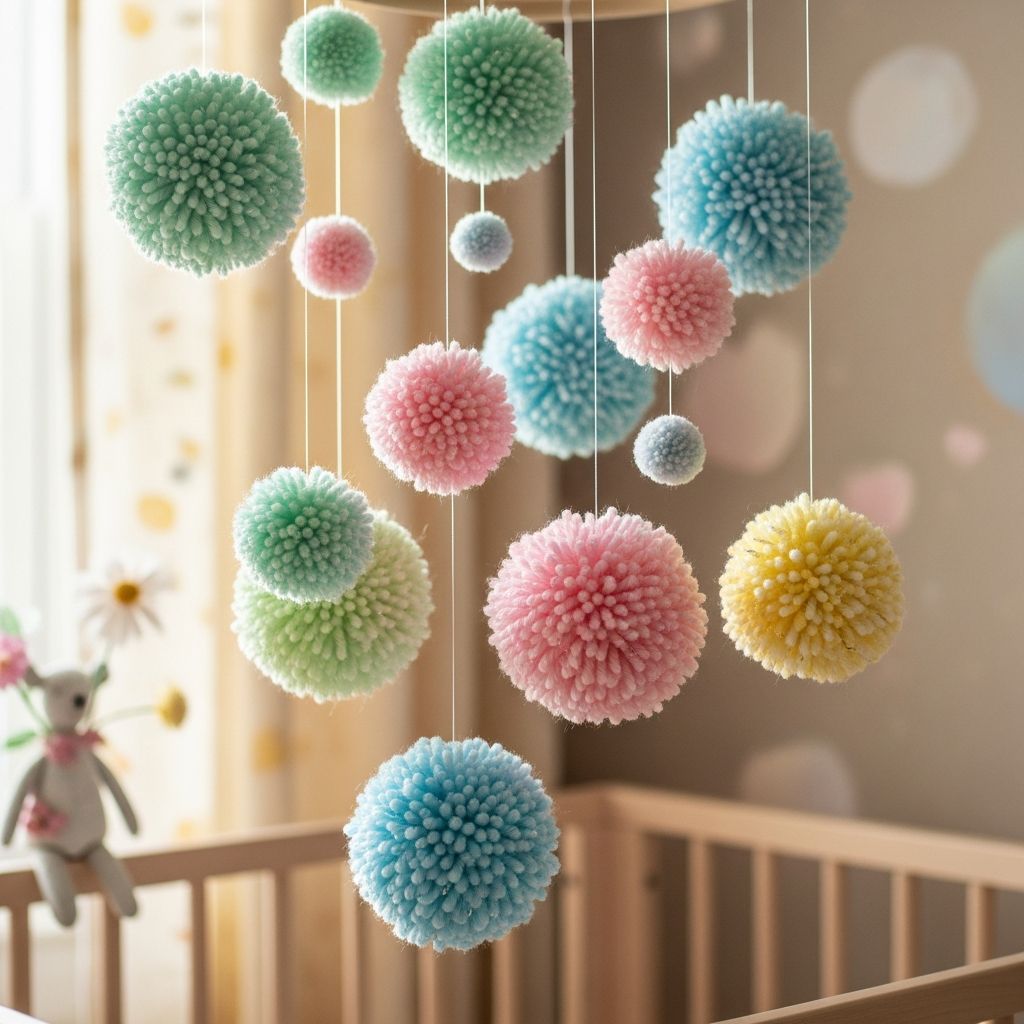
Handcrafted pom poms bring a burst of softness and color to any nursery, turning a simple room into a dreamy haven for your baby. These fluffy creations, made from everyday materials like yarn or tissue paper, offer endless customization for themes from rainbows to pastels. Parents love them for their affordability, ease, and ability to spark joy without overwhelming tiny spaces. Whether hanging as mobiles or scattered as accents, pom poms create gentle visual stimulation ideal for little eyes.
Why Pom Poms Are Perfect for Baby Rooms
Pom poms mimic clouds or cuddly toys, providing safe, non-toxic decor that withstands curious tugs. Unlike rigid ornaments, their plush nature reduces injury risks, making them suitable from newborn stages onward. Crafting them involves minimal tools, fostering family bonding time. Customize sizes and hues to match bedding or walls, ensuring cohesion. They’re also versatile: swap seasonally for holidays or growth spurts.
- Affordable joy: Use scrap yarn or bulk tissue for pennies per piece.
- Customizable whimsy: Mix textures for 3D depth and movement.
- Safety first: Secure firmly to avoid falls; opt for natural fibers.
- Therapeutic craft: Repetitive wrapping calms minds during late-night sessions.
Mastering Yarn Pom Poms: Basic Techniques
Yarn pom poms form the backbone of durable nursery decor. Start with a simple cardboard template: cut two identical discs (2-6 inches diameter) from recycled cereal boxes, with a central hole roughly half the size. Wind yarn around the discs 100-200 times for fluffiness, varying tightness for density. Slide scissors between discs to cut loops, then tie tightly with matching yarn through the center. Fluff outward for a perfect sphere.
For mini versions (under 1 inch), use forked tools or pom pom makers from craft stores. Larger ones (basketball-sized) demand patience but yield statement pieces like floor poufs. Pro tip: Layer colors during winding for ombre effects, ideal for gender-neutral nurseries.
| Size | Yarn Winds | Best Uses |
|---|---|---|
| Small (1″) | 50-100 | Garlands, keychains |
| Medium (3″) | 150-250 | Mobiles, pillows |
| Large (6+”) | 300+ | Rugs, wall hangings |
Effortless Tissue Paper Pom Poms
Tissue pom poms offer lightweight, translucent alternatives that catch light beautifully over cribs. Stack 8-12 sheets (20×30 inches), accordion-fold into 1-2 inch sections, creasing firmly. Twist 12-inch floral wire around the center, leaving a hanging loop. Trim ends—rounded for full blooms, pointed for spiky stars. Gently separate layers from the center, working slowly to prevent tears. Hang with monofilament for floating effects.
Choose 60gsm tissue for durability; thinner gift wrap frays easily. These expand to 12-18 inches, perfect for backdrops or single accents. Mix colors for ombre clusters mimicking sunsets.
Creative Nursery Projects with Pom Poms
Suspended Dream Catchers and Mobiles
Craft a mobile by attaching varied-size yarn pom poms to embroidery hoops with twine. Add wooden beads or felt stars for contrast. Hang 12-18 inches above changing tables for gentle sway. Tissue versions suit lighter hoops, preventing sags. These stimulate tracking skills while soothing with motion.
Cozy Floor and Bedding Accents
Glue medium pom poms to felt bases for play mats, or hot-fix to pillowcases for huggable cushions. A pom pom rug from scrap yarn scraps feels like walking on clouds—sew or glue to burlap backing. Ensure machine-washable yarns like acrylic for practicality.
Wall Art and Hanging Displays
String minis into rainbow garlands across walls, or cluster larges into macrame-inspired hangings. Wreaths from foam rings wrapped in yarn, studded with pom poms, frame doors festively. Vertical garlands save floor space in small nurseries.
Functional Adorable Touches
Adorn crib bumpers (securely stitched), storage baskets, or lamp shades with tiny pom poms. Keychains for diaper bags double as room charms when clipped nearby.
Safety Essentials for Nursery Crafts
Prioritize non-toxic, washable materials; avoid loose glitter or small parts under age 1. Secure hangings 18 inches above sleeping areas per AAP guidelines. Test glue strength—hot glue holds best. Supervise play near pom poms to prevent ingestion risks. Natural wool resists allergens, but synthetics clean easier.
- Anchor firmly with wall hooks rated for 5+ lbs.
- Use LED lights if illuminating; no open flames near yarn.
- Check monthly for wear, replacing frayed items.
Materials Shopping Guide
Source yarns from discount bins (wool blends $2/skein), tissue packs ($1/10 sheets). Tools: scissors, wire cutters, hot glue gun ($10 starter kit). Bulk buy for projects saves 30-50%. Eco-tip: Repurpose old sweaters for unique textures.
Frequently Asked Questions (FAQs)
What materials are safest for baby pom pom crafts?
Use acrylic or cotton yarns and acid-free tissue; avoid polyester stuffing that pills. All components should meet CPSIA standards for children’s products.
How long do pom poms take to make?
Yarn minis: 5 minutes each; larges: 20-30 minutes. Tissue: 10 minutes per large pom.
Can pom poms be washed?
Spot-clean yarn ones; machine-gentle for cushions in mesh bags. Air-dry to preserve shape.
Are tissue pom poms reusable?
Yes, gently deflate and refold; store flat. They last years if not crushed.
Ideas for themed nurseries?
Forest: greens/browns; Underwater: blues/teals with bead ‘bubbles’; Space: metallics/silvers.
Advanced Twists for Seasoned Crafters
Experiment with glow-in-dark yarn for nightlights, or scented sachets inside pillows. Combine yarn cores with tissue petals for hybrids. LED strings woven through garlands add magic post-bedtime. Scale up to tent canopies for toddler play zones.
These projects not only beautify but teach fine motor skills when kids join in from age 3+. Track progress with photo journals, evolving designs as your child grows.
References
- Consumer Product Safety Improvement Act (CPSIA) — U.S. Consumer Product Safety Commission. 2023-01-01. https://www.cpsc.gov/Regulations-Laws–Standards/Statutes/CPSIA
- Safe Sleep Recommendations — American Academy of Pediatrics. 2022-10-20. https://www.aap.org/en/patient-care/safe-sleep/
- Yarn Craft Safety Guidelines — Craft Yarn Council. 2024-05-15. https://www.craftyarncouncil.com/safety
- Tissue Paper Decor Standards — ASTM International. 2023-11-01. https://www.astm.org/standards/f963.htm
- Children’s Product Certification — Federal Register (U.S. Gov). 2025-02-10. https://www.federalregister.gov/documents/2025/02/10/children-products