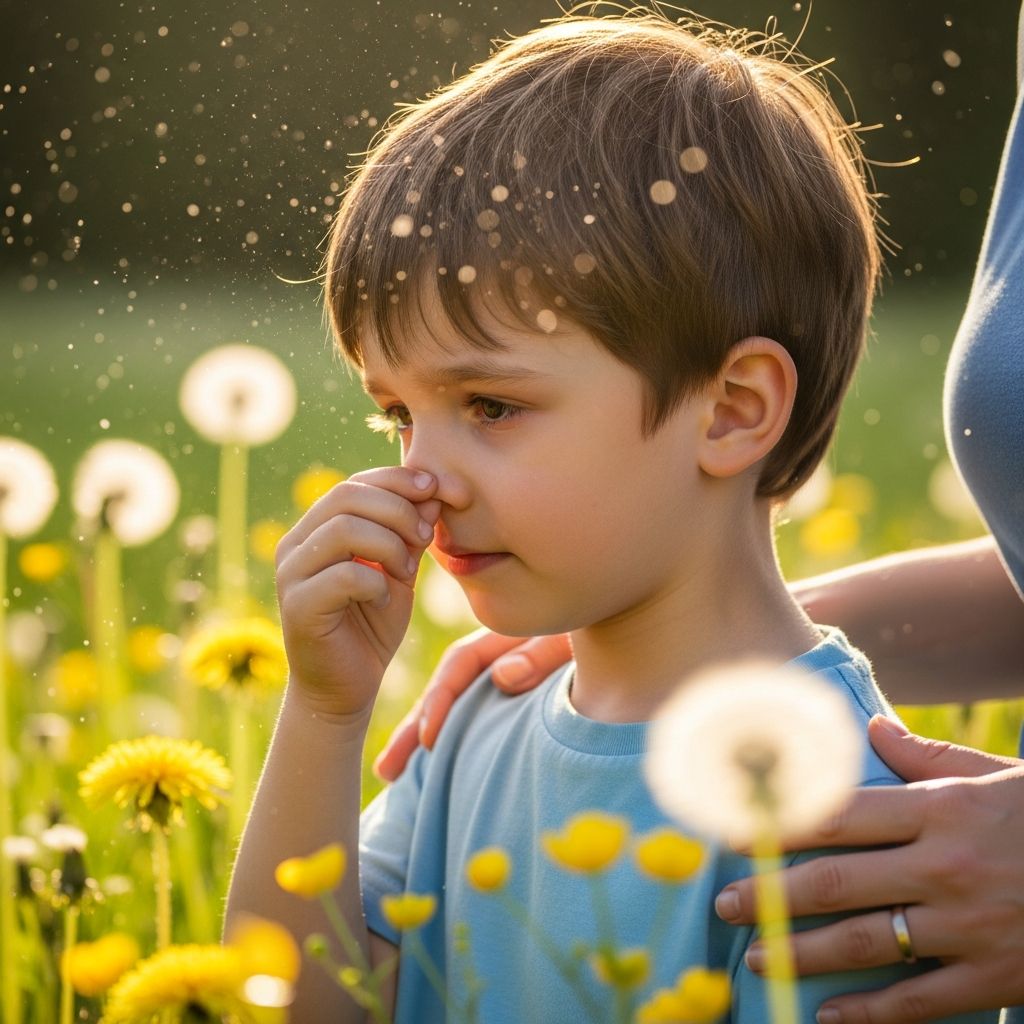
Pollen allergies are a frequent cause of sniffles, itchy eyes, and springtime misery for many children. When plants release tiny grains of pollen into the air, some kids’ immune systems react as if these harmless particles are dangerous germs. The result is hay fever, also called seasonal allergic rhinitis, a cluster of symptoms that look a lot like a cold but keep coming back whenever pollen levels are high.
This guide explains what pollen is, how allergies develop, what symptoms to look for, and the steps parents can take to help children feel better at home, at school, and outdoors.
What Is Pollen and Why Does It Cause Allergies?
Pollen is a powdery substance made by trees, grasses, and weeds to fertilize other plants. It is carried by wind, insects, or animals. For most people it is harmless, but in a child with allergies, the immune system mistakenly treats pollen as a threat and launches an inflammatory response.
Common Types of Pollen That Bother Kids
- Tree pollen – Often peaks in late winter and spring; common in many regions.
- Grass pollen – Typically highest in late spring and summer.
- Weed pollen – Such as ragweed; often surges in late summer and fall.
Because different plants release pollen at different times, some children have symptoms during only one part of the year, while others are affected in more than one season.
How an Allergy Reaction Happens
When a sensitized child breathes in pollen, the immune system produces antibodies called IgE. These attach to cells that release histamine and other chemicals, leading to itching, swelling, and extra mucus in the nose, eyes, and sometimes the lungs.
This reaction explains why allergy medicines that block histamine (antihistamines) can be so effective for many children.
At What Age Do Pollen Allergies Start?
Most children do not develop true pollen allergies in the first year of life. They usually need at least a couple of seasons of exposure before the immune system becomes sensitized.
- Rare under age 2: Ongoing nasal symptoms at this age are more often from infections, enlarged adenoids, or other causes.
- Common between 2 and 5: Many kids start to show seasonal patterns of sneezing and congestion in preschool years.
- Peak in school-age and teens: Symptoms may be most noticeable in older children and young adults.
Typical Symptoms of Pollen Allergies in Children
Pollen allergies mainly affect the nose, eyes, and upper airways. Symptoms often appear suddenly when pollen counts rise and improve when the child goes indoors or when the season changes.
Common Nasal and Eye Symptoms
- Frequent sneezing
- Clear, watery runny nose rather than thick yellow or green mucus
- Nasal congestion or stuffiness that makes it hard to breathe through the nose
- Itchy nose, throat, or roof of the mouth
- Itchy, red, watery eyes (also called allergic conjunctivitis)
- Postnasal drip, when mucus runs down the back of the throat and may cause coughing
Other Possible Signs
- Dry cough, especially at night or after outdoor play
- Scratchy or sore throat from drainage
- Dark circles under the eyes, sometimes called allergic shiners
- Ear fullness or popping from congestion around the Eustachian tubes
- Fatigue, poor sleep, and daytime irritability, often due to blocked breathing and nighttime coughing
In children who also have asthma, pollen can trigger wheezing, chest tightness, or shortness of breath. These lower-airway symptoms need prompt medical attention and often require asthma medicines.
Pollen Allergies vs. the Common Cold
Pollen allergy can easily be confused with a cold, especially when symptoms first appear. Knowing the differences can help parents decide when to call the doctor and when to consider allergies as the main cause.
| Feature | Pollen Allergy | Common Cold |
|---|---|---|
| Onset | Often sudden; appears when pollen counts rise | Develops gradually 1–3 days after virus exposure |
| Duration | Lasts for weeks as long as child is exposed to pollen | Usually 7–10 days |
| Type of mucus | Clear and watery | May start clear, then turn yellow or green |
| Itching | Common in eyes, nose, and throat | Usually mild or absent |
| Fever, body aches | Uncommon with allergies | More typical with viral infections |
| Seasonal pattern | Same time each year; worse outdoors or on high-pollen days | No predictable pattern; spreads in families or classrooms |
How Doctors Diagnose Pollen Allergies
Evaluation usually starts with the child’s history and a physical exam. The healthcare provider will ask about when symptoms started, what makes them worse, and whether there is a family history of allergies or asthma.
Key Questions Your Child’s Clinician May Ask
- Do symptoms appear mainly in certain seasons or all year?
- Are symptoms worse after playing outside, mowing the lawn, or visiting certain locations?
- Does anyone in the family have allergies, asthma, or eczema?
- Does your child snore, breathe through the mouth at night, or wake frequently?
Allergy Testing
When needed, your child may be referred to an allergist. Testing helps identify specific pollens that trigger symptoms so you can plan better avoidance and treatment.
- Skin prick testing: Small drops of allergen are placed on the skin and gently pricked. A raised, itchy bump suggests sensitivity to that pollen.
- Blood tests (specific IgE): Measure allergy-related antibodies to different pollens. These can be useful when skin testing is not possible.
Test results are interpreted together with your child’s history; a positive test alone does not always mean the allergen is causing symptoms.
Treatment Options for Pollen Allergies in Children
The main goals of treatment are to reduce symptoms, improve sleep and concentration, and prevent complications such as sinus infections or asthma flares.
Everyday Measures: Reducing Pollen Exposure
- Track pollen counts: On high-pollen days, keep outdoor time shorter, especially in the early morning when levels may be higher.
- Keep windows closed at home and in the car during peak seasons; use air conditioning when possible.
- Change clothes and wash hands and face after outdoor play to remove pollen from skin and hair.
- Shower before bed to prevent pollen from transferring to pillows and bedding.
- Use high-efficiency filters in central air systems if recommended, and change them regularly.
Medicines Commonly Used for Kids
Medication choices depend on the child’s age, symptom severity, and other health conditions. Always follow your clinician’s guidance on dosing for children.
- Non-drowsy antihistamines: Help with sneezing, runny nose, and itchy eyes by blocking histamine.
- Nasal corticosteroid sprays: Reduce inflammation inside the nose; often considered one of the most effective treatments for ongoing symptoms.
- Eye drops: Allergy eye drops can relieve red, itchy, watery eyes when other measures are not enough.
- Leukotriene modifiers: Sometimes used in children who also have asthma or more complex allergy patterns.
Most children need medicines only during the months when pollen is present, though some may require longer treatment depending on local plant seasons.
Allergy Shots (Immunotherapy)
For children with severe or persistent pollen allergies who do not respond well to usual treatments, allergen immunotherapy may be considered. This involves regular injections of small, gradually increasing doses of the pollen allergen to train the immune system to become less reactive over time.
Immunotherapy is typically supervised by an allergy specialist and may take several years, but it can lead to long-lasting symptom relief and reduce the risk of asthma development in some children.
How Pollen Allergies Affect Daily Life
While pollen allergies are rarely dangerous on their own, they can significantly affect a child’s quality of life and school performance.
Impact on Sleep and Behavior
- Stuffy noses can make it hard for children to sleep through the night.
- Nighttime coughing from postnasal drip may wake them frequently.
- Interrupted sleep can lead to daytime fatigue, irritability, and difficulty concentrating in school.
Link With Other Conditions
- Sinus and ear infections: Chronic congestion can increase the risk of these problems in some children.
- Asthma: Pollen is a common trigger for asthma symptoms, and many kids with allergic rhinitis also have asthma.
- Skin conditions: Some children have eczema or hives along with respiratory allergies as part of an atopic tendency.
When to Call the Doctor Right Away
Although most pollen allergies are manageable, certain symptoms require urgent medical care.
- Difficulty breathing, wheezing, or chest tightness
- Rapid breathing or struggling to speak because of shortness of breath
- Swelling of the lips, tongue, or face
- Signs of severe tiredness or confusion
- Symptoms that do not improve with prescribed medicines or suddenly get much worse
These could be signs of an asthma attack or a more serious allergic reaction and should be evaluated quickly.
Practical Tips for Parents and Caregivers
Small daily habits can make a big difference in how children with pollen allergies feel during peak seasons.
- Give prescribed allergy medicines consistently during pollen season, even on days when symptoms seem mild, if your clinician recommends a daily schedule.
- Work with teachers and school nurses so they know your child’s triggers and medications.
- Encourage your child not to rub their eyes, which can make itching and redness worse.
- Plan outdoor activities for later in the day or after rain, when pollen levels may be lower.
- Keep a simple symptom diary noting dates, activities, locations, and severity to identify patterns and help guide treatment decisions.
Frequently Asked Questions (FAQs)
Q1. Can young children really have pollen allergies?
Yes. Pollen allergies are uncommon before age 2, but many children begin showing seasonal allergy symptoms in the preschool years and beyond after they have been exposed to the same pollens for more than one season.
Q2. Will my child outgrow pollen allergies?
Some children’s symptoms improve as they get older, while others continue to have hay fever into adulthood. Even if the allergy does not fully go away, good management can greatly reduce its impact on daily life.
Q3. Is it safe for my child to play sports outdoors?
In most cases, yes. With appropriate treatment, many children with pollen allergies participate fully in outdoor sports. Adjusting practice times, using pre-activity medicines if recommended, and ensuring access to asthma medication for children who wheeze can help keep them safe and comfortable.
Q4. Are over-the-counter antihistamines enough?
Mild symptoms sometimes respond well to non-drowsy antihistamines used as directed. However, children with moderate or persistent symptoms often benefit from a combination approach that may include nasal sprays and other therapies, so it is wise to discuss a tailored plan with your child’s clinician.
Q5. Do pollen allergies mean my child will develop asthma?
Not necessarily, but allergic rhinitis and asthma often occur together. Children with ongoing pollen allergies should be monitored for cough, wheeze, or breathing trouble, and early management of both conditions can improve long-term outcomes.
References
- Hay fever – Symptoms and causes — Mayo Clinic. 2023-04-27. https://www.mayoclinic.org/diseases-conditions/hay-fever/symptoms-causes/syc-20373039
- Seasonal Allergies (Hay Fever) — Nemours KidsHealth. 2022-06-01. https://kidshealth.org/en/parents/seasonal-allergies.html
- Hay Fever — Seattle Children’s Hospital. 2023-05-01. https://www.seattlechildrens.org/conditions/a-z/hay-fever/
- Children and Allergies: Symptoms & Treatment — American College of Allergy, Asthma & Immunology (ACAAI). 2022-09-15. https://acaai.org/allergies/allergies-101/who-gets-allergies/children/
- Allergies in Children — Cedars-Sinai. 2021-11-10. https://www.cedars-sinai.org/health-library/diseases-and-conditions—pediatrics/a/allergies-in-children.html
- Seasonal Allergies: Keeping Symptoms in Check — Children’s Hospital of Philadelphia (CHOP). 2022-03-21. https://www.chop.edu/news/health-tip/seasonal-allergies-keeping-symptoms-check
- Pollen allergies in children: recognizing the signs and symptoms — Dyson Insights (citing medical sources). 2023-02-16. https://www.dyson.com/discover/insights/allergy/pollen/pollen-allergies-in-children-recognizing-the-signs-and-symptoms