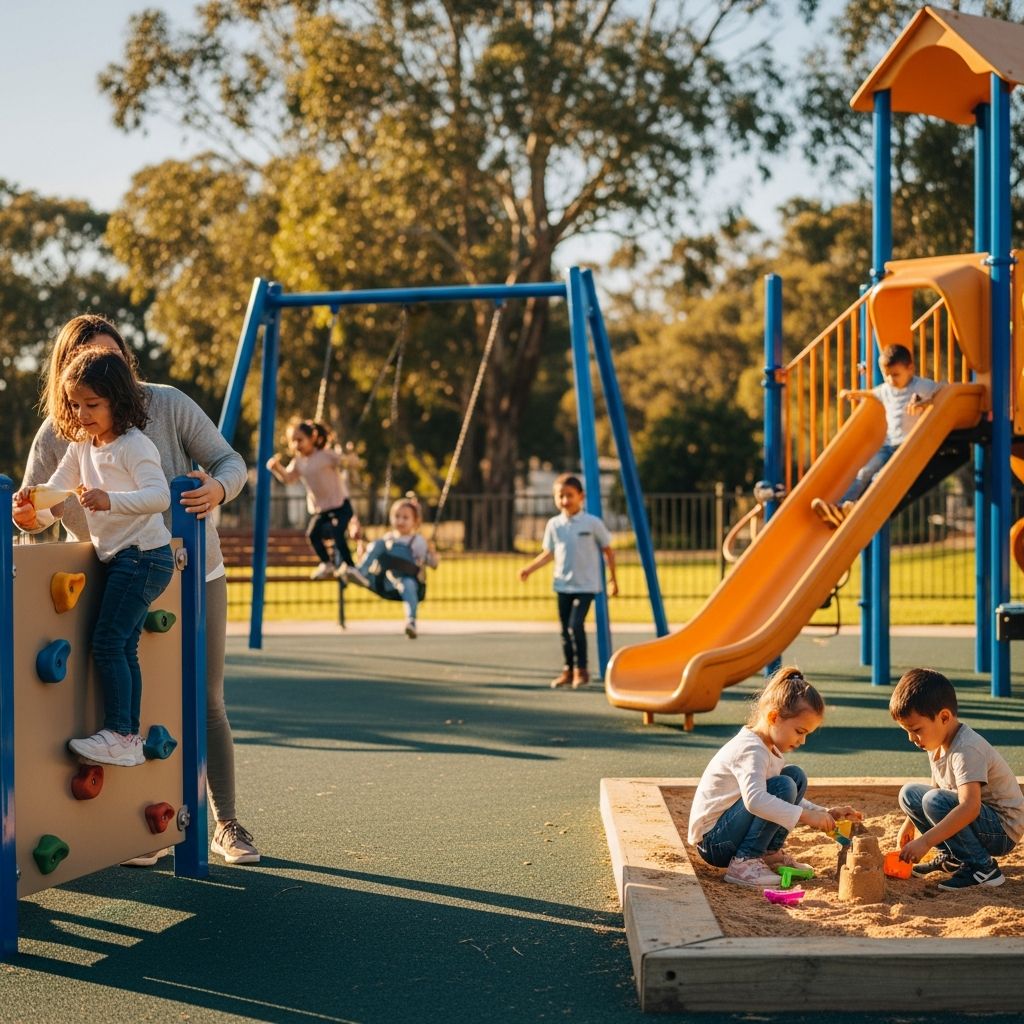
Playgrounds offer children a place to climb, swing, and explore, but they also present real risks when equipment is worn out, surfaces are too hard, or supervision is limited. This guide helps caregivers create safer play experiences without taking away the fun.
Why Playground Safety Matters
Playgrounds support children’s physical strength, coordination, and social skills, yet many injuries happen each year because of preventable hazards. With a bit of planning, parents can greatly reduce the chance of serious harm while still encouraging adventurous play.
Safety does not mean wrapping kids in bubble wrap; it means recognizing risks, teaching smart habits, and choosing environments that are designed with children in mind. When adults know what to look for, visits to the playground become less stressful and more enjoyable for everyone.
A Quick Safety Checklist Before Kids Start Playing
Take one or two minutes to scan the playground before your child runs off to the swings or slide. This brief pause often reveals issues that are easy to miss when you are distracted or in a hurry.
- Walk around the main equipment and look for sharp edges, loose bolts, or broken pieces.
- Check the ground surface under and around the equipment for hard or uneven spots.
- Notice how crowded the area is and whether older and younger children are separated.
- Scan for trash, glass, animal droppings, or other obvious hazards.
- Make a quick weather check: hot metal, slippery surfaces, or strong wind can all increase risk.
Understanding Safer Playground Surfaces
The surface beneath equipment is one of the most important safety features on any playground. Falls from climbing structures or swings are common, and a softer landing can mean the difference between a scare and a serious injury.
Look for surfaces that cushion landings and avoid areas where the ground feels as hard as a sidewalk. Natural grass often looks soft but can be packed down and provide little protection after heavy use or dry weather.
Common Surface Materials
| Surface type | Typical location | Safety considerations |
|---|---|---|
| Wood chips or mulch | Public parks, school playgrounds | Provides cushioning when deep enough; needs regular raking and replenishing to avoid bare patches. |
| Sand or pea gravel | Older or community-built playgrounds | Absorbs some impact but can scatter, hide debris, or be difficult for strollers and mobility devices. |
| Rubber tiles or poured rubber | Modern inclusive playgrounds | Even, springy surface that cushions falls and works well for wheelchairs and walkers; can become hot and may need cleaning. |
| Grass, dirt, or bare soil | Informal or older play areas | Often becomes compacted and hard; offers limited protection in a fall and may turn muddy or slippery. |
| Concrete or asphalt | Courts, walkways, parking areas | Too hard under play equipment; best avoided for climbing and jumping activities. |
When possible, choose play areas with a thick layer of loose-fill material like wood chips or a resilient rubber surface under and around all elevated equipment. If you can easily see the underlying ground or feel hard spots, treat that part of the playground as higher risk.
Checking Equipment: What Parents Should Look For
Attractive play structures are not always safe structures. Over time, weather, heavy use, and poor maintenance can weaken the equipment your child relies on for climbing and balance.
Use your eyes and hands to evaluate whether the equipment looks sturdy, secure, and appropriate for your child’s size and abilities. If something feels unsafe to you, it is worth keeping your child away from it until someone can fix the issue.
Basic Equipment Safety Signs
- Stability: Posts should be firmly set, without wobbling when you push them.
- Smooth surfaces: Wood should be free of splinters; metal should not have sharp edges, peeling paint, or heavy rust.
- Secure fasteners: Bolts and screws should not stick out where they can catch skin or clothing.
- Safe openings: Spaces between bars should be too small for a child’s head to get stuck, or large enough that a child cannot be trapped.
- Guardrails and barriers: Platforms that children can stand on should have railings or barriers to prevent falls from a height.
If you notice broken rungs, missing steps, sharp edges, or exposed concrete footings, treat the structure as off-limits and report the problem to the organization that manages the site, such as a school, city department, or homeowners’ association.
Choosing Age-Appropriate Areas
Playgrounds that mix toddlers, preschoolers, and older children in the same small area can quickly become chaotic. Younger children are still developing balance and judgment, while older kids move faster and take bigger physical risks.
Many modern playgrounds divide spaces by approximate age group. Even when they do not, parents can mentally assign certain structures to specific ages and gently steer children toward areas that match their size and skills.
Age Guidelines for Common Equipment
- Toddlers (about 1–3 years): Low platforms with short steps, small slides with guardrails, and baby swings with bucket seats.
- Preschoolers (about 3–5 years): Slightly higher platforms, short ladders, gentle climbers, and low horizontal bars.
- School-age children (5+ years): Taller climbers, more complex structures, overhead rings, and higher slides and swings.
When in doubt, watch how easily your child can climb up and get down without your physical help. If a structure demands constant lifting, pushing, or catching from an adult, it may not be a good fit yet.
Supervision Strategies That Actually Work
Being physically present at the playground is not the same as supervising. Effective supervision means staying alert, staying close enough to step in quickly, and anticipating trouble before it starts.
Children still need freedom to test their limits, so the goal is to guide rather than hover. With clear rules and a good vantage point, adults can support confident exploration while still preventing dangerous behavior.
Practical Supervision Tips
- Position yourself where you can see the entire area your child is using, including the base of slides and behind larger structures.
- Put phones away or limit their use to brief checks, especially when children are near high platforms or moving equipment.
- For younger children, stay within arm’s reach when they climb or try something new.
- Set simple rules in advance, such as “no pushing,” “one at a time on the slide,” and “wait your turn for the swings.”
- Watch for signs of fatigue or overstimulation, like more frequent falls or rough play, and suggest breaks when needed.
Safe Clothing and Gear for the Playground
What children wear can either reduce risks or quietly create new ones. Loose strings, dangling accessories, and certain types of shoes can catch on equipment or make it harder for kids to move safely.
A quick clothing check before leaving home or stepping onto the playground helps prevent preventable incidents such as strangulation, tripping, or slipping.
Helpful Clothing Guidelines
- Choose closed-toe shoes with good traction rather than sandals, flip-flops, or slippery dress shoes.
- Avoid long drawstrings on hoodies, pants, or hats that can get snagged on slides or climbing frames.
- Remove necklaces, long scarves, and purses or bags before children get on equipment.
- If a child rode a bike or scooter to the park, take off the helmet before climbing or using the slide.
- Use light layers on hot days and gloves on cold metal equipment to protect small hands from burns or extreme chill.
Using Slides, Swings, and Climbers Safely
Most serious playground injuries involve falls from heights or collisions around moving equipment. Teaching a few basic rules for each major type of equipment helps children develop safe habits that follow them from one playground to the next.
Adults can reinforce these rules calmly and consistently, and praise children when they use equipment correctly rather than only reacting when they make mistakes.
Slides
- Children should go down feet first, sitting upright, with one child on the slide at a time.
- Encourage kids to wait at the top until the bottom is completely clear.
- Check slide surfaces for excessive heat or ice before use; hot metal can burn and ice can cause sudden slips.
- Avoid sending children down on an adult’s lap, since a child’s leg or foot can catch on the side and twist.
Swings
- Keep a clear zone in front of and behind swings; teach children to walk around, not through, that space.
- One child per swing is safest, sitting upright and holding on with both hands.
- Discourage standing on swings or jumping out at the highest point.
- For babies and toddlers, use a bucket-style seat designed to support the torso and prevent slipping out.
Climbers and Monkey Bars
- Check that the surface below climbers is soft and deep enough to cushion a fall.
- Encourage one child per ladder or section of monkey bars to reduce pushing or sudden falls.
- Stand nearby the first time your child tries a new climbing challenge so you can spot them.
- Remind children to use both hands and to go one rung at a time, especially when they feel nervous.
Weather and Environmental Hazards
Even an otherwise safe playground becomes more dangerous in certain weather conditions. Heat, cold, rain, and poor visibility each change how equipment behaves and how children move.
Planning visits around the time of day and season can minimize these risks and keep kids more comfortable while they play.
Conditions to Watch For
- Heat: Metal slides, platforms, and railings can heat up enough to cause burns; test surfaces with your hand before your child uses them.
- Cold and ice: Icy rungs and platforms become extremely slippery, increasing the chance of sudden falls.
- Rain: Wet equipment and muddy surfaces reduce traction and can hide holes or obstacles.
- Sun exposure: Limited shade increases the risk of sunburn and overheating; bring water, hats, and sunscreen.
- Visibility: Dusk, heavy clouds, or poor lighting make it harder for you and your child to see edges, steps, and obstacles.
Handling Conflicts and Crowded Play
Busy playgrounds are great for social learning but can also lead to pushing, cutting in line, and collisions. Children are still developing impulse control and may not realize how their actions affect others.
Parents can help by modeling calm problem-solving and by reminding kids of simple rules that keep everyone safer when space is tight.
Helping Kids Share the Playground
- Encourage your child to wait turns for popular equipment rather than rushing or pushing.
- Teach children to use words like “Can I have a turn next?” or “I’m still using this” instead of grabbing.
- Step in if you see rough play near high platforms, climbers, or swings, where a shove could cause a serious fall.
- Consider moving to a quieter area if your child seems overwhelmed or repeatedly gets bumped or knocked over.
What to Do When a Child Gets Hurt
Even on the safest playground, minor injuries such as scrapes and bruises are part of normal childhood. Parents can prepare for these moments so that they can respond calmly when something happens.
A small, basic first-aid kit in your bag or car can make it easier to clean and cover minor wounds quickly so children can either return to play or head home comfortably.
Responding to Playground Injuries
- Stay calm and bring the child to a safe spot away from moving equipment or crowds.
- Check for signs of serious injury, such as difficulty walking, dizziness, severe pain, heavy bleeding, or loss of consciousness.
- For bumps and bruises, apply a cold pack wrapped in a cloth and watch for swelling or increasing pain.
- For cuts and scrapes, rinse with clean water, gently remove dirt, and cover with a bandage if needed.
- Seek urgent medical attention for suspected broken bones, head injuries, or any situation where you are unsure about the seriousness of the injury.
Creating a Family Safety Plan for Playgrounds
Talking about safety before arriving at the park helps children understand expectations and gives them a sense of control. A short family “playground plan” can make every outing more predictable and less stressful.
Keep the plan simple, repeat it often, and adjust it as children grow and gain experience. Involve them in setting rules so that they feel like partners rather than passive recipients of instructions.
Ideas for a Simple Family Plan
- Agree on a meeting spot in case anyone gets separated, such as a specific bench or tree.
- Set ground rules about how far children may roam and which areas need an adult nearby.
- Establish a signal, like a phrase or hand sign, that means “come back to me now.”
- Review equipment rules, such as “feet first down the slide” and “no walking in front of swings,” before play begins.
- End the outing with a brief check-in: ask what felt fun, what felt scary, and what they would do differently next time.
Frequently Asked Questions About Playground Safety
How often should I inspect the playground my child uses?
Do a quick visual check every visit, even if you go there frequently. Weather and heavy use can change conditions quickly, and something that was safe last week might be loose, broken, or worn out today.
Is it safe for children to use playgrounds without an adult nearby?
Young children should always have an attentive adult at the playground, because they may not recognize hazards or know how to respond if they get hurt. Older children may sometimes play with less direct supervision, but it is still helpful to have an adult within reach or at least within sight and easy calling distance.
What if there is only hard surface under the equipment?
If the ground is concrete, asphalt, or packed dirt under tall equipment, the risk of serious injury from a fall is much higher. In that situation, consider restricting your child to lower, safer parts of the playground or finding another location with a softer surface for climbing and swinging.
How can I teach my child to be safe without scaring them?
Use simple, positive language that focuses on what they can do rather than only listing things they must avoid. Demonstrate safe behavior yourself, praise smart choices, and treat mistakes as learning opportunities instead of reasons for punishment.
When should I report a playground hazard, and to whom?
Report any broken equipment, exposed concrete, missing guardrails, or other serious hazards as soon as you see them. Contact the organization responsible for the site, such as the local parks department, school administration, or property manager, and be as specific as possible about the location and the problem.
Helping Kids Love Playgrounds Safely
Safe playground experiences teach children that their bodies are strong, capable, and trustworthy. With thoughtful supervision, age-appropriate challenges, and basic rules, parents can support adventurous play while keeping serious injuries rare.
By consistently checking surfaces, inspecting equipment, and talking openly with children about smart choices, families can turn playground visits into a regular source of joy, exercise, and confidence-building for years to come.