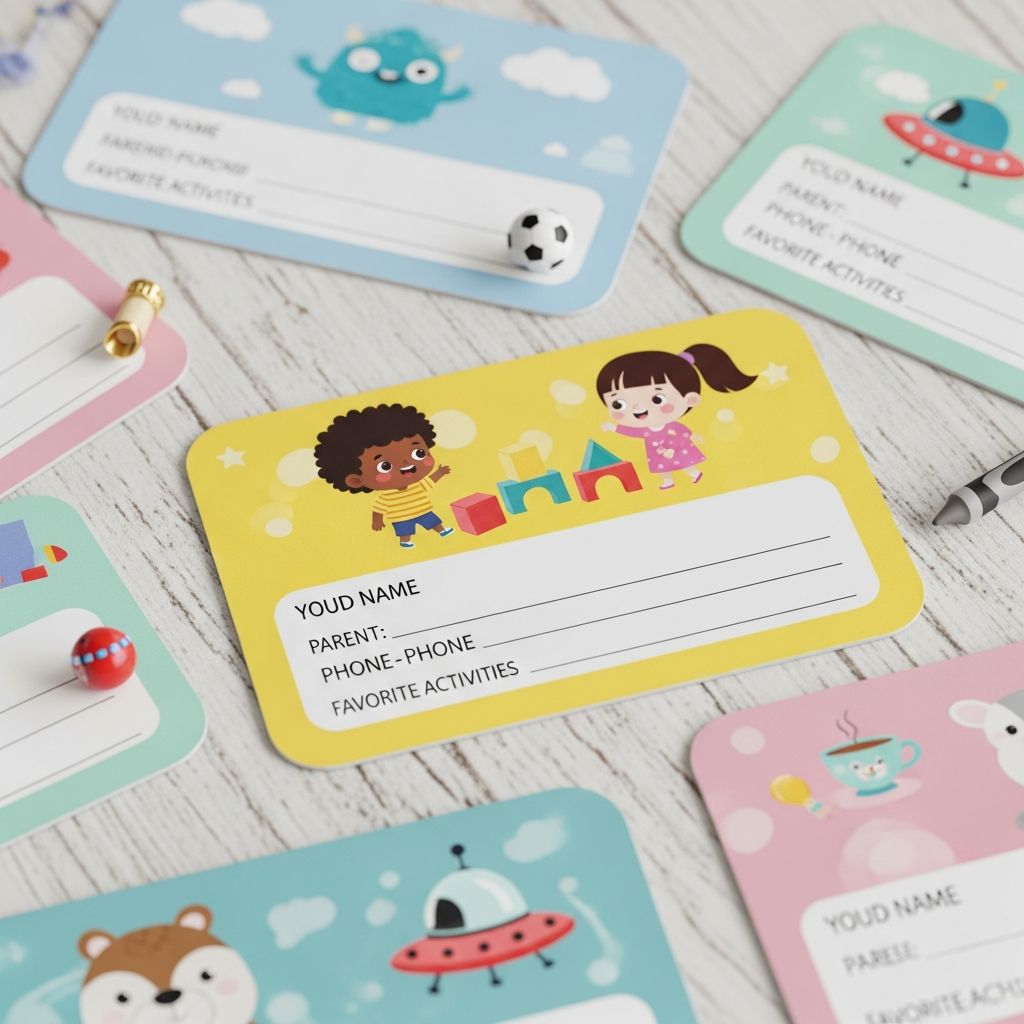
Understanding the Playdate Business Card Phenomenon
In recent years, a creative parenting solution has emerged that transforms the way families approach children’s social gatherings. Parents are discovering that small, personalized cards containing contact information can dramatically simplify the process of arranging playdates and fostering friendships among young children. This modern approach addresses a genuine challenge many parents face: coordinating social activities while managing their own comfort levels and busy schedules.
The concept is straightforward yet ingenious. Instead of awkwardly exchanging phone numbers at playgrounds or schools, parents create miniature contact cards featuring their child’s name, parent contact details, and sometimes additional information like gaming usernames or availability for scheduled playdates. Children then distribute these cards to potential friends, eliminating the initial social friction that often accompanies friendship-building in childhood.
The Core Benefits of Implementing Playdate Cards
Playdate business cards offer multiple advantages for families navigating the social landscape of childhood. Understanding these benefits helps explain why this trend has gained such significant traction among parents from diverse backgrounds.
Reducing Social Friction for Introverted Parents
One of the primary advantages centers on supporting parents who identify as introverted. These parents often experience genuine anxiety when initiating conversations with other adults at schools, parks, or community events. The playdate card eliminates this requirement by allowing children to take the lead in social connection, shifting the responsibility from parent-to-parent interaction to child-to-child exchange. This reduction in required social effort can be transformative for parents managing introversion while supporting extroverted children who naturally seek social connections.
Streamlining Scheduling and Coordination
The mechanics of arranging playdates often involve multiple steps: identifying interested families, remembering contact information, tracking availability, and coordinating logistics. Playdate cards consolidate essential scheduling information into one portable format. Parents no longer need to scramble for paper, phones, or ways to remember another person’s contact details when a meaningful connection has been made. This efficiency proves especially valuable during busy periods or at multiple social venues throughout the week.
Creating Professional-Quality Impressions
The formal presentation of a business-style card conveys intentionality and professionalism. Rather than hastily scribbled information on torn paper, a thoughtfully designed playdate card demonstrates care and organization. Many parents report positive reception from other adults who appreciate the clarity and charm of a dedicated contact card designed specifically for this purpose.
Evolution of a Trending Parenting Strategy
The playdate business card trend gained significant visibility through social media platforms, where parents began sharing their experiences and creative designs. Content creators showcased cards featuring colorful designs, child photographs, witty taglines, and strategic information placement. The viral nature of these posts encouraged other parents to develop their own versions, creating a widespread movement across communities and social networks.
What makes this trend particularly noteworthy is its spontaneous emergence from parental need rather than commercial marketing. Parents independently recognized a genuine problem—the awkwardness and inefficiency of scheduling playdates—and developed practical solutions. This organic growth reflects how modern parenting communities solve challenges through shared creativity and mutual support.
What Information Should Playdate Cards Include?
While basic contact cards contain only essential information, many parents enhance their designs with additional details that facilitate better planning and connection. Consider the following elements when creating playdate cards:
- Child’s Name and Age: Essential identifying information that other children and parents will reference
- Parent Contact Information: At least one phone number and email address for scheduling confirmation
- Child’s Photograph: A small picture helps other families connect faces with names
- Availability Notes: Specific days or times when playdates are typically possible
- Gaming Usernames: Relevant gaming or online platform names if your child plays with peers online
- Allergy or Dietary Information: Critical details for parents providing snacks or meals during playdates
- Creative Taglines: Fun phrases like “Let’s Play!” or “Have Your People Call My People” add personality
- Home Address or Location Notes: Optional neighborhood information to help families determine proximity
Creating Professional-Quality Playdate Cards
Parents have multiple options for designing and producing playdate cards, ranging from simple to elaborate approaches. Understanding these options helps families choose methods aligned with their preferences and budgets.
Digital Design Platforms
Services like Canva offer pre-designed templates specifically created for playdate cards. These platforms provide drag-and-drop functionality, eliminating the need for advanced design skills. Parents can customize colors, fonts, images, and text within minutes, then either print locally or order professional printing through the platform.
Online Marketplace Solutions
Specialized Etsy shops have emerged offering pre-made designs and custom creation services. These sellers understand the playdate card market and provide professionally designed templates that parents can personalize with their child’s specific information. This option suits parents seeking polished designs without doing design work themselves.
Traditional Printing Services
Standard printing companies like Vistaprint or local print shops can produce playdate cards using parent-provided designs or design templates. This approach guarantees high-quality physical cards suitable for frequent distribution.
Home Printing Methods
For budget-conscious families, printing cards at home using standard paper or specialty cardstock and a personal printer represents the most economical option. While quality may vary compared to professional printing, homemade cards often carry personal charm that other families appreciate.
Addressing Common Concerns and Criticisms
While playdate cards have gained significant popularity, some parents and observers express reservations about the trend. Understanding these perspectives provides balanced context.
Concerns About Formality and Authenticity
Some individuals feel that business-style cards introduce excessive formality to childhood friendships. Critics argue that authentic connections develop through organic social interaction rather than structured contact exchange. They suggest that playdate cards might prioritize quantity of social connections over quality of genuine friendship development.
Privacy and Safety Considerations
Parents reasonably worry about distributing contact information widely. Cards containing home addresses, phone numbers, or specific availability details might feel like excessive personal disclosure to some families. These concerns reflect legitimate safety considerations that parents should thoughtfully evaluate when deciding what information to include.
Socioeconomic Accessibility
The trend potentially creates pressure for families who cannot afford printed cards or custom designs. Children without professionally designed cards might feel excluded from a practice that peers embrace, raising questions about whether this trend inadvertently creates social hierarchies based on resources.
Ideal Situations for Utilizing Playdate Cards
Playdate cards prove most effective in specific contexts where they address genuine challenges. Recognizing these situations helps parents decide whether the strategy suits their family needs.
| Situation | Why Playdate Cards Help |
|---|---|
| Moving to a New Community | Helps children establish initial connections when parent networks are underdeveloped |
| Introverted Parent with Extroverted Child | Reduces parent social burden while supporting child’s natural social tendencies |
| Large School or Activity Settings | Facilitates connection-building in environments with numerous potential friends |
| Only Children | Assists families seeking to create robust friend networks for socially isolated children |
| Busy Family Schedules | Streamlines coordination by consolidating essential scheduling information |
Real Parent Experiences and Success Stories
Many parents report transformative results from implementing playdate card strategies. Families have shared accounts of children developing lasting friendships, increased social confidence, and easier scheduling coordination. Parents describe receiving positive feedback from other adults who appreciated the clarity and thoughtfulness of the contact card approach.
Educators and early childhood specialists have noted that playdate cards support children’s social development by encouraging them to take initiative in friendship-building. Rather than relying entirely on parents to facilitate connections, children learn networking skills and social confidence by personally distributing cards and expressing interest in future interactions.
Creative Design Variations and Personalization Options
As the playdate card trend evolved, parents developed numerous creative variations reflecting their family values and aesthetics. Some incorporate child artwork or interests, creating cards that truly represent the child’s personality. Others use themed designs aligned with favorite characters, hobbies, or family cultural backgrounds. These personalized touches transform functional contact cards into memorable keepsakes that reflect individual family identity.
Frequently Asked Questions About Playdate Business Cards
Are playdate business cards appropriate for all age groups?
Playdate cards work best for children ages 4-12, though adaptations can suit younger or older children depending on developmental readiness and social context. Younger children benefit from adult support in understanding and distributing cards, while older children can independently manage the process.
How many playdate cards should parents create?
Consider creating 25-50 cards initially, adjusting based on how quickly they distribute and your child’s social circles. Having extras available for unexpected social opportunities prevents running out when your child wants additional cards.
Can playdate cards include a home address?
Including addresses is optional and depends on your family’s comfort level and safety considerations. Phone and email provide sufficient contact information for most families to arrange meetings at neutral locations or through initial conversation.
What should parents do if they receive a playdate card from another family?
Respond within a reasonable timeframe if you’re interested in scheduling a playdate. Even if timing doesn’t work immediately, acknowledging the card shows appreciation for the family’s effort and leaves the door open for future connection.
Do playdate cards replace traditional friendship-building methods?
Playdate cards complement rather than replace organic friendship development. They facilitate initial connection but authentic friendships still develop through repeated positive interactions, shared interests, and quality time together.
Are custom Etsy playdate cards worth the investment?
Custom designs offer professional quality and personalization that many parents appreciate, though homemade or template-based cards serve the same functional purpose at lower cost. Choose based on your budget and design preferences rather than necessity.
Practical Implementation Tips for Success
Parents implementing playdate cards achieve better results by following several evidence-based strategies. Keep cards accessible in your child’s backpack or your own bag for spontaneous distribution opportunities. Encourage your child to hand out cards personally, supporting their confidence and social development. Follow up proactively within 24 hours when other parents indicate interest, before contact information becomes misplaced. Store extra cards in multiple locations so your child always has access when meeting new potential friends.
Looking Forward: The Future of Childhood Networking
The playdate business card trend reflects broader evolution in how modern families approach childhood social development. As parenting styles increasingly emphasize proactive support for children’s emotional and social needs, practical tools like contact cards emerge as solutions to genuine challenges. Whether this specific trend continues or evolves into new formats, the underlying principle remains valuable: intentional, organized approaches to facilitating meaningful childhood friendships serve families navigating complex social landscapes.
References
- Parents Are Now Making Business Cards To Get Their Kids Playdates — CafeMom. 2024. https://cafemom.com/parenting/parents-are-now-making-business-cards-to-get-their-kids-playdates-so-much
- Playdate Business Cards Might Be The Solution To Introverted Parents’ Woes — Scary Mommy. 2024. https://www.scarymommy.com/parenting/playdate-business-cards-trend
- Playdate Cards Are Trending—Here’s How Parents Use Them — The Every Mom. 2024. https://theeverymom.com/playdate-cards/
- Parents Now Using Playdate Business Cards For Kid Friendships — WJRZ. September 6, 2024. https://wjrz.com/2024/09/06/parents-using-playdate-business-cards/