Building Scientific Foundations Through Play-Based Exploration
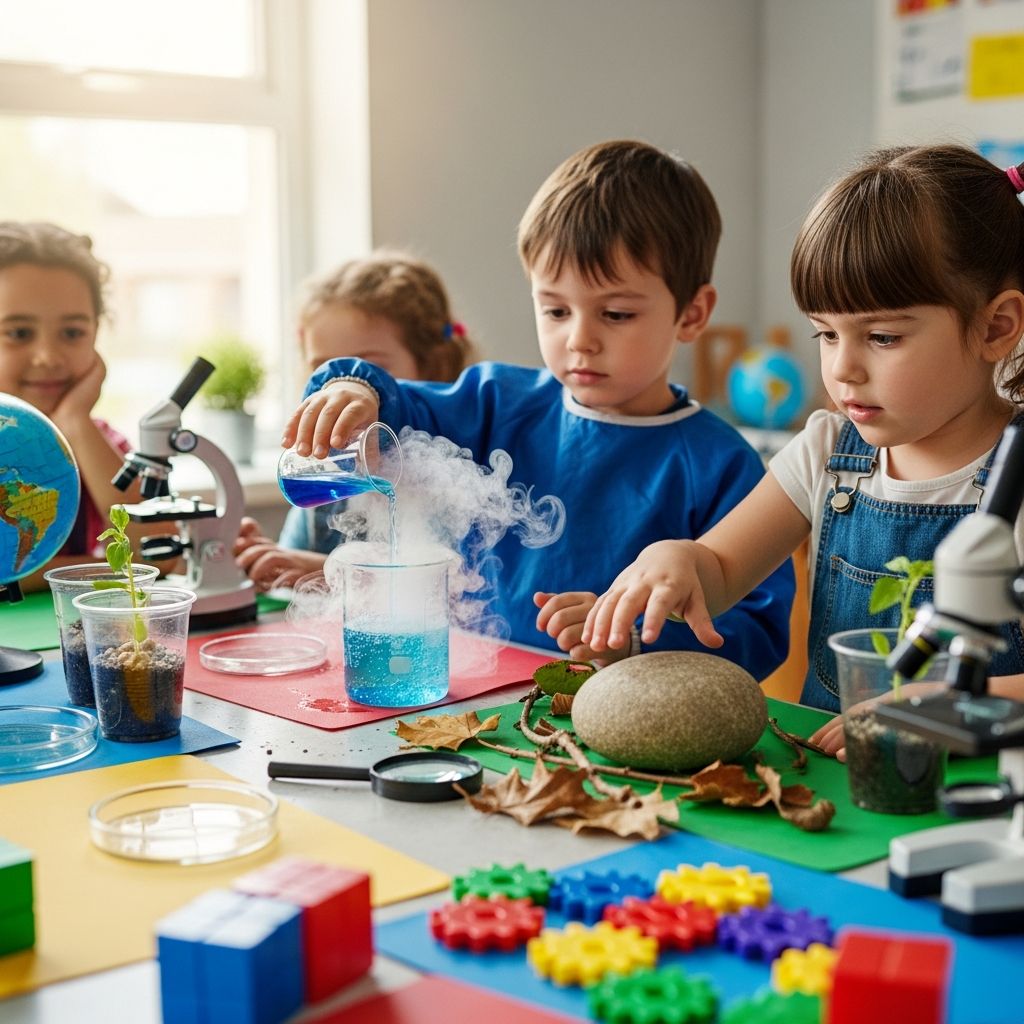
Young children are natural scientists. They investigate their surroundings with endless curiosity, asking questions about how things work and why phenomena occur. Science activities designed for toddlers and preschoolers harness this innate drive to explore while introducing foundational concepts in physics, chemistry, and natural observation. Rather than relying on textbooks or abstract lessons, effective early childhood science relies on direct sensory experiences and hands-on experimentation that make learning tangible, memorable, and genuinely enjoyable.
The value of introducing science at this developmental stage extends far beyond acquiring facts. When young children engage in structured exploration activities, they develop critical thinking skills, learn to make predictions based on observations, and build confidence in their ability to understand the world around them. These experiences create positive associations with scientific inquiry that can influence educational trajectories for years to come.
Foundational Concepts: Why Science Matters in Early Childhood
Early exposure to scientific thinking establishes neural pathways that support future academic achievement across multiple domains. When children participate in hands-on experiments, they engage multiple sensory systems simultaneously—seeing, touching, hearing, and sometimes smelling or tasting. This multisensory engagement strengthens memory formation and deepens conceptual understanding.
Additionally, science activities promote the development of executive function skills including planning, prediction, and evaluation. When a child predicts whether an object will sink or float before testing it, they are engaging in hypothesis formation. When they observe the actual outcome, they practice reconciling expectations with reality—a cornerstone of scientific thinking that extends into all academic disciplines.
Water-Based Investigations: Exploring Fundamental Physical Properties
Water serves as an ideal medium for introducing young children to basic physics principles. Its transparency allows clear observation, its safety profile supports independent exploration, and its universal familiarity makes it an accessible entry point for scientific inquiry.
Buoyancy and Density Exploration
One of the most engaging water-based activities involves testing various objects to determine whether they sink or float. This experiment introduces children to buoyancy without requiring technical vocabulary. Begin by gathering a collection of objects with varied material compositions—plastic toys, wooden blocks, metal spoons, rubber balls, and cork pieces. Invite children to make predictions about each item before placing it in water, then observe the results together.
This seemingly simple activity builds observational skills and encourages children to think about properties that determine whether objects float. Some children may notice that heavier items sometimes float (cork) while lighter items sometimes sink (metal), prompting deeper inquiry into what actually determines buoyancy. Extend the activity by asking follow-up questions: “What would happen if we added more objects to the container? Could we make a floating object sink by adding weight to it?”
Separation and Solubility Investigations
Exploring how different liquids interact teaches children about molecular behavior and the concept of solubility. Create a simple mixing experiment by providing various liquids—water, milk, oil, vinegar, and juice—along with small cups and spoons. Allow children to combine liquids and observe what happens. Some mixtures blend seamlessly while others separate into distinct layers, providing visual evidence of different molecular properties.
The classic oil and water experiment demonstrates immiscibility in an especially dramatic fashion. Pour equal amounts of water and oil into transparent jars, add food coloring to the water to enhance visibility, and seal the jars. When children shake the jars, they observe the liquids temporarily mixing before naturally separating into layers. This experiment introduces the concept that not all substances combine readily, laying groundwork for future chemistry understanding.
Temperature and State Changes
Melting ice cubes represent one of the simplest yet most profound scientific experiences for toddlers. The visible transformation from solid to liquid fascinates young children and introduces the concept of states of matter without requiring formal terminology. Provide ice cubes, shallow containers of water, and small utensils like slotted spoons and funnels. Encourage children to observe the ice’s properties: its temperature, hardness, and translucency. As ice melts, discuss how the material changes while remaining the same substance.
To extend this exploration, try freezing objects within ice cubes before melting. Children become invested in discovering what’s encased in each ice cube, providing motivation for careful observation throughout the melting process. You might freeze buttons, coins, or plastic insects to create an element of discovery.
Sensory Science: Exploring Color, Texture, and Light
Color-based experiments offer rich opportunities for scientific observation while engaging children’s natural aesthetic sensibilities. These activities bridge scientific investigation with artistic expression, appealing to diverse learning preferences.
Capillary Action and Color Transport
The “rainbow walk” experiment demonstrates capillary action—the movement of liquid through porous materials—in a visually stunning way. Arrange strips of paper toweling to connect cups of water, each containing different food coloring. Place white paper towels or coffee filters as bridges between the cups. Over several hours, children observe colored water traveling up the paper towels and mixing to create new colors at the intersections. This experiment introduces multiple concepts: color mixing, liquid movement, and patience in scientific observation.
Chemical Reactions and Color Change
The “dancing milk” experiment combines color observation with introduction to surface tension and chemical properties. Pour milk into a shallow dish, add drops of food coloring at various points, and provide toothpicks dipped in dish soap. When the soap-covered toothpick touches the milk’s surface, the colors explosively swirl and dance across the dish. Children observe rapid color changes and mixing, discovering that small amounts of certain substances can produce dramatic visible effects.
Light Refraction and Prisms
Introducing children to how light behaves opens an entirely new dimension of scientific exploration. Using water-filled transparent containers or actual prisms in sunlight demonstrates how light refracts and separates into rainbow colors. This experiment teaches that white light contains multiple colors, introducing concepts of electromagnetic radiation in an accessible, visually engaging format.
Material Science: Understanding How Things Stick, Mix, and Transform
Investigations into materials help children understand the physical properties of everyday substances and introduce basic chemistry concepts.
Adhesion and Stickiness
Sticky notes offer an accessible tool for investigating adhesion. Place sticky notes on various surfaces—walls, windows, plastic containers, fabric, and wood. Observe which surfaces hold the notes securely and which cause them to fall. Discuss why certain surfaces work better than others. This investigation introduces the concept that different materials have different properties affecting how other materials interact with them.
Non-Newtonian Fluids
Creating playdough and slime introduces children to materials that behave as both solids and liquids depending on how force is applied. These substances fascinate young learners because they challenge their developing understanding of how matter should behave. The hands-on manipulation involved in creating and playing with these materials reinforces sensory learning and concept development.
Color Mixing and Pigment Exploration
Creating different colors of playdough with food coloring allows children to explore color theory at a developmental appropriate level. As they mix colors together, they observe primary colors combining to create secondary colors. This tactile approach to color science engages children who might not respond to visual-only color mixing demonstrations.
Natural World Observations: Connecting to Outdoor Science
The natural environment provides endless opportunities for scientific investigation and observation.
Nature Walks and Collection-Based Learning
Guided nature walks encourage children to observe and collect natural materials—leaves, flowers, rocks, and seeds. Upon returning indoors, organize a discussion about the collected items. Examine the leaves’ different shapes, colors, and textures. Compare rock sizes and surfaces. Observe flower structures and colors. This structured observation teaches children to notice details and appreciate the diversity present in nature. Create a simple sorting activity where children group items by color, size, or texture, introducing classification—a fundamental scientific skill.
Bird Observation and Habitat Study
Creating simple bird feeders from recycled materials and observing visiting birds introduces ecology and animal behavior concepts. Discuss the different bird species that visit, their colors and sizes, and what foods they prefer. This activity develops observation skills while promoting environmental awareness and appreciation for wildlife.
Weather Observation and Measurement
Creating simple weather measurement tools introduces children to the scientific practice of data collection. A basic rain gauge made from a clear plastic container and ruler allows children to measure rainfall over time. Creating a simple windsock from colorful fabric demonstrates wind’s presence and behavior. These activities introduce measurement concepts and weather science in tangible, observable ways.
Physical Science Through Play: Exploring Forces and Motion
Understanding how objects move and interact introduces fundamental physics concepts.
Magnetism Exploration
A simple homemade compass demonstrates Earth’s magnetic field in a remarkable way. Float a magnetized needle on a cork in a water-filled bowl. The needle orients to point north, revealing the invisible force of magnetism. This experiment generates questions and wonder about forces we cannot see but can observe through their effects.
Wind and Air Movement
Creating windsocks and observing their movement in wind introduces children to invisible forces. Constructing simple ramps and rolling objects down them at different angles demonstrates how inclines affect motion. These investigations build intuitive physics understanding.
Gas Exploration: Understanding Invisible Matter
Gases present unique challenges for young learners because their invisibility makes them harder to conceptualize than solids or liquids.
Carbonation and Bubble Observation
The “dancing raisins” experiment makes gas behavior visible and entertaining. Drop raisins into clear carbonated water and observe them dancing up and down as bubbles attach and detach from their surfaces. This experiment visually demonstrates that gases exist, have properties, and can interact with other materials in observable ways.
Air Pressure and Expansion
Simple experiments demonstrating air’s physical properties help children understand that air occupies space and has substance. Inverting a cup of water held by paper demonstrates air pressure. These investigations build conceptual foundations for future physics learning.
Guidelines for Successful Science Exploration With Young Children
| Principle | Application |
|---|---|
| Minimize Prep Requirements | Choose activities using household materials already available. Complex setups discourage participation. |
| Prioritize Safety | Ensure all materials are non-toxic and appropriate for the age group. Supervise closely during all activities. |
| Follow Children’s Interests | Allow exploration to extend naturally rather than rushing to conclusions. Children learn more when intrinsically motivated. |
| Encourage Prediction | Before observing outcomes, ask children what they think will happen. This develops hypothesis formation skills. |
| Embrace Mess | Water, soil, and art materials create learning opportunities. Accept that active learning involves some cleanup. |
| Repeat Favorites | Children benefit from revisiting activities. Repetition deepens understanding and reveals new observations. |
Frequently Asked Questions
What age can children start participating in science activities?
Even infants benefit from sensory exploration. Toddlers as young as 12-18 months can participate in simple water play and texture exploration. Preschoolers (ages 3-5) can engage in more structured experiments with prediction and observation components.
How long should science activities last?
For toddlers, 5-10 minutes of focused exploration is appropriate. Preschoolers can sustain attention for 15-20 minutes. Follow children’s interest levels rather than adhering to strict time limits.
Do I need special materials or equipment?
No. Most effective early childhood science activities use everyday household items—water, food coloring, paper, plastic containers, and natural materials. Avoiding expensive equipment keeps activities accessible and sustainable.
What if my child isn’t interested in the activity I planned?
Redirect to a different activity or allow free exploration of the materials. Forced participation undermines the goal of building positive associations with science. Children learn best when intrinsically motivated.
How can I document children’s learning during science activities?
Simple observations, drawings, or photographs capture learning moments. Children can draw what they observed or predict. These records help track developing understanding and provide conversation starters.
Can science activities support children with different learning styles?
Absolutely. Hands-on science naturally accommodates kinesthetic learners. Adding verbal discussion supports auditory learners, while drawing and visual observation support visual learners. Well-designed activities engage multiple modalities simultaneously.
References
- 20 Science Activities for Preschoolers — Bright Horizons. 2024. https://www.brighthorizons.com/article/education/science-for-preschoolers
- Preschool Science Experiments for Play-Based Learning — Accelerate Learning. 2024. https://blog.acceleratelearning.com/7-easy-science-experiments-for-preschoolers
- Easy Science Activities for Toddlers — Lovevery. 2024. https://blog.lovevery.com/child-development/easy-science-activities/
- 9 Preschool Science Activities and Experiments — Famly. 2024. https://www.famly.co/us/blog/preschool-science-activities-and-experiments
- 21 Easy Preschool Science Activities and Experiments — Brightwheel. 2026. https://mybrightwheel.com/blog/science-activities-for-preschoolers
- Head Start Early Learning Outcomes Framework — U.S. Department of Health and Human Services Administration for Children and Families. 2015. https://eclkc.ohs.acf.hhs.gov/sites/default/files/pdf/head-start-early-learning-outcomes-framework.pdf