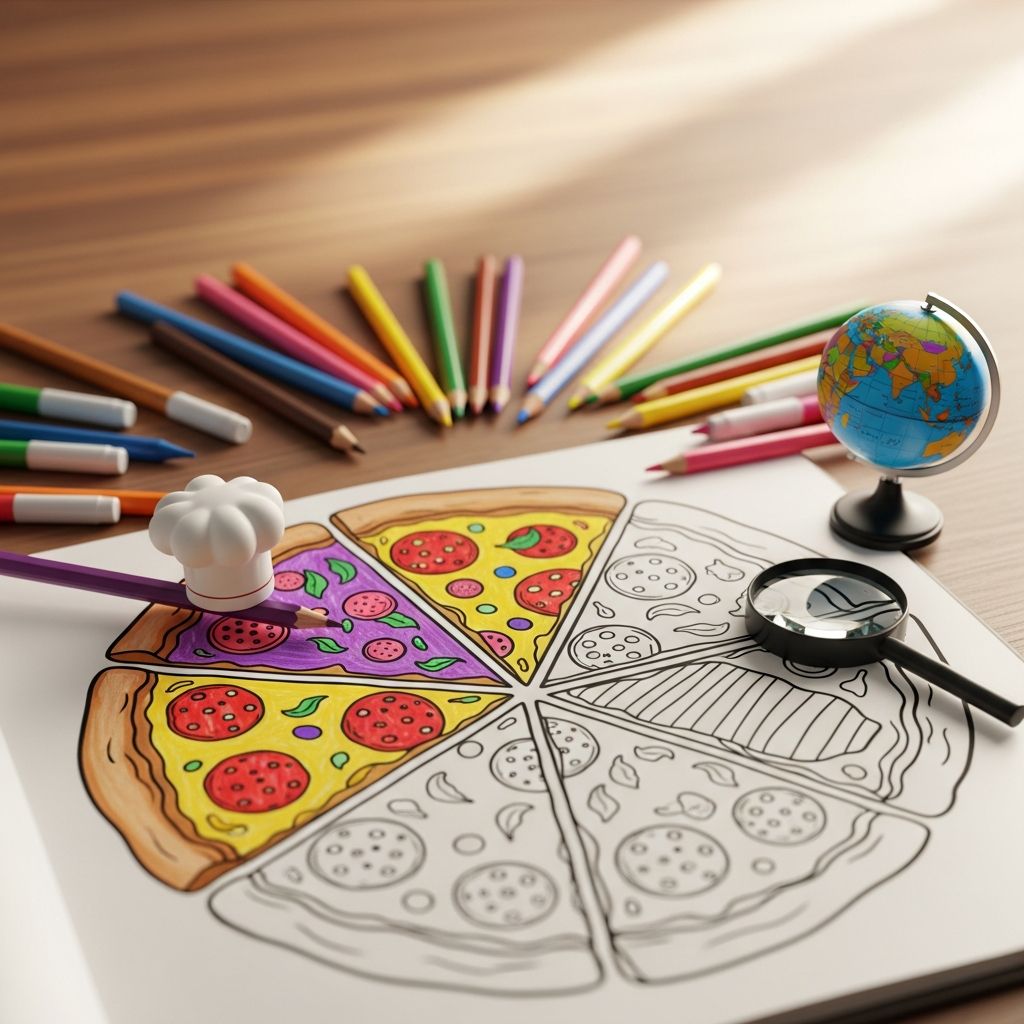
Pizza coloring pages are more than just cute food pictures to color; they are a playful way to help kids relax, express themselves, and practice important early learning skills. Whether you are a parent, teacher, or caregiver, a simple pizza-themed sheet can turn a rainy afternoon, a classroom center, or a birthday party into an engaging and educational experience.
Why Kids Love Pizza-Themed Coloring Pages
Pizza is a universal favorite for kids, which makes it the perfect subject for coloring pages. When children see a familiar, delicious food on paper, they instantly feel excited and curious about the activity in front of them.
- Familiar and fun theme: Pizza is easy for kids to recognize, describe, and personalize, which makes it ideal for even very young artists.
- Endless design options: From plain cheese slices to fully loaded pies with silly faces, pizza designs can be as simple or as detailed as you need.
- Perfect for all ages: Toddlers can color large shapes, while older children can enjoy intricate toppings, patterns, and background scenes.
Because pizza is so customizable, each child can create a unique version of the same page. This encourages kids to feel proud of their work and eager to share their creations with others.
Educational Benefits of Pizza Coloring Pages
Coloring may look like pure fun, but pizza printables can support several early learning skills at once. With a bit of intention, a simple coloring session can become a hands-on mini lesson.
- Fine motor skills: Holding crayons, markers, or colored pencils and staying within the lines helps strengthen the small muscles in a child’s fingers and hands.
- Hand-eye coordination: Choosing a section and carefully filling it with color trains children to control their movements more precisely.
- Color recognition and vocabulary: Talking about red tomatoes, green peppers, yellow cheese, and brown crust expands language skills and understanding of color words.
- Attention and patience: Completing a whole slice or a detailed pizza scene teaches persistence and the satisfaction of finishing a task.
Pizza themed sheets can also be adapted to support math, early literacy, and basic science concepts by adding numbers, letters, or simple observation tasks to the artwork.
Creative Pizza Coloring Ideas for Different Ages
One of the best things about pizza coloring pages is how easily they can be tailored to fit various age groups and ability levels. Adjust the level of detail and the type of prompts you give to keep children challenged without overwhelming them.
For Toddlers and Preschoolers
- Use large, simple outlines of whole pizzas or single slices with a few big toppings.
- Offer thick crayons or washable markers that are easy for small hands to grasp.
- Focus on naming colors and foods, such as “Can you color the cheese yellow?” or “Let’s find the red pepperoni circles.”
At this stage, process matters more than precision. Encourage children to enjoy the movement of coloring and the fun of picking their favorite colors, even if they are not realistic.
For Early Elementary Kids
- Provide pages with more toppings, patterns on the crust, and simple backgrounds like plates, tables, or party decorations.
- Add easy instructions, such as “Color 3 mushrooms brown” or “Use two different colors for the peppers.”
- Invite kids to draw extra toppings or write their name on the pizza box in the picture.
At this age, children can begin to follow multi-step directions and enjoy the challenge of more detailed designs. This helps build confidence and a sense of achievement.
For Older Kids and Tweens
- Offer more complex designs with intricate toppings, shading opportunities, or humorous characters like pizza slices with faces.
- Encourage kids to experiment with shadows, highlights, and textures to make the cheese and crust look more realistic.
- Turn the page into a mini art project, asking them to design a logo, menu, or pizza box cover within the same sheet.
Older kids often appreciate activities that feel less like “little kid coloring” and more like personal art projects. Giving them creative control over style and layout keeps them engaged.
Using Pizza Coloring Pages to Teach Math
Pizza is a natural fit for math, especially concepts like fractions, counting, and simple addition. Visual slices and toppings give children concrete examples of numbers and parts of a whole.
| Concept | How to Use a Pizza Coloring Page |
|---|---|
| Counting | Ask children to color and then count the number of pepperoni slices, olives, or mushrooms. |
| Addition | Have kids draw 2 mushrooms and then add 3 more, then color all 5. |
| Fractions | Divide the pizza into equal slices and color half, one quarter, or three quarters in different colors. |
| Patterns | Create color patterns across toppings, such as red-green-red-green pepperoni and peppers. |
You can even turn math practice into a small game. For example, roll a die to decide how many slices to color or how many toppings to add, and then ask children to tell you how many are on the pizza in total.
Boosting Literacy with Pizza Printables
Pizza coloring sheets can also serve as a playful introduction to reading and writing. Combining coloring with simple words or short prompts offers a gentle way to reinforce literacy skills without feeling like a worksheet.
- Letter recognition: Add large letters like “P is for Pizza” for kids to trace or color.
- Labeling parts: Invite children to label crust, cheese, sauce, and toppings on the page.
- Descriptive writing: Ask older kids to write a short description or a fun name under their pizza, such as “Super Veggie Volcano” or “Cheesy Rainbow Delight.”
These small literacy add-ons turn a simple coloring page into a multi-skill activity. Children see that reading and writing can connect with familiar, enjoyable topics from everyday life.
Fun Theme Ideas for Pizza Coloring Pages
To keep kids excited, rotate different themes and storylines around your pizza pages. Changing the context of the same basic image makes the activity feel fresh and new.
- Seasonal pizza: A winter pizza with snowflake-shaped toppings or a summer picnic pizza on a checkered blanket.
- Holiday pizza: Heart-shaped pizza for Valentine’s Day, a pumpkin-shaped pizza for fall, or star-shaped toppings for New Year celebrations.
- Animal pizza chefs: Cats, dogs, or dinosaurs wearing aprons and tossing pizza dough.
- Fantasy pizza: Magical toppings like glittery stars, rainbow cheese, or toppings inspired by outer space.
- Restaurant scene: A pizza shop with a menu board, tables, and customers for kids to color and personalize.
Giving the page a story, such as “This pizza shop is opening today” or “This is a pizza from another planet,” invites kids to add their own details and talk about their ideas as they color.
Classroom and Homeschool Uses
Pizza coloring pages can fit seamlessly into lesson plans and centers. They work well as quiet independent tasks, early finisher activities, or as part of a themed learning week about food, community helpers, or shapes.
- Math and literacy centers: Pair coloring pages with simple task cards asking students to color specific numbers of toppings or to read and follow short directions.
- Art extension: Let learners design their own pizza, then share with the class why they chose certain toppings and colors.
- Project-based learning: Use pizza pages in a pretend restaurant project, where students create menus, set prices, and take “orders” from classmates.
Because the theme is so flexible, teachers can differentiate activities by giving simpler or more complex pages depending on the child’s developmental level.
Party and Playdate Activity Ideas
Pizza coloring sheets also shine at birthday parties, playdates, and family gatherings. They offer a calm, screen-free option that still fits the fun mood of the event.
- Set up a “Design Your Dream Pizza” coloring station with crayons, stickers, and glitter glue.
- Use clipboards or trays so kids can color at the table or on the floor without needing special desks.
- Offer small prizes or certificates for “Most Colorful Pizza,” “Silliest Toppings,” or “Most Realistic Slice,” focusing on effort rather than perfection.
These activities can act as an icebreaker for shy children and give kids something creative to do while waiting for food, cake, or the next game.
Practical Tips for Printing and Using Pizza Pages
To get the most out of your pizza coloring sheets, a few simple preparation steps go a long way. Planning ahead saves time and helps you offer a smooth, stress-free activity.
- Choose the right paper: Standard printer paper works for crayons and colored pencils, while thicker paper or cardstock is better for markers or paint.
- Print extra copies: Many kids love to start over or try a new idea, so keeping a stack ready prevents disappointment.
- Organize coloring tools: Place crayons, markers, and colored pencils in small containers where kids can easily see and reach different colors.
- Protect surfaces: Use placemats, old newspapers, or plastic tablecloths under the coloring area, especially when using markers.
Consider storing finished pages in a simple folder or binder so kids can build their own “pizza art book” to flip through later. This creates a sense of pride in their growing collection of work.
Encouraging Creativity and Personal Expression
Instead of treating coloring as a task to do “correctly,” encourage children to see pizza pages as a chance to express themselves. When no two pizzas look alike, kids learn that their ideas are unique and valuable.
- Invite them to invent new toppings, even imaginary ones like blue marshmallows or golden stars.
- Ask open-ended questions such as “What would this pizza taste like?” or “Who do you think would order this pizza?”
- Display finished artwork on a wall, fridge, or bulletin board to celebrate their creativity.
By praising effort, color choice, and originality rather than neatness alone, adults can help children build confidence and a positive relationship with art and learning.
Frequently Asked Questions about Pizza Coloring Pages
1. What materials work best with pizza coloring pages?
Most pizza coloring pages are designed for basic school or home supplies like crayons, colored pencils, and washable markers. For younger children, thick crayons or broad-tip markers are easier to grip, while older kids may enjoy using colored pencils to blend and shade toppings. If you plan to use markers or paints, printing on thicker paper or cardstock can help prevent colors from bleeding through.
2. Are pizza coloring pages suitable for educational use?
Yes, pizza coloring pages can easily be turned into educational tools with a few simple tweaks. You can add numbers for counting toppings, use pizza slices to teach fractions, or invite children to label ingredients and write short descriptions. This way, kids practice math, literacy, and fine motor skills while having fun.
3. How can I adapt the same page for different ages?
To adapt a single page, change the instructions rather than the design. Younger kids might simply color the picture, while older children follow extra prompts to add specific numbers of toppings, create patterns, or write a creative name for their pizza. This flexibility makes pizza printables useful in mixed-age groups, families, or multi-level classrooms.
4. Can pizza coloring pages be reused?
If you want to reuse the same design, consider sliding the printable into a clear plastic sheet protector and letting children color it with dry-erase markers. After they finish, you can wipe the page clean and start again. You can also photocopy a favorite design several times or keep a digital file to print fresh copies whenever needed.
5. How do I keep kids engaged for longer with one coloring sheet?
To stretch a single sheet into a longer activity, break it into stages. First, have kids color the crust and sauce, then pause for a short discussion about ingredients or favorite toppings. Next, ask them to add and color toppings based on simple directions, and finally invite them to decorate the background with a restaurant scene, party decorations, or imaginative settings. Layering steps like this turns one page into a full creative session.
Serving Up Learning with Every Slice
Pizza coloring pages combine play, creativity, and learning in a way that feels natural and enjoyable for children. With a single printable, you can encourage artistic expression, practice important school skills, and create warm memories around the table or classroom. The next time you need a quick, low-prep activity, reach for a pizza page and let kids cook up their own colorful, imaginative designs.