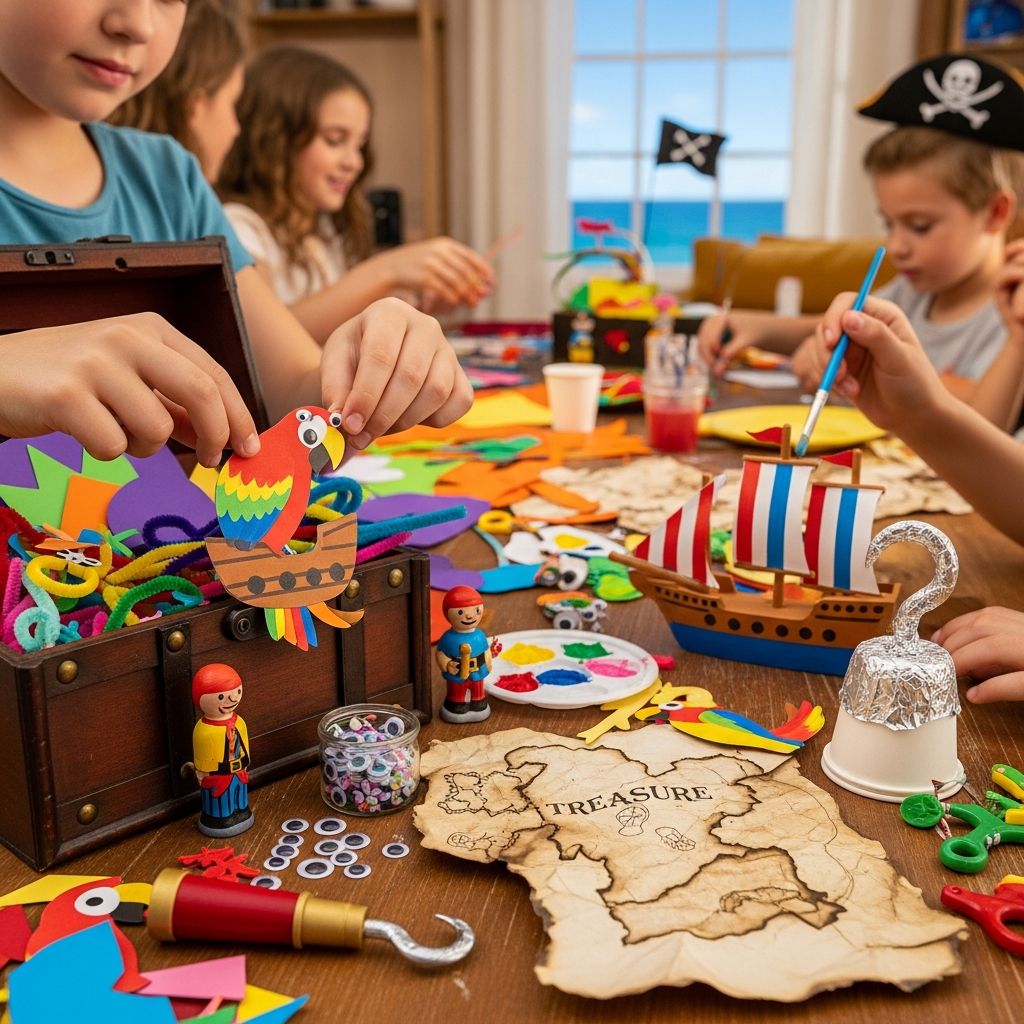
Transform an ordinary afternoon into a high-seas adventure with simple pirate crafts, imaginative games, and creative play that kids and grown-ups can enjoy together. This guide shares approachable, screen-light activities that use common household supplies and focus on creativity over perfection.
Why Pirate Play Captivates Kids
Pirate play gives children an invitation to be bold, noisy, and imaginative in a safe environment. They can experiment with new voices, invent stories, and move their bodies while exploring a make-believe world on the open sea.
For families and teachers, a pirate theme creates a flexible “umbrella” under which you can mix arts and crafts, basic geography, early literacy, and social skills practice without it ever feeling like a lesson. It works for a one-hour craft session or a full themed day.
Planning Your Pirate Adventure
Before diving into the crafts, decide what kind of pirate experience you want: a quick activity block, a themed party, or a full pirate day. The ideas below can be mixed and matched to fit your schedule and age group.
- Choose 2–3 simple crafts for younger children and keep setup minimal.
- For older kids, add more detail-oriented projects like coded messages or homemade board games.
- Layer in pirate music, sound effects, or a favorite storybook to create atmosphere.
DIY Pirate Costume Corner
You do not need a full store-bought costume to turn a child into a convincing pirate. With a few odds and ends, kids can build a look that feels special and unique to them.
Simple Pirate Accessories from Household Items
- Striped shirt or plain T-shirt: Any shirt with stripes instantly suggests “nautical,” but a solid dark shirt works too.
- Scarf or bandana: Tie around the head as a headscarf or around the waist as a sash.
- Rolled-up pants: Rolling hems to mid-calf gives a rugged, ship-ready look.
- Old belts: Worn diagonally across the chest or low on the hips to mimic a sailor’s gear strap.
Cardboard and Paper Costume Add-ons
Cardboard is your best friend when it comes to creating sturdy but lightweight accessories. Thin cardboard from cereal boxes is easy for kids to cut and decorate.
- Cardboard belt buckle: Cut a rectangle, color it gold, and tape it to a fabric belt.
- Paper “boot cuffs”: Wrap colored paper around the tops of shoes or ankles and tape in place to imitate boots.
- Fake beard or mustache: Draw on paper, cut out, punch two small holes, and tie with elastic.
Crafting a Pirate’s Signature Look
Some accessories feel almost required for a pirate: a bold hat, a dramatic eye cover, and something to help them scan the horizon. These can all be created with basic art materials.
Paper Pirate Hat Remix
Instead of a traditional folded paper hat, try a simple crown-style design that works for a range of head sizes.
- Measure a strip of cardstock or sturdy paper around the child’s head and tape to fit.
- On another piece of paper, draw a large, curved “hat brim” shape with room for decoration.
- Decorate with markers, stickers, or cut-out shapes like skulls, stars, or sea creatures.
- Attach the decorated hat front to the paper band so it stands up like a crown.
This style lets children design unique pirate symbols—maybe their pirate loves dolphins instead of skulls!
Eye Cover with Personality
An eye cover does not need to fully block vision. For safety, especially with younger kids, create a “pretend” eye patch that sits below or to the side of one eye.
- Cut a small oval or heart from felt or foam.
- Use craft glue to add sequins, tiny foam shapes, or a painted initial.
- Attach to a length of elastic or yarn that can be knotted behind the head.
- Position slightly off-center so both eyes remain uncovered but the pirate “look” is there.
Spyglass from Recycled Tubes
A looking tube is an easy, satisfying craft that doubles as a prop for games and storytelling.
- Use a cardboard tube from kitchen paper or two shorter tubes taped together.
- Wrap in colored paper or paint the outside and let it dry.
- Add details like paper “metal” rings at each end, drawn-on rivets, or star stickers.
- Optional: Tape a circle of colored cellophane over one end for a tinted “lens.”
Treasure Maps and Secret Islands
A treasure map turns any living room, classroom, or backyard into a mysterious island. Encouraging kids to design their own map helps them think about symbols, directions, and storytelling.
Making an Aged Treasure Map
Use plain paper as the base and focus on imaginative details rather than artistic perfection.
- Sketch the outline of an island, ship deck, or familiar room.
- Add key features: a cave, a crooked tree, rocks, pretend volcanoes, or sea monsters just offshore.
- Mark a winding path that leads to a bold red “X.”
- (Optional for older kids) Lightly brush with brewed tea and let dry to give an antique look.
Using Maps in Play
- Hide a small box of “treasure” (stickers, costume jewelry, or notes) and draw clues that relate to your home’s layout.
- Ask kids to trade maps and follow a sibling’s route rather than their own.
- For pre-readers, use icons (a sofa picture, a window sketch) instead of words.
Building a Pirate Ship at Home
A full cardboard ship is fun but not essential. You can create the feeling of a pirate vessel with simple rearrangements of furniture and fabric.
Quick Indoor pirate “Deck”
- Push a sofa slightly away from the wall and call it the ship’s rail.
- Lay a blanket on the floor as the “sea” and scatter blue cushions as waves.
- Use a tall chair or broom (carefully secured) as the “mast” and hang a scarf for a sail.
Cardboard ship Details
If you have a large box, you can add a few simple touches that upgrade the experience.
- Cut circular “portholes” and outline them with marker “bolts.”
- Draw a steering wheel on cardboard, cut it out, and tape it where kids can reach.
- Add a strip of paper across the front with the ship’s name chosen by the children.
Treasure Chests and Pirate Booty
Treasure does not need to be expensive. The fun lies in collecting, sorting, trading, and pretending it is priceless. Everyday items quickly become pirate riches with a little sparkle.
DIY treasure Containers
- Cover a shoe box with colored paper or brown paper bag pieces for a wooden look.
- Use metallic pens or foil pieces to draw or glue on “metal” straps and locks.
- For a mini chest, decorate a cleaned food container or small tin instead.
Ideas for pirate “Treasure”
Let kids help decide what counts as treasure. Their ideas might surprise you and usually cost very little.
| Item | Where to Find It | How Kids Use It |
|---|---|---|
| Plastic beads or buttons | Old craft kits, sewing box, discount bins | Sorting by color, stringing into “royal” jewelry |
| Foil-wrapped cardboard coins | Cut from cereal boxes and wrapped in kitchen foil | Counting games, pretend trading, treasure hunts |
| Glass pebbles or marbles | Decor or garden sections | “Gems” to guard, bury, or trade with shipmates |
| Shells and smooth stones | Collected on walks or from craft stores | Pirate souvenirs from “distant islands” |
Pirate Games for High-Energy Fun
After crafting, kids often want to move. Pirate-themed games help them burn off energy while staying within the imaginative world you have built together.
Walk the Safe “Plank”
- Lay a strip of painter’s tape or a folded blanket on the floor as the “plank.”
- Challenge kids to walk across with different instructions: heel-to-toe, backward, while balancing a soft toy on their heads, or while delivering a silly pirate phrase.
- Turn it into a cooperative game by asking older children to help younger ones across.
Color or Shape Treasure Hunt
Instead of hiding a single treasure chest, hide several small items of different colors or shapes.
- Choose a category (for example, red things or star shapes).
- Hide related objects around a designated area.
- Give kids a list or simple drawing of what they must find.
- Gather the items and store them in the treasure chest for later pretend play.
Language and storytelling with pirate Flair
Pirate play is a natural gateway to language practice. Kids love trying out dramatic voices and new phrases, and even shy children may feel braver behind a costume.
Inventing pirate Names
- Ask kids to combine an adjective and an animal (for example, “Stormy Shark” or “Giggling Gull”).
- Invite them to write or draw their pirate name on a nametag or mini flag.
- Encourage everyone to stay “in character” for a few minutes at a time.
Shared Story Circle
Group storytelling works well for families or classrooms and requires no materials at all.
- Seat everyone in a circle and choose a simple opening line, such as “Our ship woke to a strange sound…”
- Go around the circle, with each person adding one or two sentences.
- End the story when the pirates solve a problem, discover treasure, or arrive safely at a new island.
Snack Ideas for Hungry Sailors
Snacks do not have to be complicated to feel on-theme. Use simple presentation tricks to turn everyday foods into pirate provisions.
- Serve crackers and cheese on a wooden board and call it “ship rations.”
- Float fruit wedges on a plate of yogurt or pudding as “boats on the sea.”
- Pour water or juice into clear cups and label them “ocean water” with a small paper flag on each straw.
Adapting pirate Activities by Age
The same theme can work from preschool to early teens with a little adjustment in difficulty and responsibility.
- Toddlers and preschoolers: Emphasize dress-up, sensory play with “treasure,” and simple maps with pictures.
- Early elementary: Add simple written clues, short storytelling, and more detailed craft steps.
- Older kids: Invite them to design and lead games, construct more elaborate props, or create a pirate-themed comic or stop-motion video.
Frequently Asked Questions
How can I do pirate crafts on a tight budget?
Focus on using what you already have: cardboard boxes, scrap paper, fabric offcuts, and recycled containers. Replace store-bought treasure with homemade coins, drawn gems, or collected stones, and invest time rather than money in storytelling and imaginative play.
Are pirate themes appropriate for very young children?
Yes, as long as the focus stays on adventure, friendship, and exploration instead of fear or violence. Use friendly characters, silly voices, and cooperative goals like finding treasure together instead of “battles.”
What if my child is shy about costumes or loud play?
Offer low-key options like a small pin, bracelet, or nametag instead of a full costume, and let the child choose when and how to join in. Quiet roles such as ship navigator, map keeper, or treasure recorder can help them participate comfortably.
How long should a pirate activity session last?
For younger kids, 30–60 minutes is usually enough before they need a break or a change of theme. Older children can handle a longer block as long as you mix sitting activities (crafts, maps) with movement (games, hunts).
Can these ideas work in a classroom or group setting?
Absolutely. Choose projects that are easy to duplicate, pre-cut tricky shapes where needed, and set up stations for crafts, maps, and games. Assign helpers or older students to manage each station so everyone stays engaged and materials stay organized.
Bringing Your Pirate World Together
Whether you build a cardboard ship, decorate a single hat, or simply gather around for a shared story, the spirit of pirate play comes from imagination and connection. Use these ideas as a flexible toolkit, choosing the crafts and games that fit your space, supplies, and children’s interests.
Most of all, lean into the silliness: exaggerated voices, dramatic gasps at “danger,” and joyful cheers when treasure is found will make your pirate adventure a memory kids talk about for a long time.